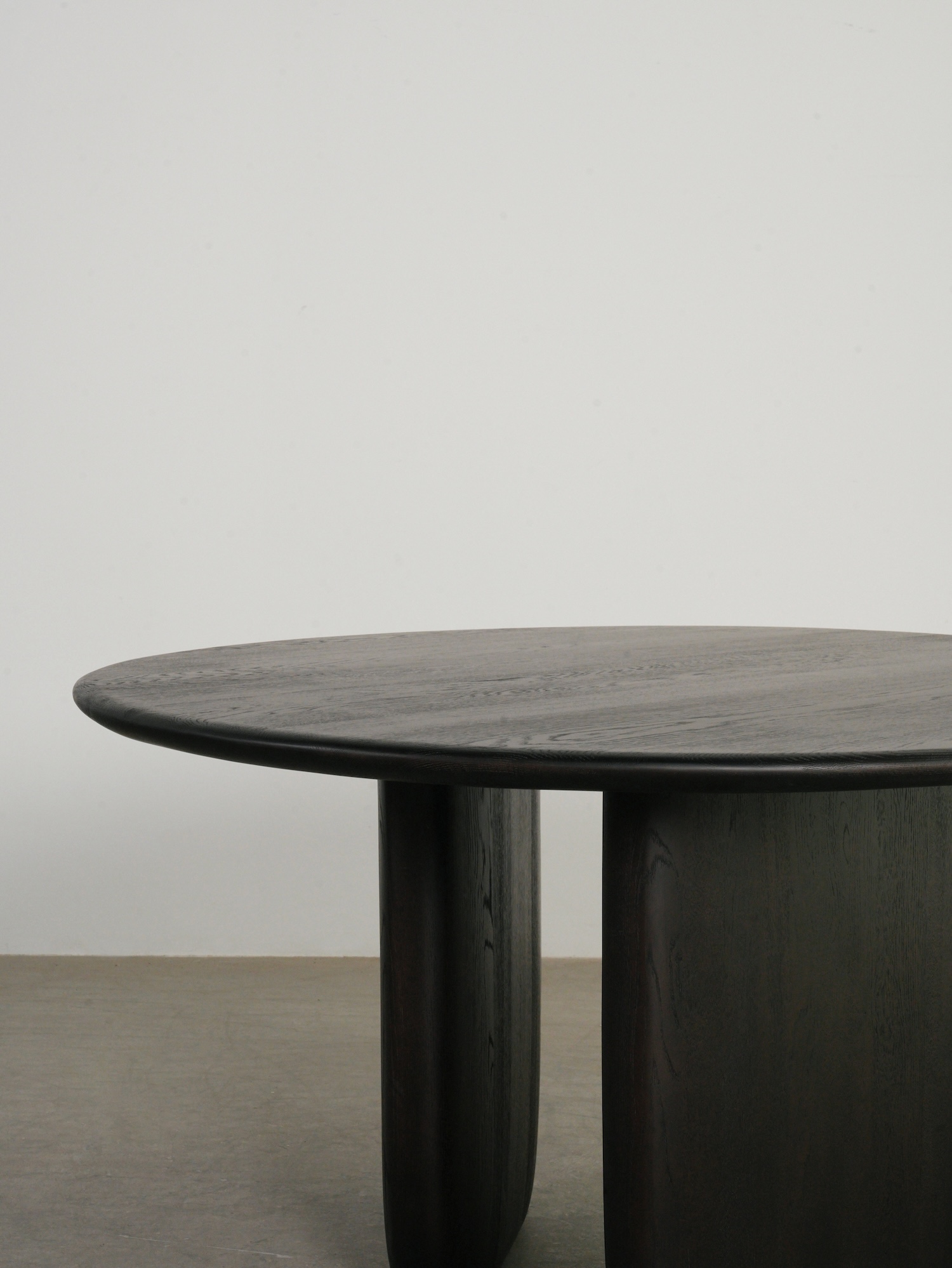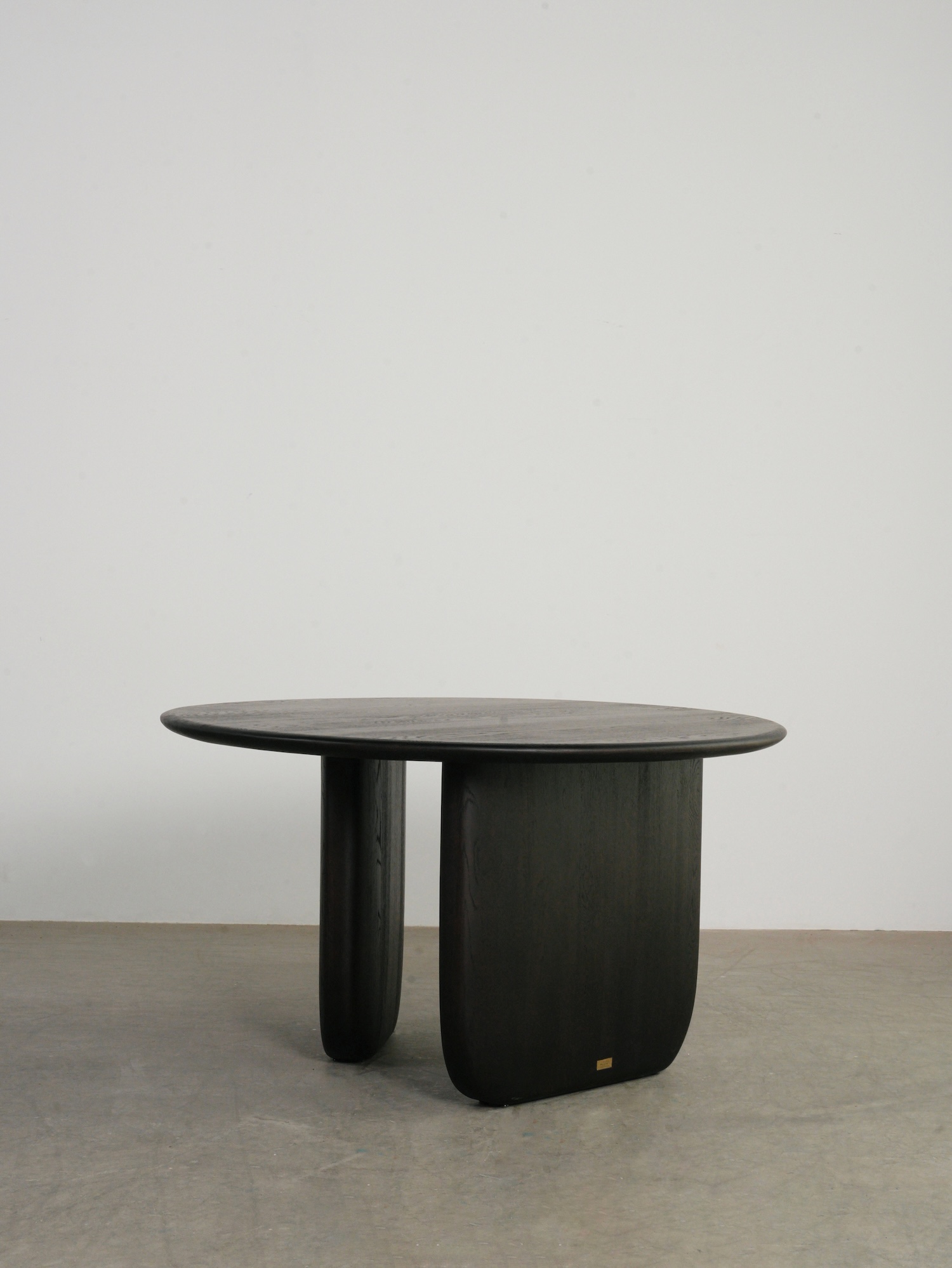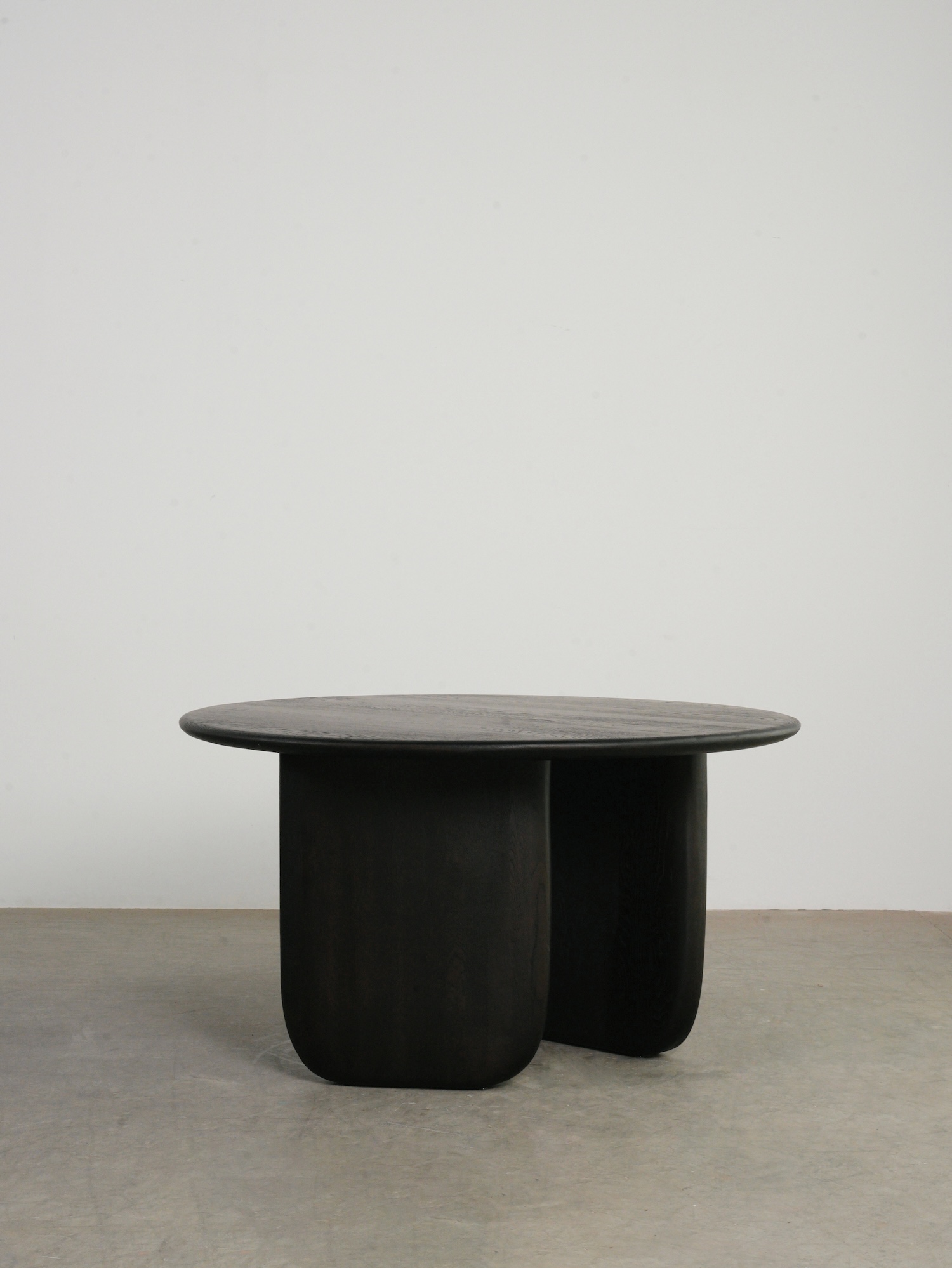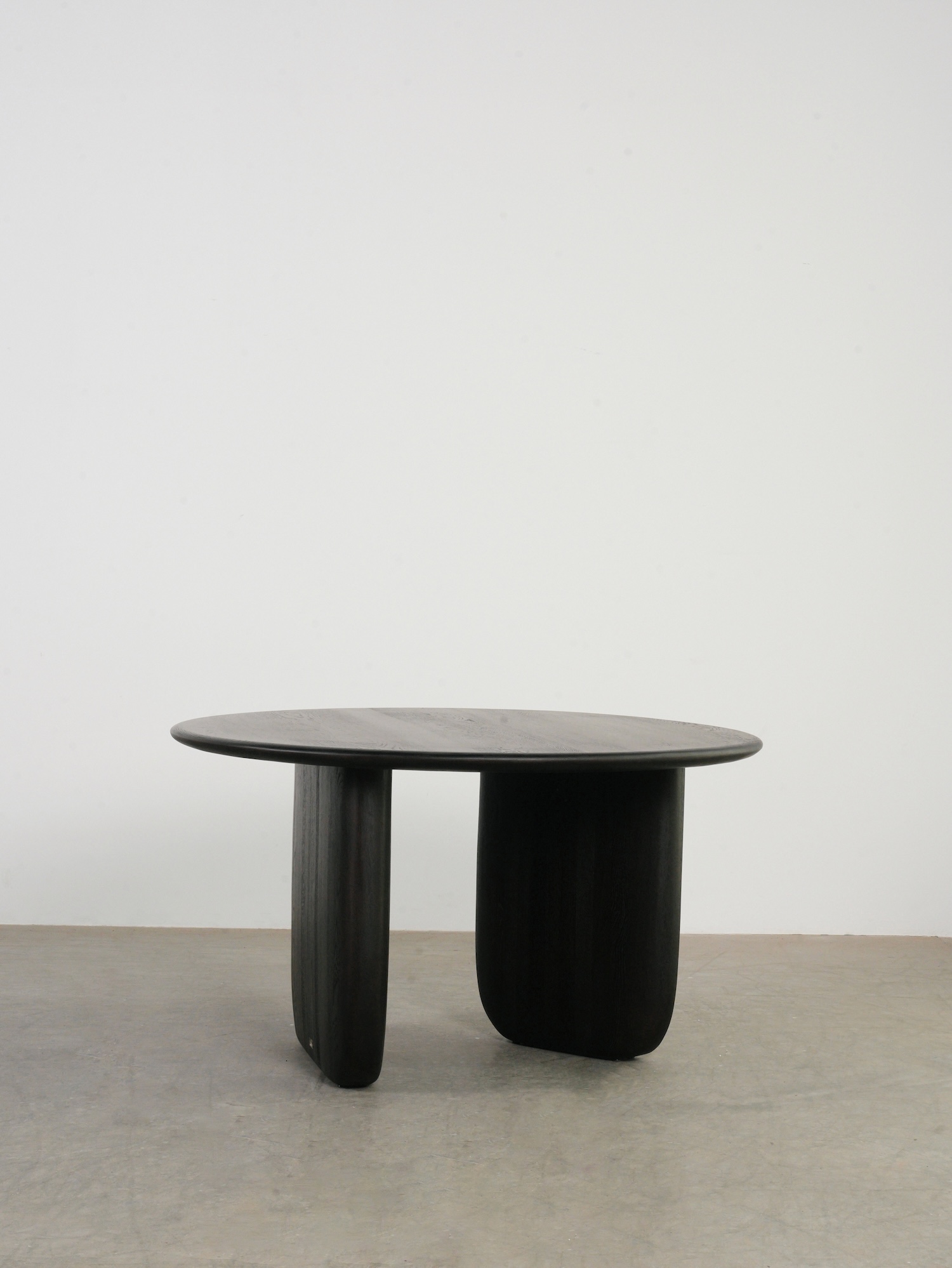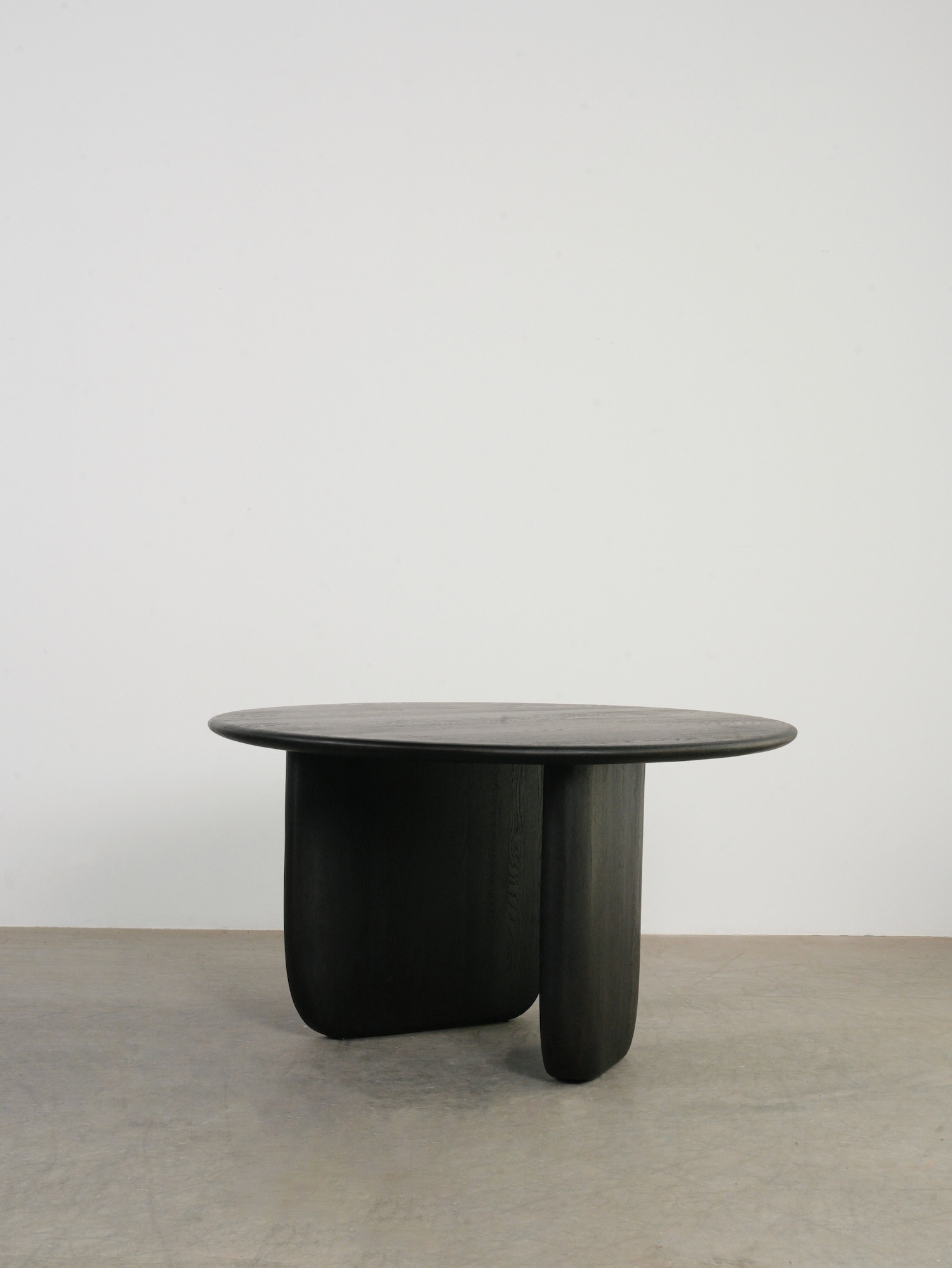
In Tokyo, design studio Mililab built the Maru table so its solid oak top holds under a millimeter of flex in normal use, a tolerance reached by kiln-drying the wood twice before any cutting begins.
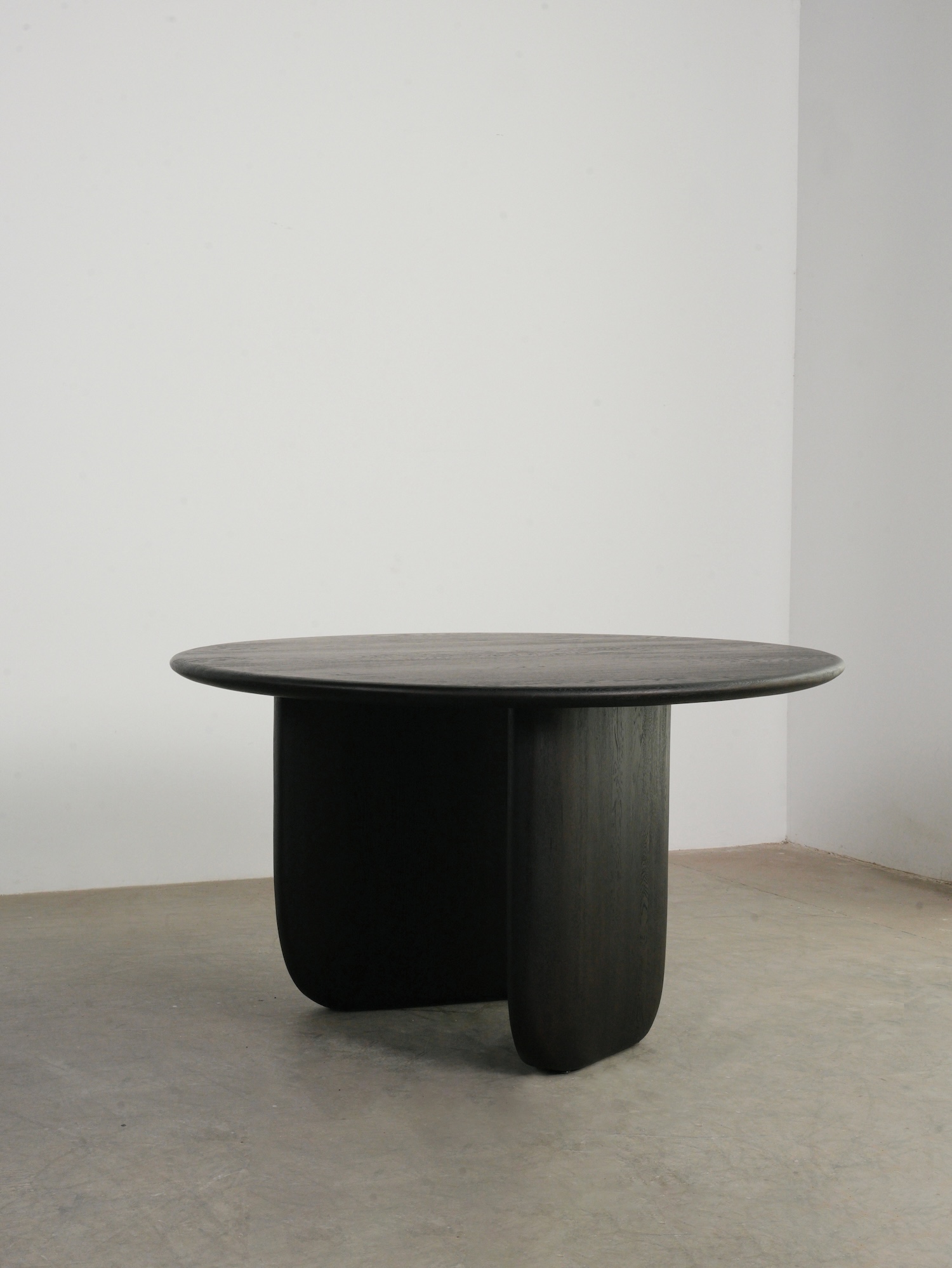
The table is round, sized to standard dining height and built to pair with the studio’s Yume chair and Ishi stool. It seats four to six people without designating a head of the table or a corner seat, a difference from the rectangular tables the same seating count usually implies. The oak base carries the top’s weight straight down rather than out toward the edges, which is what keeps the top from flexing.
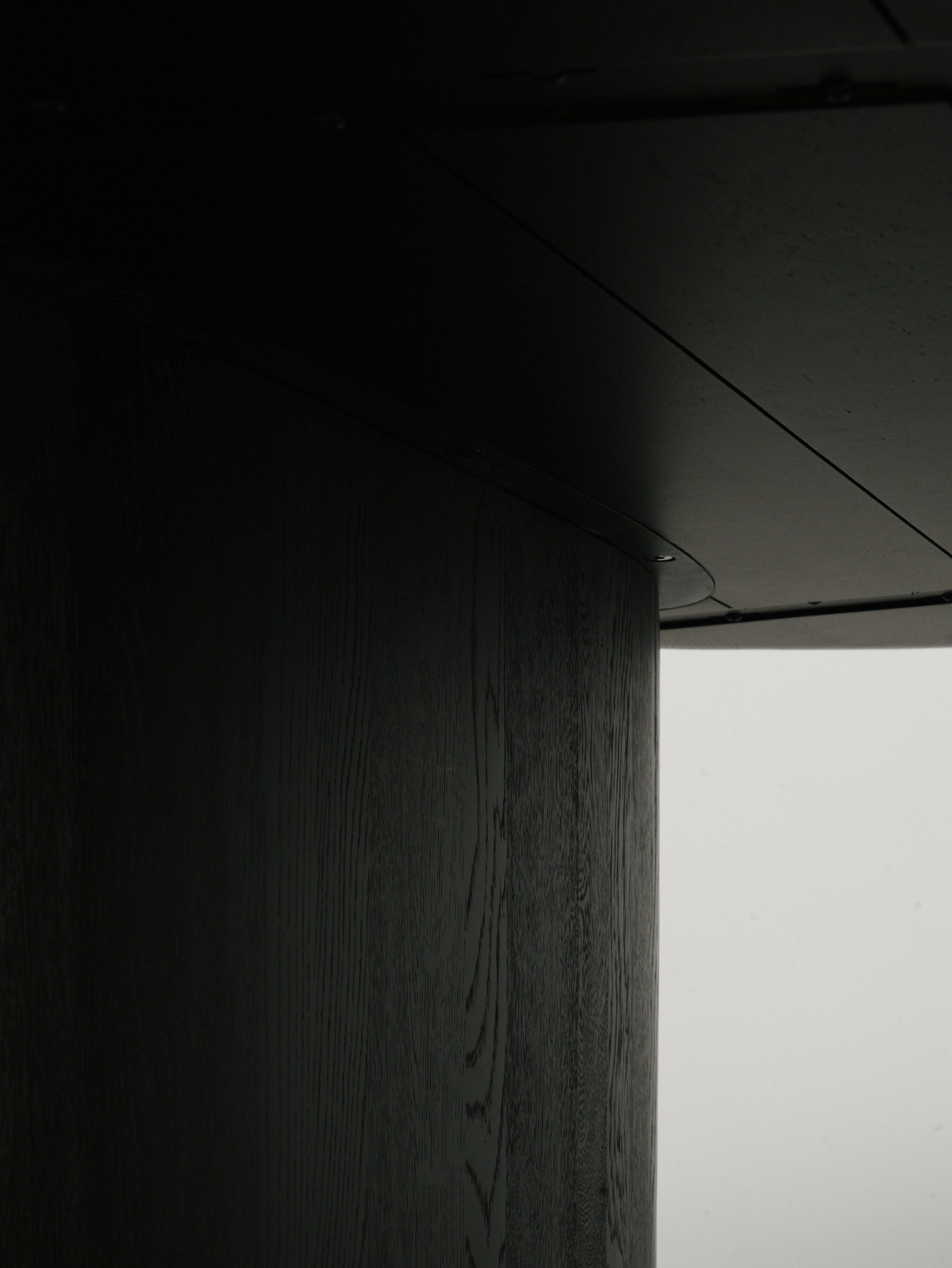
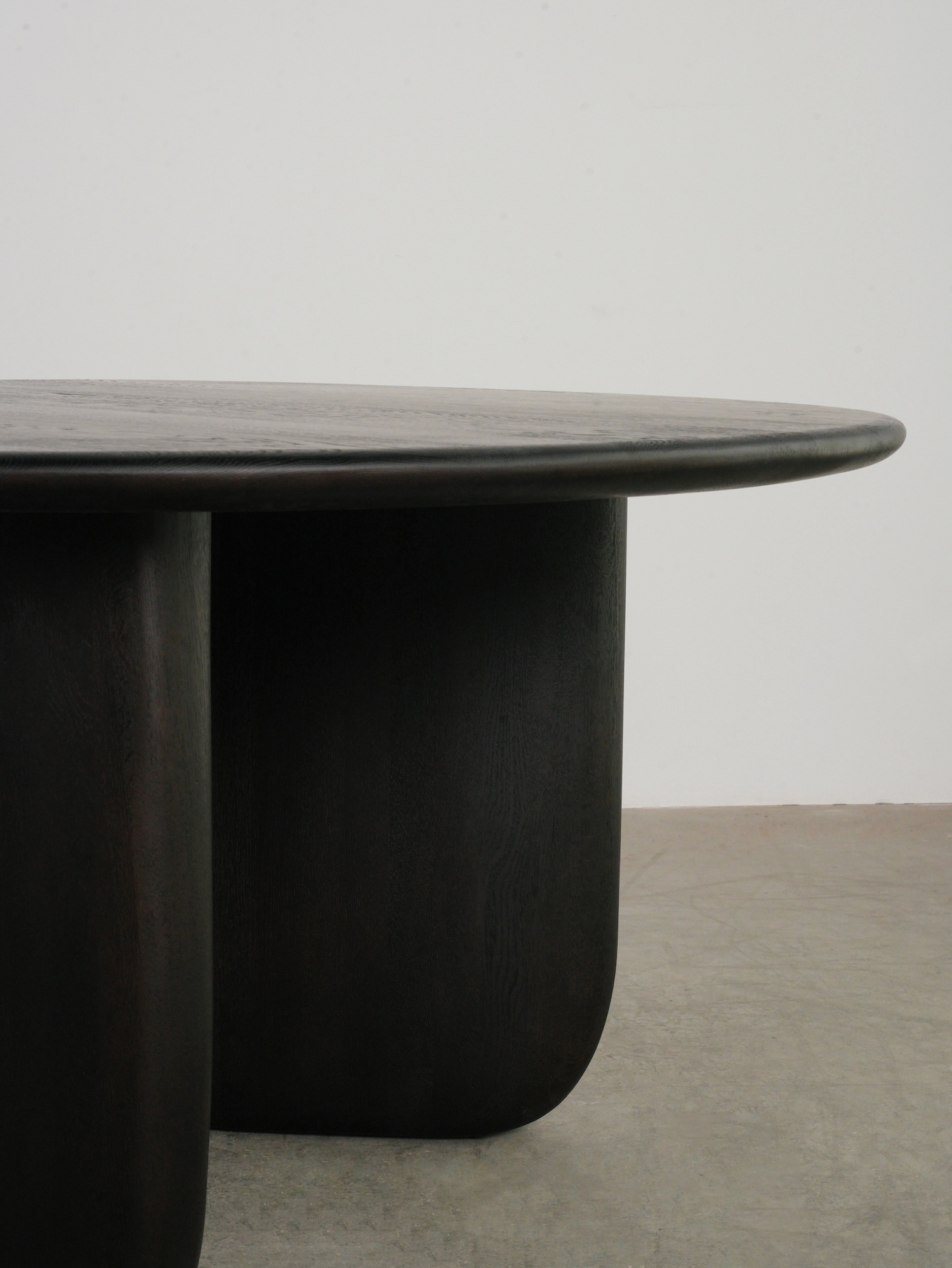
The base is where the geometry does its real work. The shaped oak legs flare outward as they rise, becoming the tabletop itself rather than meeting it at a joint. The edge that results follows a superellipsoid profile, curved enough to read as slender from across a room while staying rounded enough not to bite into a forearm resting against it.
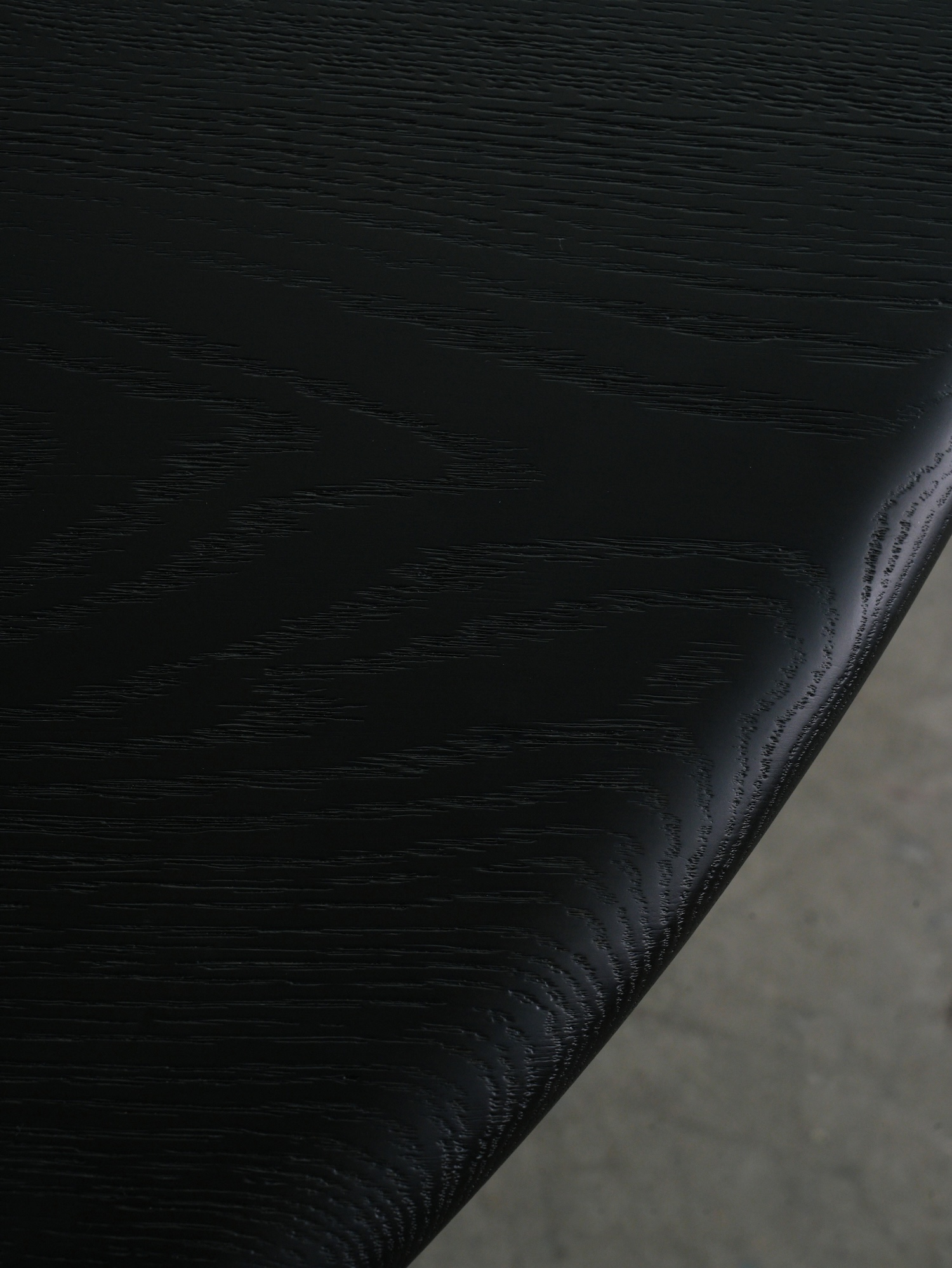
Production splits the labor between machine and hand. CNC cutting takes the major dimensions out of solid North American oak selected to FAS grade or better, and the base structure is checked joint by joint before the two pieces are assembled. From there the table is hand-shaped and hand-sanded through progressive grits, a process the studio runs for nineteen to twenty-five days before finishing begins.
The table ships flat-pack with the tools and instructions needed for assembly, arriving under delivery-duty-paid terms across thirty-four countries and backed by a five-year structural warranty.