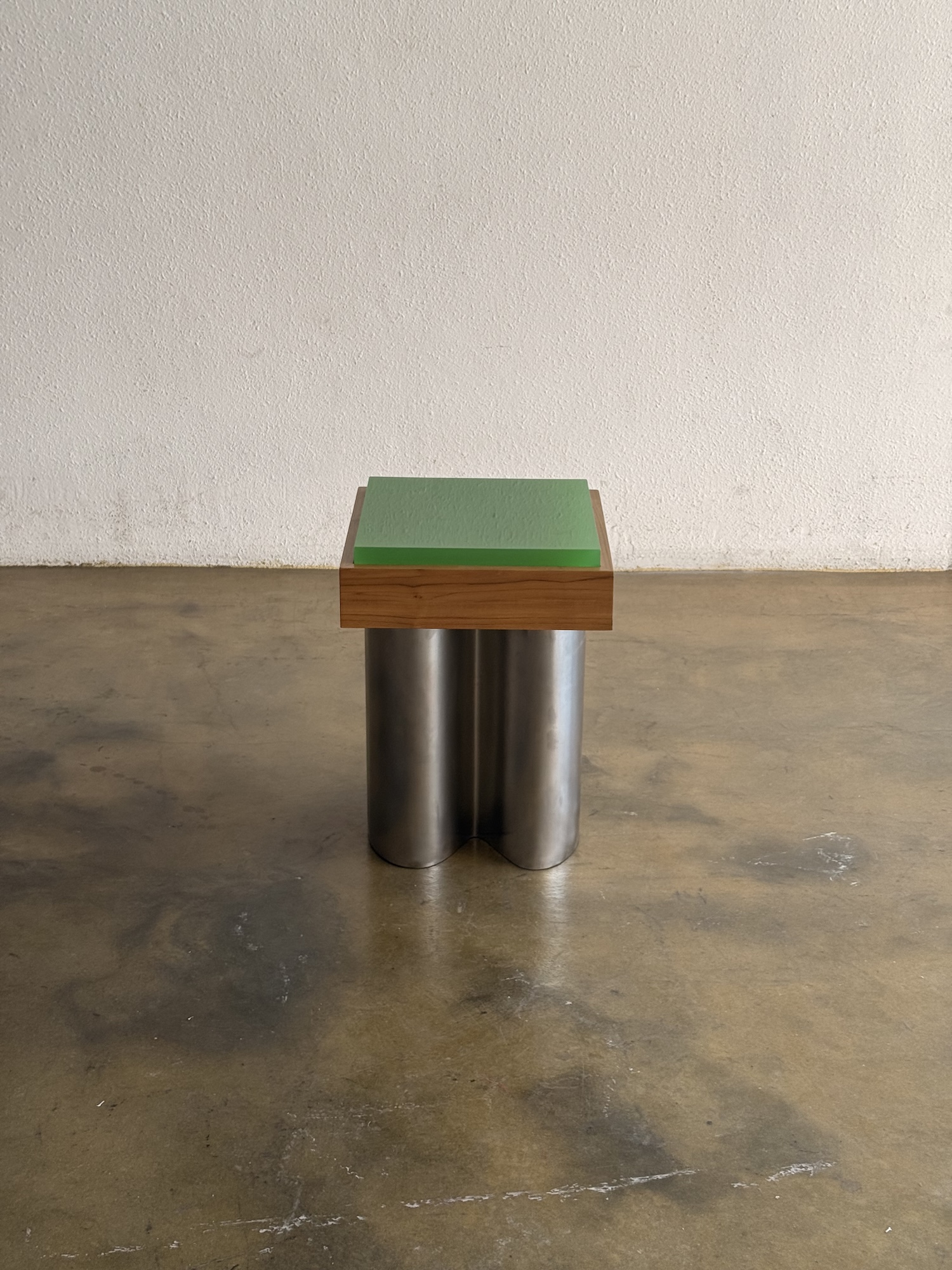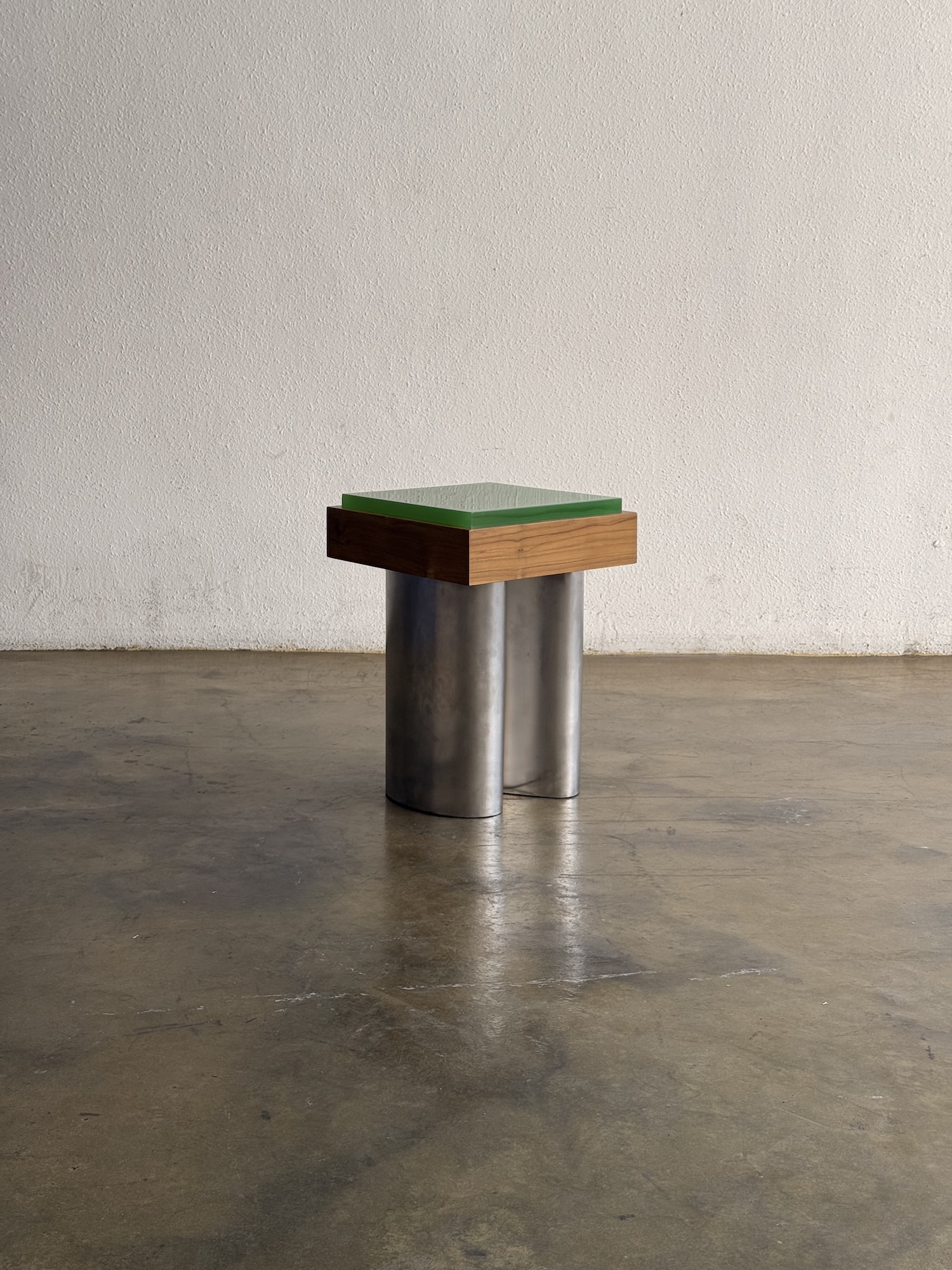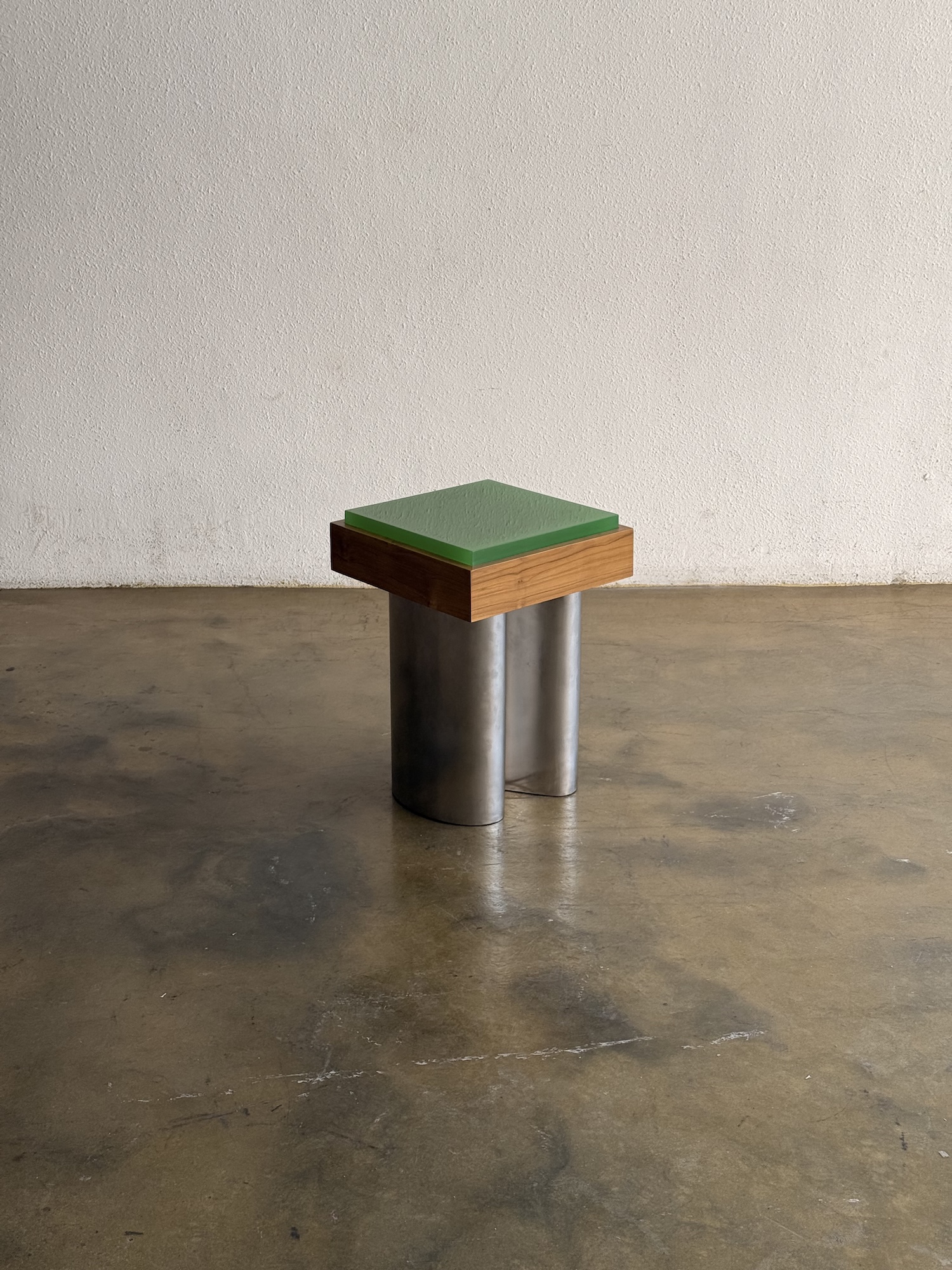
Agar Tables is a minimalist furniture collection created by New York-based practice Studio Kallang. The act of translation – rendering sensory memory into physical form – sits at the core of this collection. Faezah Shaharuddin draws on a Southeast Asian upbringing to inform objects that are fundamentally Western in their formal language yet carry within them something harder to name: the layered, luminous quality of tropical light filtered through vegetation, or the dense chromatic shifts that characterize regional craft traditions. The Agar Tables are not nostalgic objects. They are something more rigorous – an attempt to materialize cultural memory through material behavior.
Resin is the primary vehicle for this translation. Cast in shallow pools and thick slabs, it captures color with a depth that paint or lacquer cannot achieve – light enters the surface and scatters through the body of the material, producing the kind of chromatic complexity associated with natural phenomena rather than manufactured goods. The specific palette, drawn from the greens, ambers, and earth tones of Shaharuddin’s formative environment, reads differently across lighting conditions. Under direct light the resin can appear opaque and mineral; in shadow it becomes translucent and almost liquid. This oscillation between states is not incidental – it is the design.
Stainless steel provides structural counterpoint. Its hard reflectivity creates contrast against the warmth of the resin and teak, and the material’s industrial associations are deliberately left intact rather than softened. The combination recalls the strategies of designers like Naoto Fukasawa or the early work of Established and Sons – a willingness to let dissimilar materials maintain their distinct identities within a unified composition rather than blending them into something homogeneous. The tension between materials is where the visual energy lives.