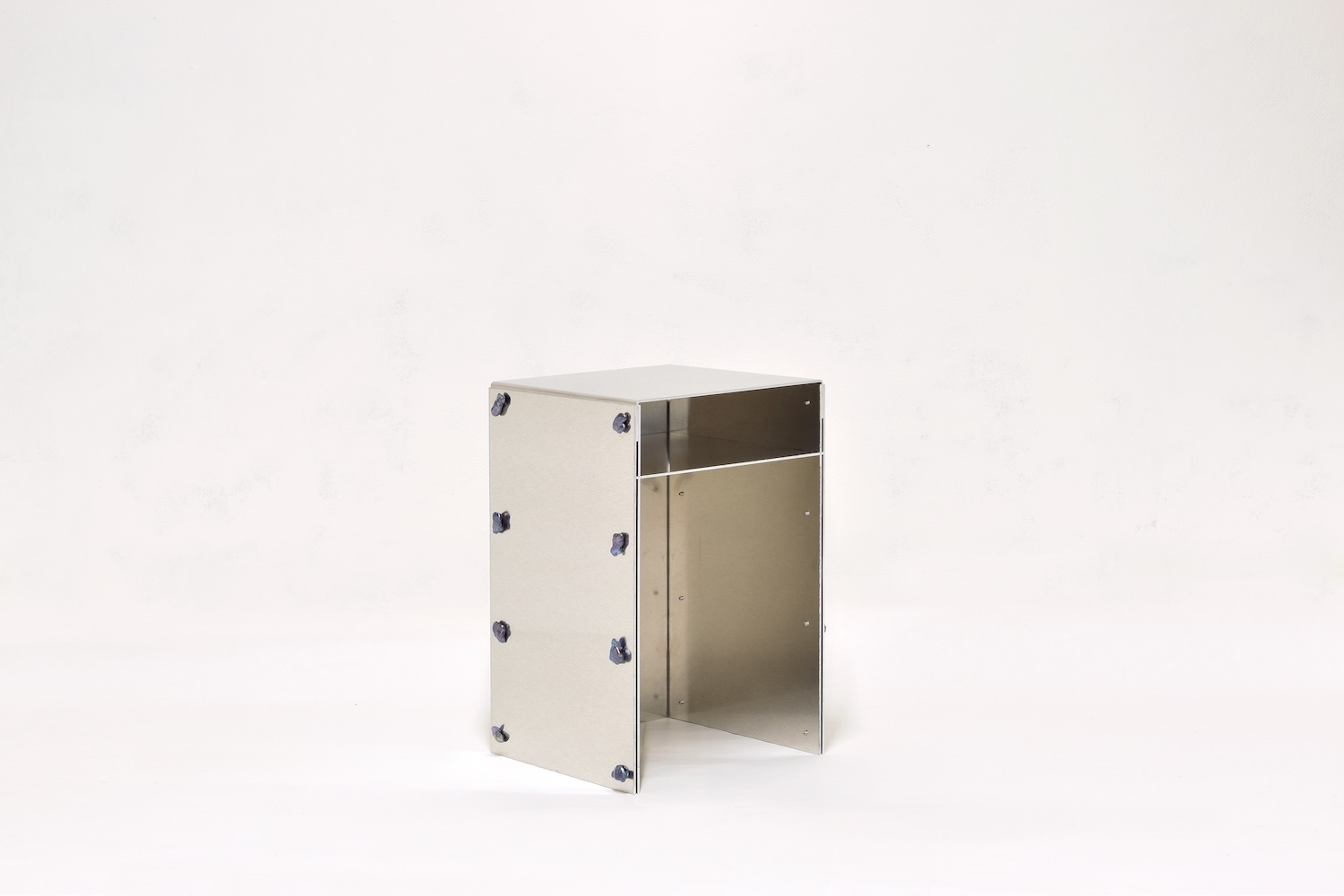
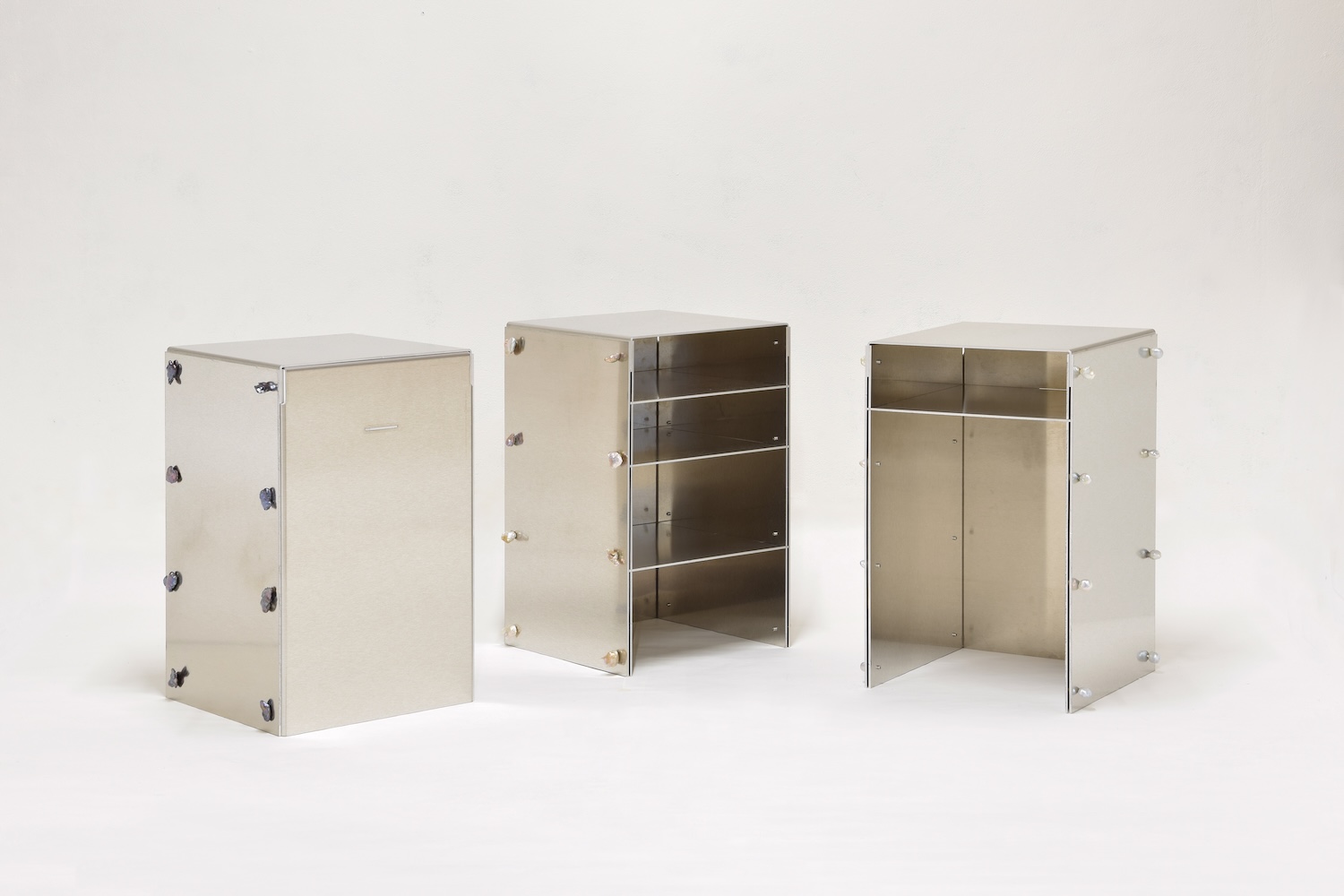
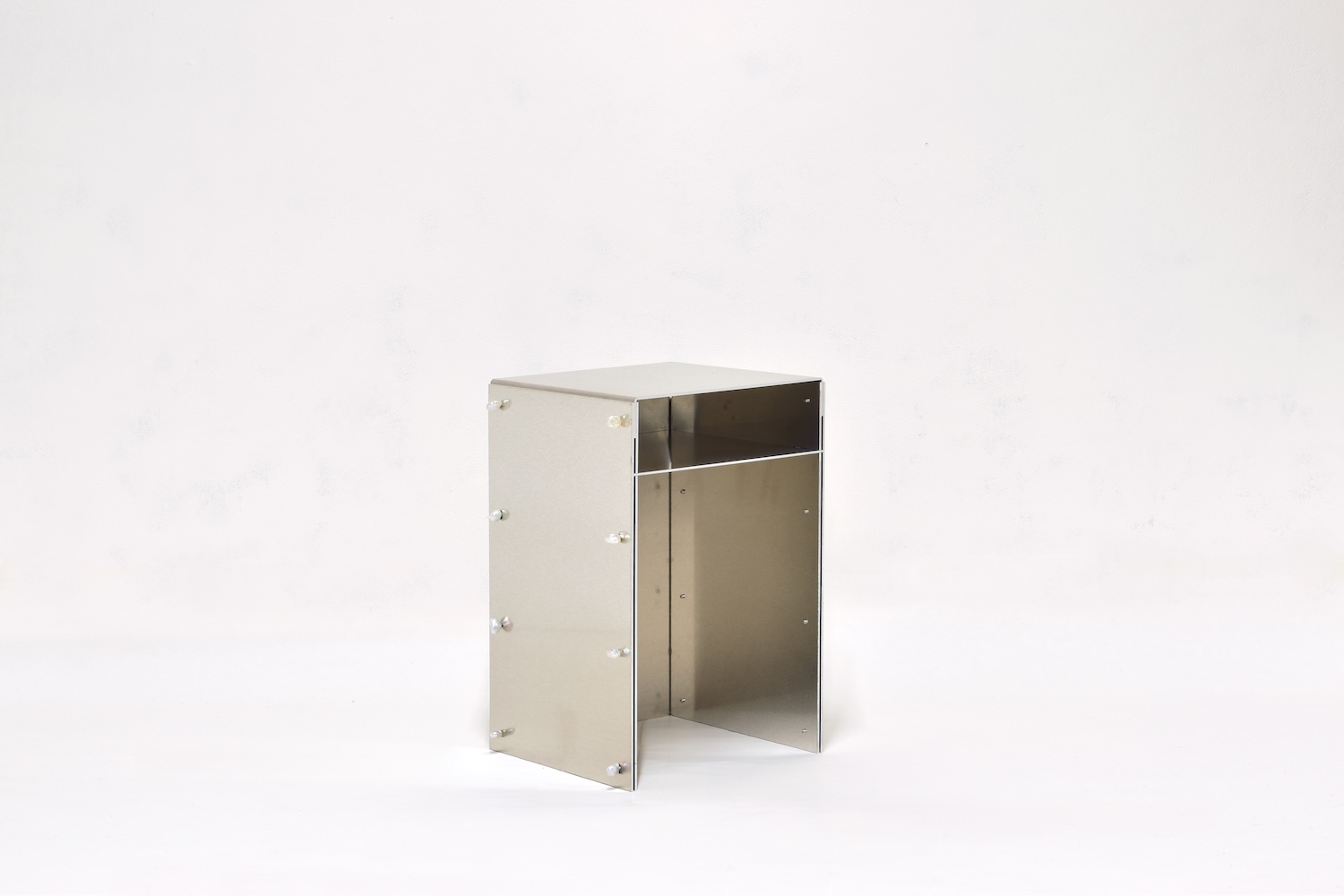
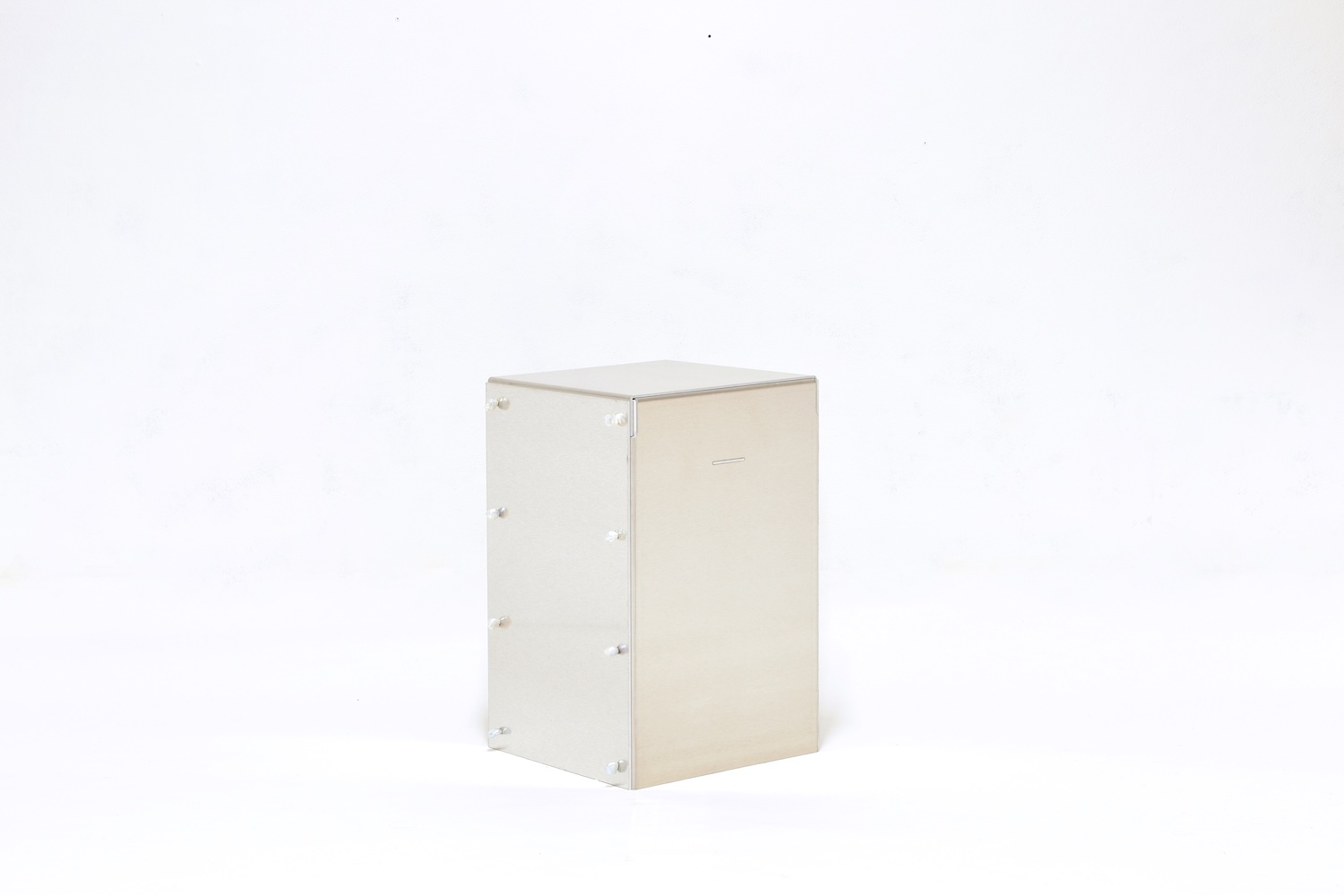
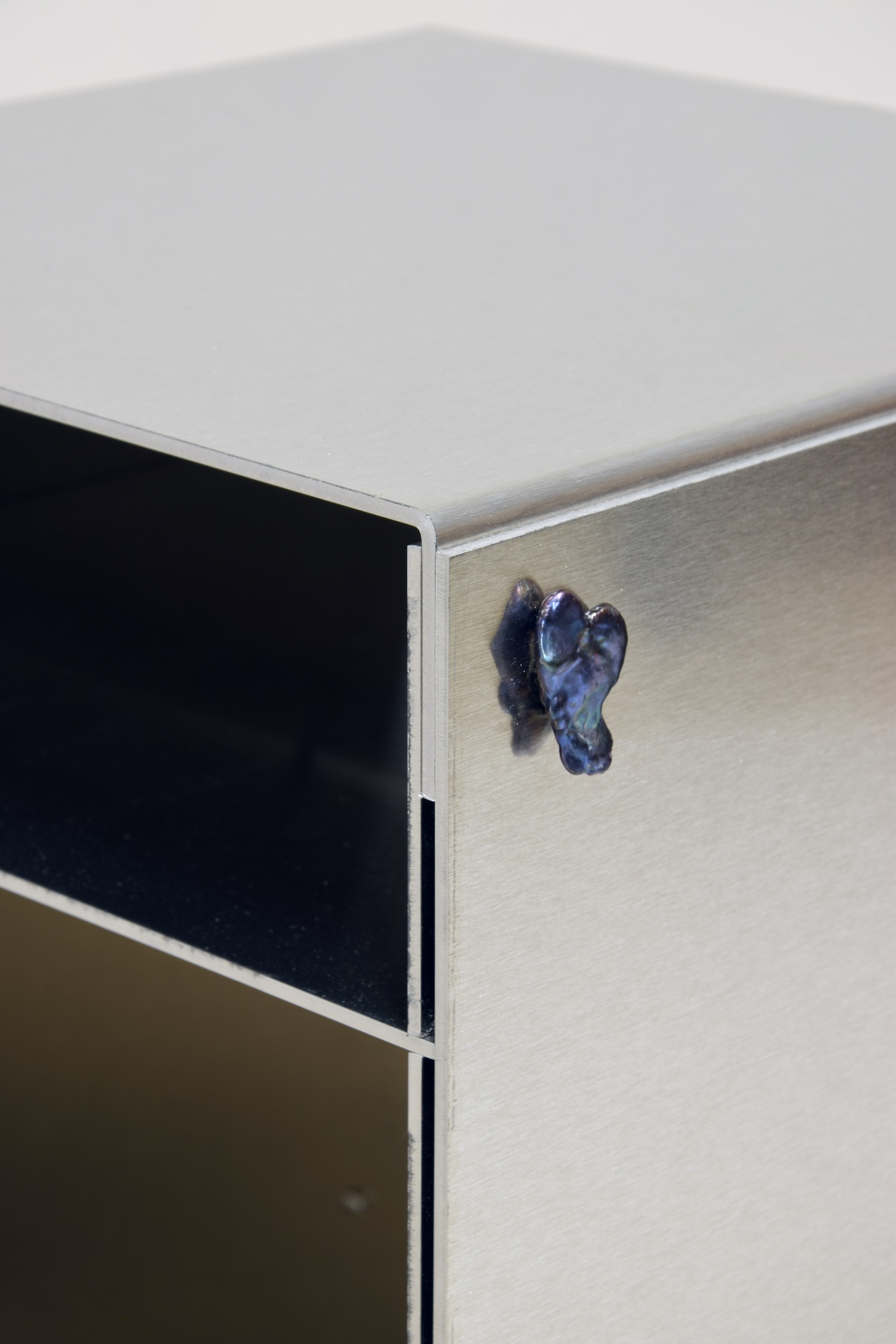
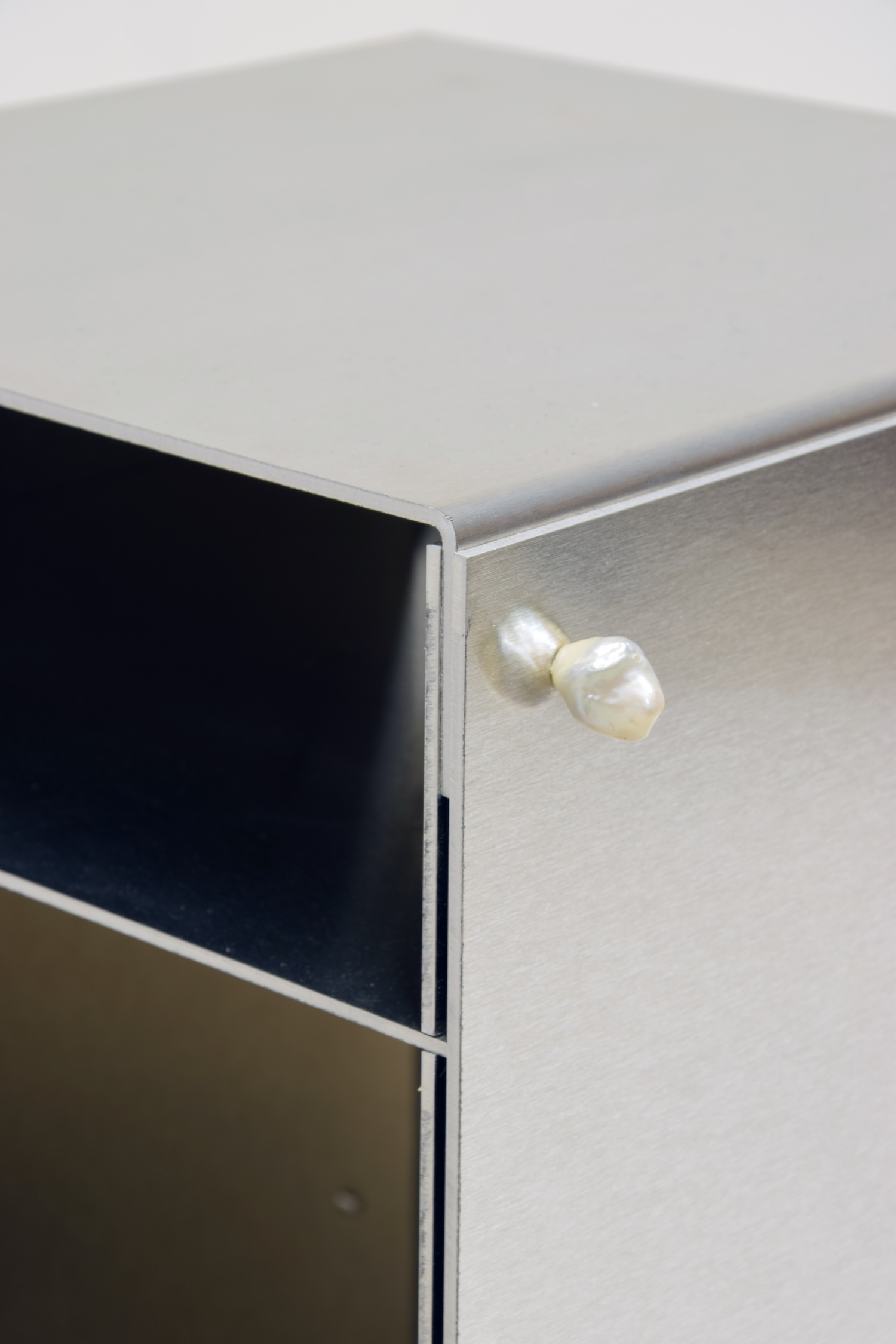
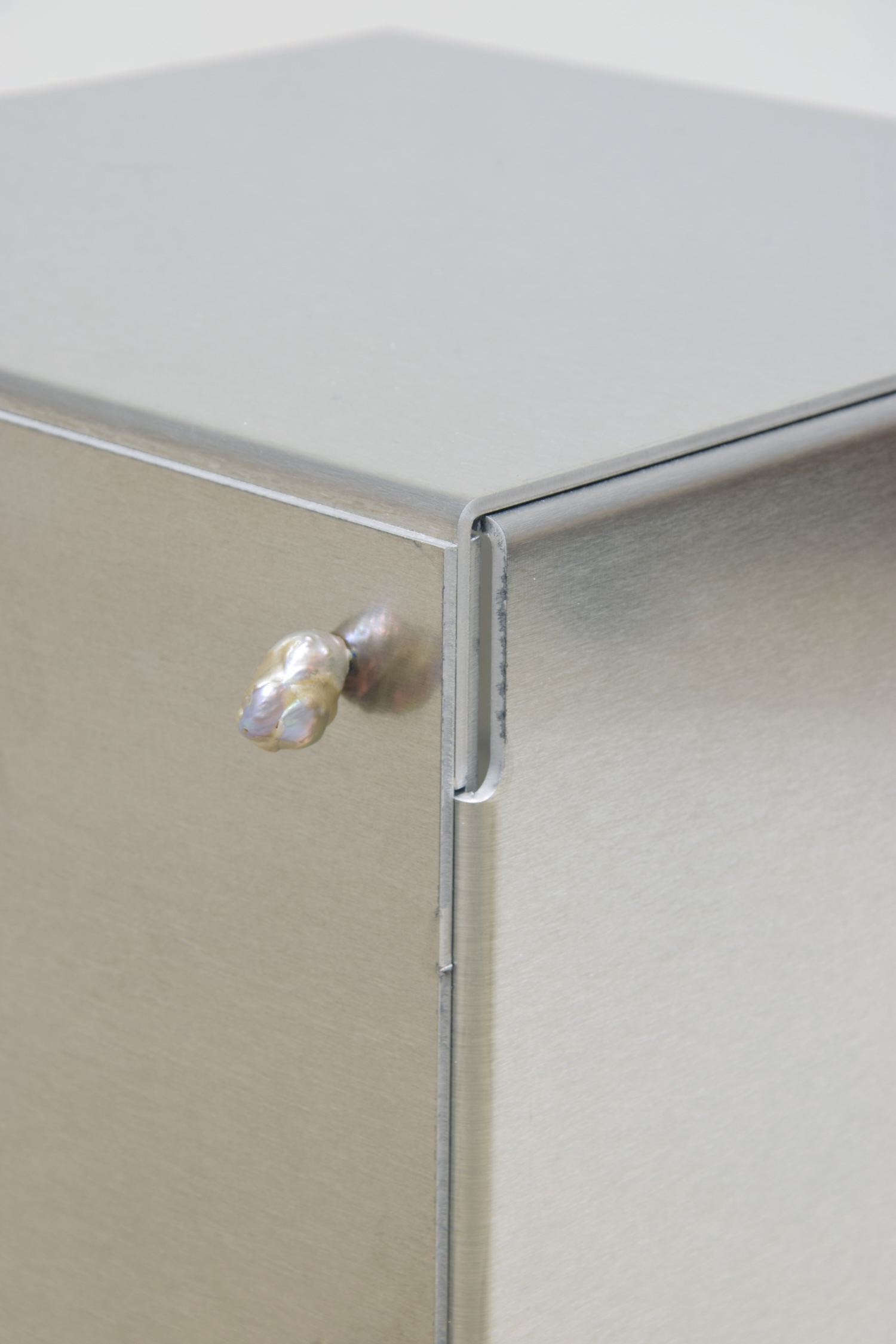
Every screw holding together Barocco, a series of small cabinets by Ludovico Grantaliano, terminates in a baroque pearl. Grantaliano trained in architecture at Roma Tre University before founding his multidisciplinary studio in Rome, Italy, in 2021. He built the cabinets entirely from laser-cut and folded aluminum, so the pearl-tipped fasteners are the only hardware in each piece and the only element that is not metal.
Furniture hardware is usually engineered to disappear. Screws get countersunk, capped, or moved to a back panel where they will not be seen. Barocco leaves its fasteners in view and makes them the sole decorative element, which means the joinery and the ornament occupy the same points on the cabinet.
The sheet construction does most of the structural work. Thin aluminum flexes easily while flat, and each fold along a cut line adds stiffness without adding material, so the body stays light while holding its shape. Laser cutting sets the profile of every panel to a tolerance that manual cutting could not match, producing parts that repeat identically across the series.
Proportions follow the golden ratio. Each cabinet measures about 12 inches square in plan and 19 inches tall, so the height is close to 1.6 times the width. The surfaces carry no applied detail beyond the folds themselves.
The pearls introduce the one variable. A baroque pearl is one that has formed irregularly, and no two share the same contour. The Portuguese word barroco is generally traced to this kind of misshapen pearl, long before the term was applied to seventeenth-century architecture, and the project takes its name directly from the object at the end of each screw.