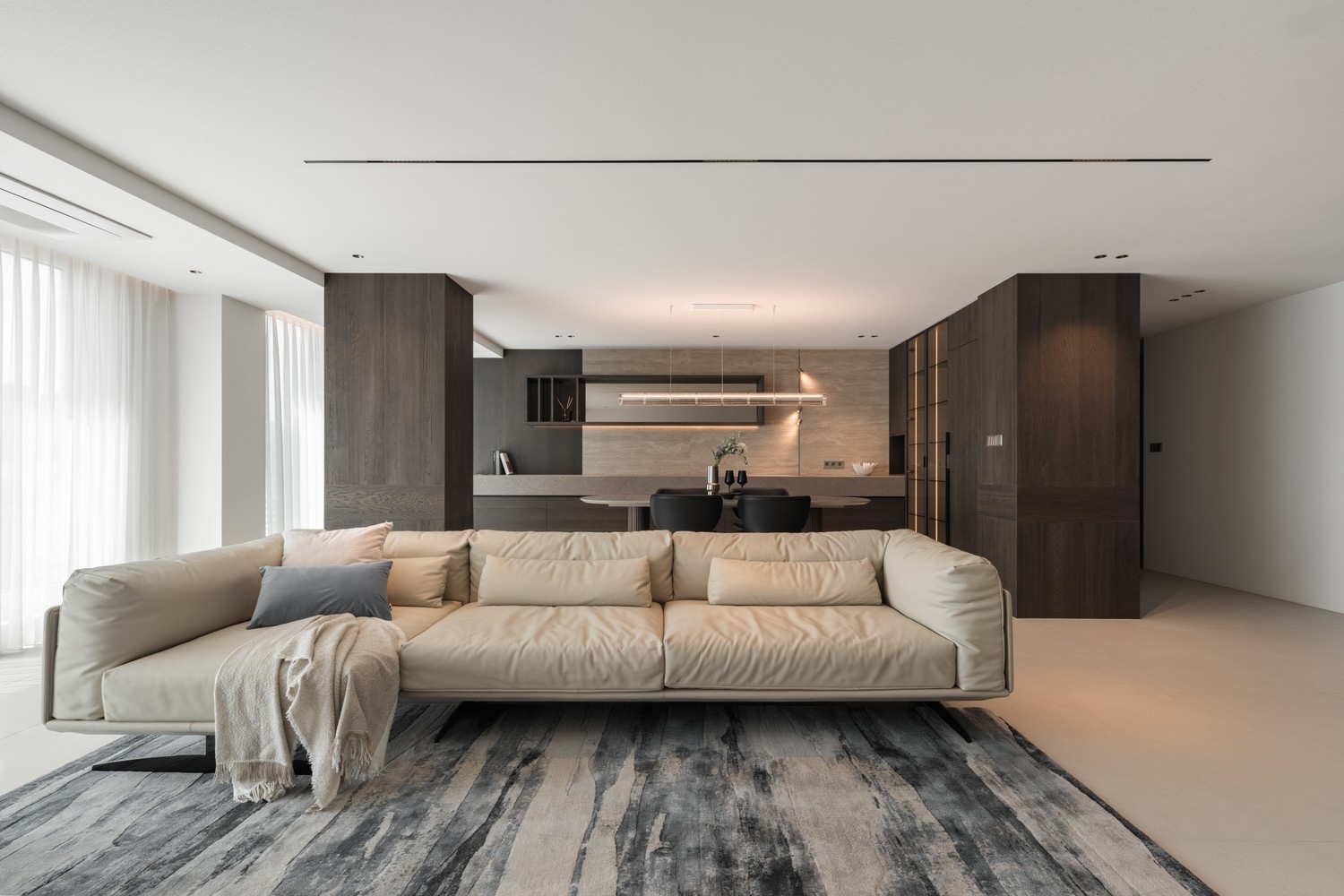
Only the load-bearing columns remained after MUAGONGGAN removed every non-bearing wall from Trace of Flow, an apartment in Bangbae-dong, Seoul, South Korea, and the studio turned those columns into the most detailed surfaces in the home. The clients are a retired couple who wanted a simpler daily routine and unbroken movement between rooms. MUAGONGGAN took its organizing logic from Changdeokgung Palace, whose buildings are set out according to the natural terrain of the site.
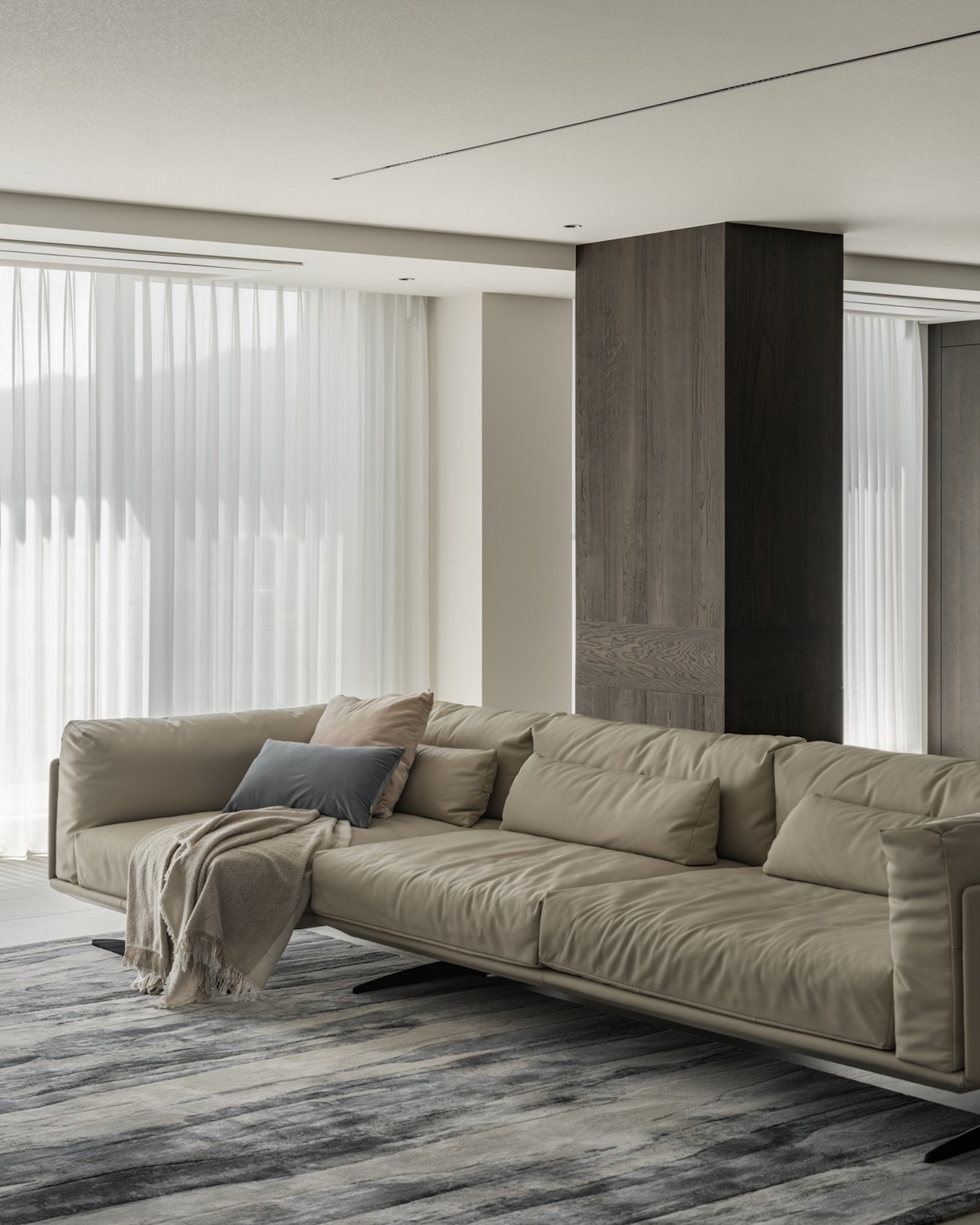
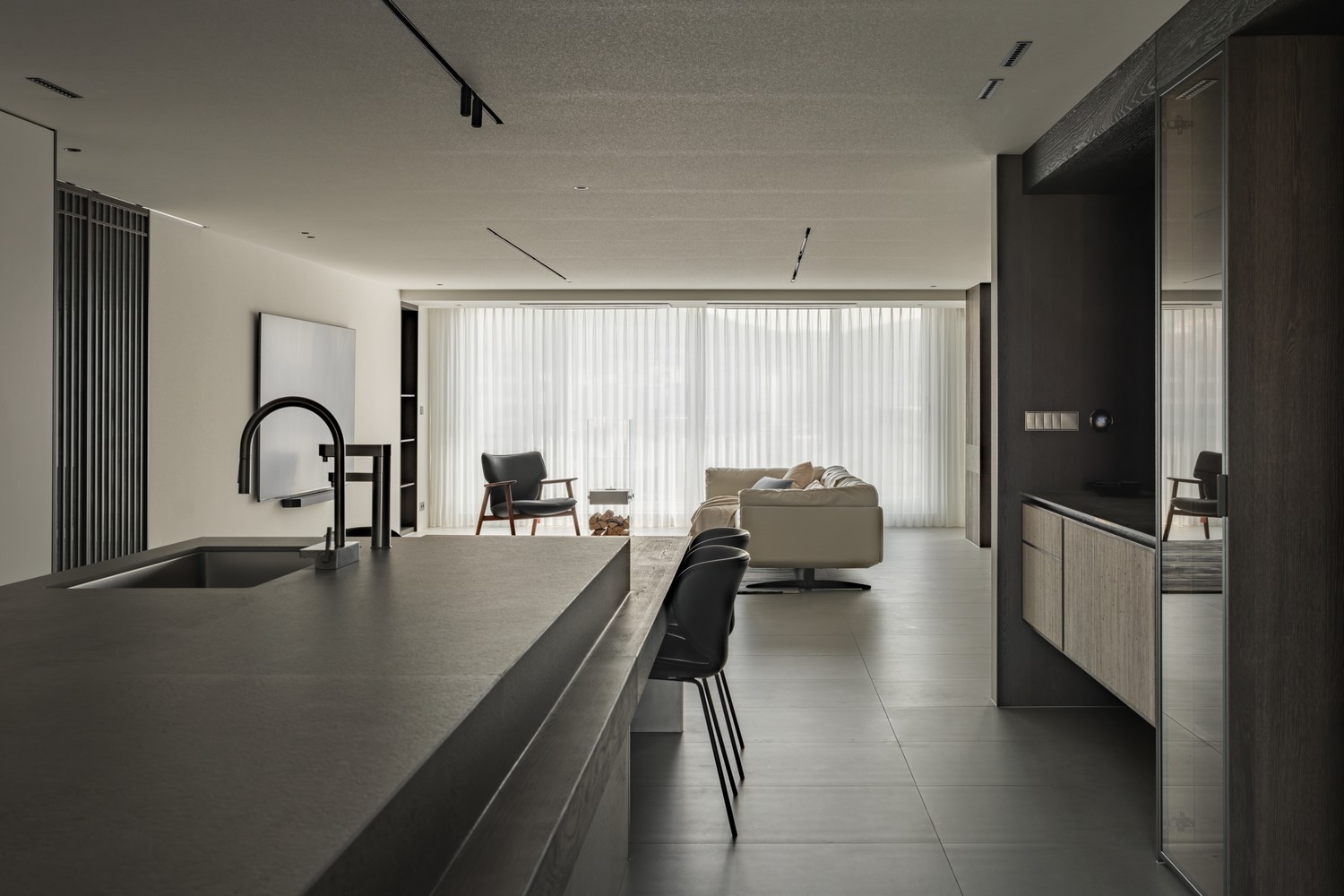
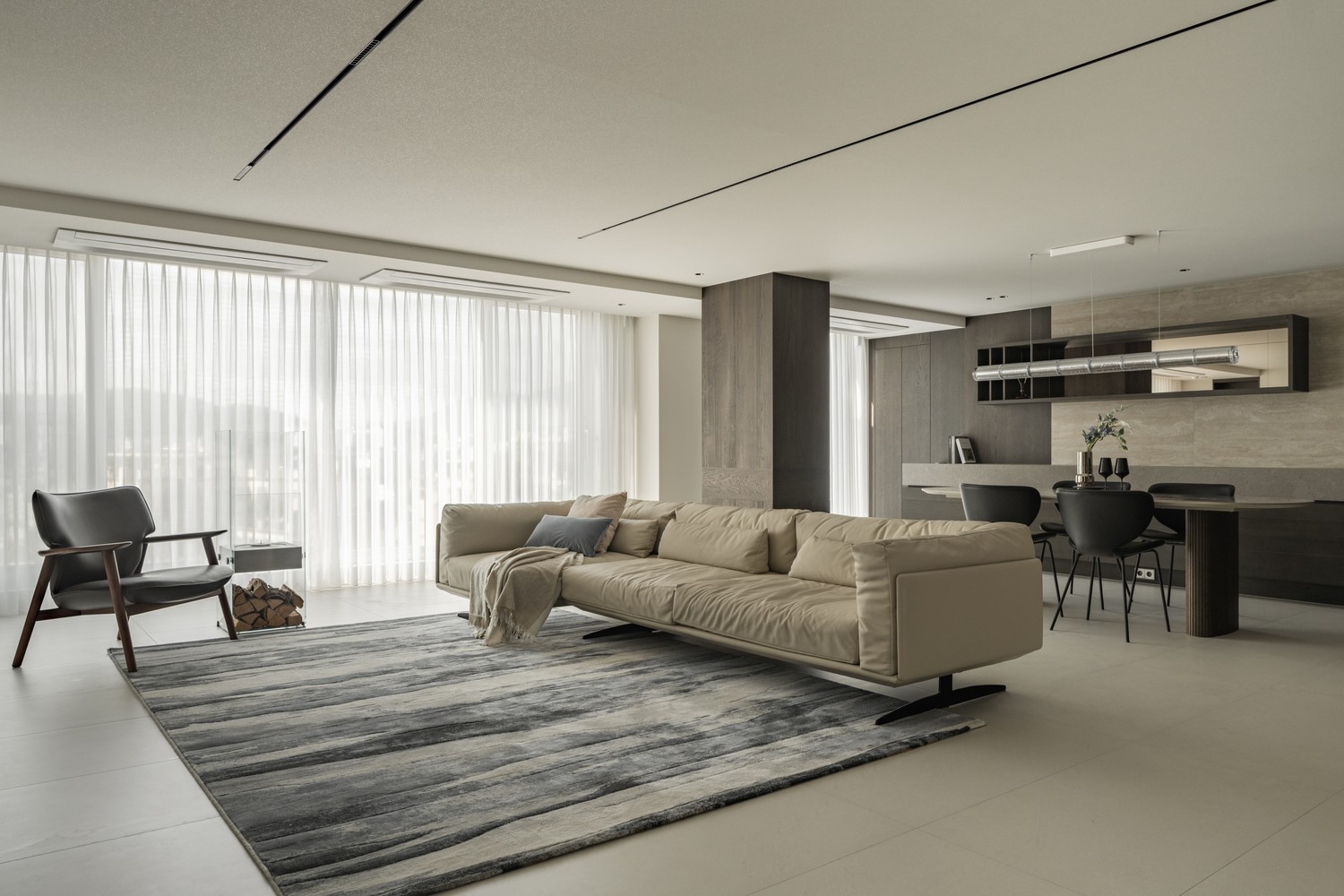
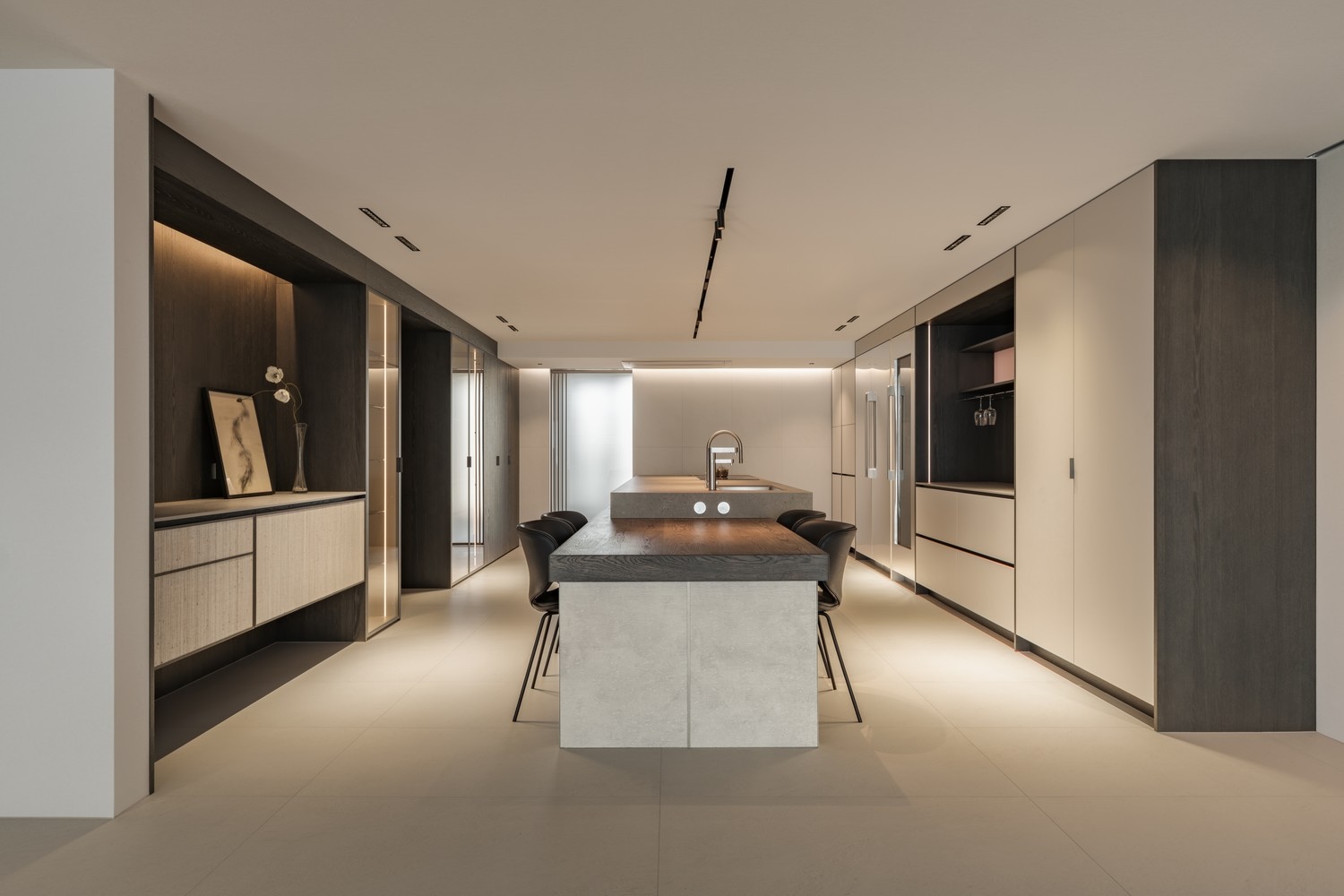
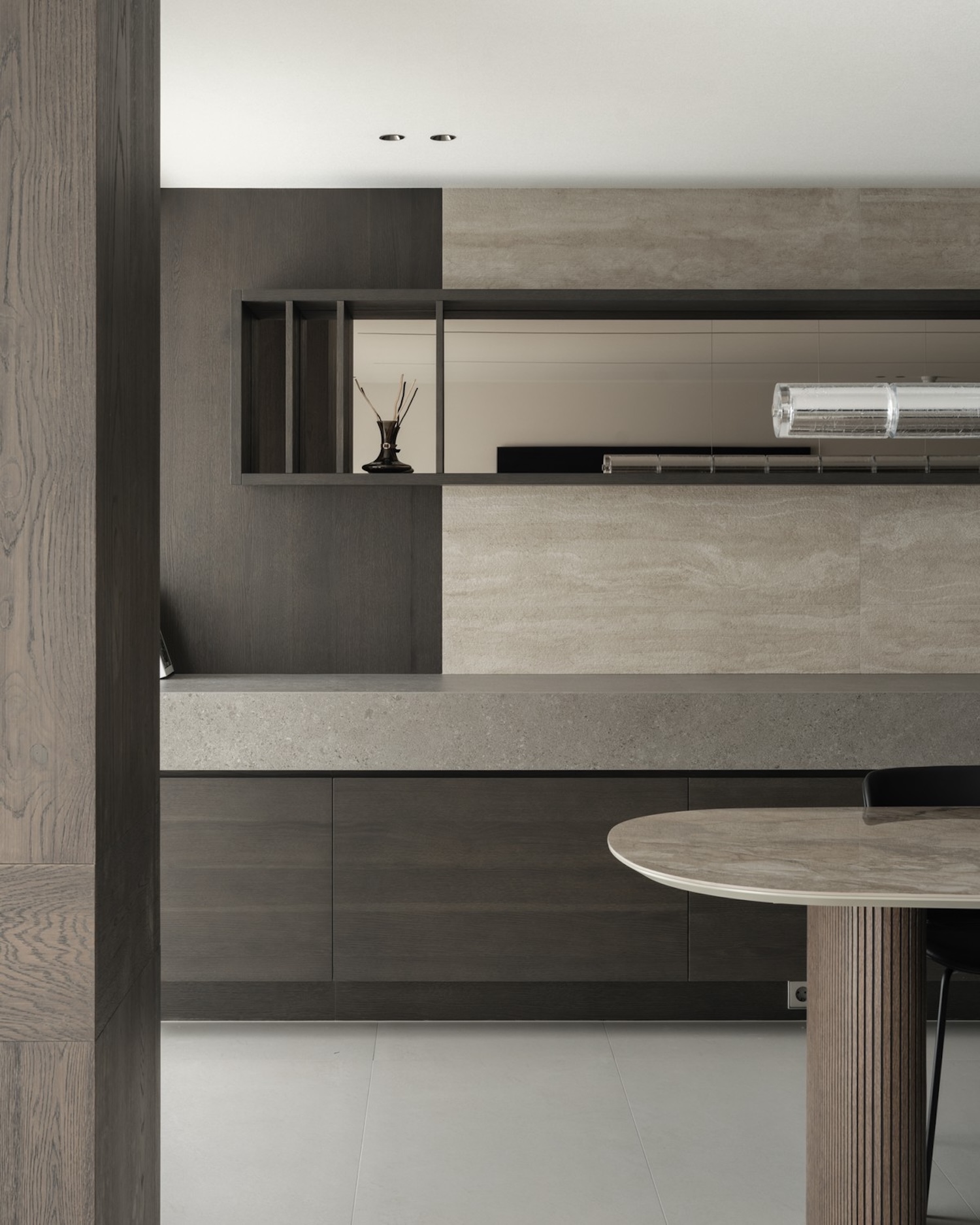
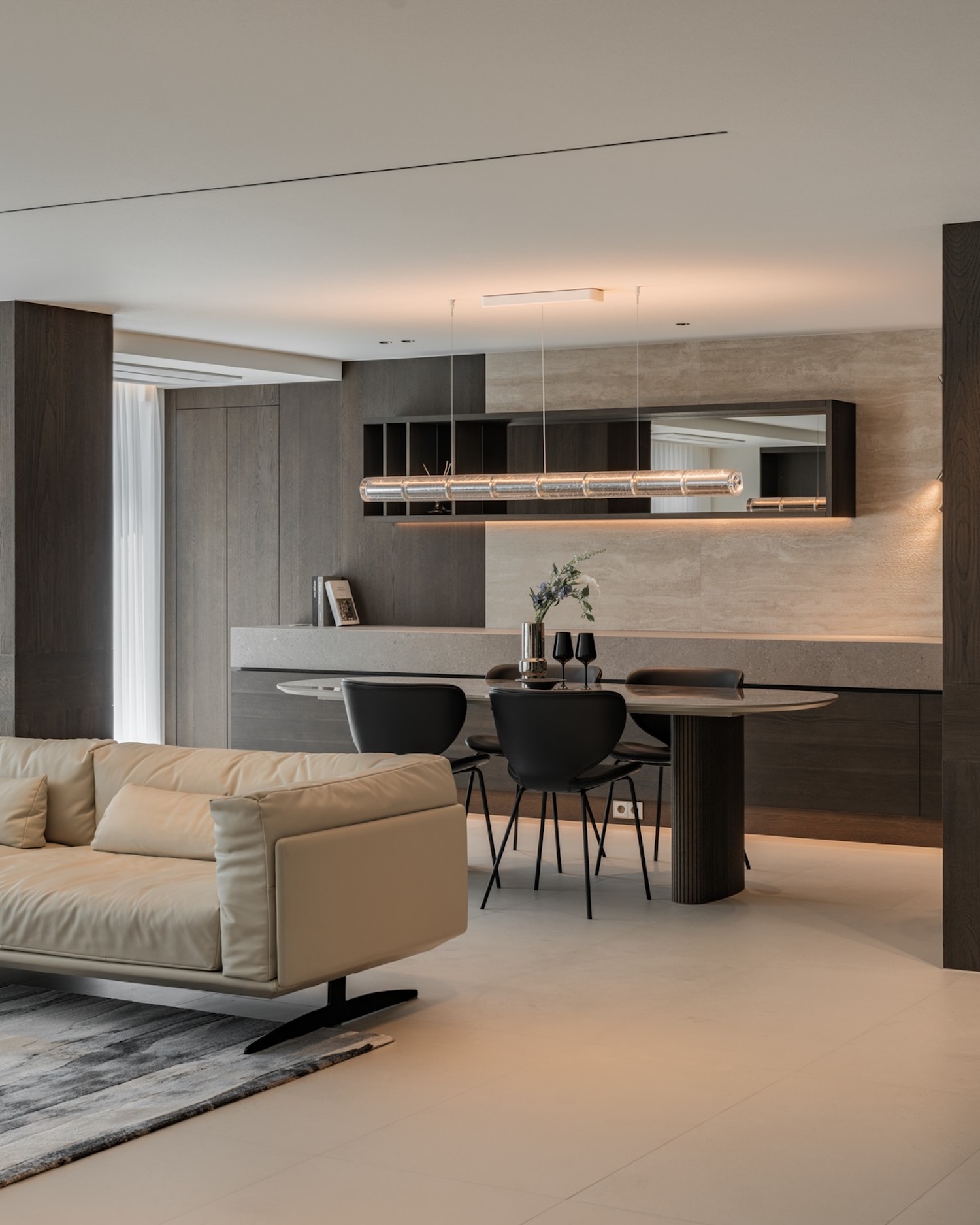
The open plan follows horizontal and vertical axes taken from the Hansik-maru, the traditional wooden floor of Changdeokgung’s main hall, where short boards are fitted between long timber beams in a grid. The living area, dining space, and central kitchen sit on these axes as one continuous field, and the couple can see each other from nearly any point in it. The columns are clad in dark timber following the same pattern, with a band of crosswise boards breaking the vertical grain, and their mass gives the open room fixed points to organize around. A floating home bar behind the dining table runs along the horizontal axis, mounted clear of the floor.
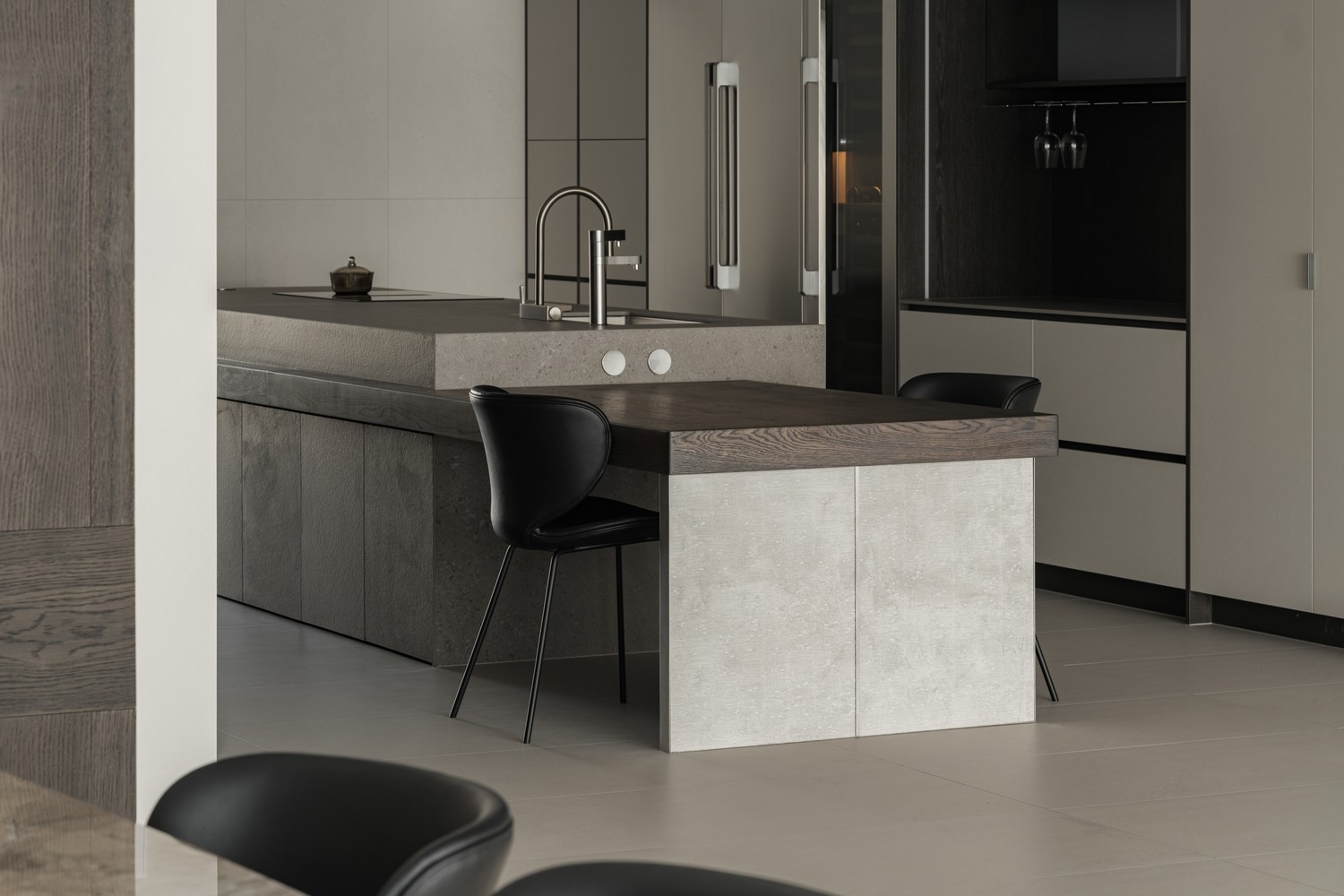
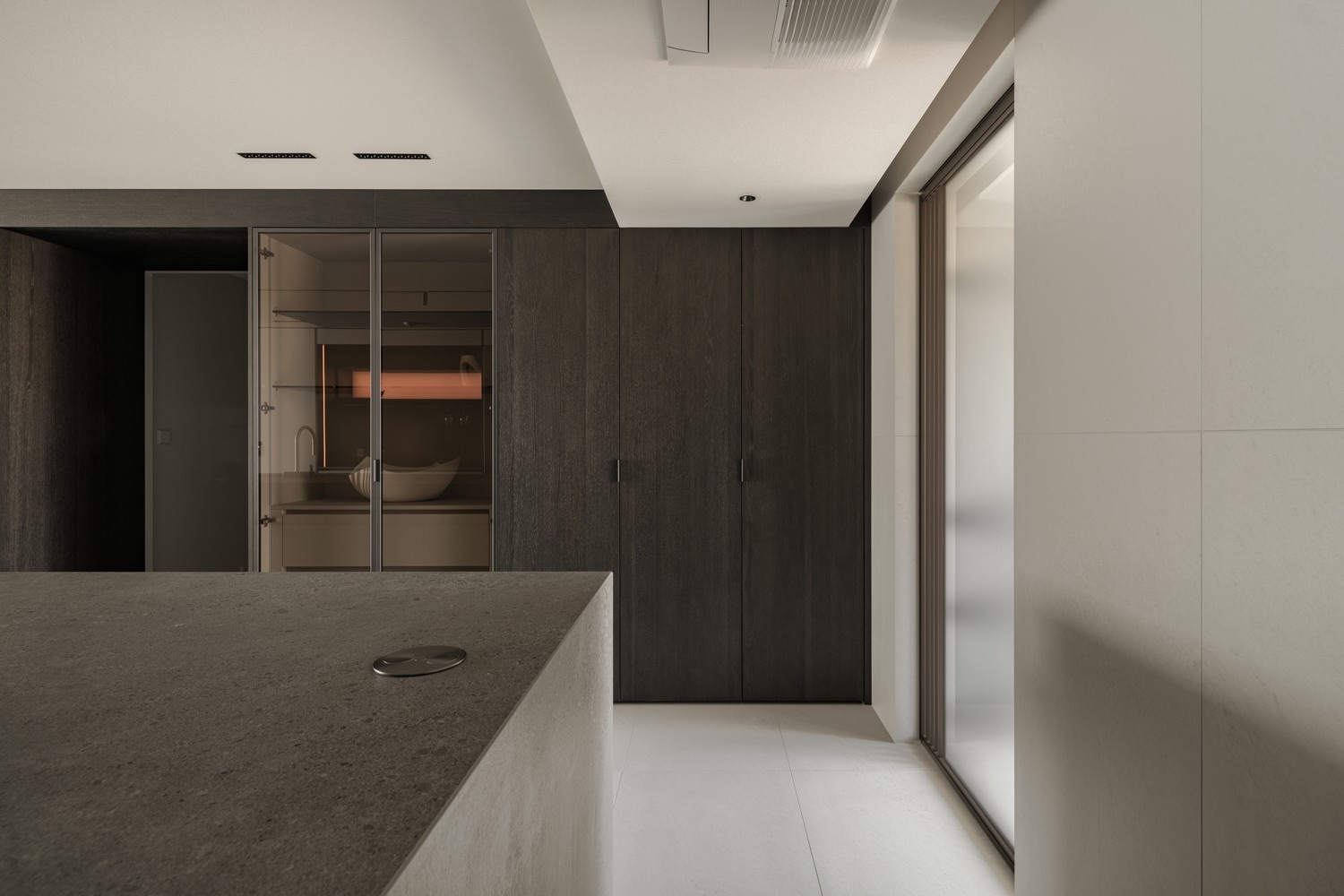
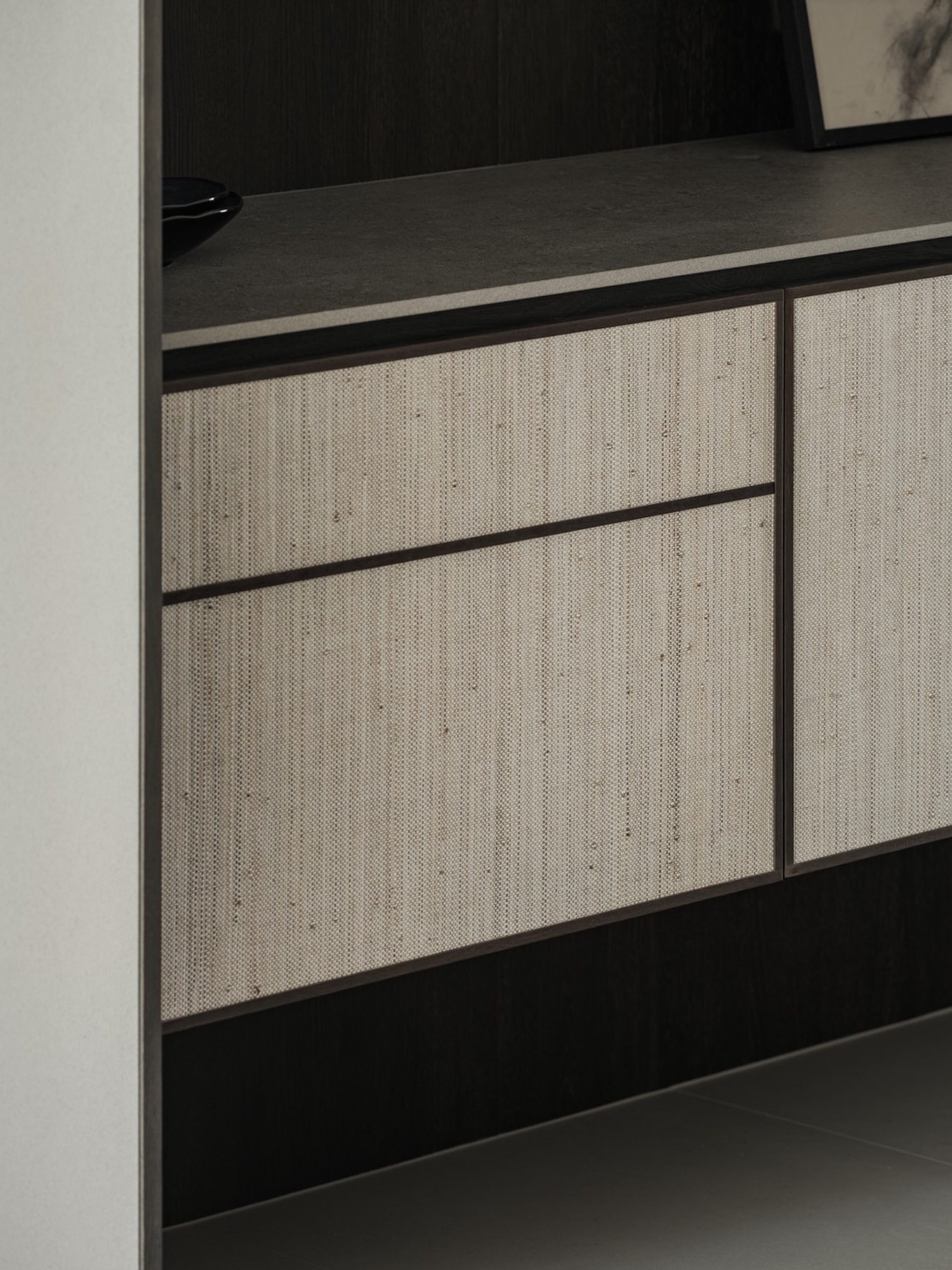
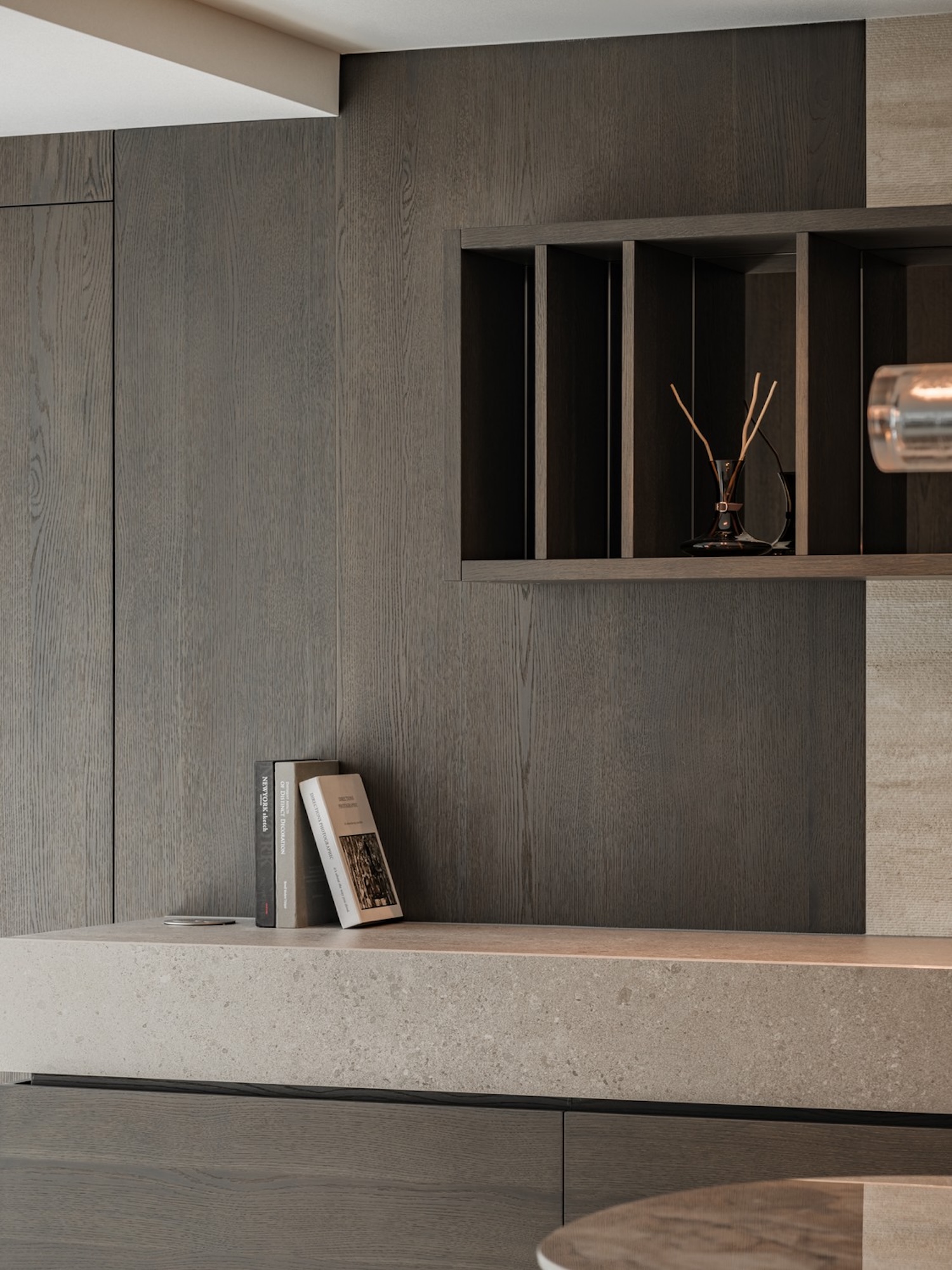
The dining table sits on a base of pale ceramic panels whose layered surface is modeled on Giwa, the traditional clay roof tile, under a top of dark wood. The same pairing of ceramic and natural wood continues through the kitchen island and cabinetry. The combination refers to Changdeokgung’s Baekgol-jip, timber buildings left without painted Dancheong decoration so the grain of the wood stays exposed, and the finishes throughout the public zone keep their grain and texture visible.
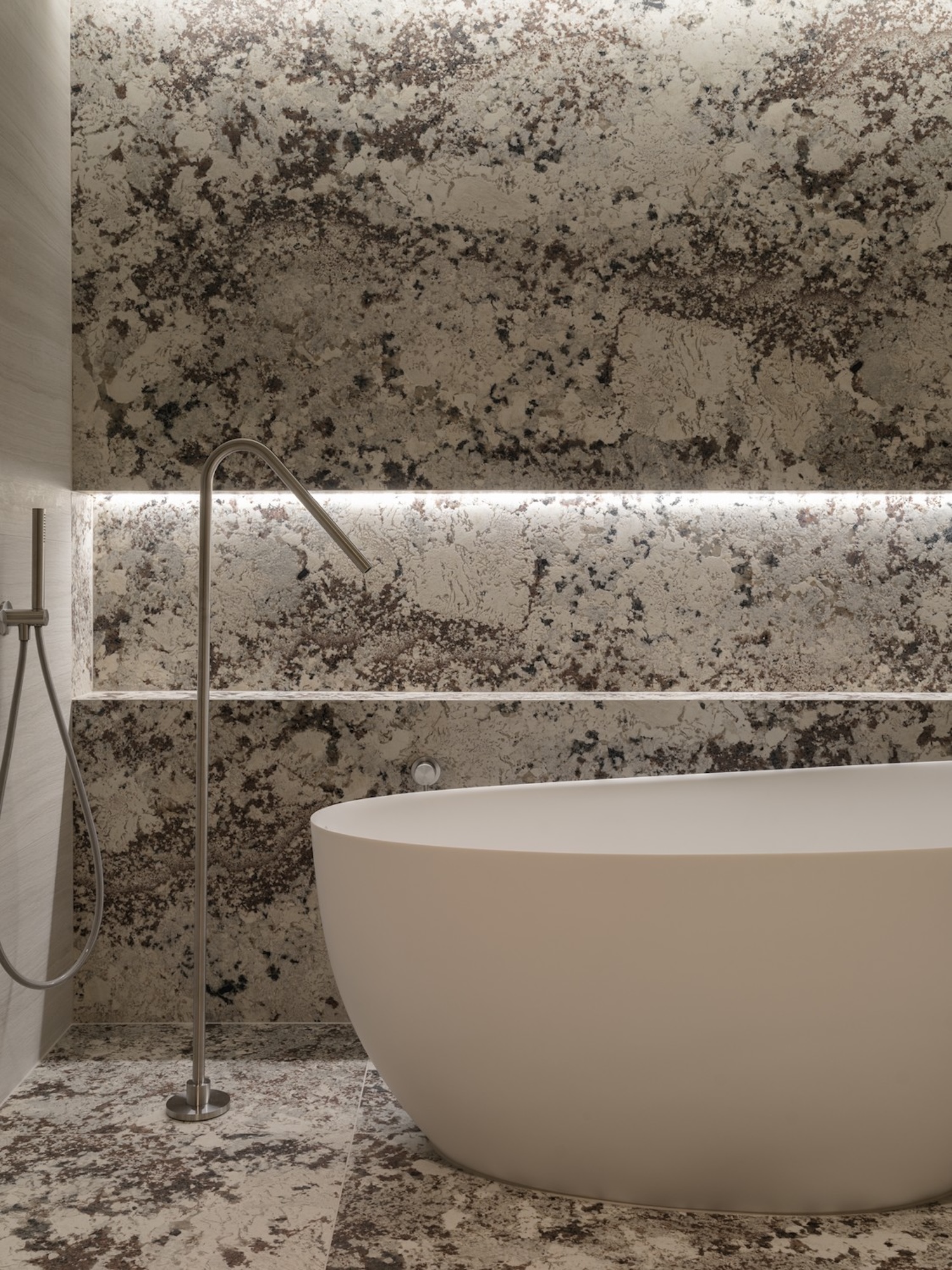
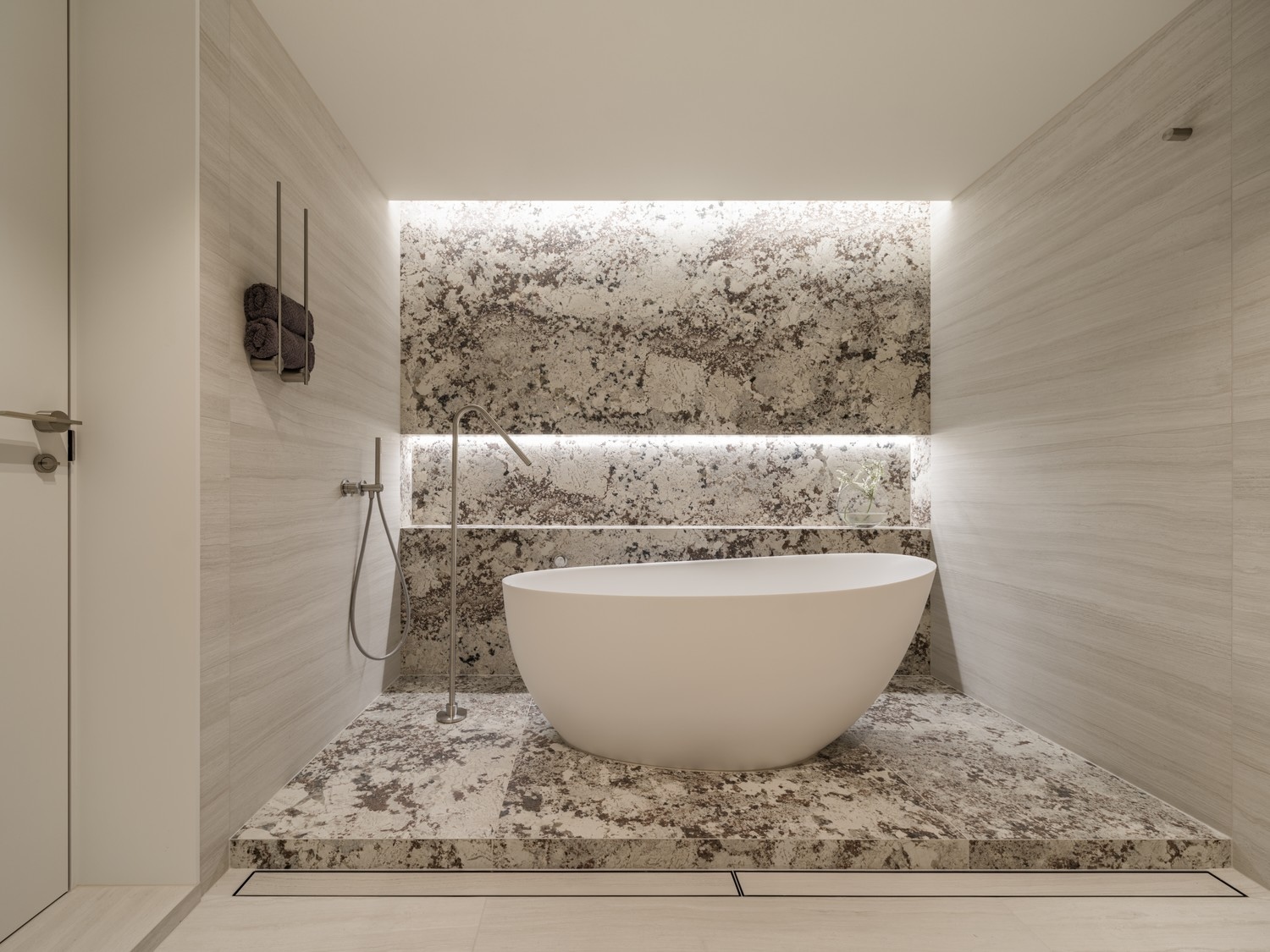
A wooden slat door separates the communal area from the primary bedroom suite. The studio based the threshold on chagyeong, or borrowed scenery, the practice of framing an outside landscape through an opening so it becomes part of the room. Past the door, the gray tile and dark timber of the public zone give way to oak floors, oak paneling, and slatted oak screens, a warmer palette chosen for the wife’s preferences. In the bathroom, a freestanding tub sits on a raised plinth of speckled stone that continues up the back wall, with a recessed, lit shelf cut into it.