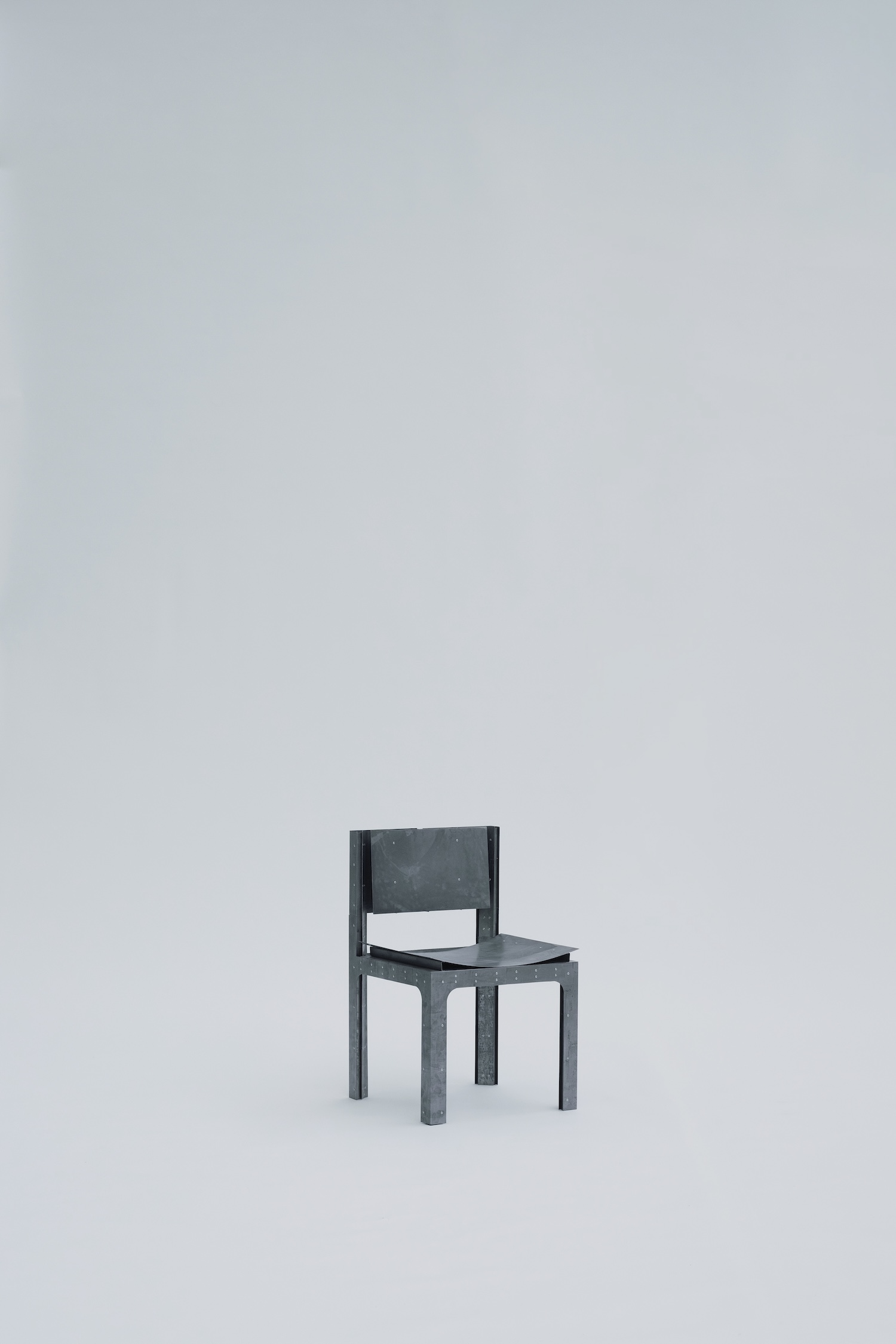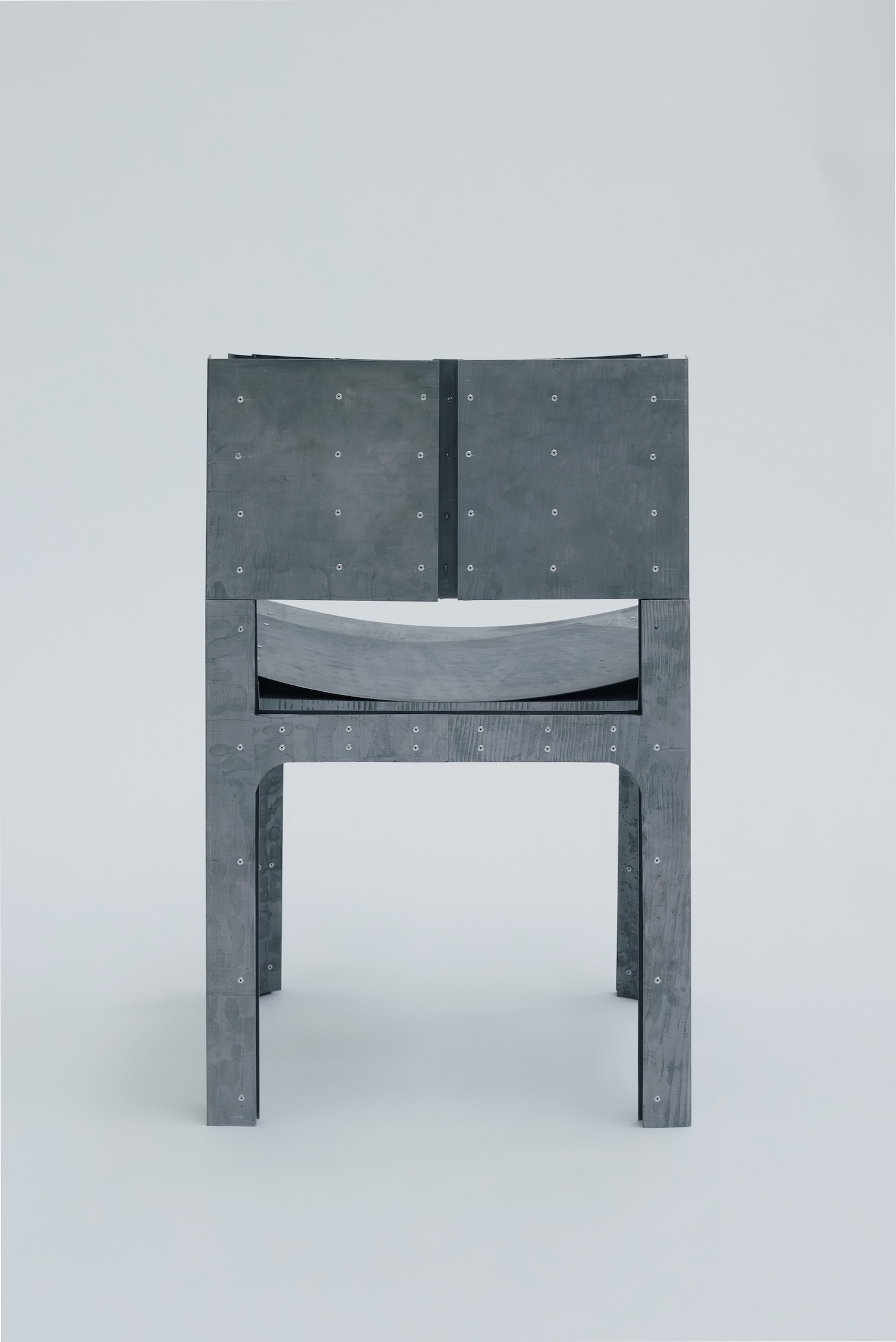
An acid bath does not stop precisely at the edge of an impression. Left in the solution long enough, it keeps working past the outline, blurring detail and eating into the metal until parts of the original pattern disappear. That imprecision is the working method behind Trauer Tragen, Carrying Grief, a steel chair by Antonia Fischer, a Munich-born designer based in London, United Kingdom.
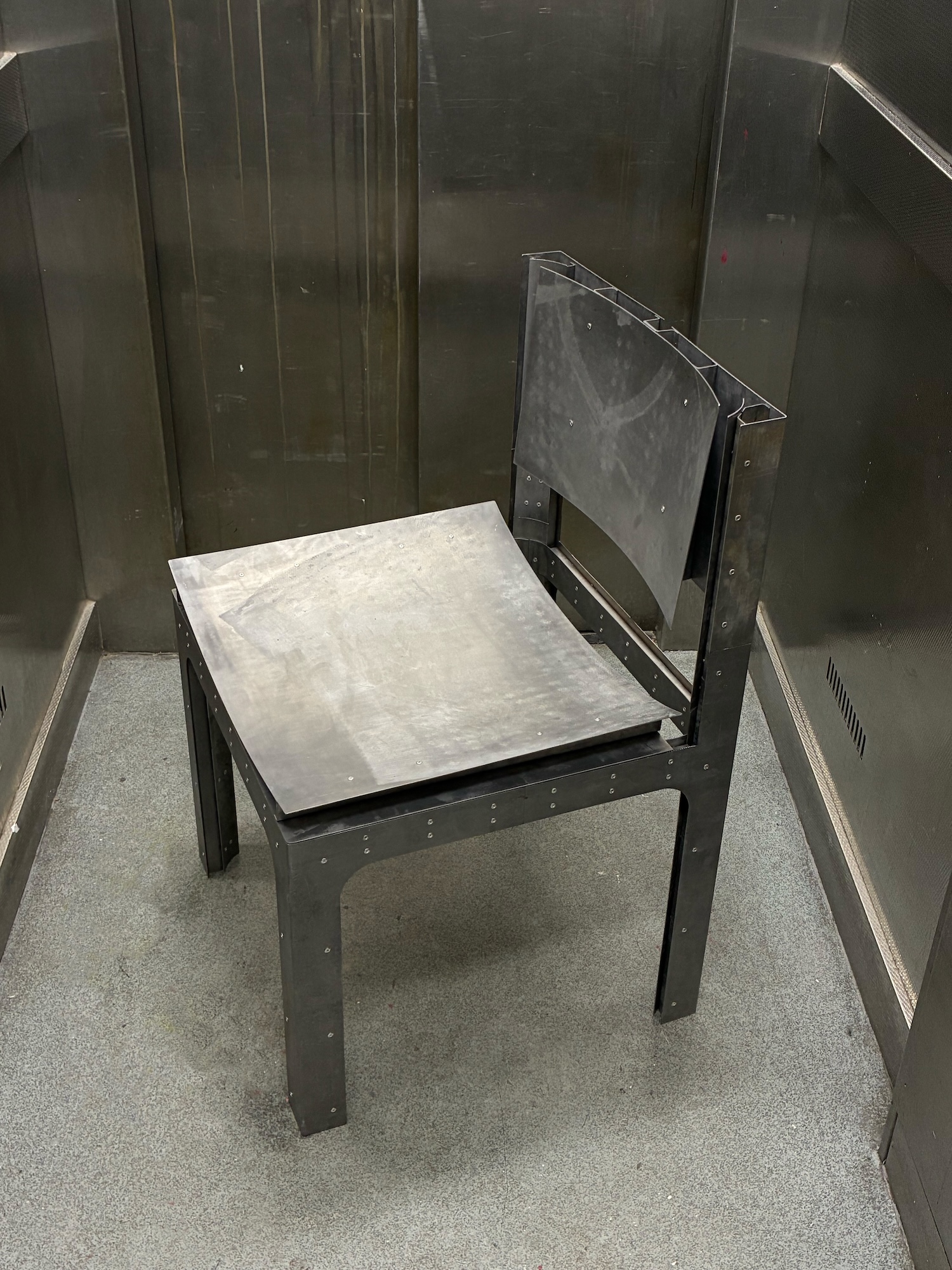
The project began after her grandfather’s death and the shift that followed in her grandparents’ home, where worn fabrics and surfaces held the visible record of decades of use. Fischer took silicone castings of those surfaces, capturing wear a camera would flatten into texture, then transferred the impressions onto steel plates through acid etching. The chemical process renders faint, ghost-like traces of the original surface while eating away at the plate around them, so the same step that records a detail also starts to erase it.
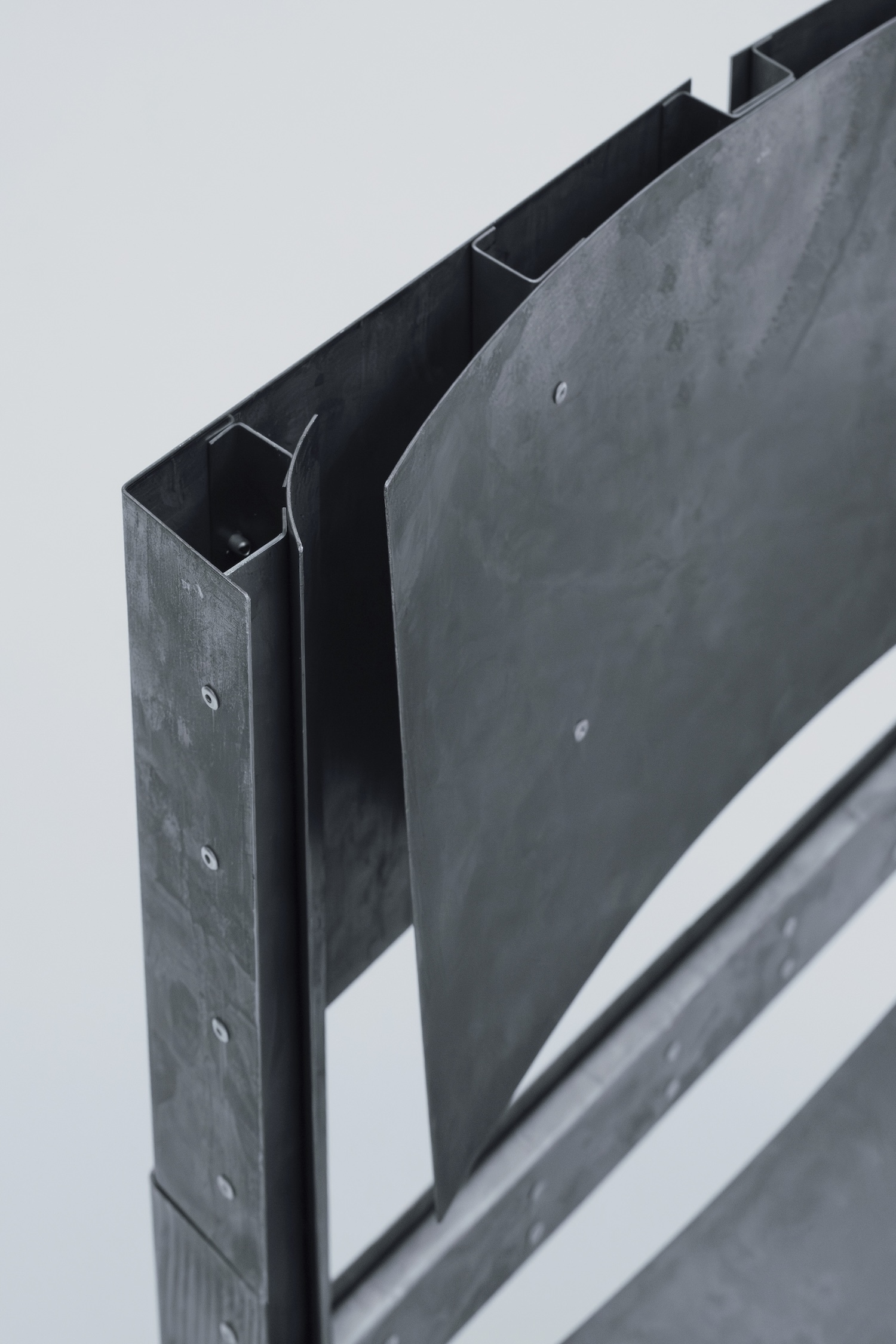
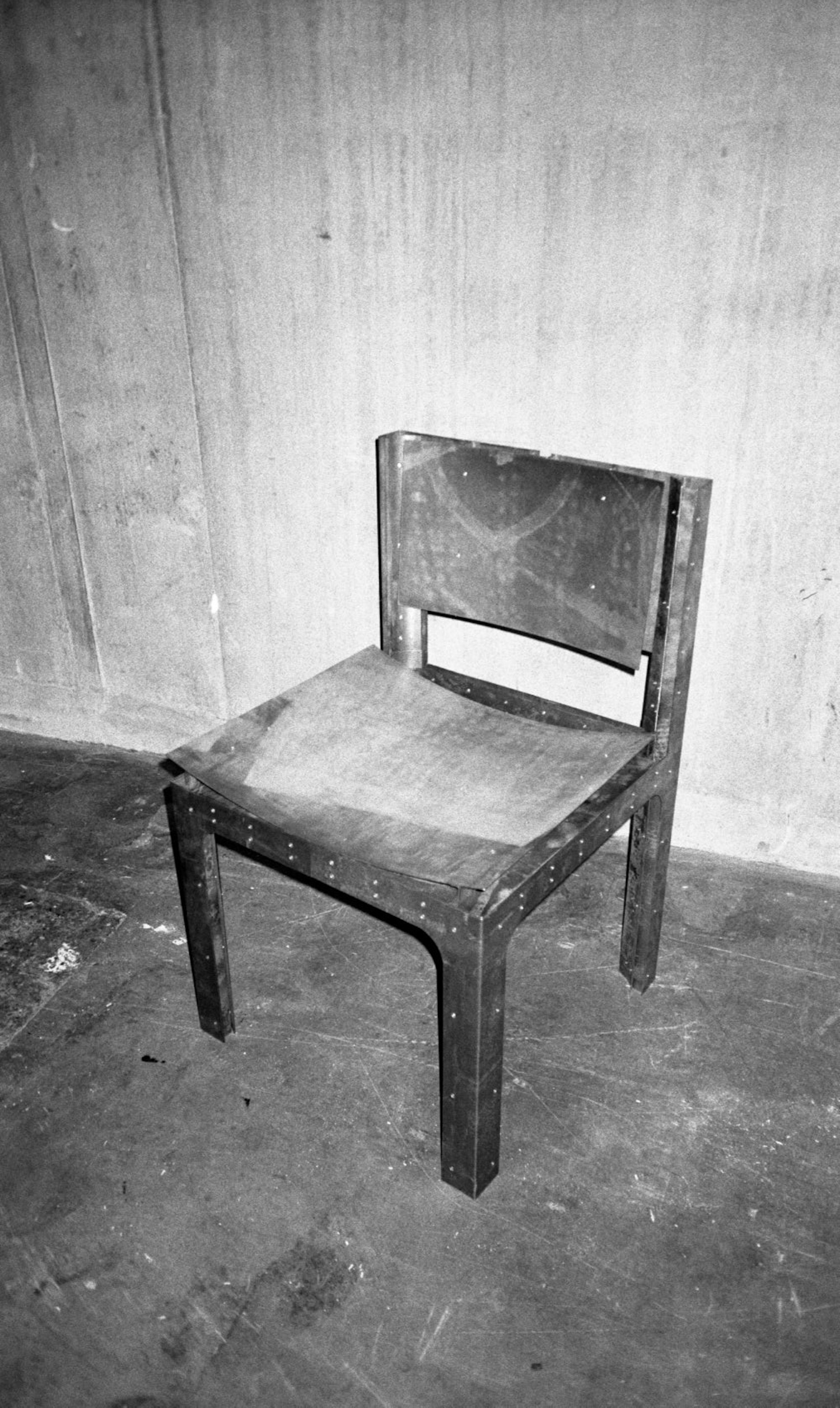
The etched plates were bent and riveted into the form of a chair, 31 by 20 by 20 inches. The rivets stay visible along every seam, keeping the fastening exposed instead of buried inside a welded or bonded joint. The result reads as an assembly of separate plates rather than a single continuous shell.
The title plays on a double meaning in German. Trauer tragen means both to grieve and to wear mourning, treating grief as something worn on the body rather than only felt internally. Fischer’s process follows that logic directly, working traces of one household into an object built to be sat in and moved around a room.
Some plates still carry a legible ghost of the original weave or worn nap. Others show only the smooth steel left behind once the acid ran longer than the pattern could survive, evidence built into the object of a project working from the idea that memories cannot be recreated, only transformed and gradually lost.