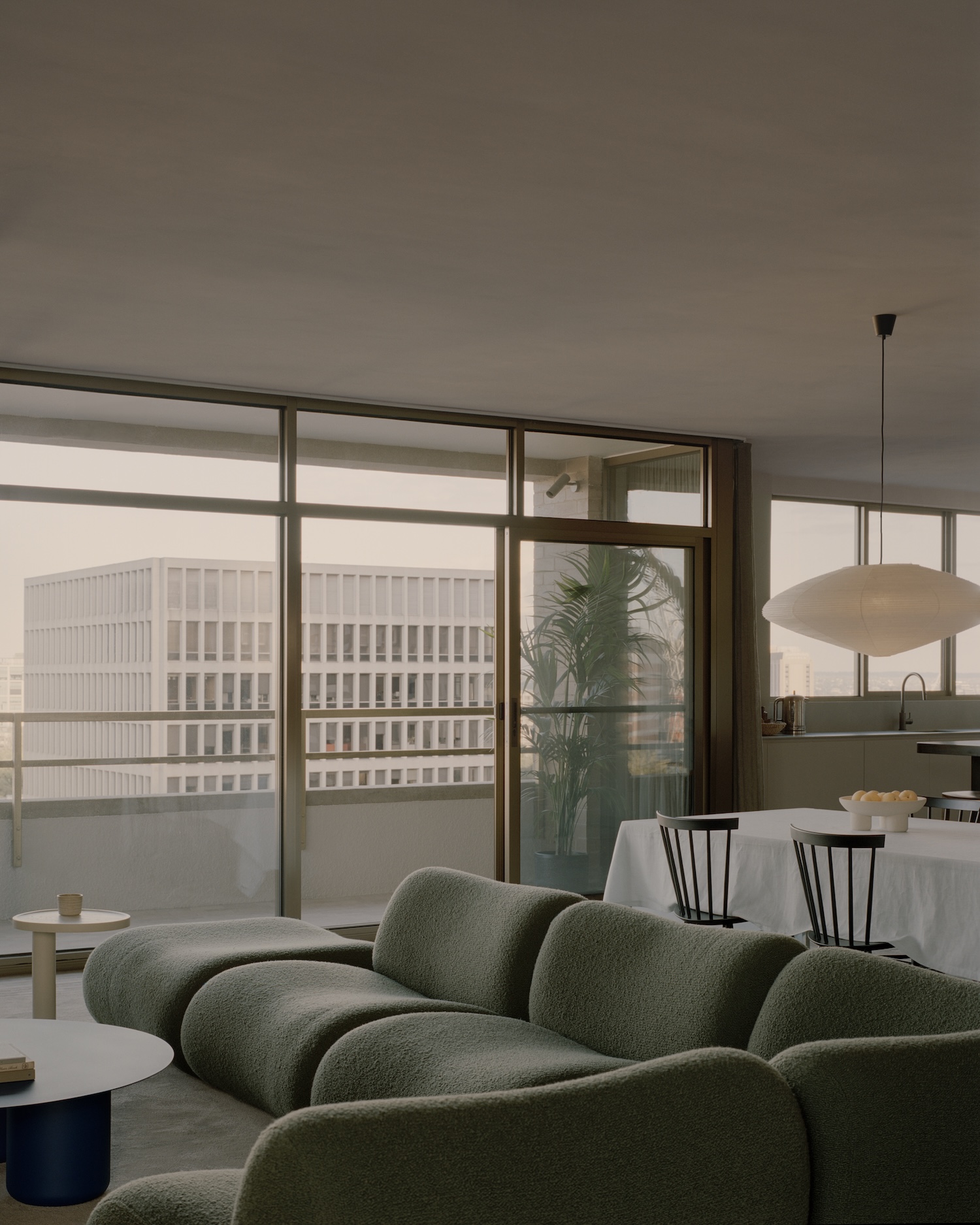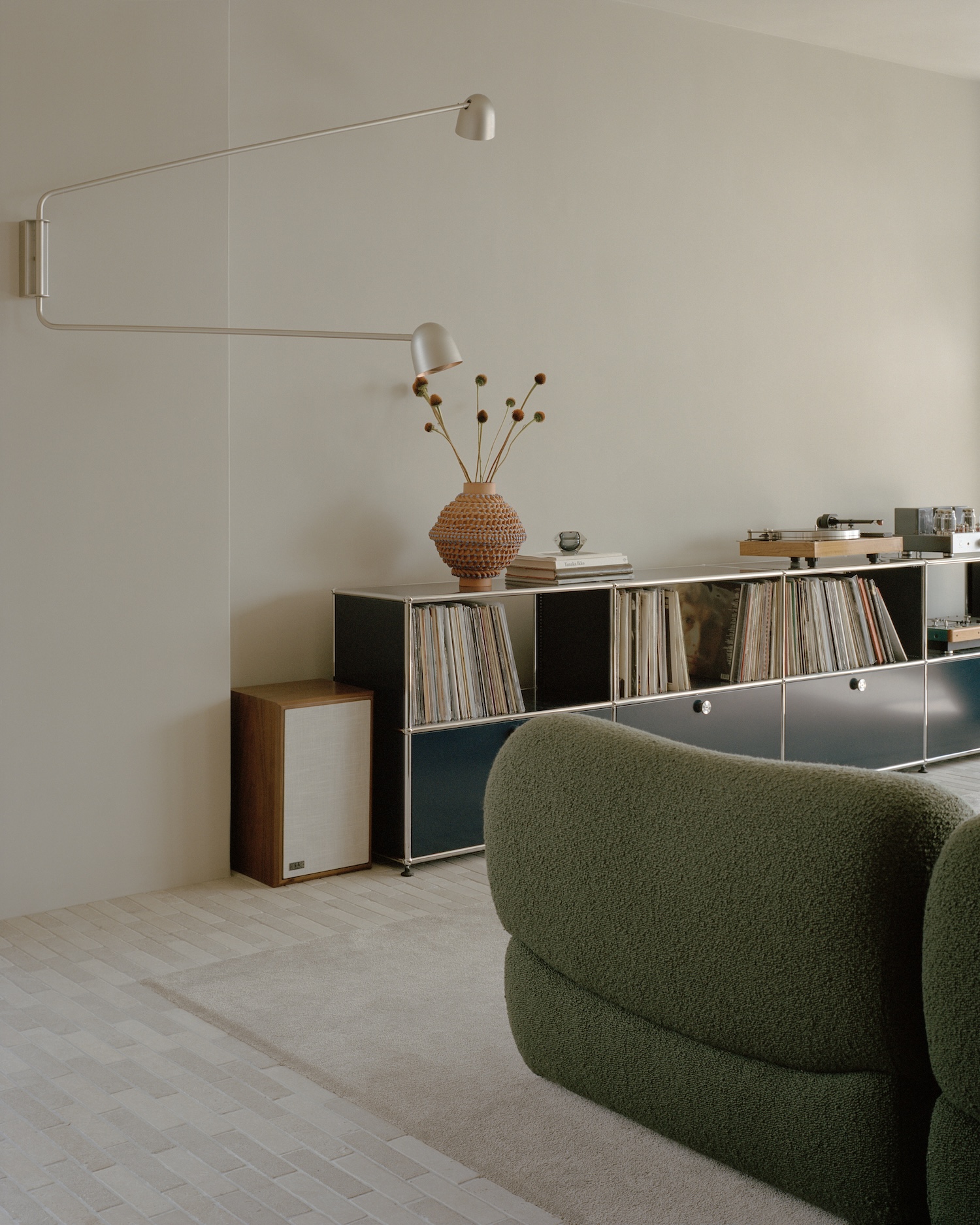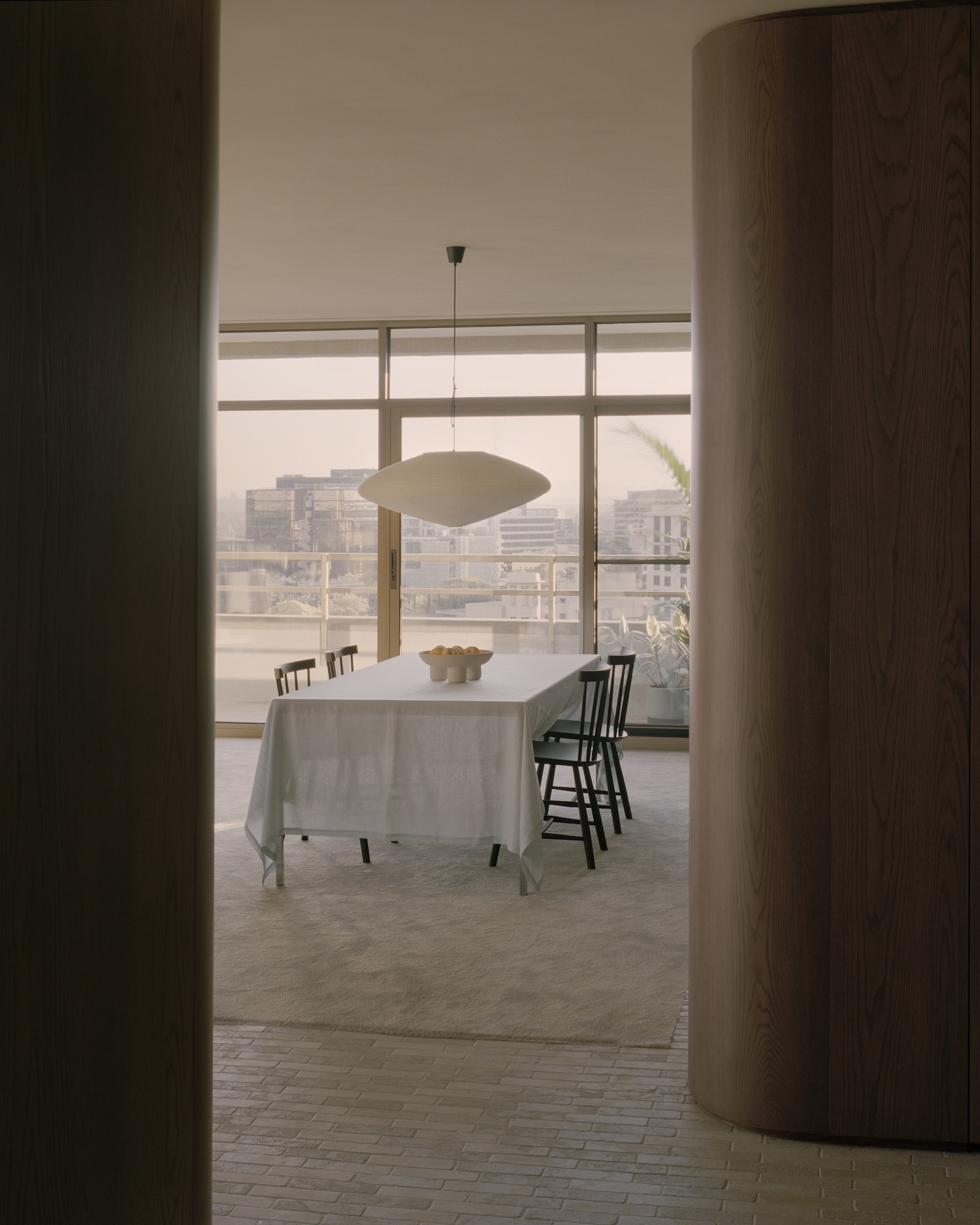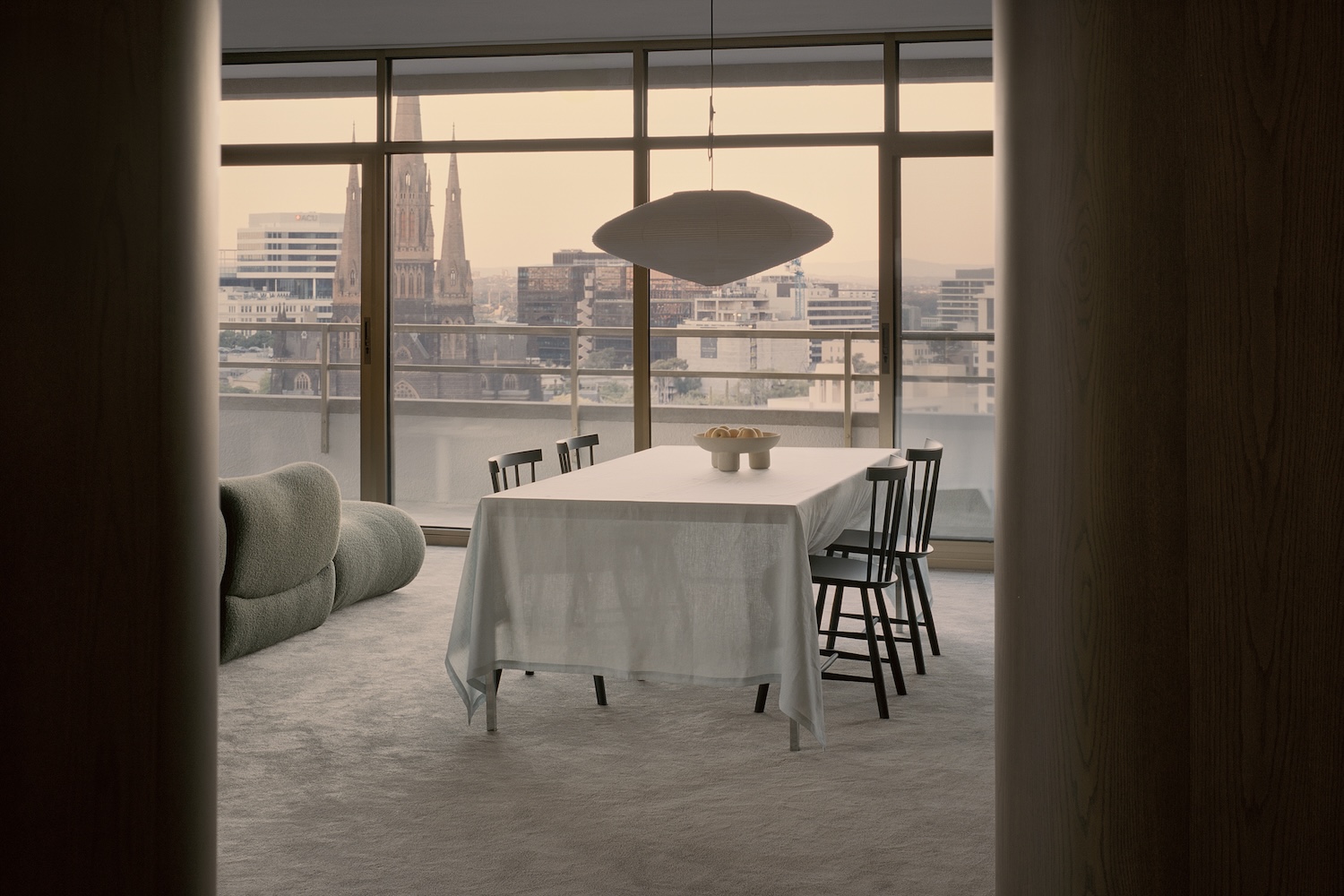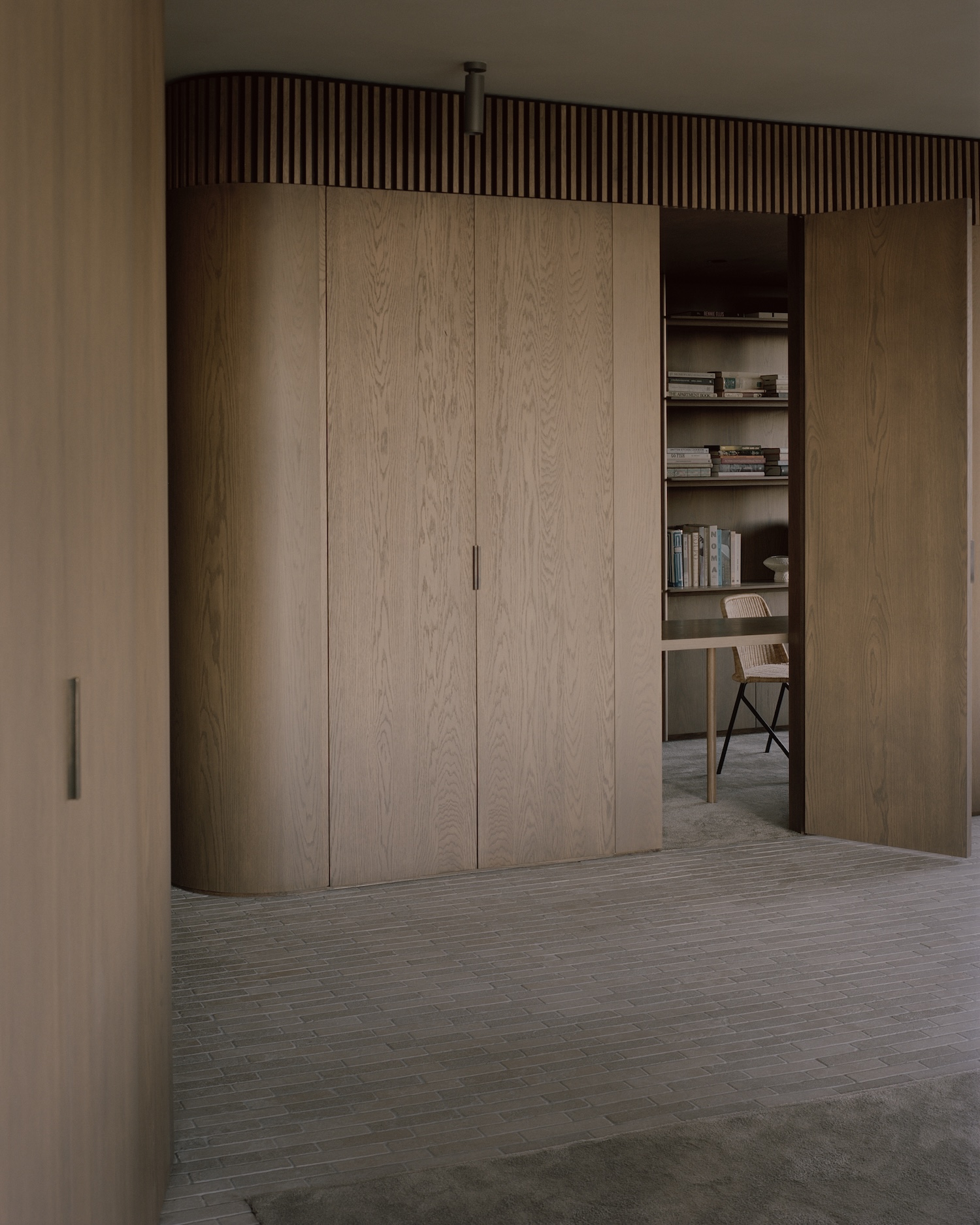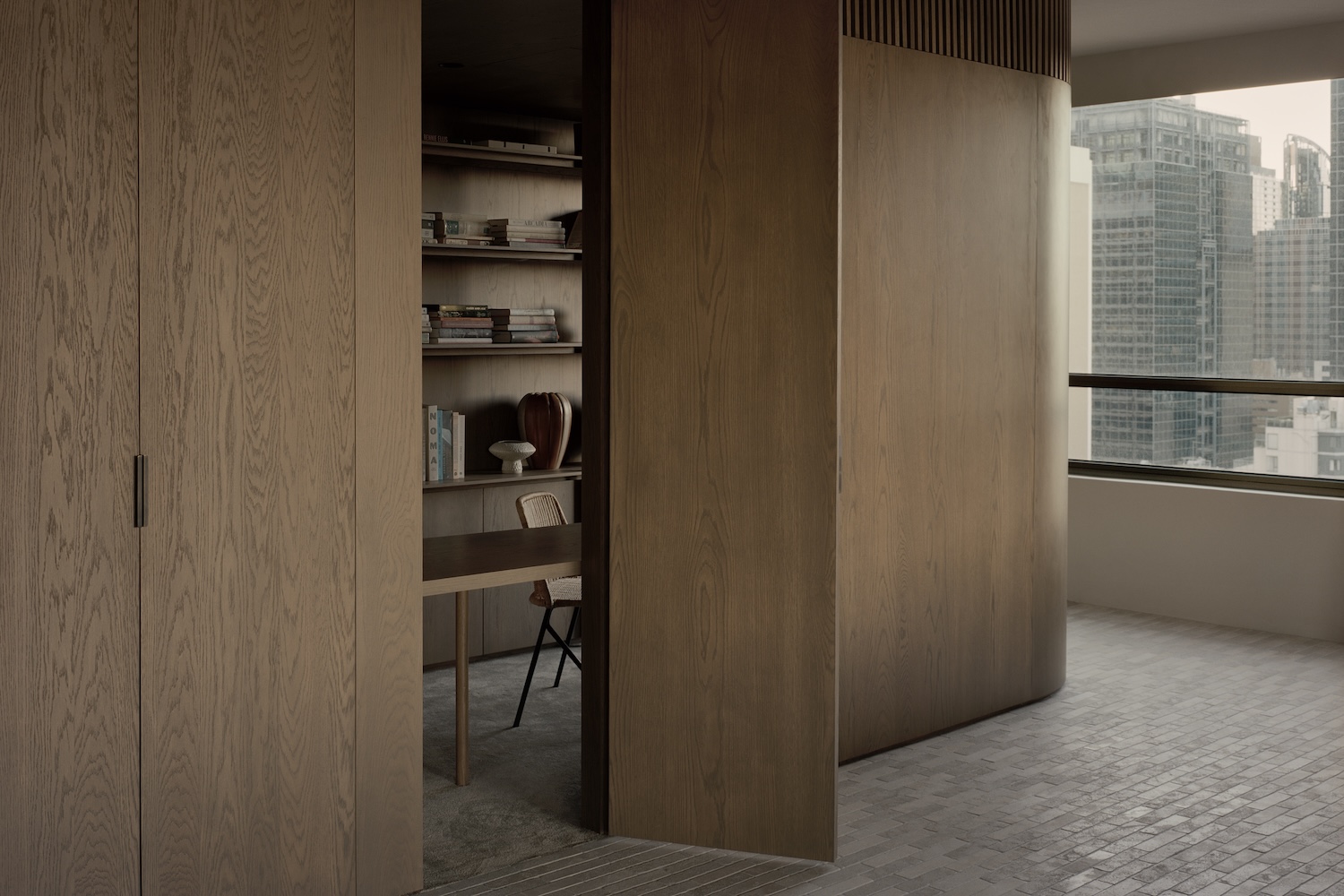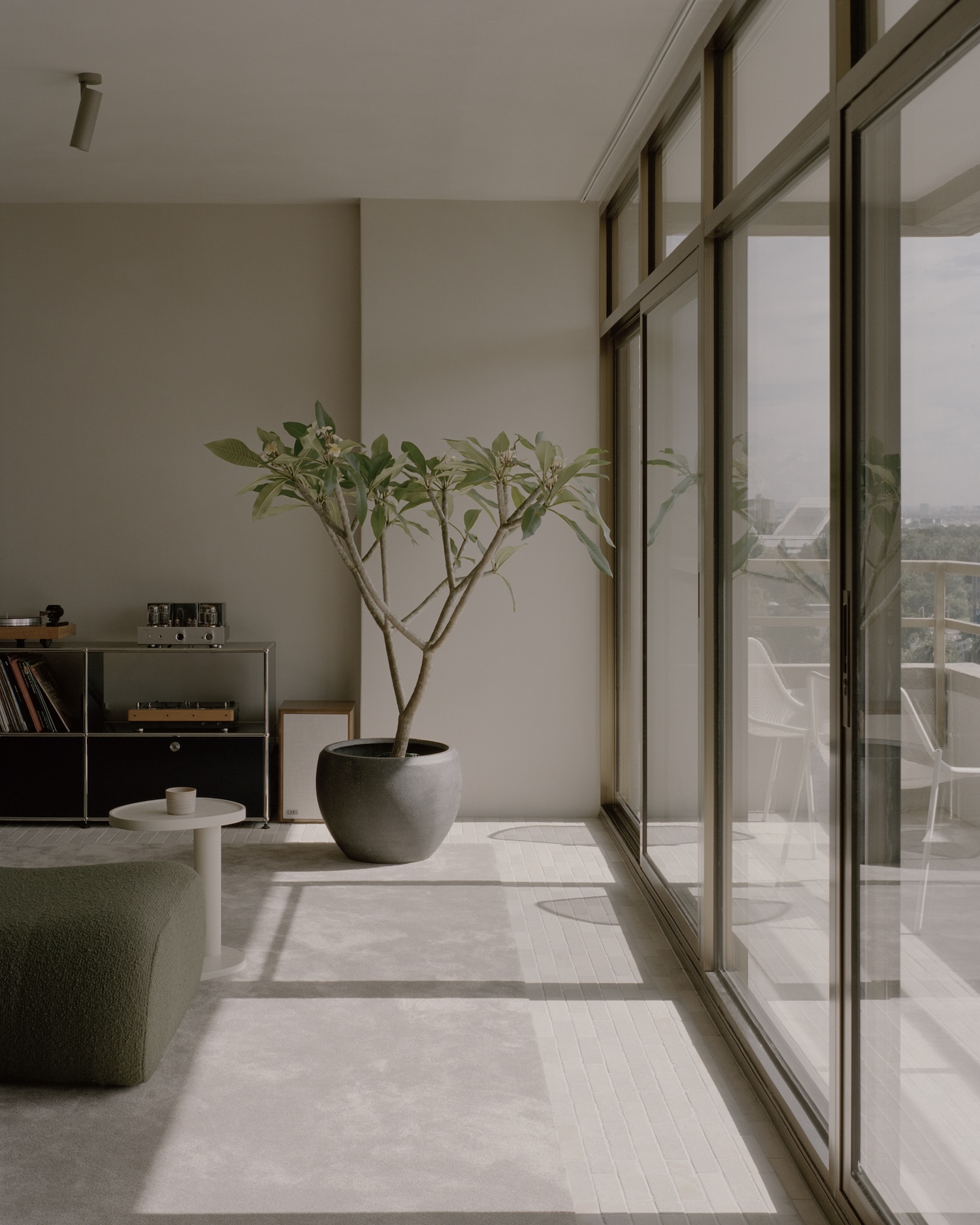
99 Spring Street is a minimalist apartment located in Melbourne, Australia, designed by Lovell Burton. This fourteenth-floor residence in a landmark 1970s building adjacent Parliament House and St. Patrick’s Cathedral demonstrates how existing modernist housing stock can be adapted for contemporary living through spatial reorganization and material interventions that heighten rather than replace original atmospheric qualities. The project addresses client desires for entertaining flexibility while maintaining intimate domestic sensibility within the apartment’s 180-degree outlook spanning eastern suburbs to CBD.
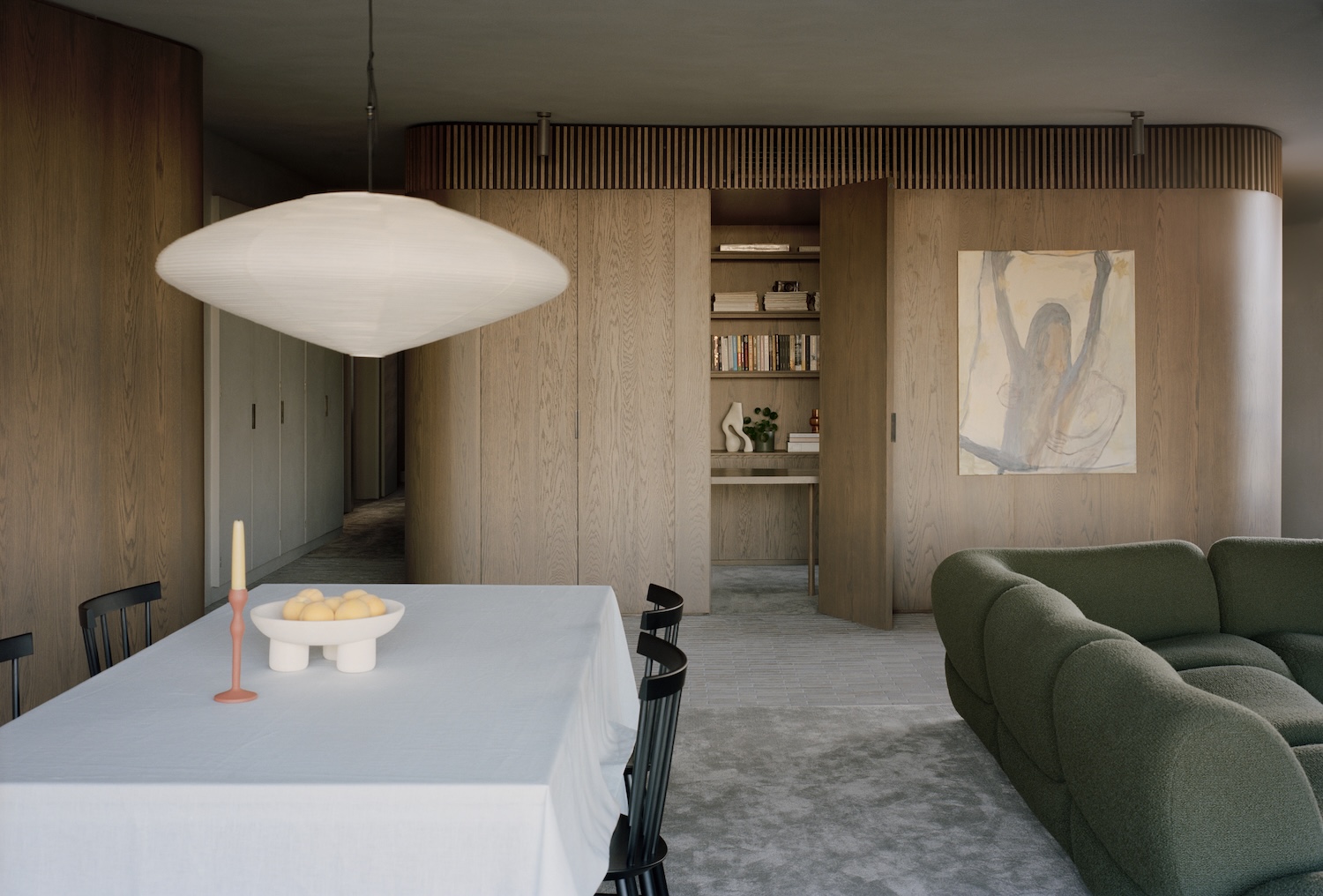
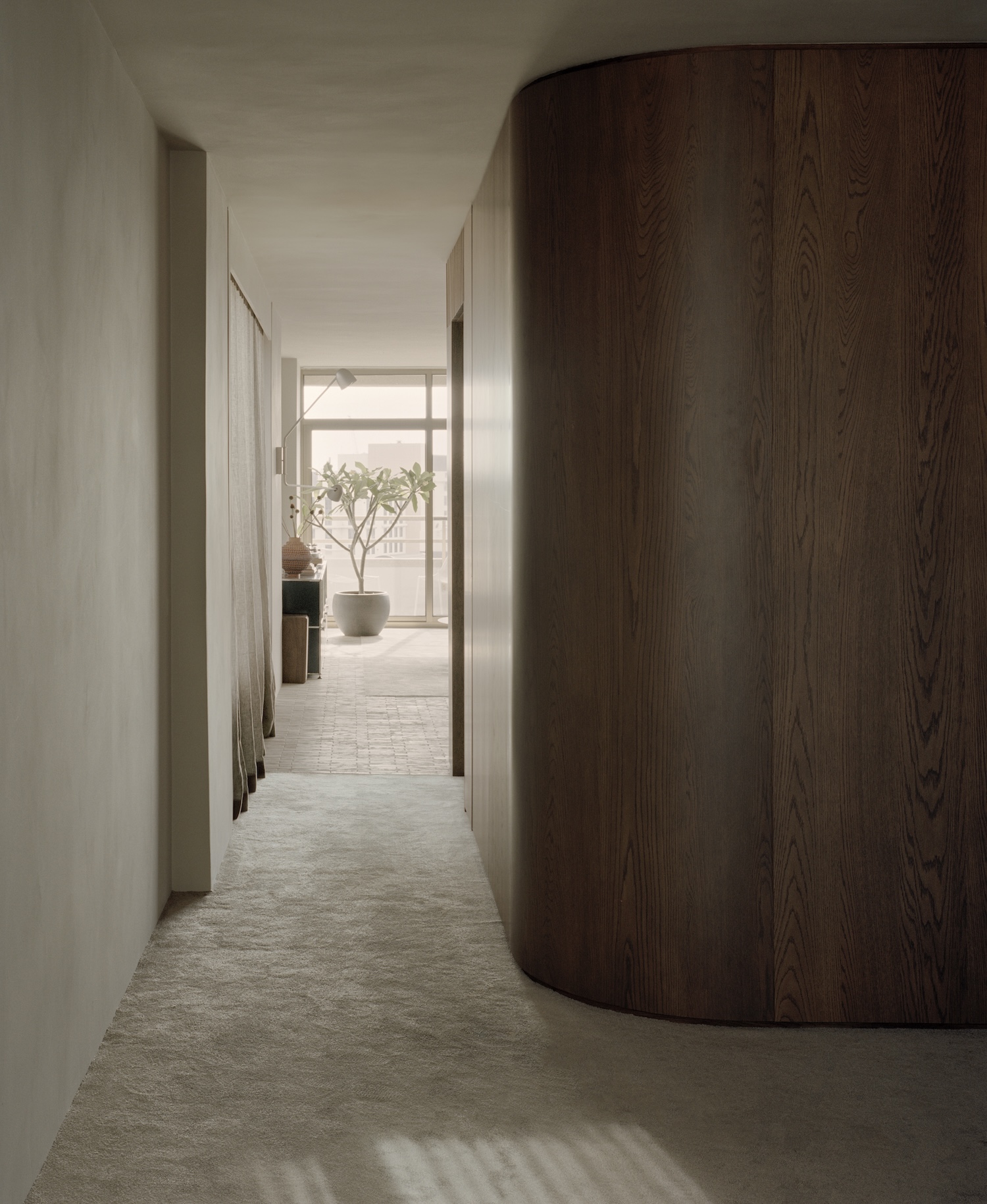
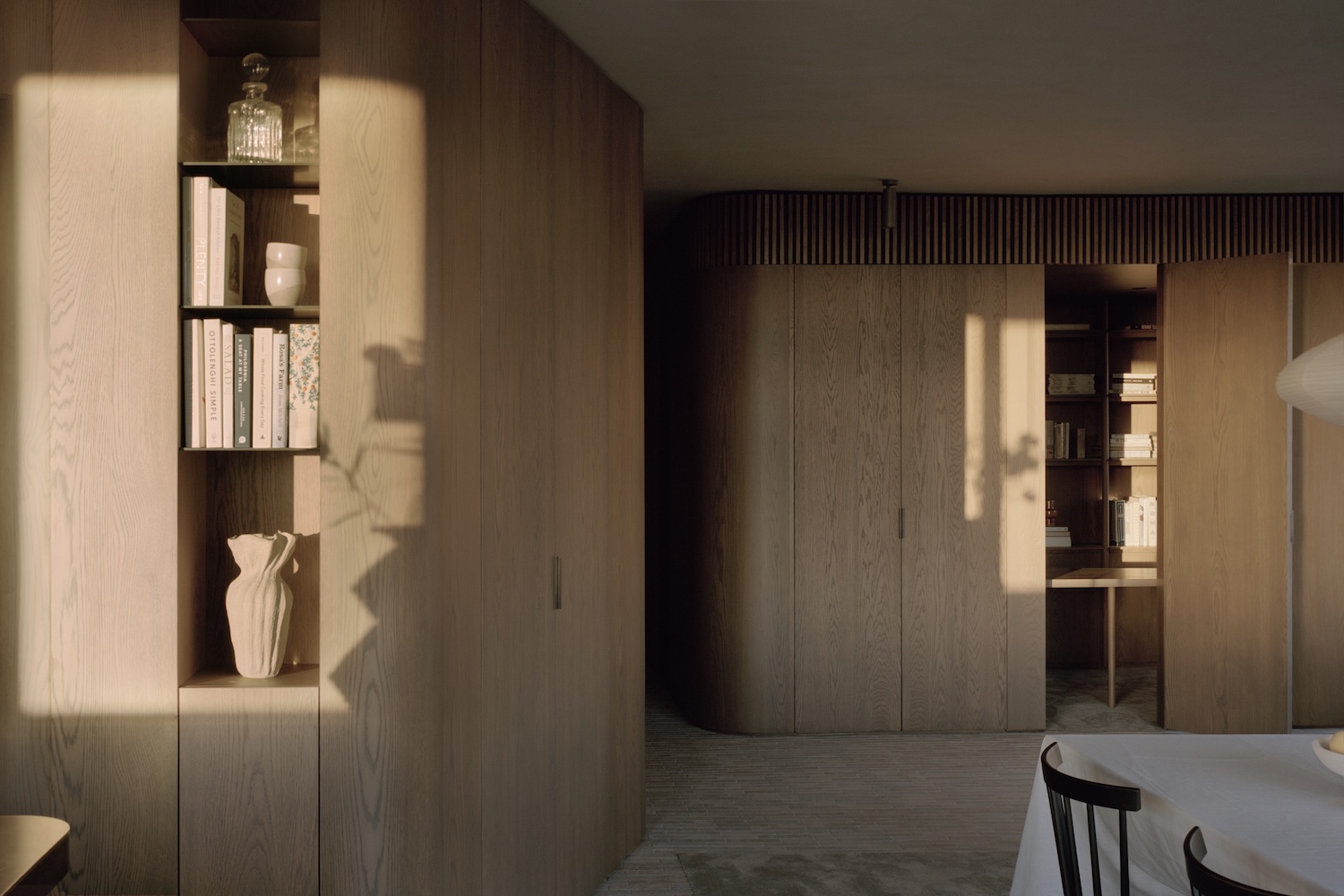
The original floor plate’s dividing walls segmented living spaces and obstructed panoramic city experience. Lovell Burton’s alterations introduce dark timber anchors that edit and curate skyline views while concealing private dwelling functions. This chiaroscuro concept employs light contrast to balance spectacular outlook with spatial definition, demonstrating how selective opacity can enhance rather than compete with exterior views.
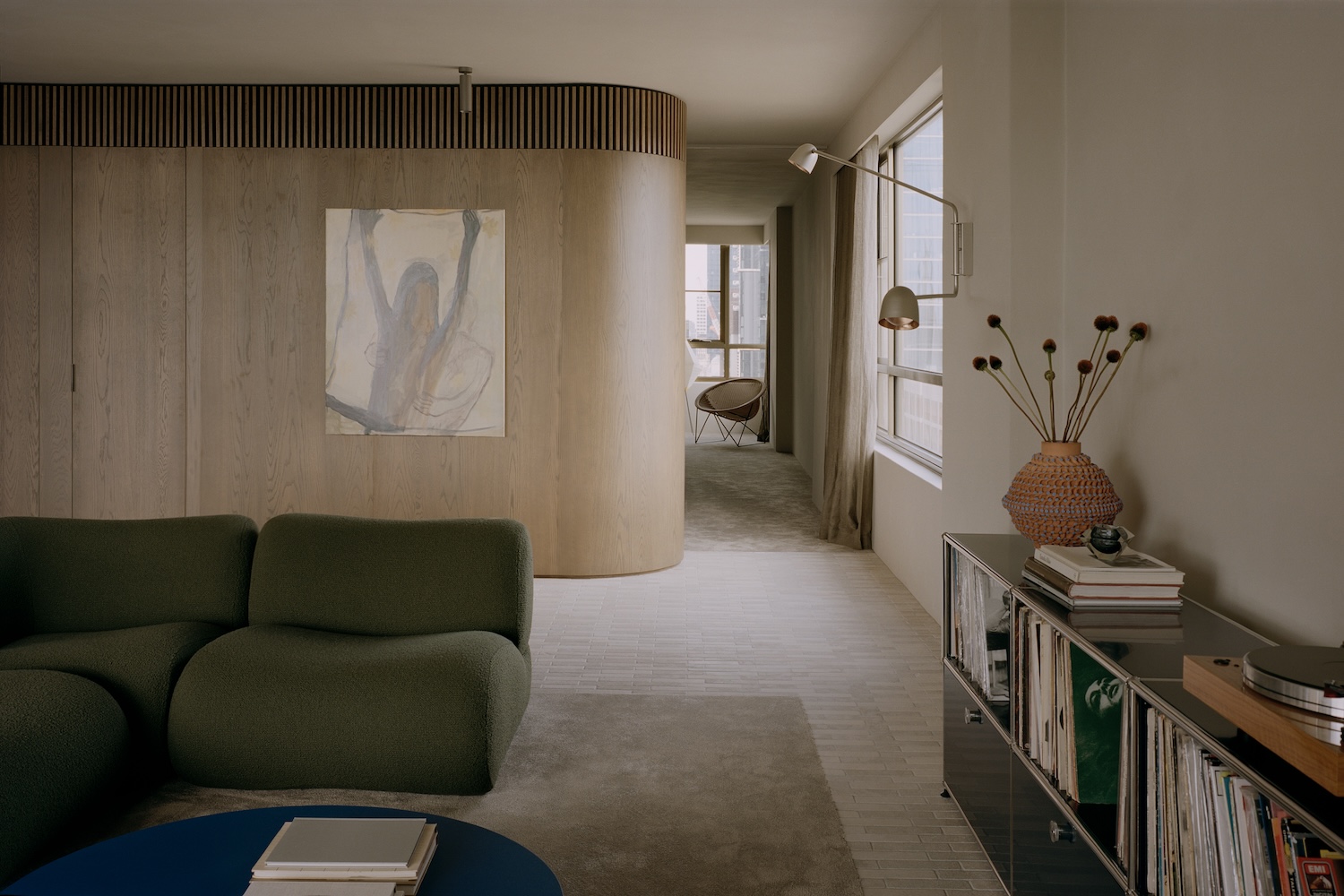
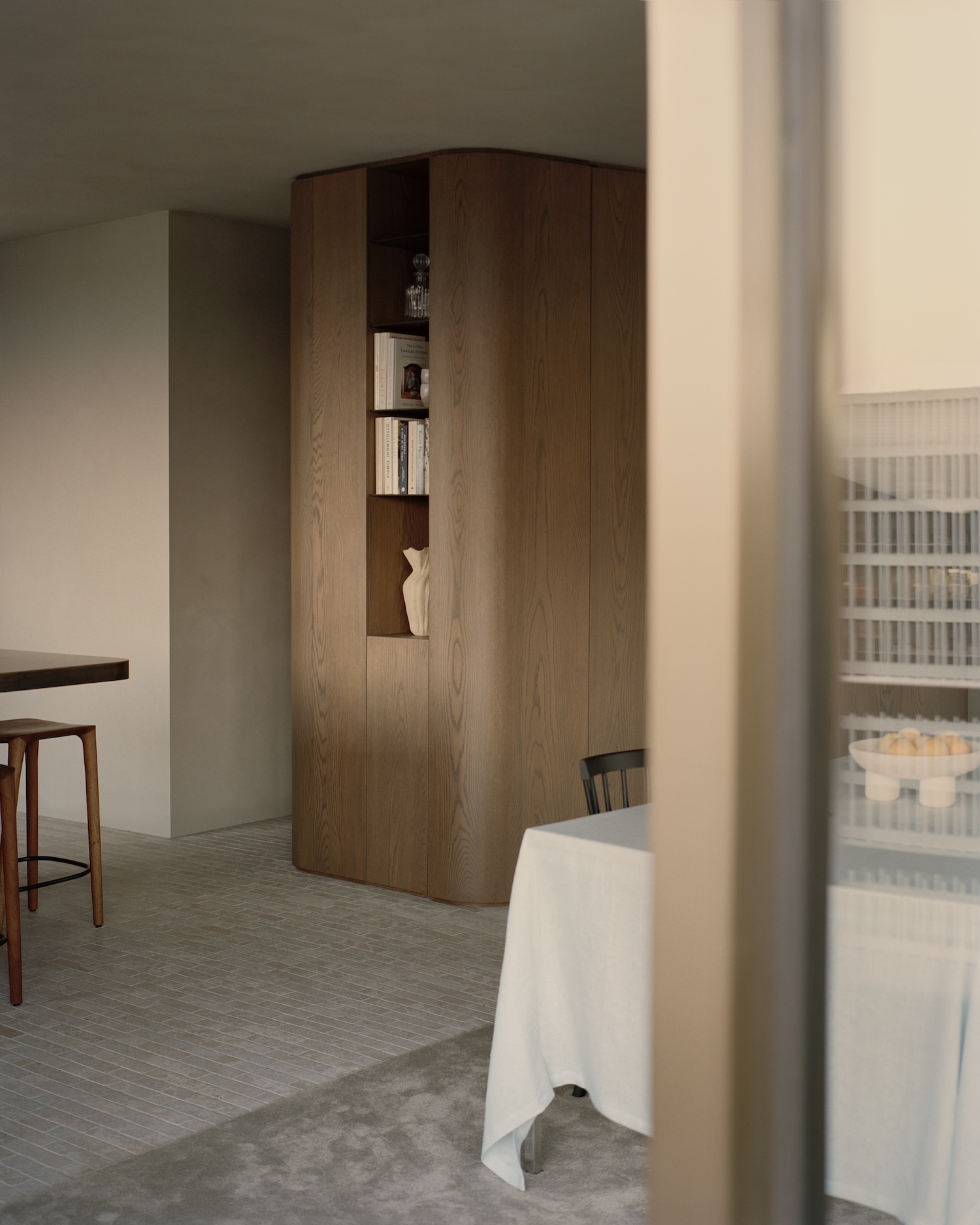
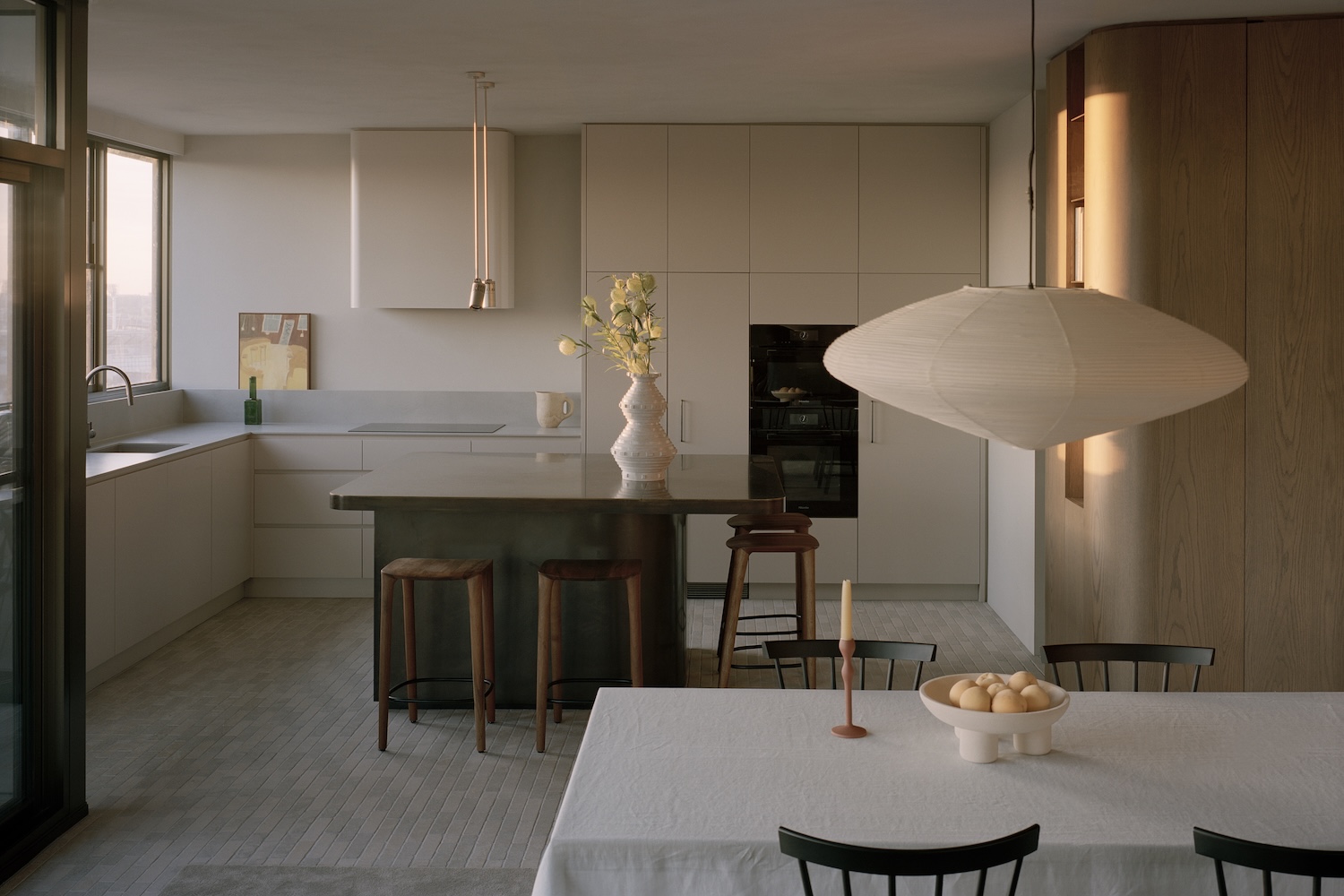
The pod placement within open plan combines with hard and soft floor finish distinctions to create discrete yet interconnected cooking, dining, living, and sleeping zones. Concealed openings enable flexible spatial relationships between pod interiors and surrounds while reductive articulation in public zones contrasts with tactile tectonic treatments in private spaces that incite intimacy and retreat.
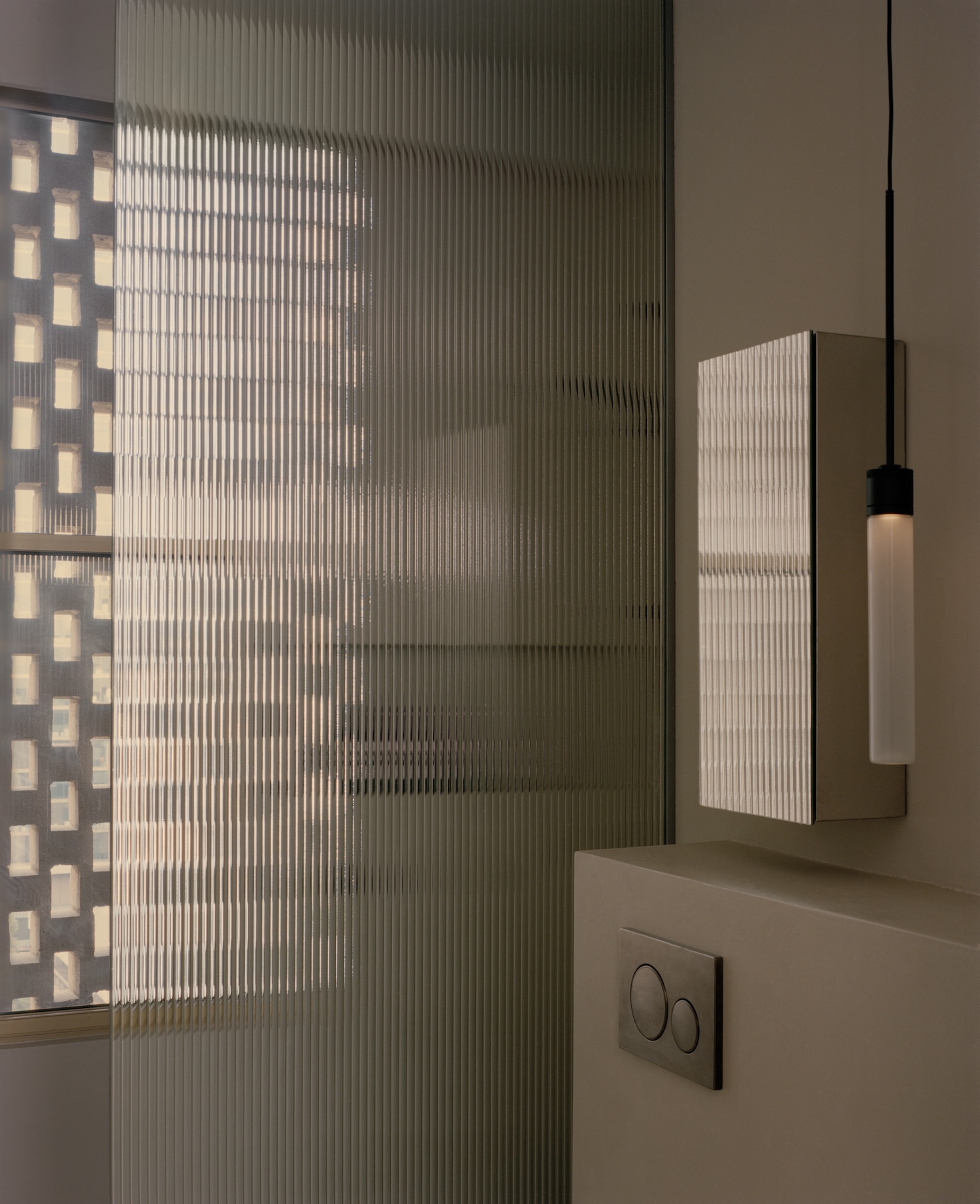
Site access limitations drove primarily prefabricated construction methodology using lightweight small-format materials that reduced waste and carbon footprint. Small-format limestone paving echoes the hit-and-miss brick motif of existing exterior walls while burnished brass kitchen island and bathroom vanities reference golden hues in existing metal detailing. Dark timber veneer panels form the anchors while perimeter walls and joinery receive neutral grey limewash, creating subtle hue and texture shifts that emphasize view and light passage throughout the day.