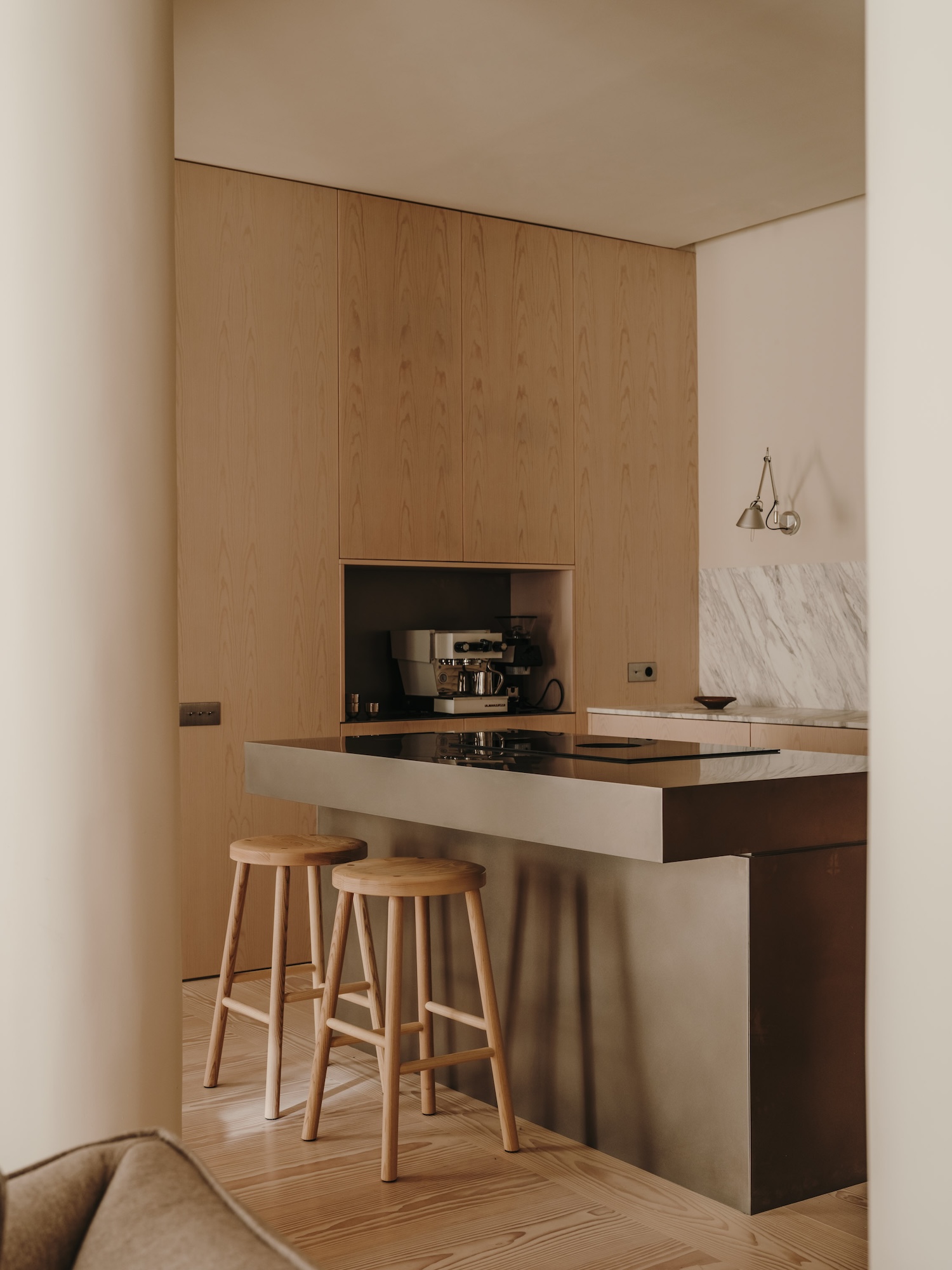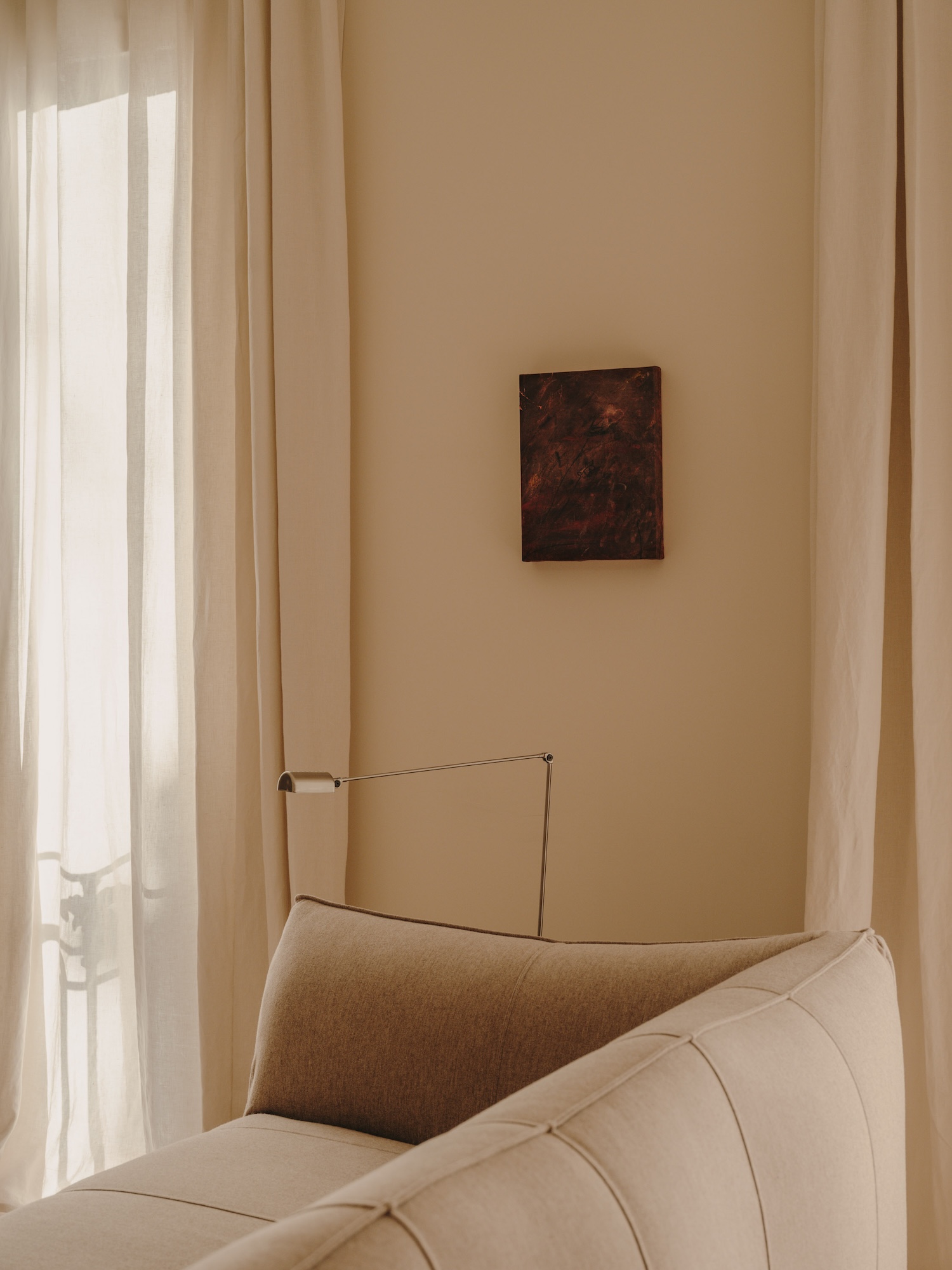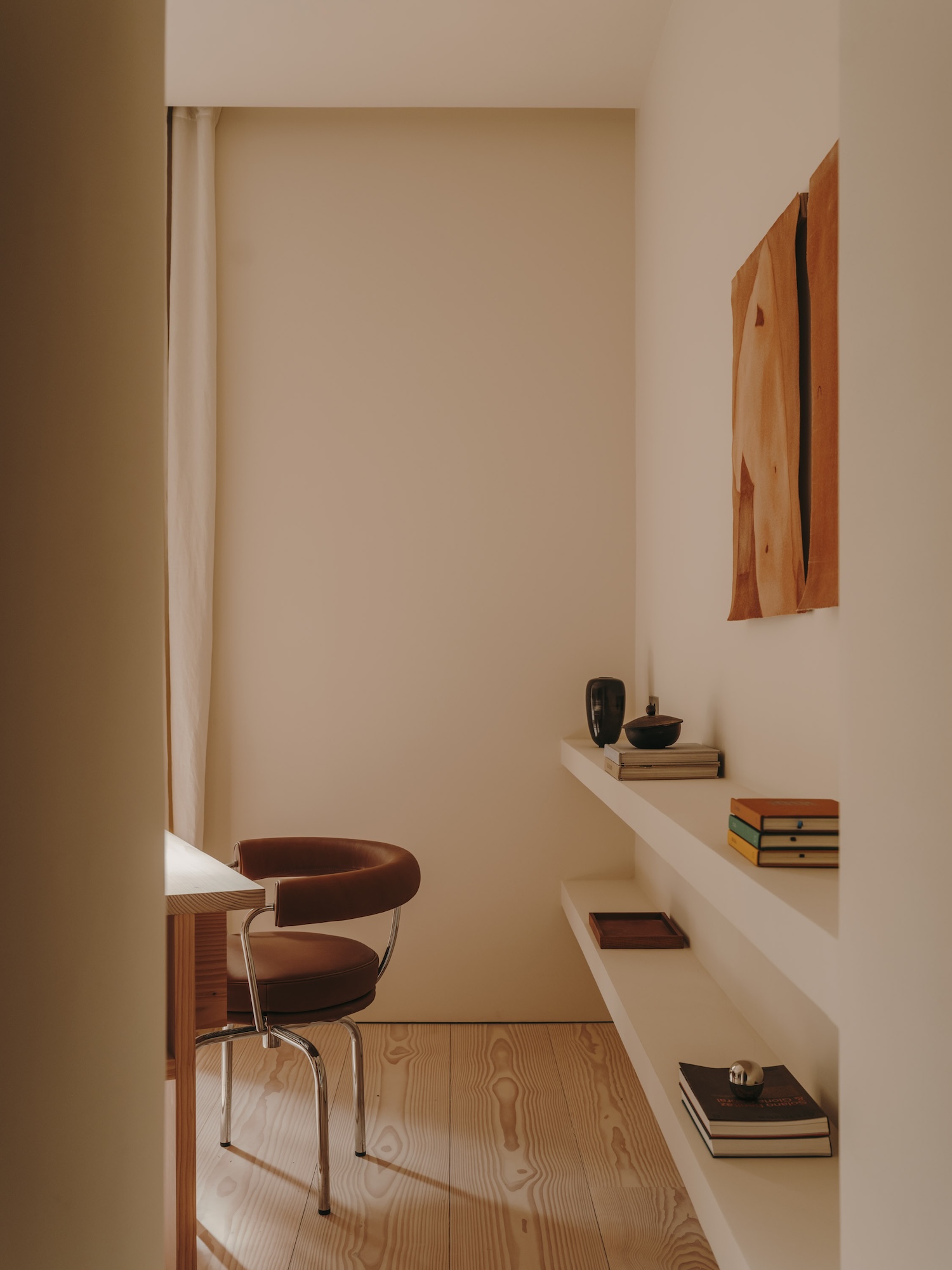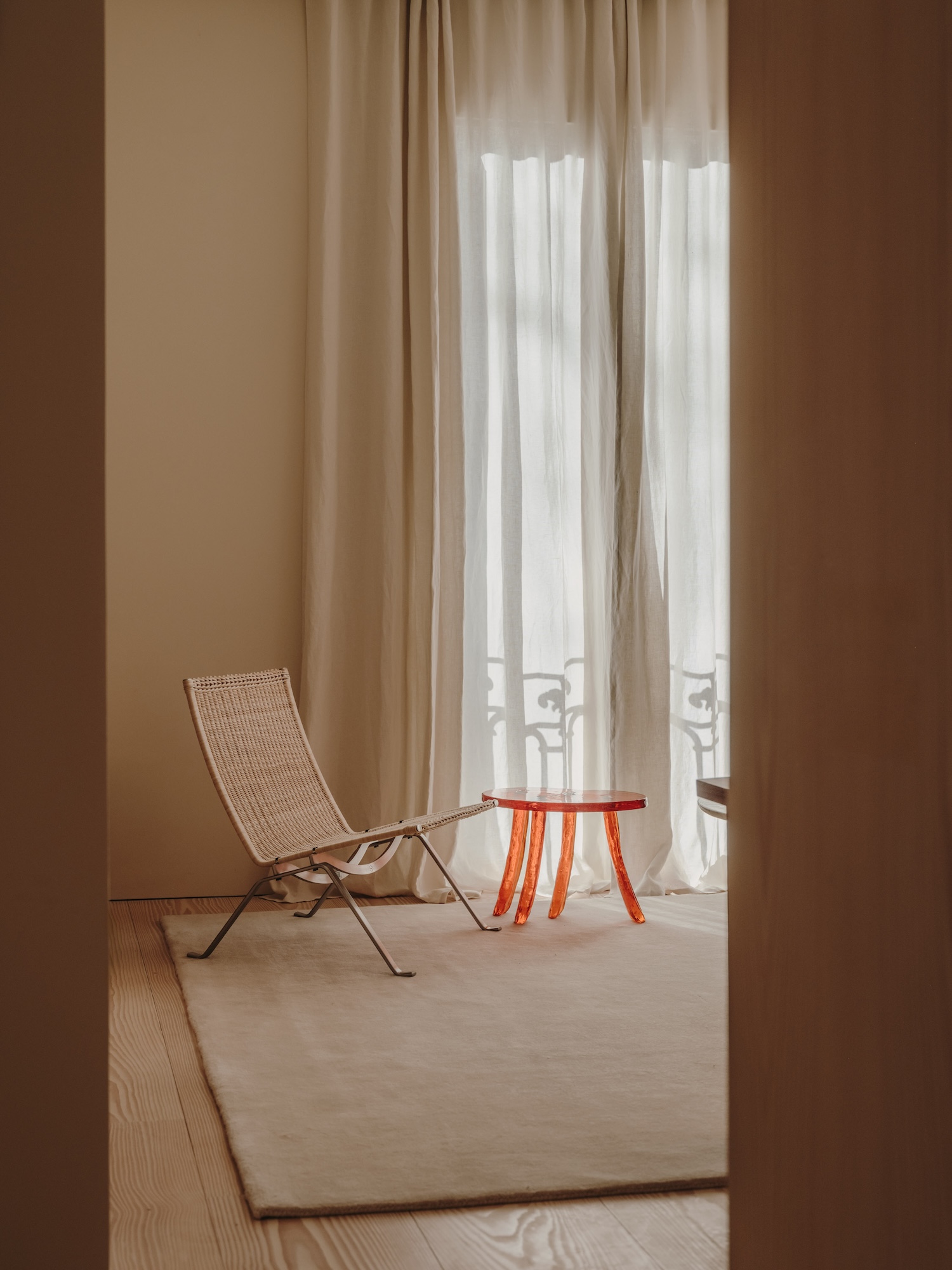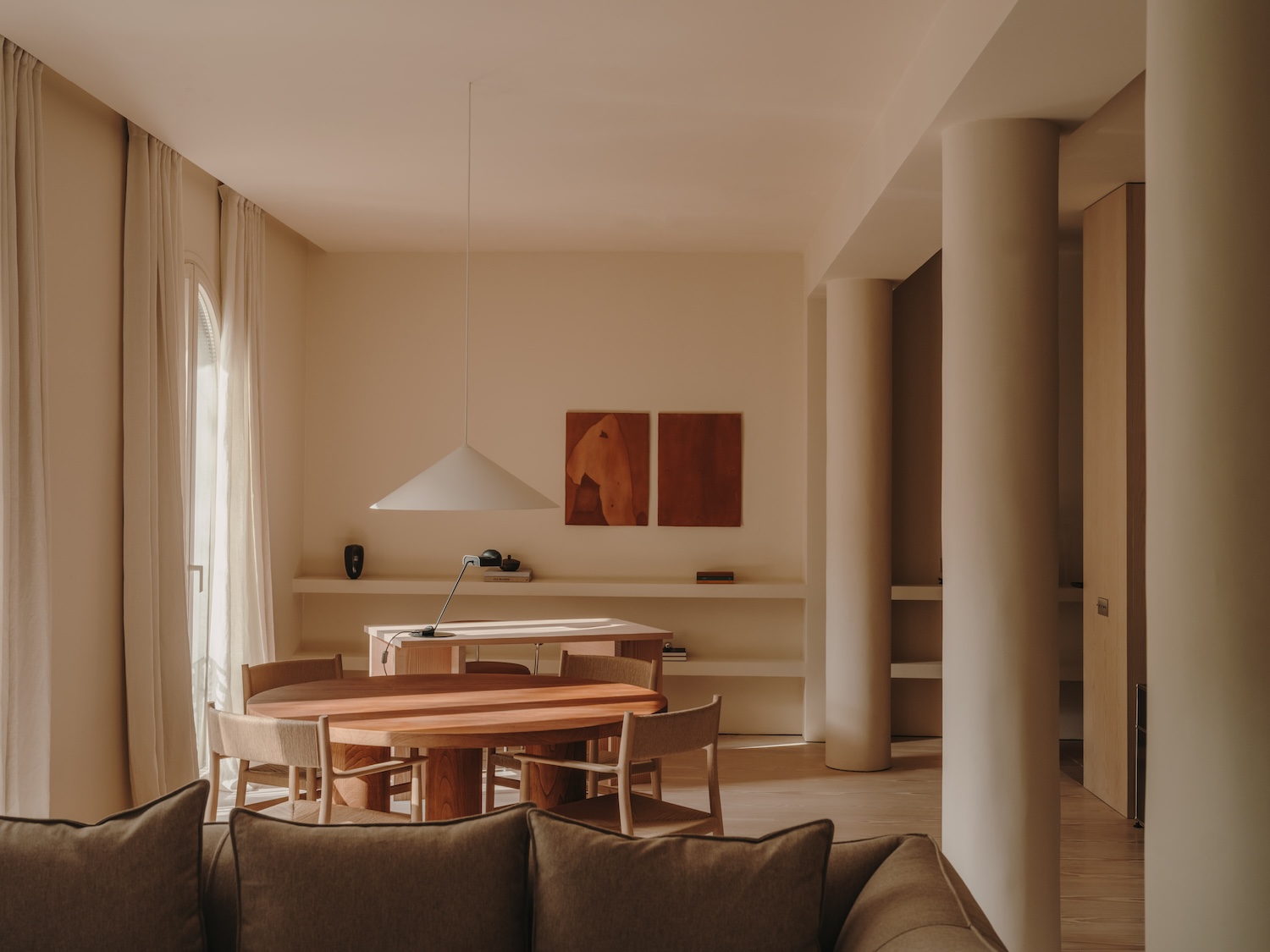
Casa Ambrose is a minimalist apartment located in Madrid, Spain, designed by Plantea Estudio. The developer, Home of Ambrose, commissioned an interior for a resident who does not yet exist, which is a harder brief than a private commission. Plantea Estudio answered it by holding three registers together that usually cancel each other out, the hearth-centered shelter of stone, clay, and solid wood, the column-and-lintel grammar a child draws before anything else, and the appetite for the new that keeps a home from becoming a period room.
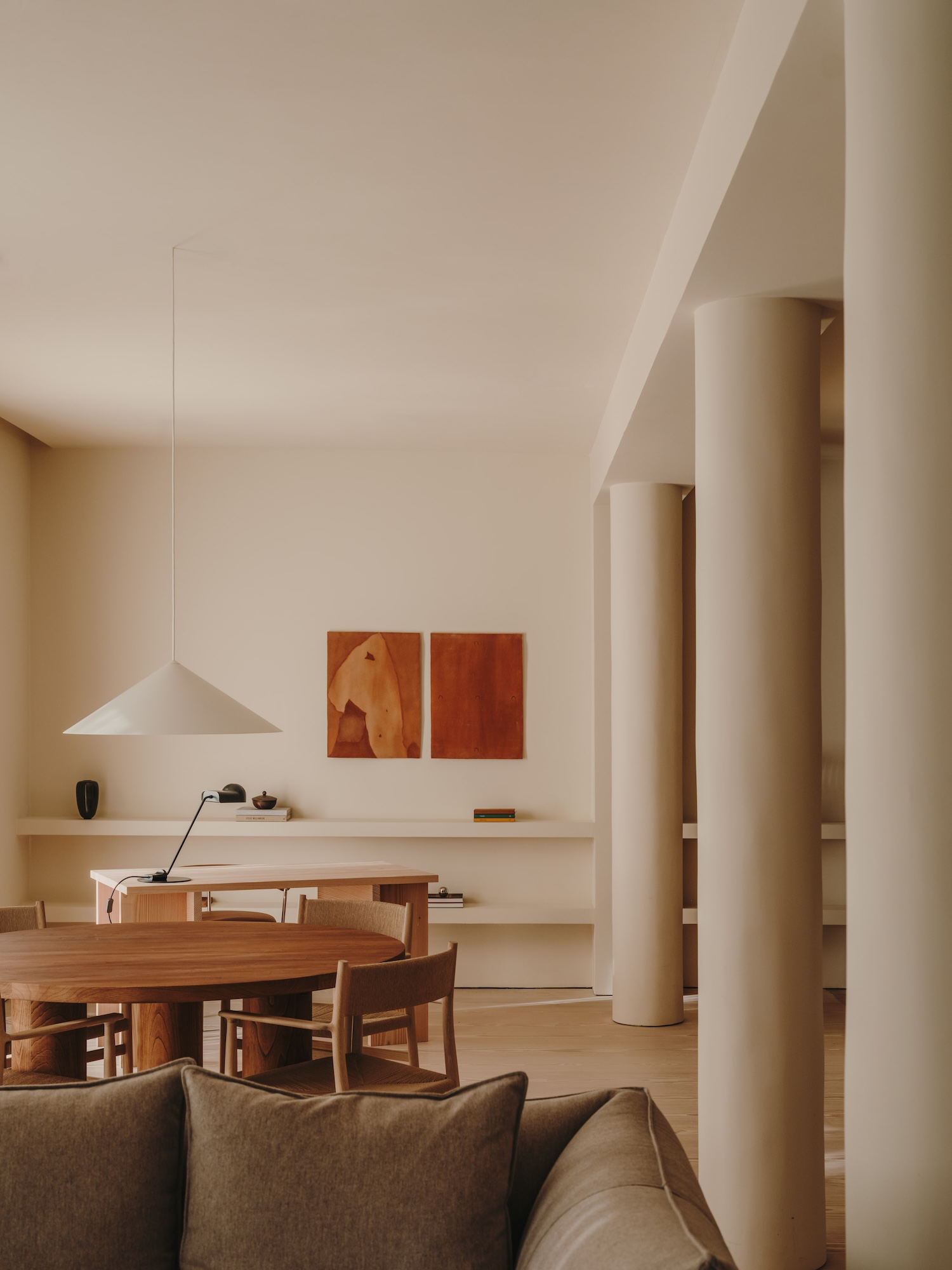
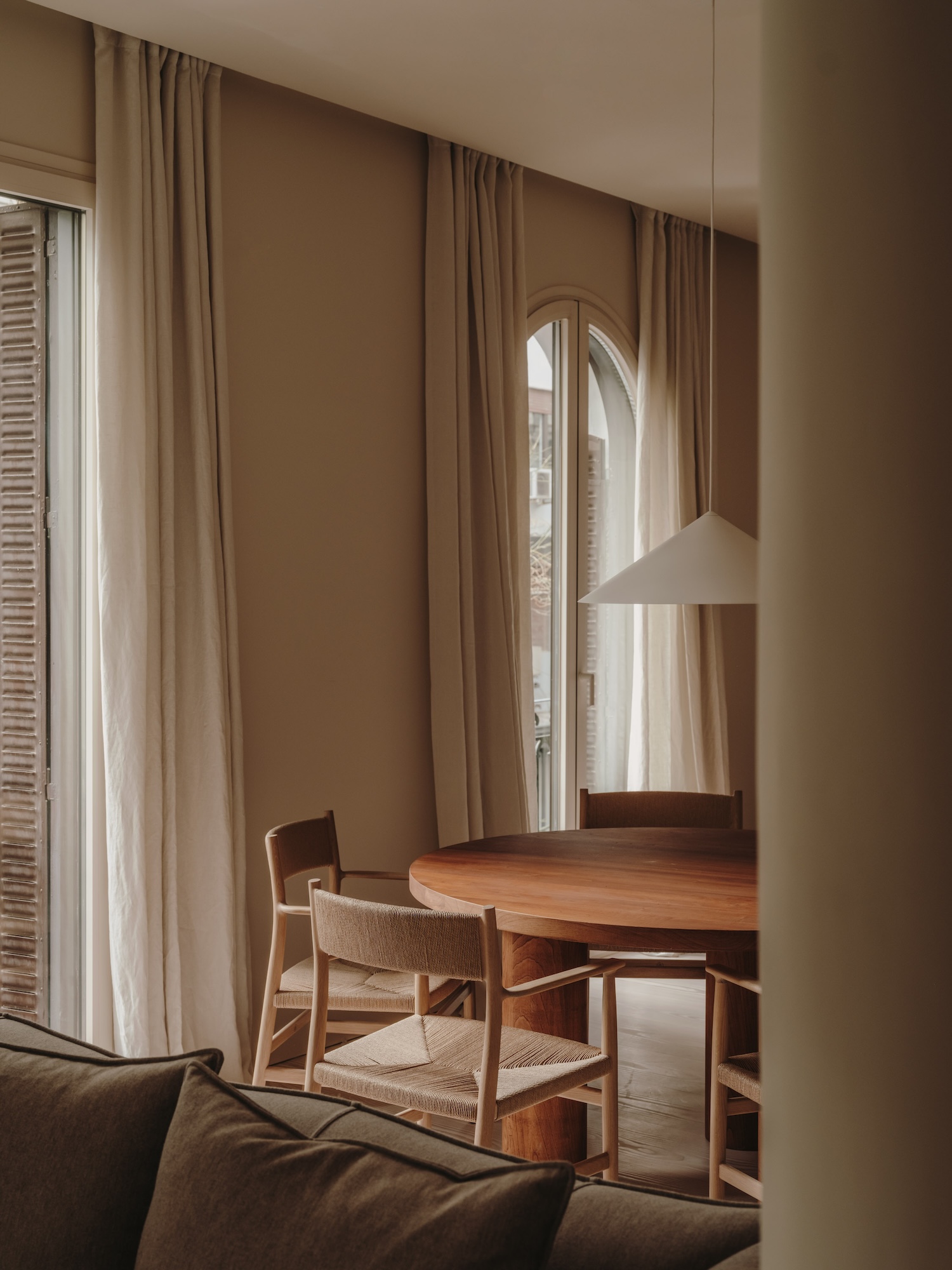
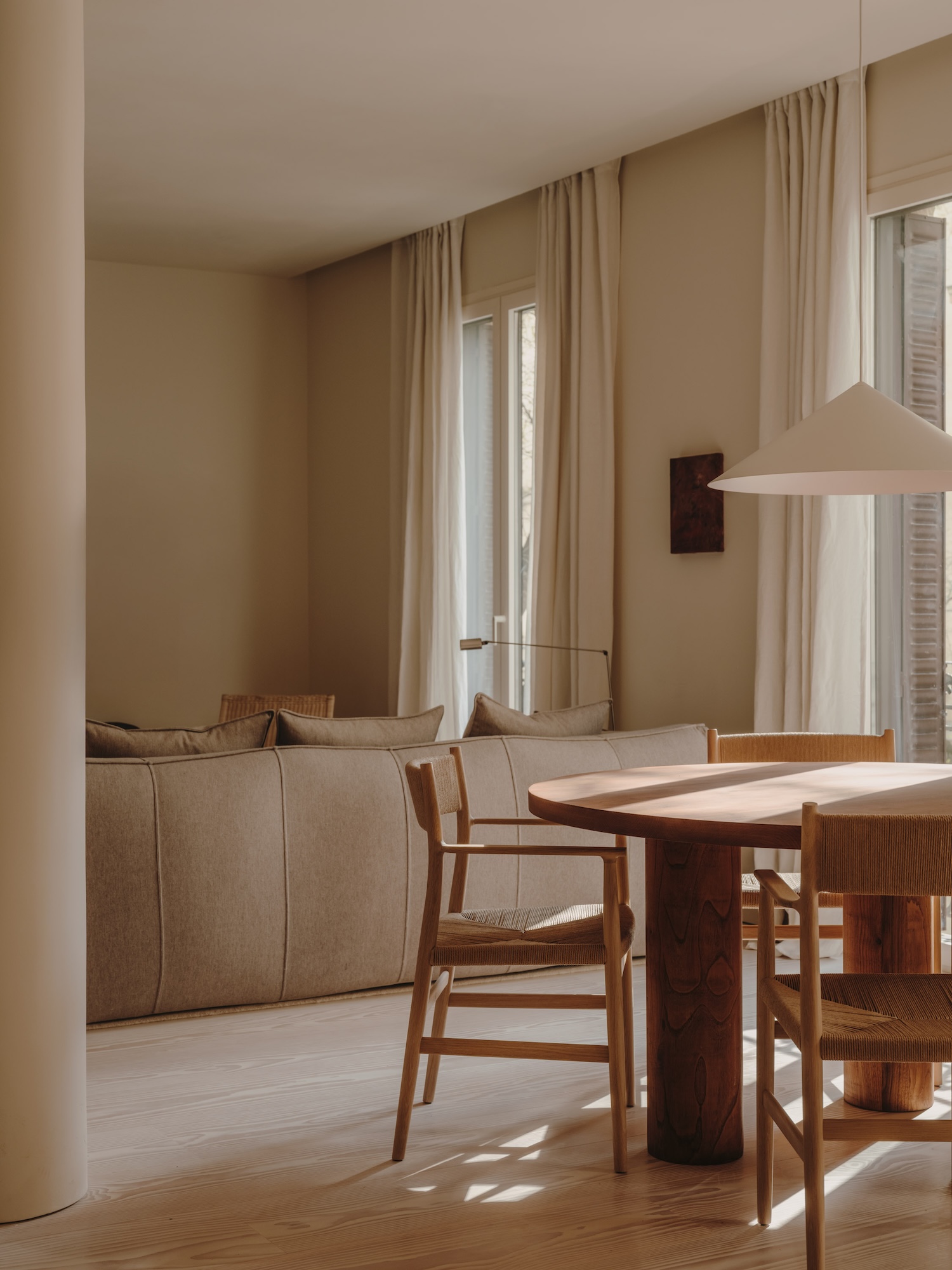
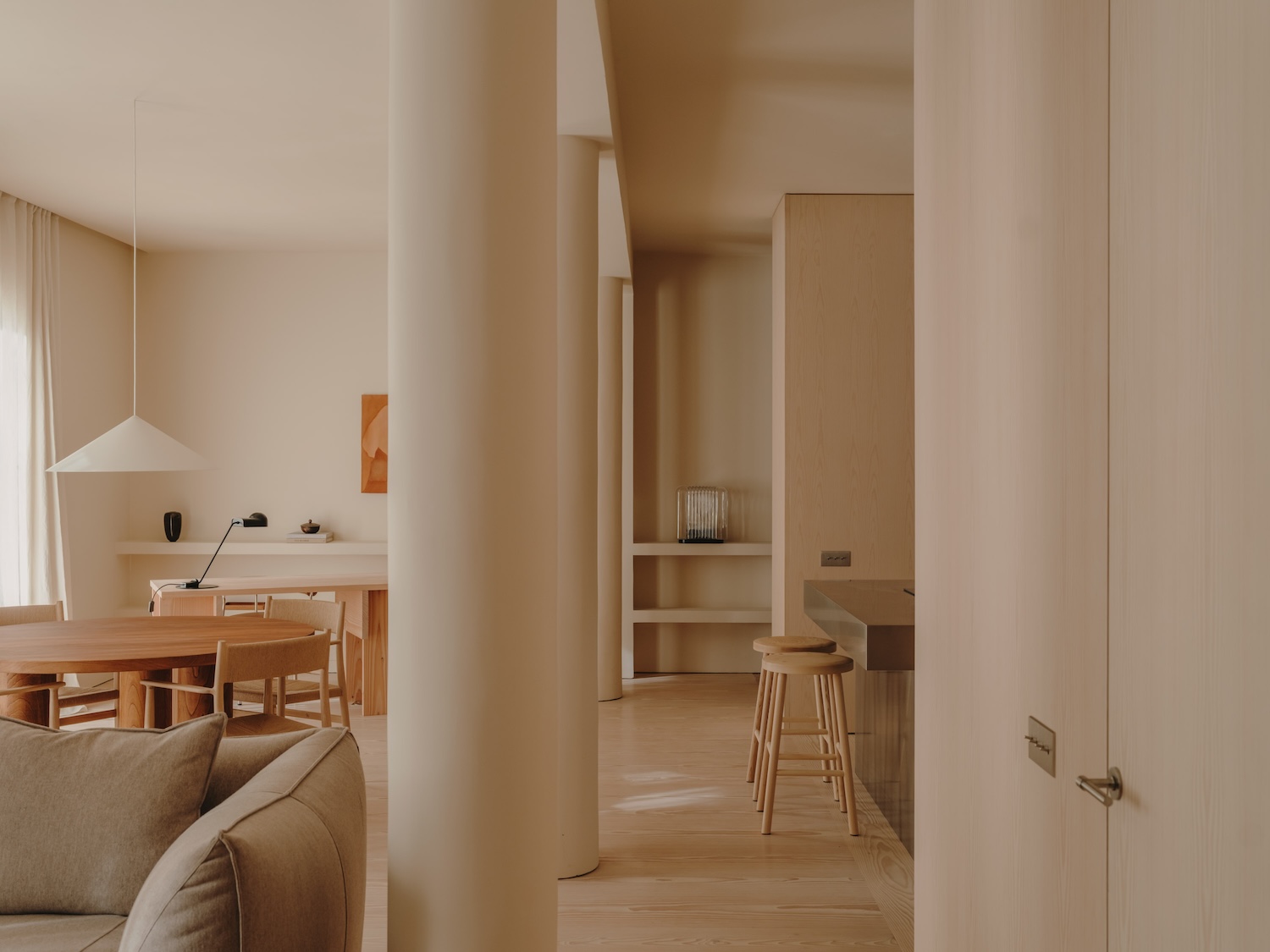
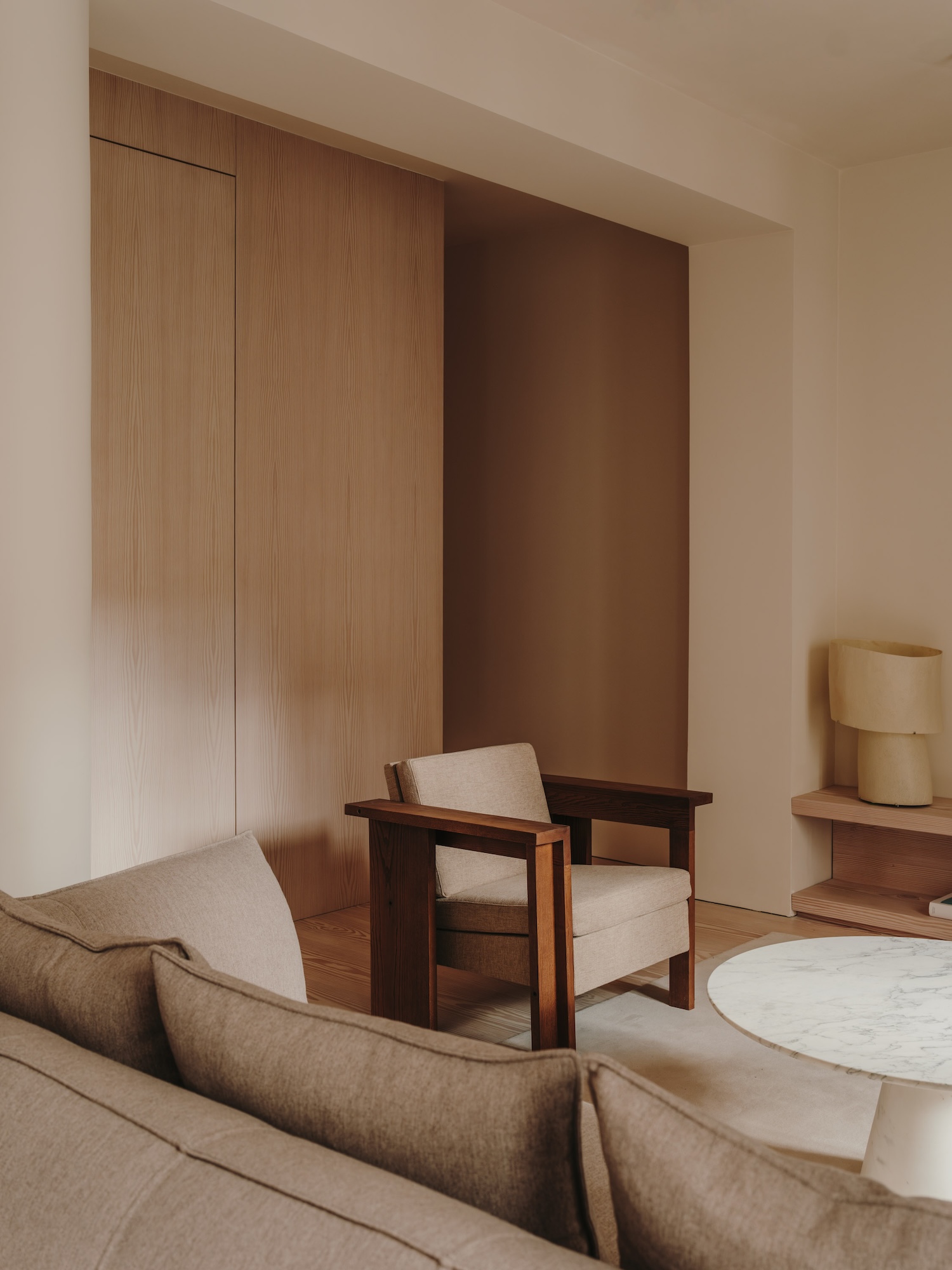
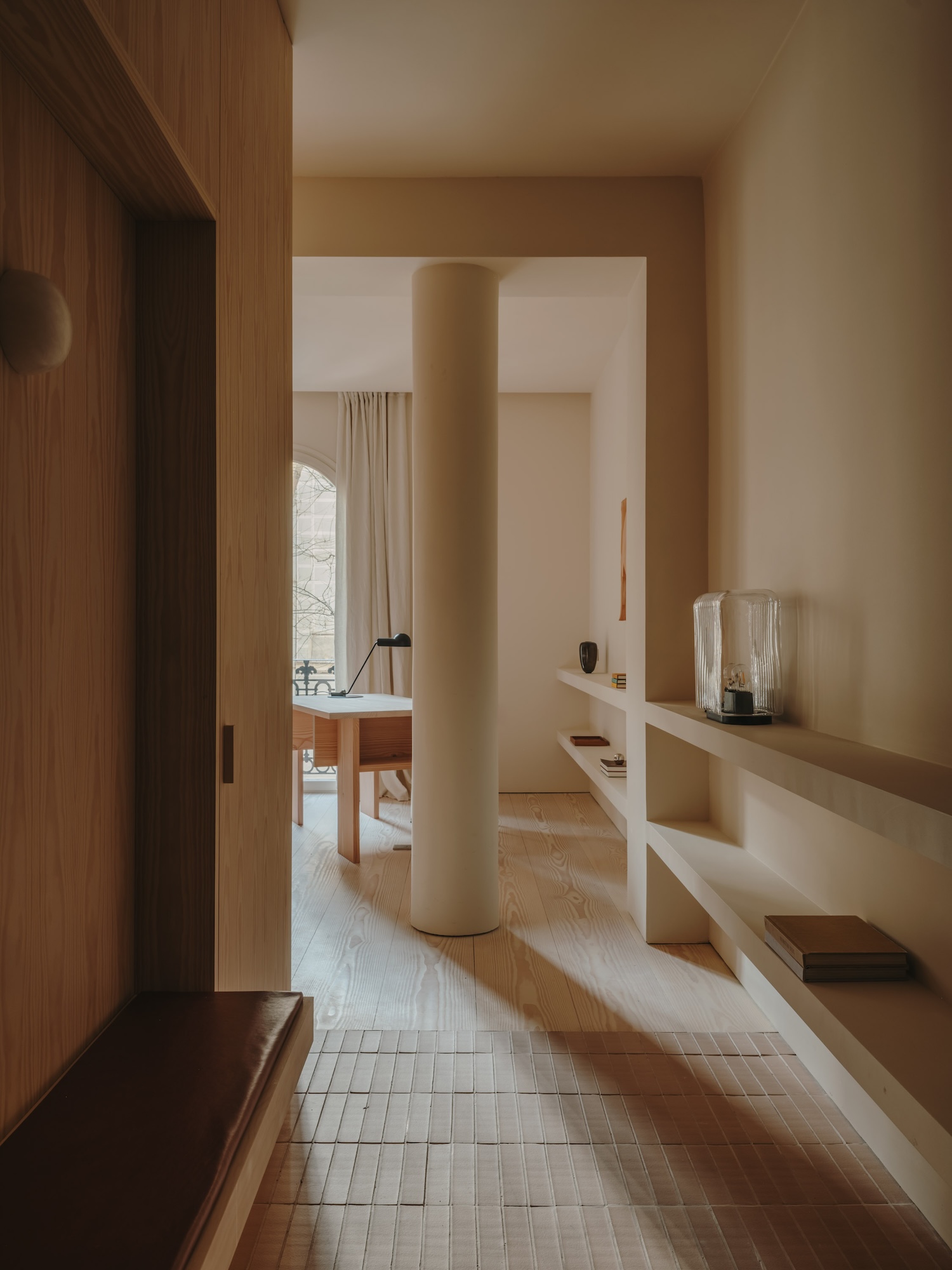
The starting point was a first-floor apartment on Calle Castelló in the Barrio de Salamanca, facing west, with three balconies onto the street and a central patio behind. Early twentieth-century Madrid apartments of this type parcel space into small single-purpose rooms strung along a corridor. Plantea Estudio removed most of that. The balcony side now runs as one continuous room holding a desk, a dining table, and a seating group for reading. A second bay behind it carries the entrance vestibule, the kitchen, and a module with storage, laundry, and a guest toilet.
Three columns stand between the two zones, thicker than structure requires. Move a few steps and one of them closes off the dining area entirely, then releases it again. Porticoes have divided space this way without walling it since the Roman atrium house, and the western light crossing the balconies through the afternoon keeps resetting what you can see from where you stand.
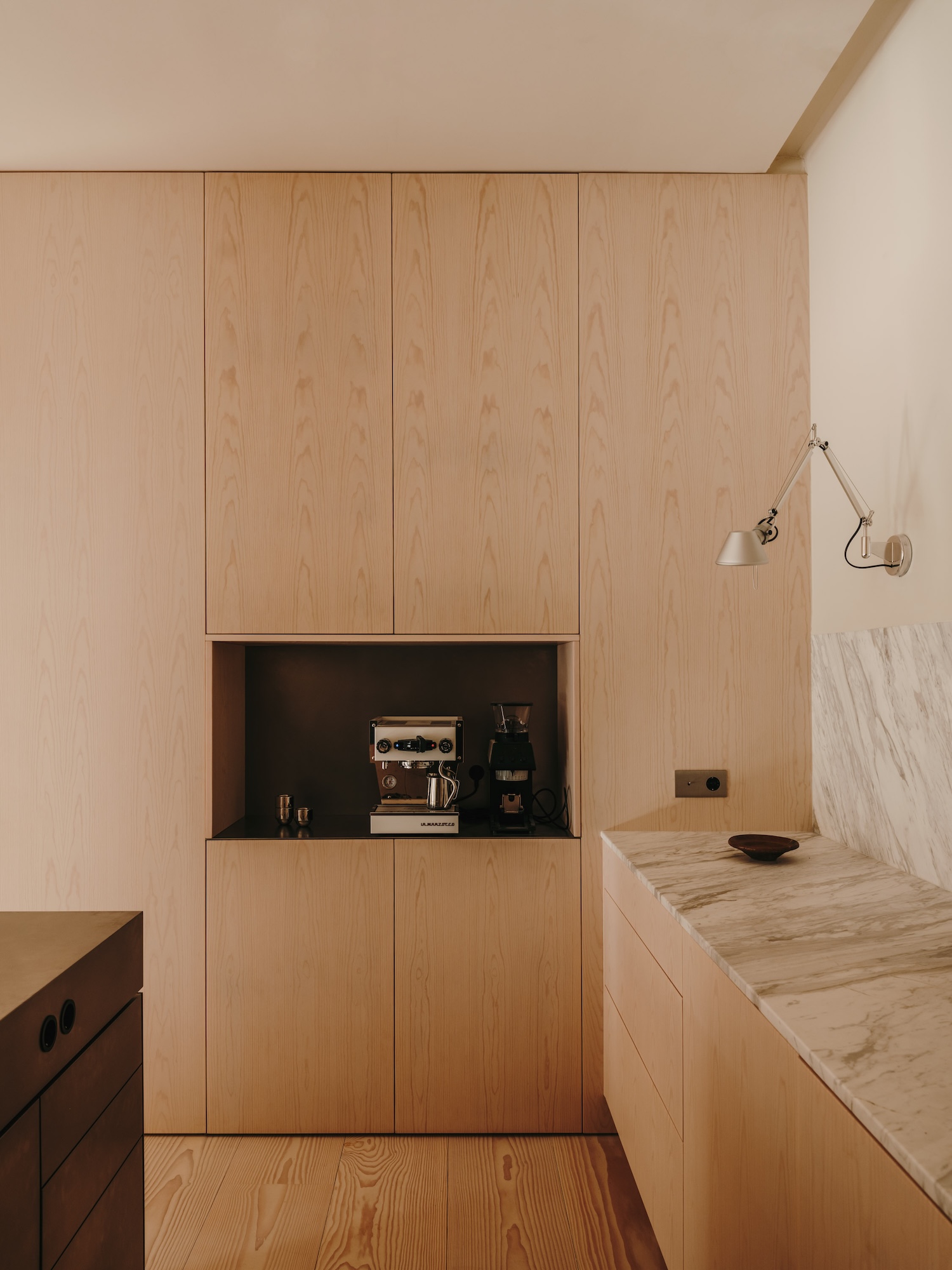
Small clay tiles from La Paloma cover the entry floor, a reference to the tiled zaguán of older Madrid buildings, and they stop where the Douglas boards begin. Dinesen supplied those in 30 centimeter widths, wide enough that the grain reads as a surface rather than a rhythm of joints. The same pine returns in the built-in cabinetry of the vestibule, laundry, and kitchen, and its faintly reddish cast sits close to both the clay and the chalky Farrow & Ball paint. At the center of the main room, Plantea Estudio placed a stainless steel unit fabricated by Artificio. Steel reflects the wood around it and refuses to age with it, which is the reason it is there.