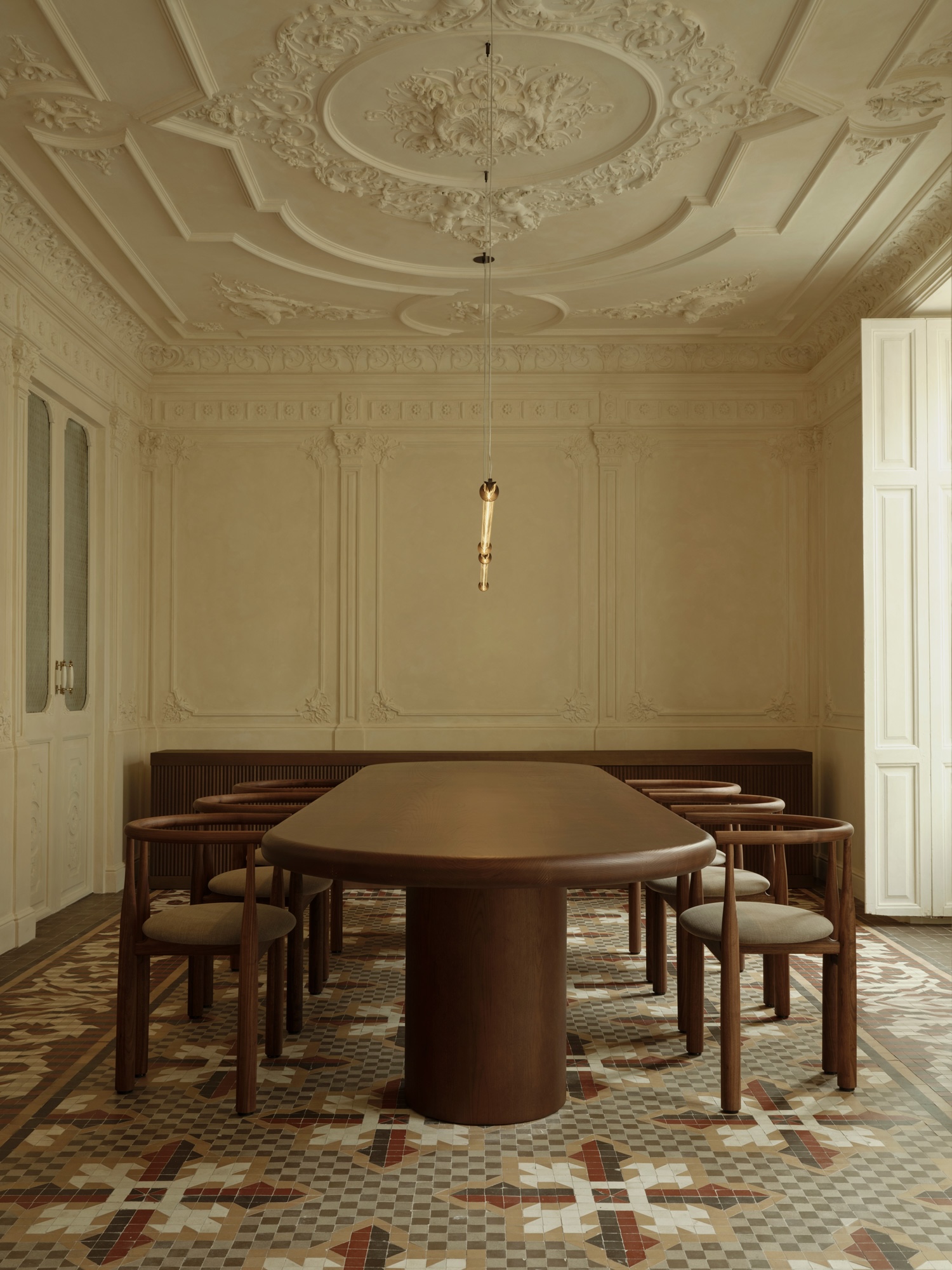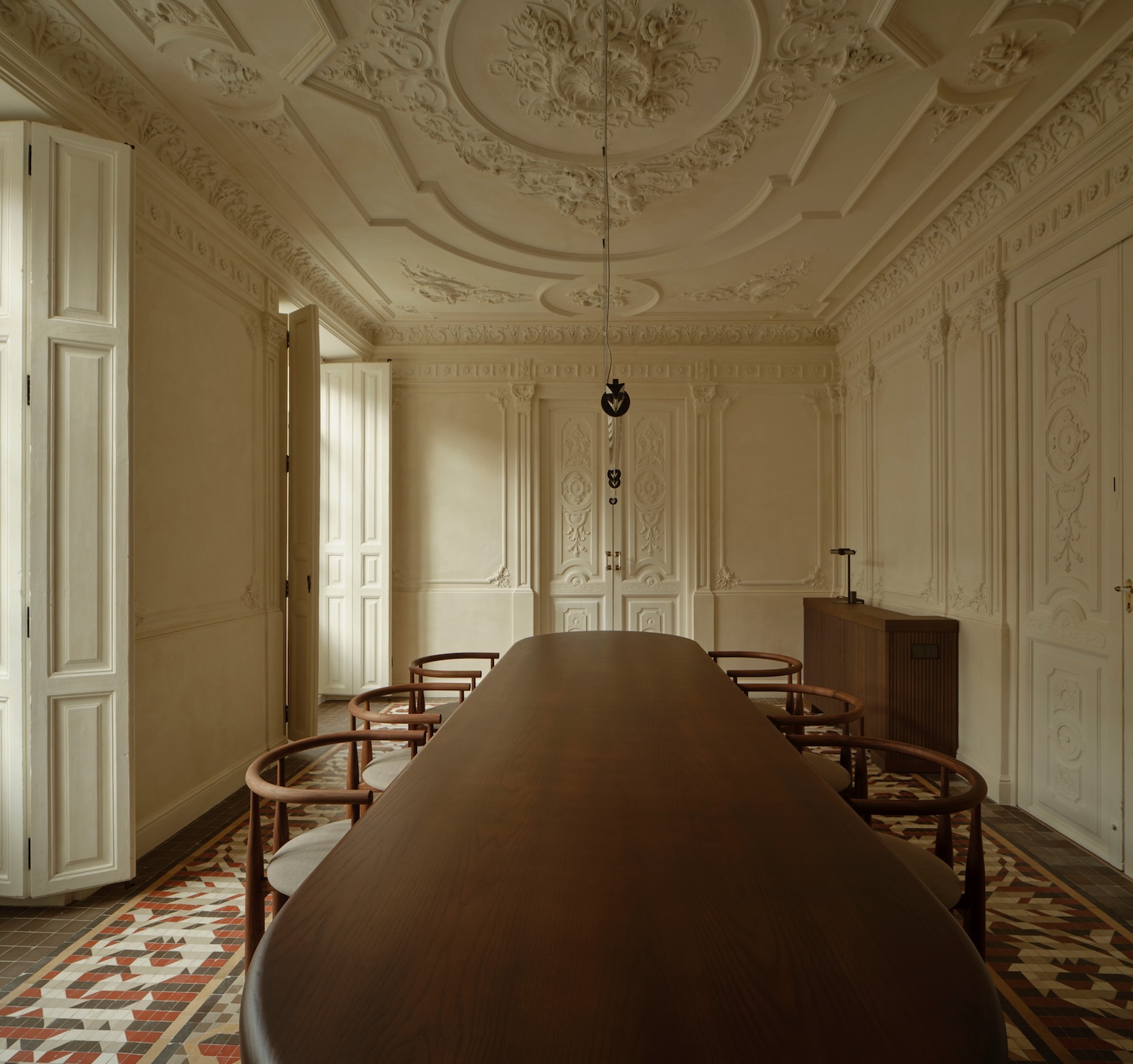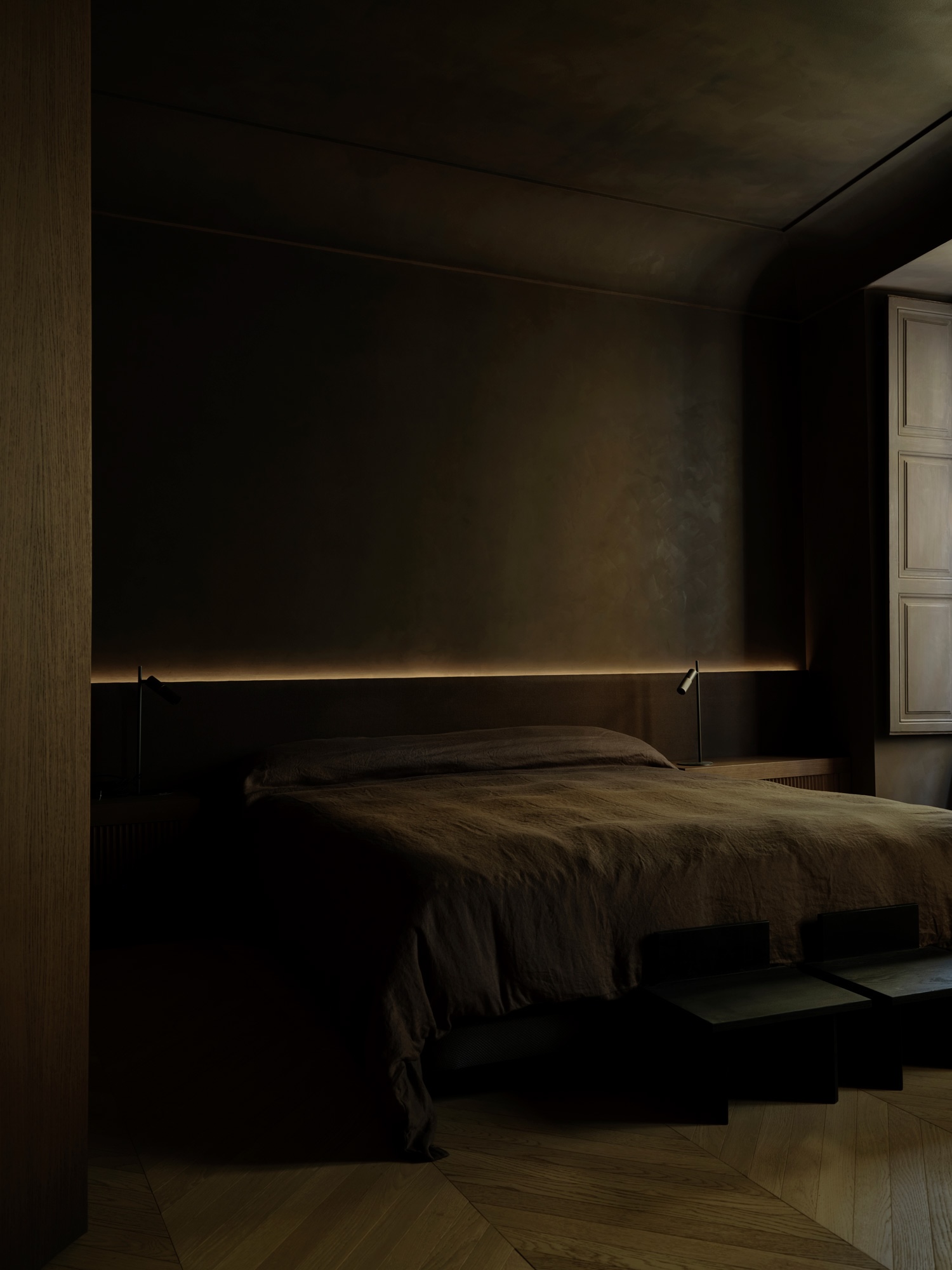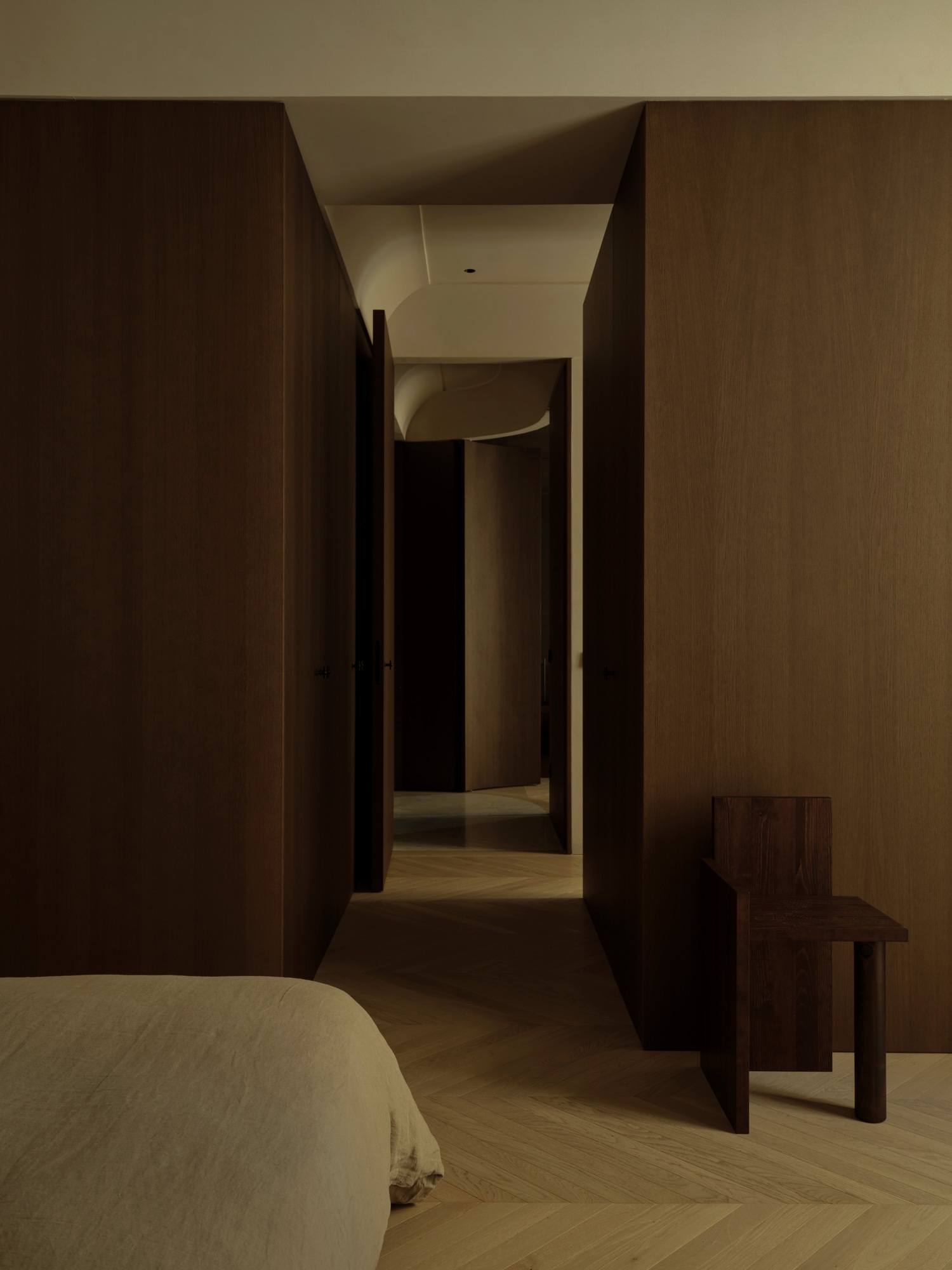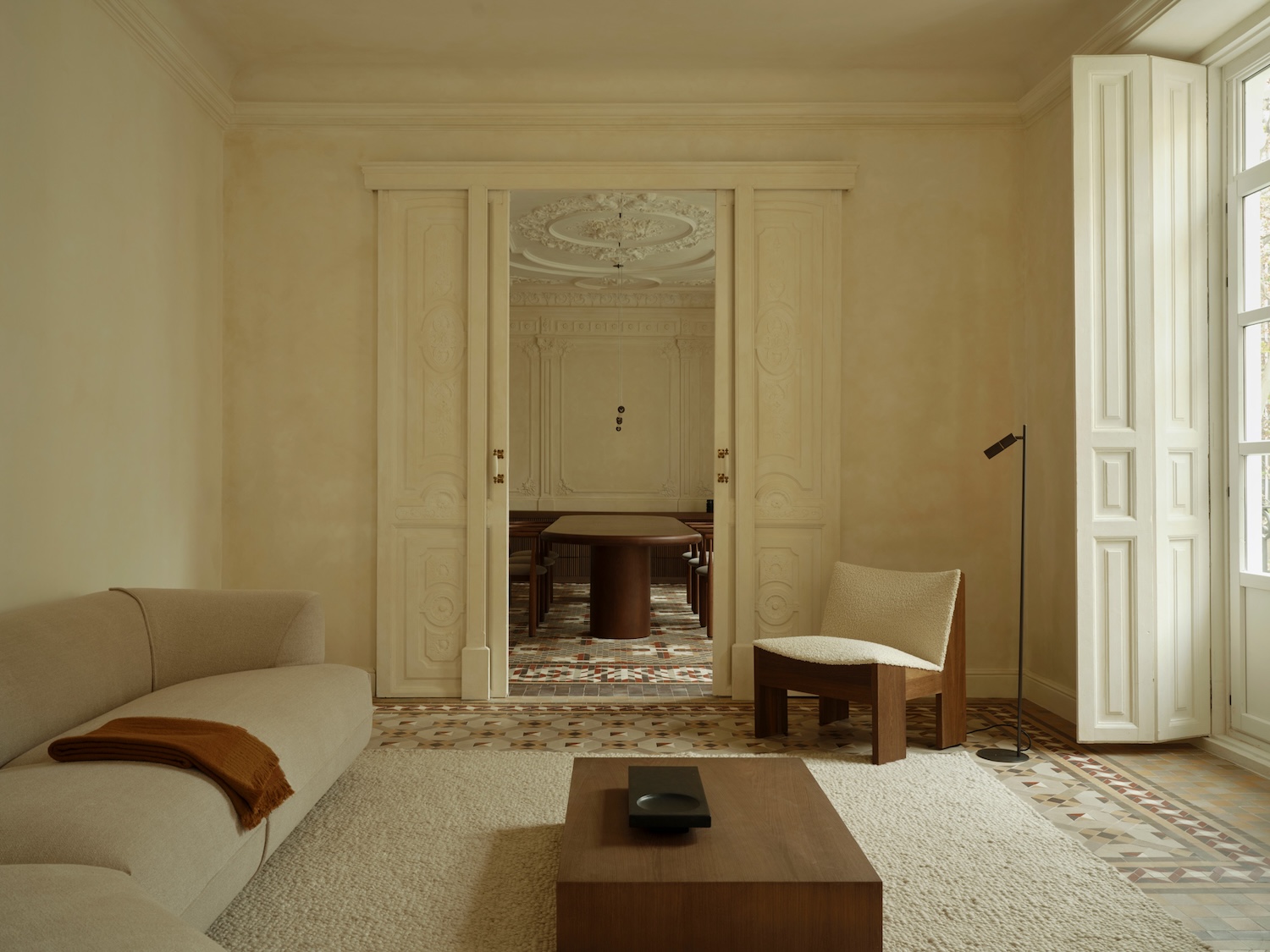
Ciutat Vella Apartment is a minimalist apartment located in Valencia, Spain, designed by Balzar Architects. Protected fabric inside an 1890 building – Nolla mosaic floors, wrought ironwork, original moldings, century-old doors, and fragments of polychrome ceiling painting – arrived as fixed conditions, and the 300 square meter renovation organizes itself around what could not be touched.
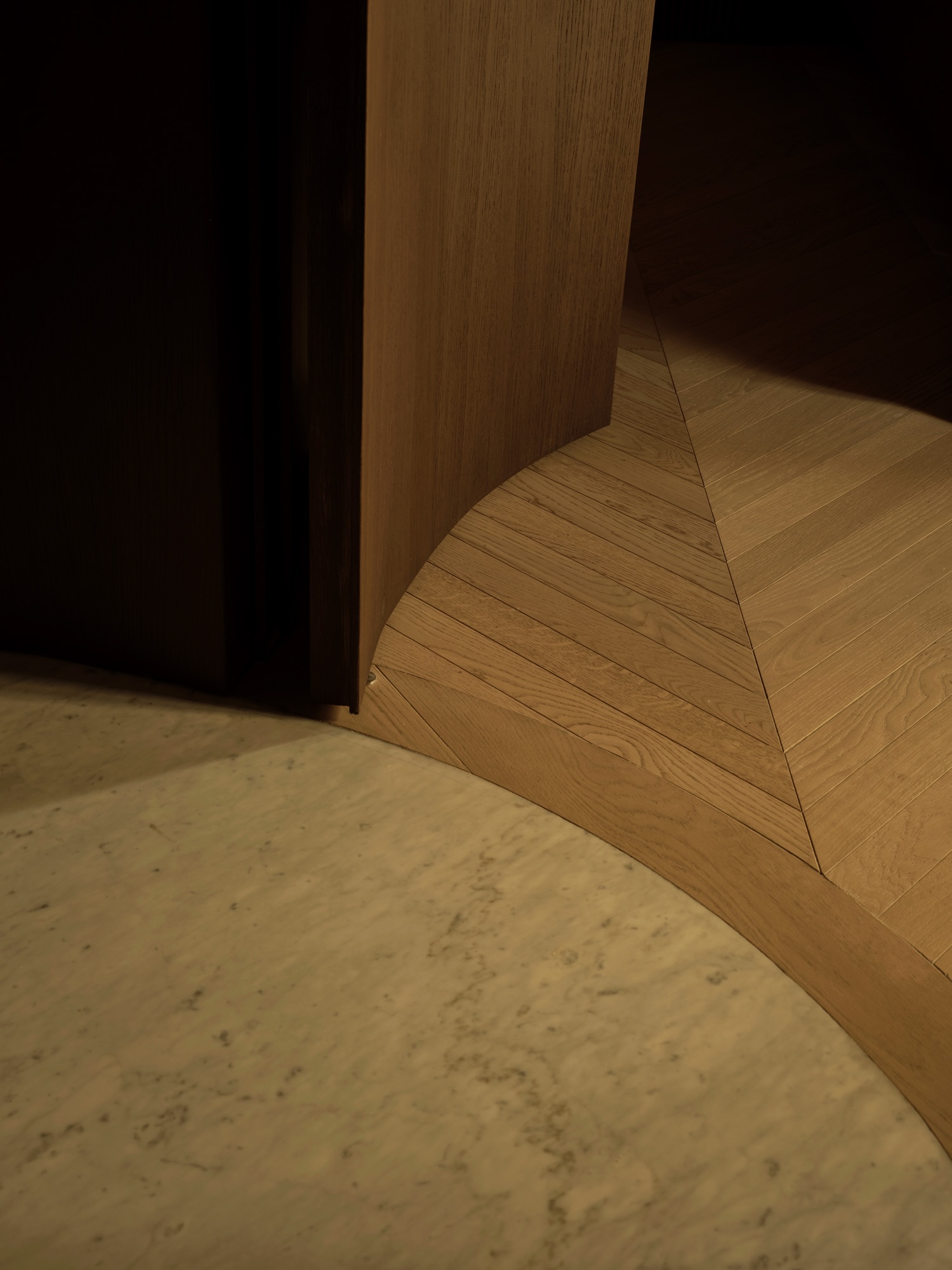
The Nolla floors carry the most weight. Miguel Nolla established his factory in Meliana, a few kilometers north of the city, in 1860, producing vitrified stoneware tesserae often smaller than a fingernail and laid in dense geometric fields with borders and corner motifs specified room by room. Color runs through the body of the tile rather than sitting in a surface glaze, which is why a century and a half of foot traffic dulls the sheen without eroding the pattern. The material was exported across Europe and became a marker of bourgeois Valencian interiors, so its survival in a Ciutat Vella apartment is less a decorative asset than a piece of local industrial history underfoot. Retaining it means inheriting its grid. Room proportions, threshold positions, and the placement of new partitions all defer to a mosaic layout drawn for a floor plan that no longer describes how anyone lives.
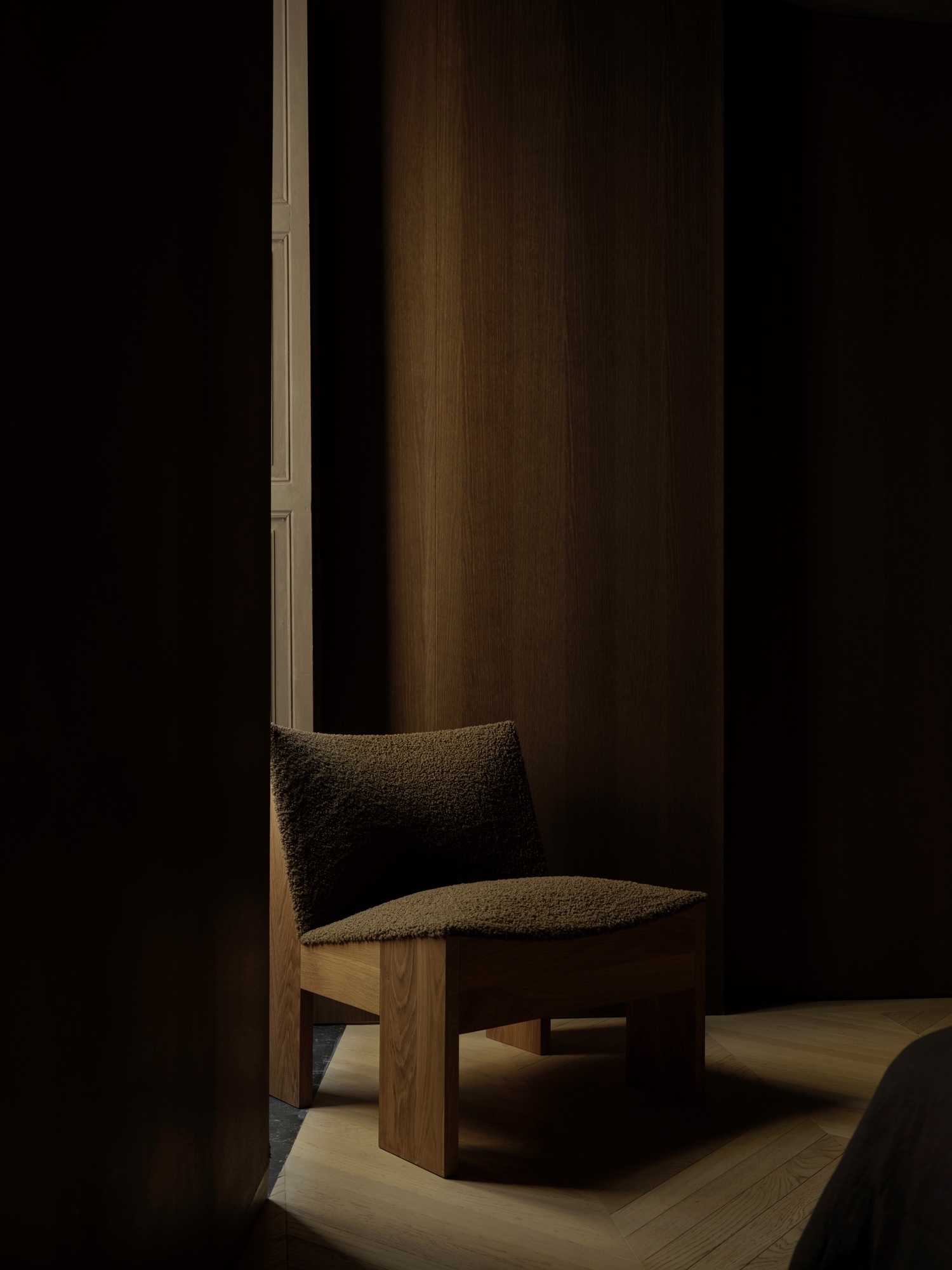
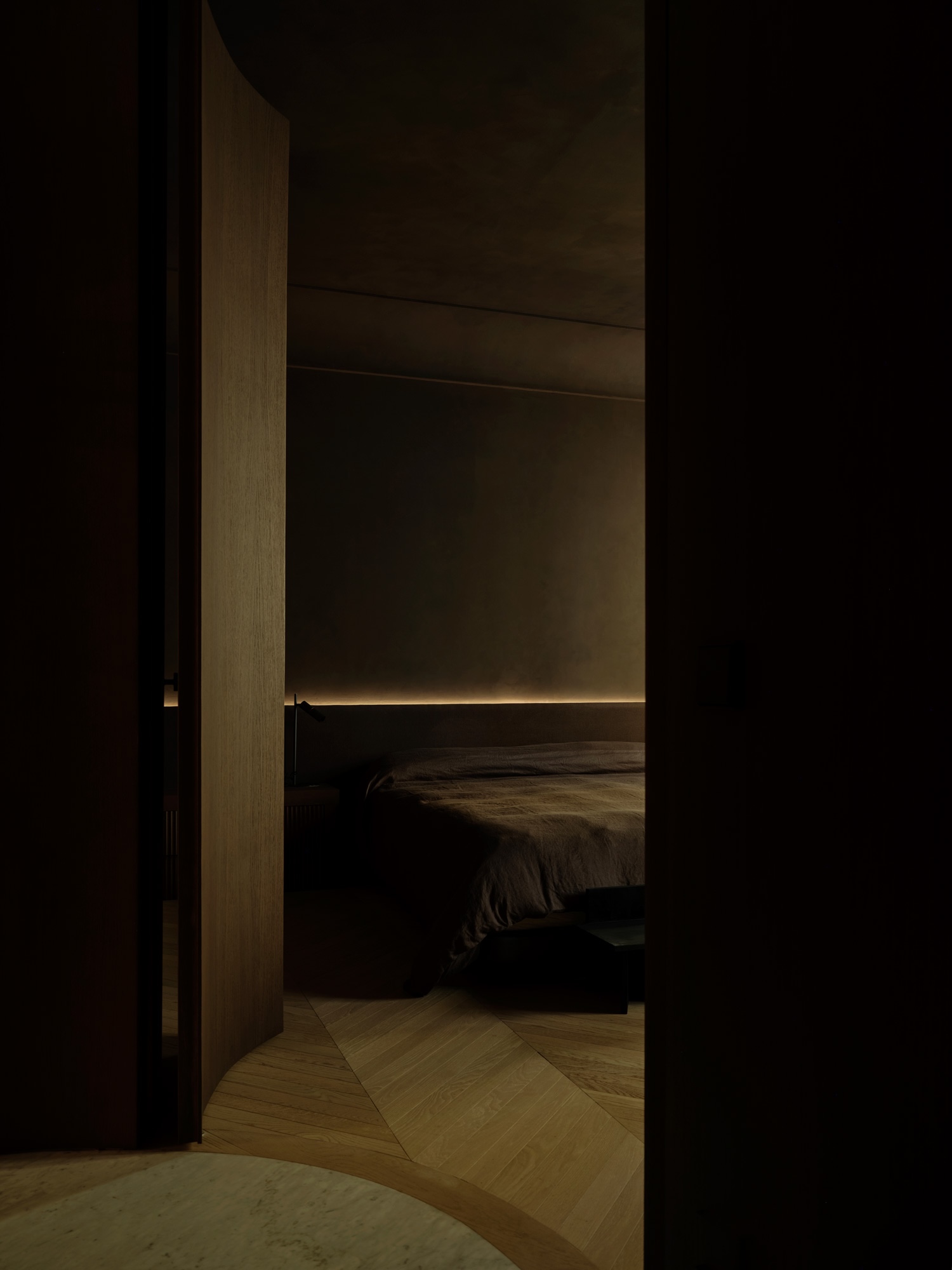
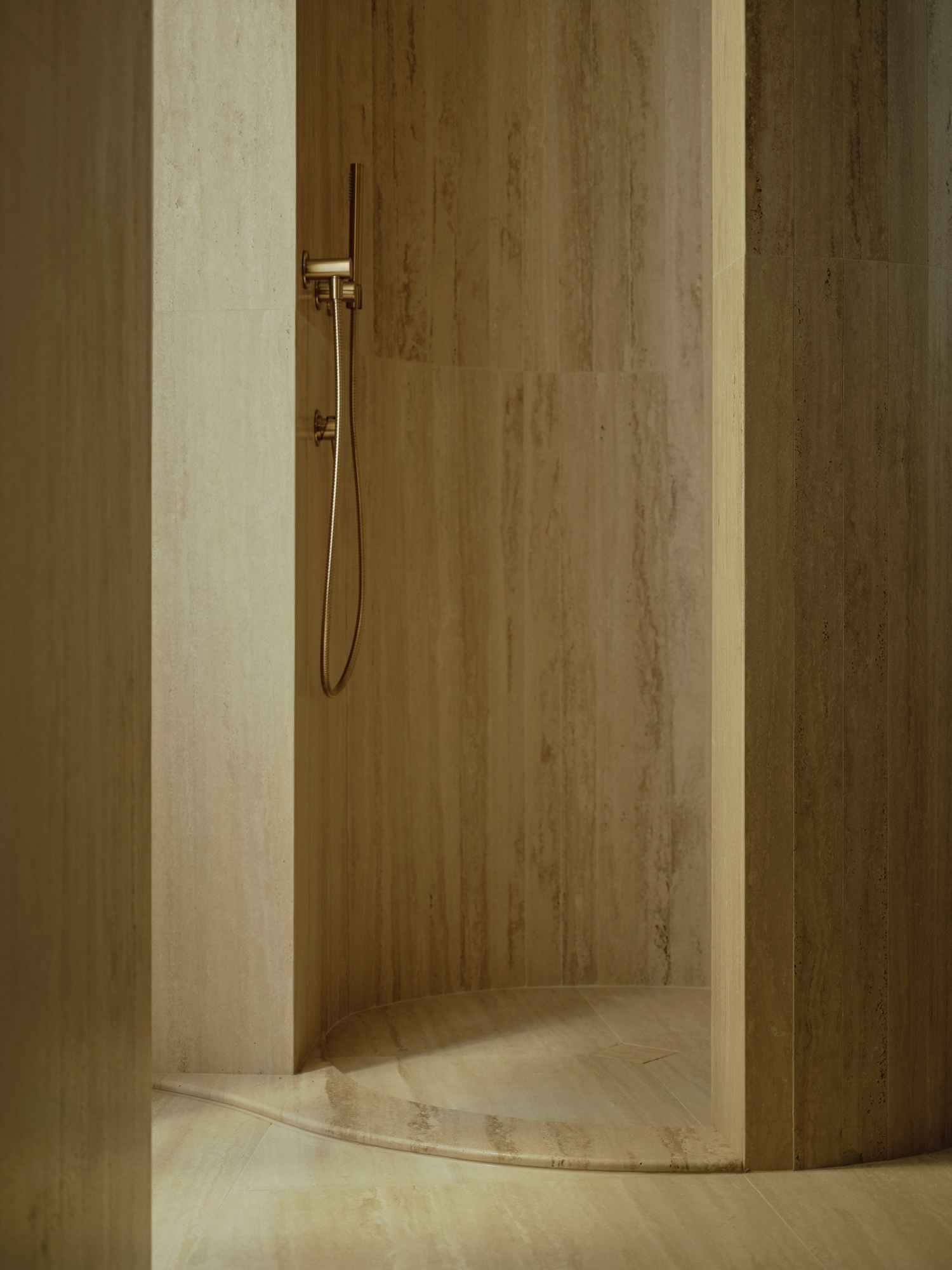
Travertine, wood, lime plaster, linen, and wool make up the added palette, and each of them ages in a way that reads as continuous with the original fabric. Lime plaster remains vapor permeable, moves with seasonal humidity, and holds the record of the trowel in its surface, which suits masonry walls that would trap moisture behind a modern acrylic finish. Travertine arrives with its own voids and bedding planes. Wool and linen soften acoustically and shift tone under filtered light. The wabi-sabi framing invoked in the project description has become shorthand across contemporary interiors, though here it has a practical corollary, since every specified material is one that improves rather than degrades under wear.
Furnishing follows the same logic of accumulation. Vintage pieces sourced through Nekonato Gallery sit alongside works by CLC Arte, chairs by New Works, and lighting by Venicem, whose Venetian output leans on brass and glass detailing developed in a city with its own long argument about preservation. Bespoke elements designed by the studio operate as architecture rather than furniture, absorbing storage and circulation into built volumes so the historic surfaces stay legible. The approach recalls Carlo Scarpa at Castelvecchio, where new insertions were made deliberately identifiable and detailed with enough precision that the old fabric read more clearly beside them.