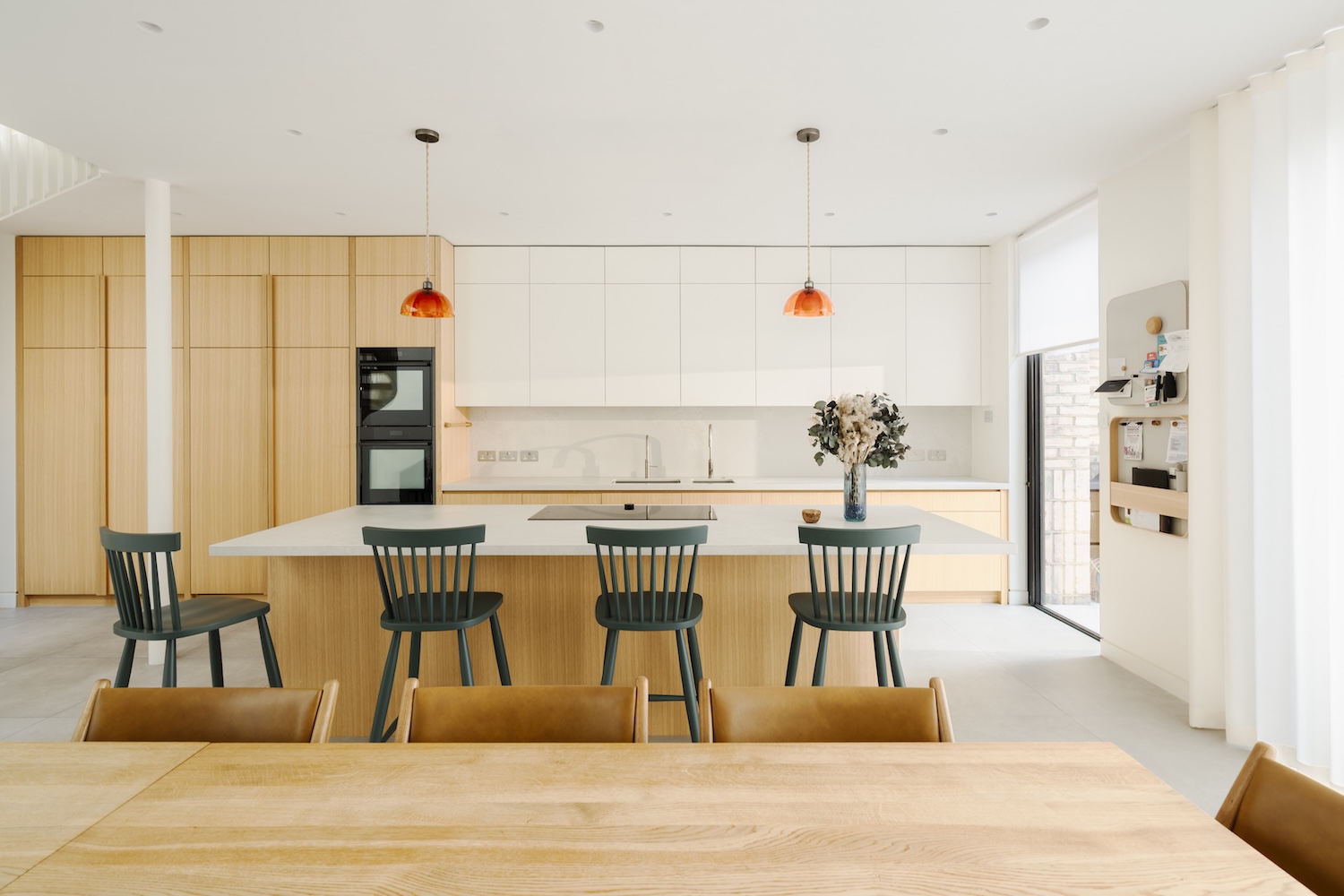
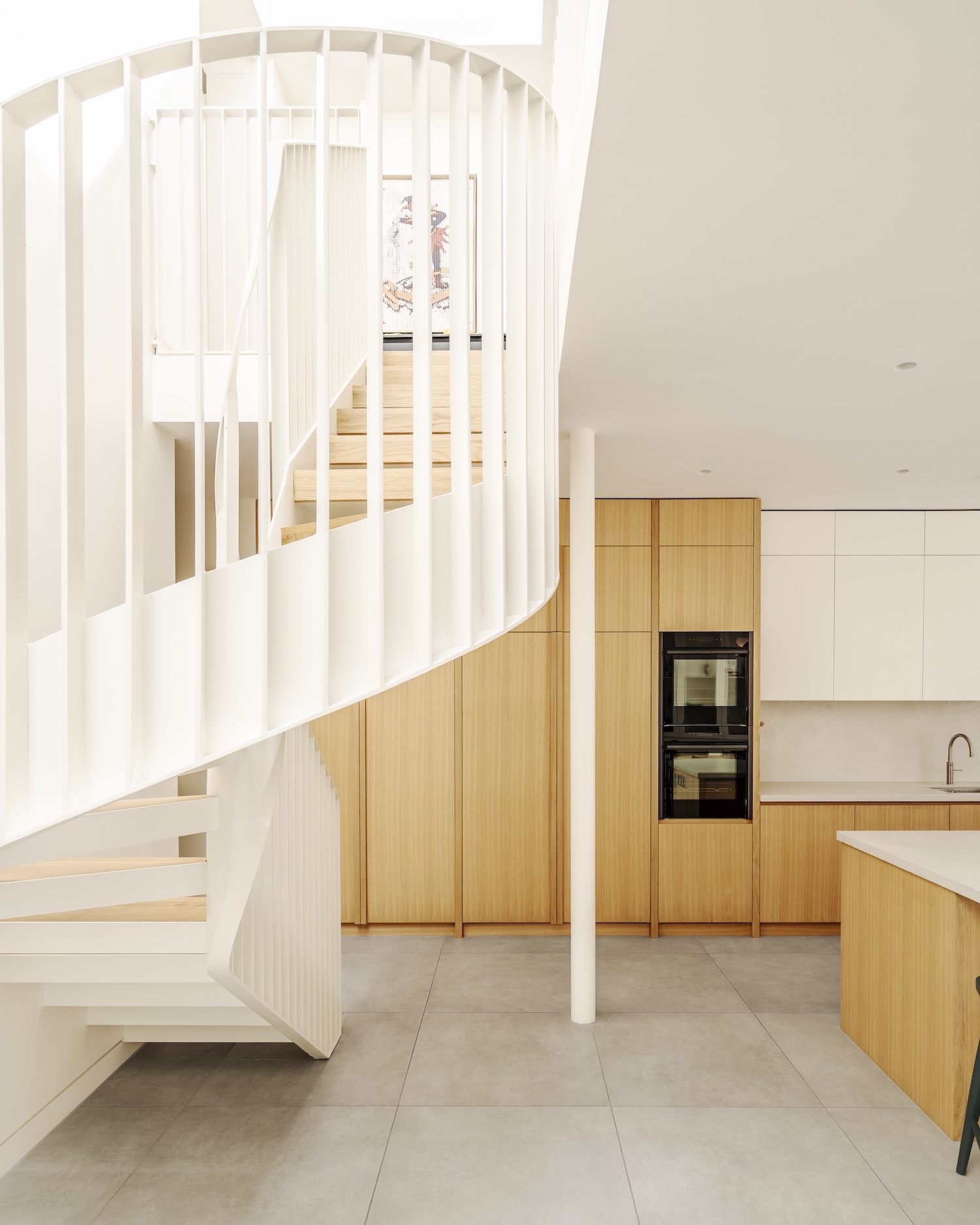
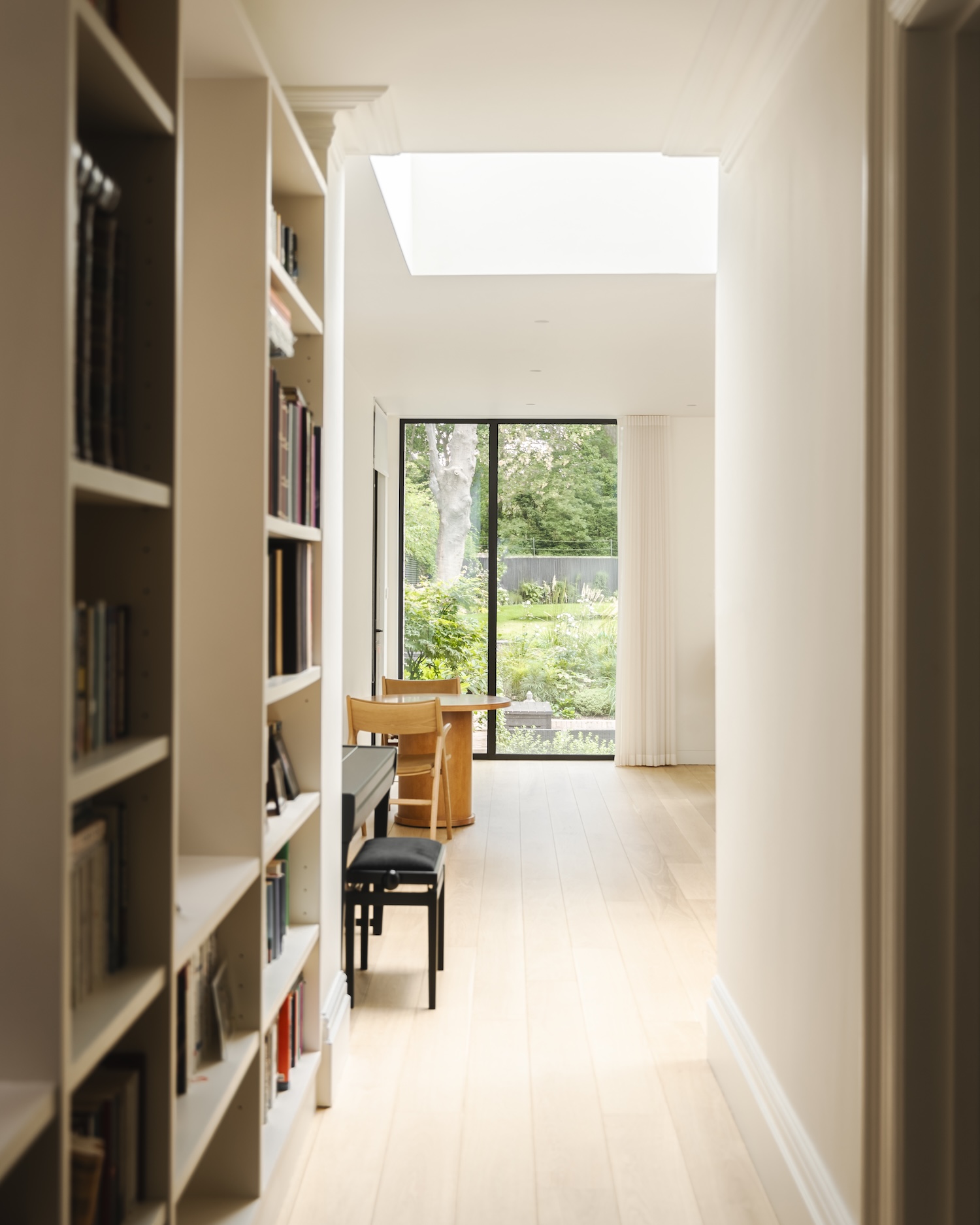
Crouch End House is a minimalist residential conversion located in London, United Kingdom, designed by Formwork Architects. The project begins with a provocation common to London’s denser boroughs: what do you do with an Edwardian property that spent decades as a care home, its original character stripped by institutional use, its planning history muddied by overreaching developer proposals? Formwork Architects answered by treating the existing fabric as the project’s primary material. Restoring rather than erasing, the practice recovered the building’s period logic while threading a contemporary spatial sequence through the rear and basement – a strategy closer to Caruso St John’s approach to found structures than to the tabula rasa renovations that typically characterise North London conversions.
The Edwardian entrance hallway sets the register. Opened to a double-height volume, the space allows restored stained glass windows to cast shifting colour across the staircase below – a staircase itself meticulously refurbished to recover the proportional authority the original joinery would have carried. That calibrated restraint in the heritage zones makes the rear extension more effective by contrast.
The 8.2-metre deep double-height addition is organised around a landscaped lightwell that resolves a level change between basement and garden. Two terraced patio areas cut into the stepped profile handle the transition, and full-height sliding doors dissolve the boundary between interior and exterior in a move that recalls the garden room typology developed by architects like John Pawson and later refined in residential work throughout the 2010s. Strategically positioned rooflights pull daylight deep into the floor plate, reaching interior balconies that frame garden views – a section-driven approach to natural light that treats the plan less as a diagram and more as a series of connected inhabited moments.