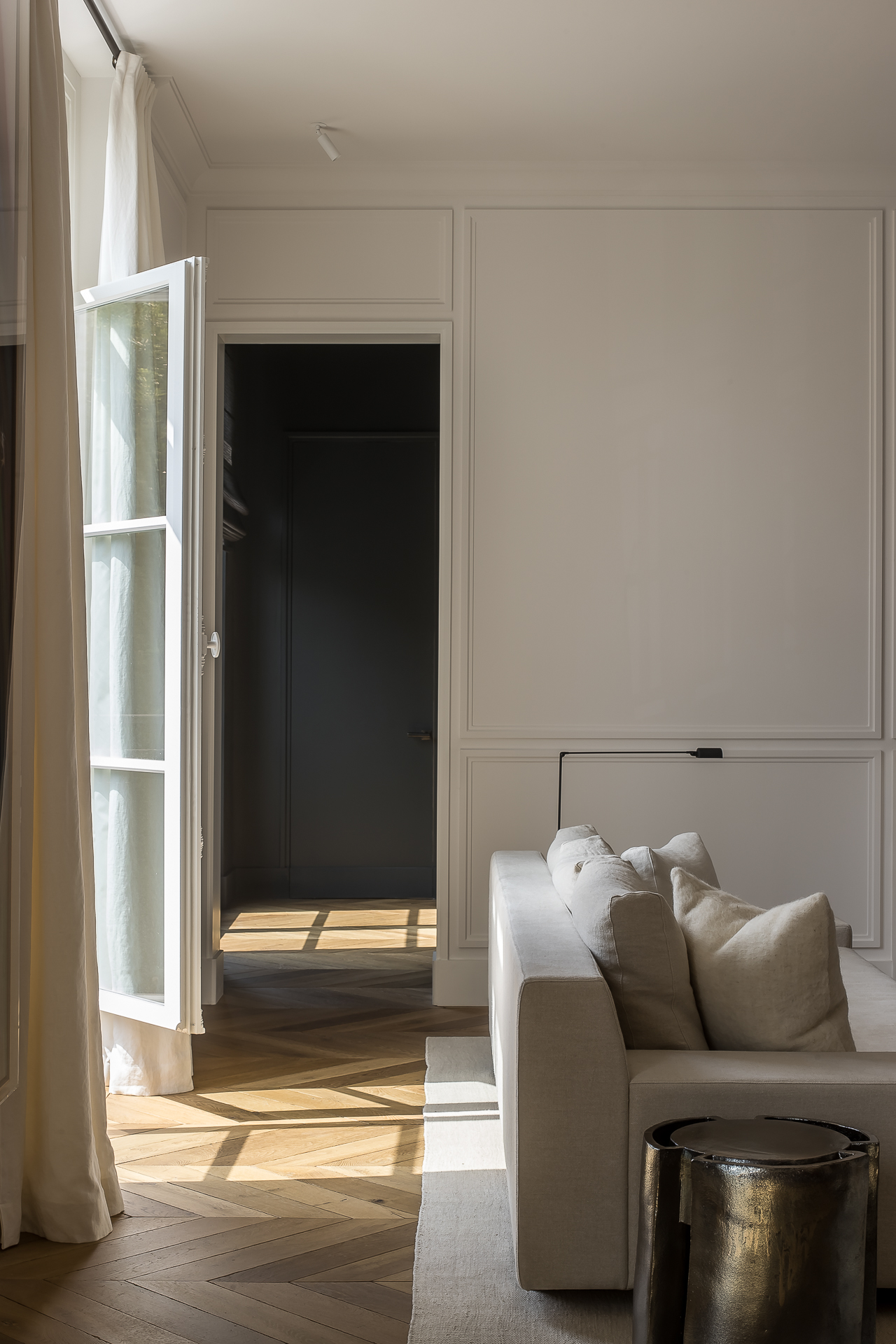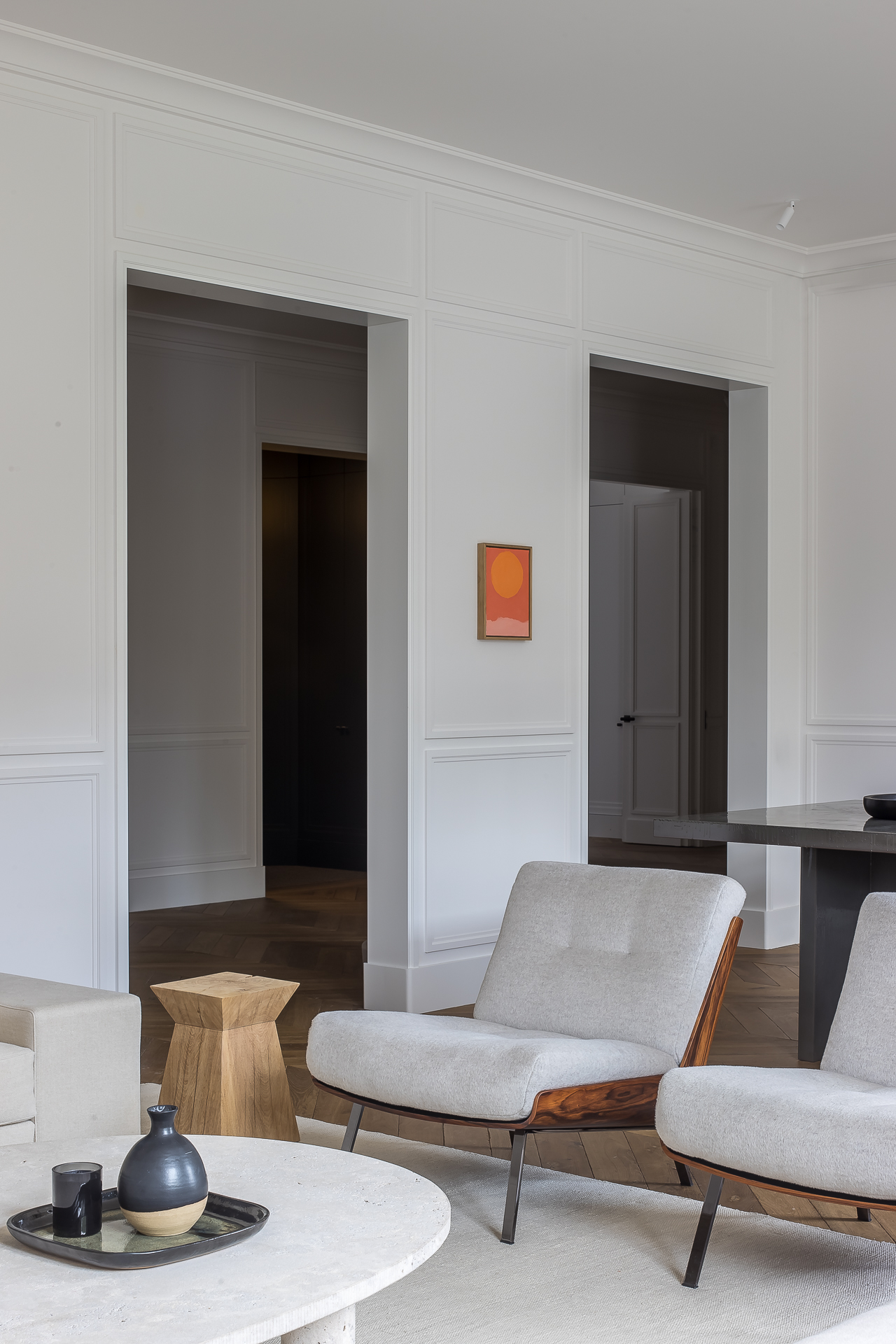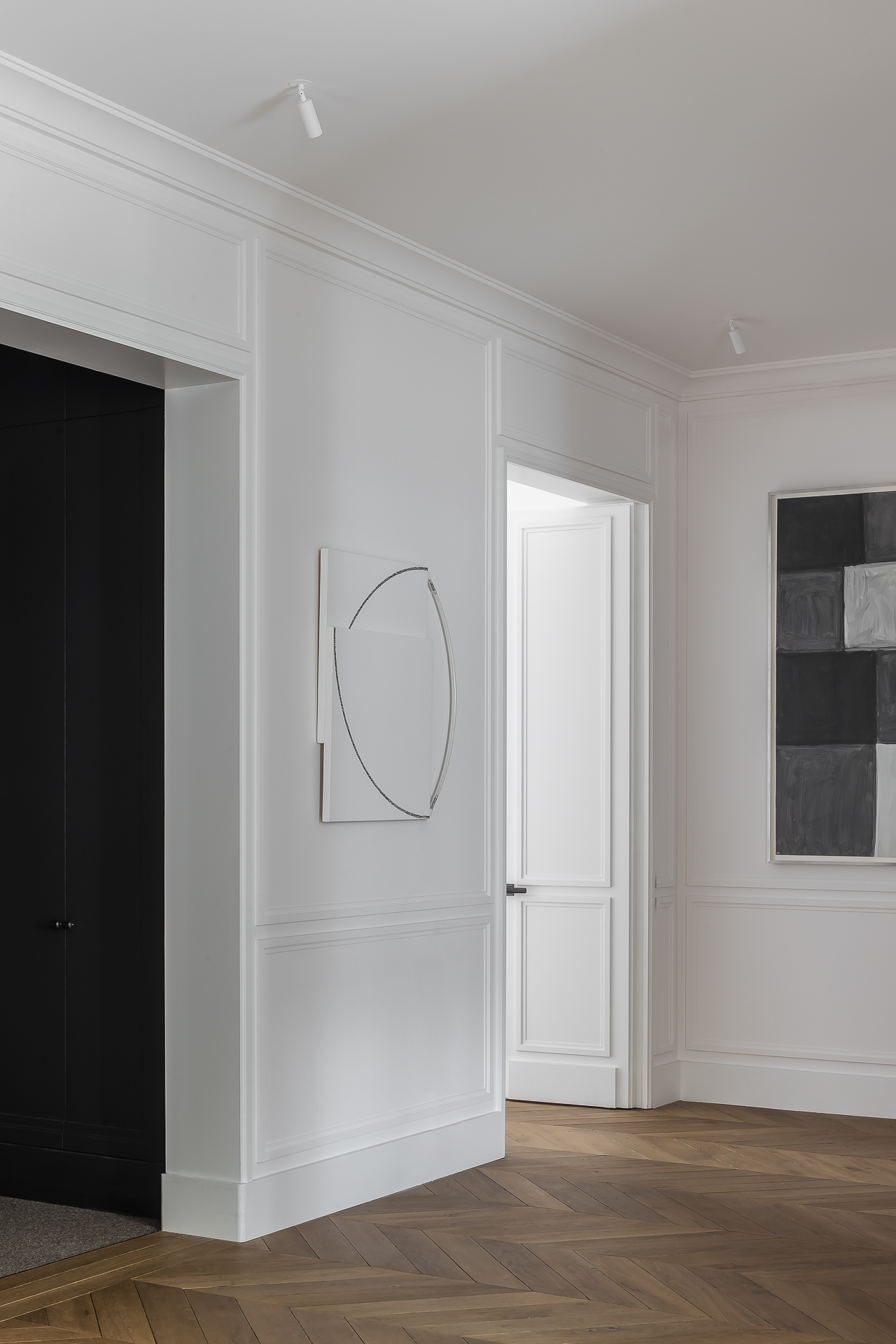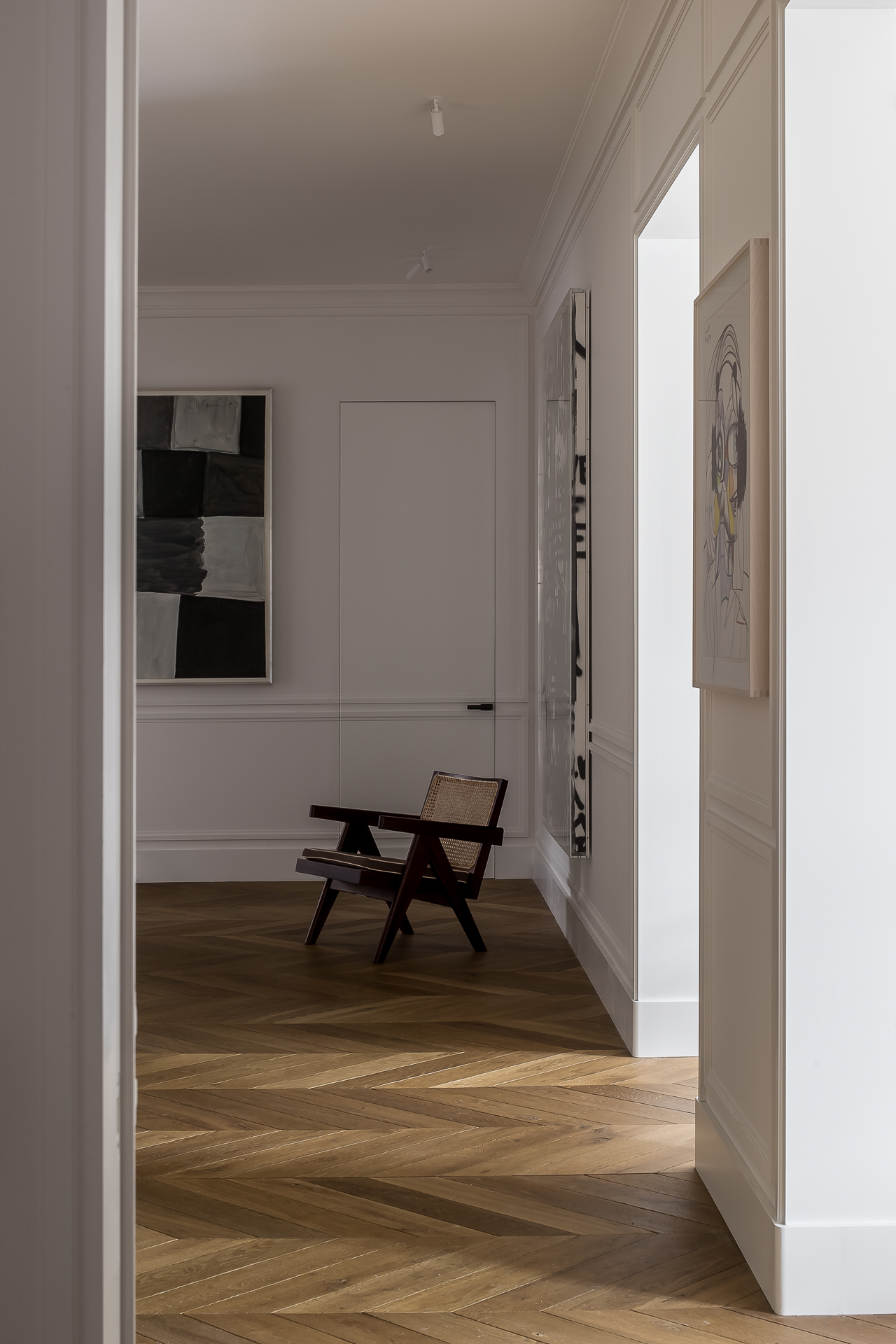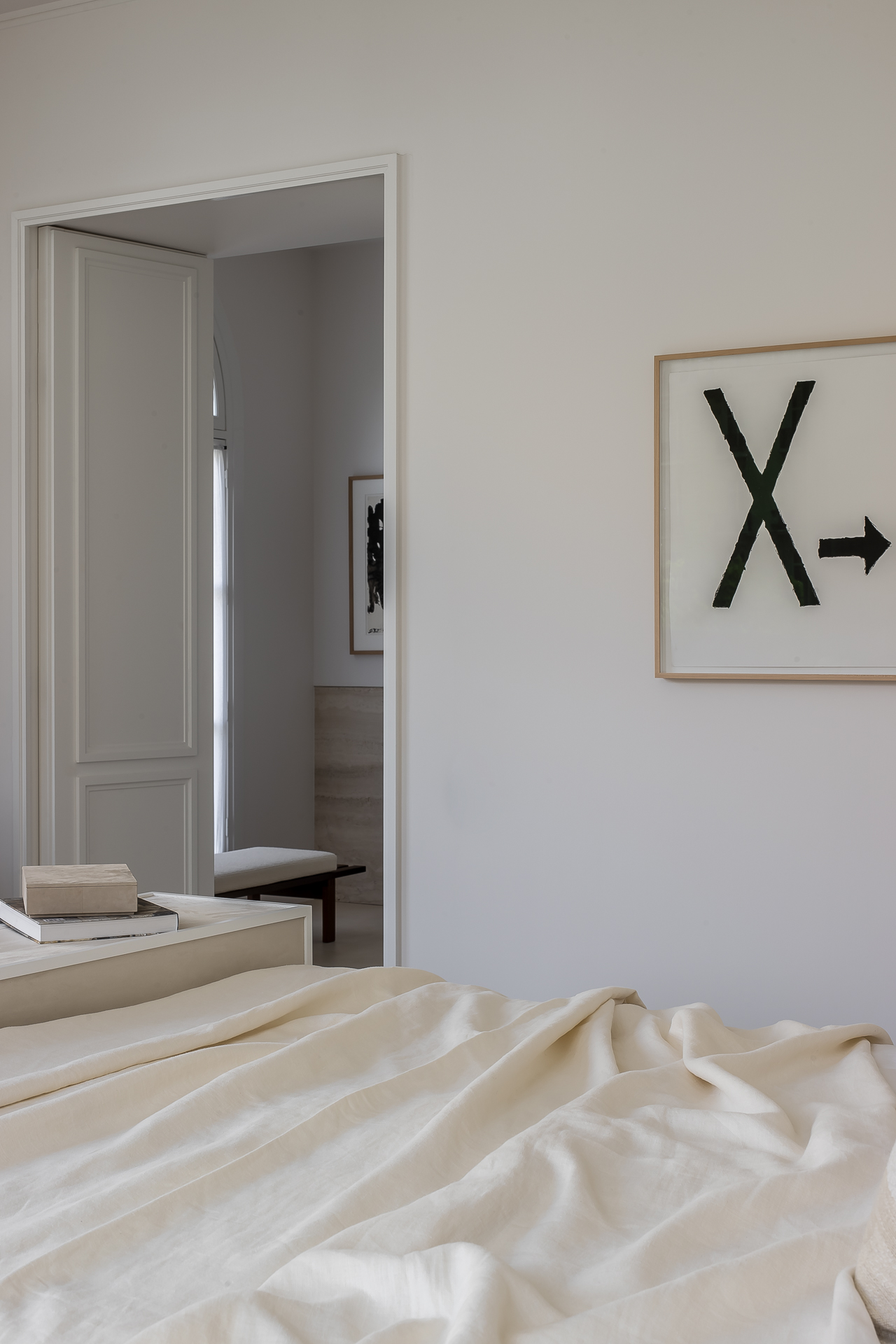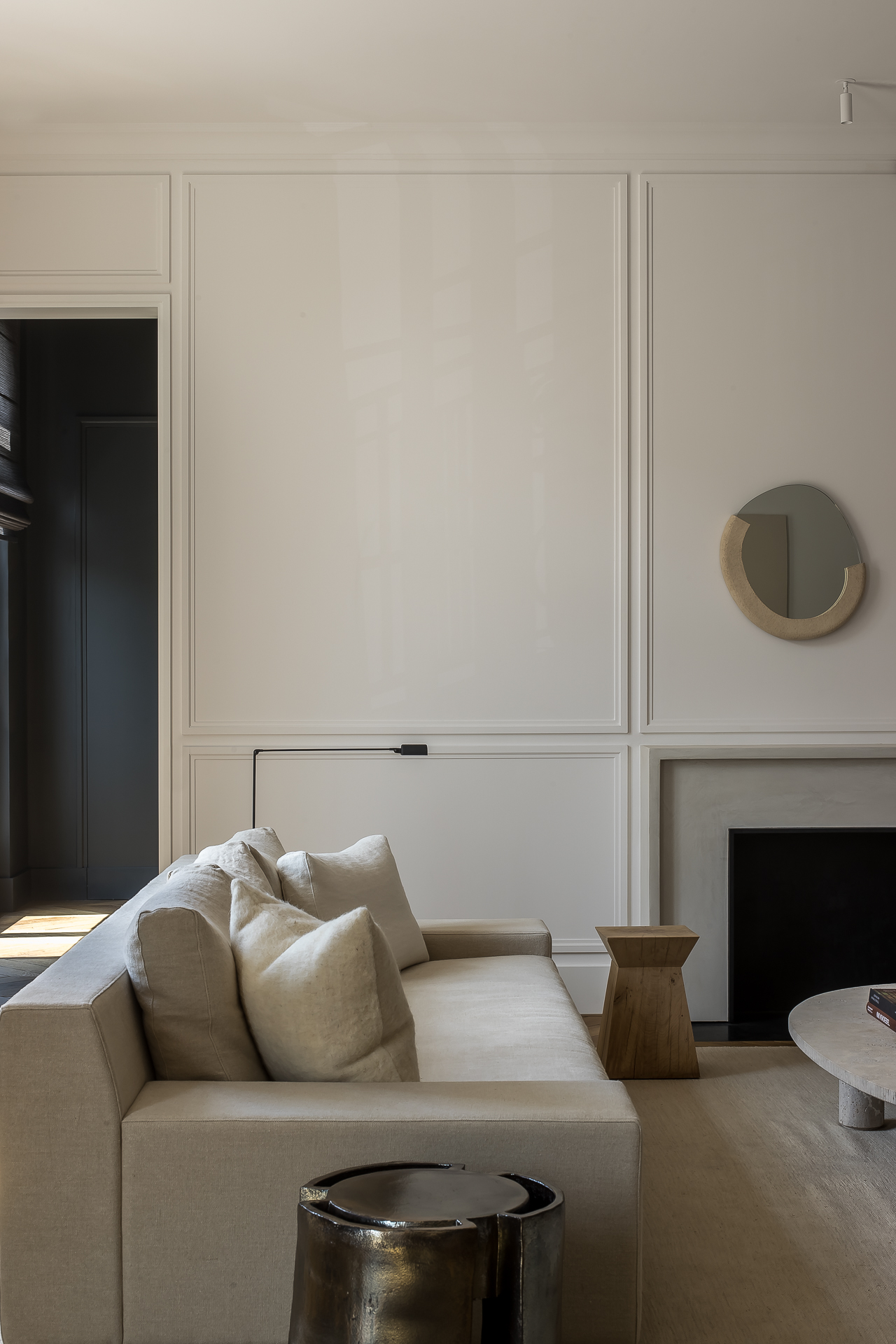
Parisian Portrait is a minimalist residential interior located in Paris, France, designed by Belgian designer Nathalie Deboel. The 16th arrondissement does not forgive indifference. Its Haussmann-era apartments carry a specific architectural authority – the rectangular wall mouldings, the axial room sequences, the proportions calibrated for a particular civic grandeur – and any intervention that ignores this grammar risks producing something jarring rather than inhabited. For this worn-out apartment on Square Lamartine, the challenge was not to erase the building’s historical weight but to work within it, accommodating a young family and their extensive art collection without neutralizing the bones of the space.
The organizational move that anchors everything is the reconversion of internal circulation. A central gallery, reached after passing through the vestiaire, operates as the apartment’s fulcrum – a generous, open passage that distributes movement to all surrounding rooms while functioning as a dedicated display space for large-format works. This is Haussmann logic extended rather than overwritten: the enfilade principle, where rooms flow from a central axis, repurposed for a contemporary collecting household rather than Napoleonic-era entertaining. The symmetrical dressing of the rooms reinforces this, the furniture arrangements responding directly to the existing wall geometry rather than competing with it.
Oak, walnut, and travertine do most of the work, their tonal range sitting between the cream plaster of the original architecture and the chromatic variety of the art collection. The reference to local statuary in the travertine selection is the kind of site-specific thinking that prevents a project from feeling like a catalogue assembly – the stone carries a contextual resonance that a cooler material like Calacatta marble or polished concrete would dissolve. Most of the furniture was developed in collaboration with a Belgian arts and crafts atelier, which keeps the custom millwork from reading as generic bespoke and gives the interiors a handmade density absent from purely commercial fit-outs.
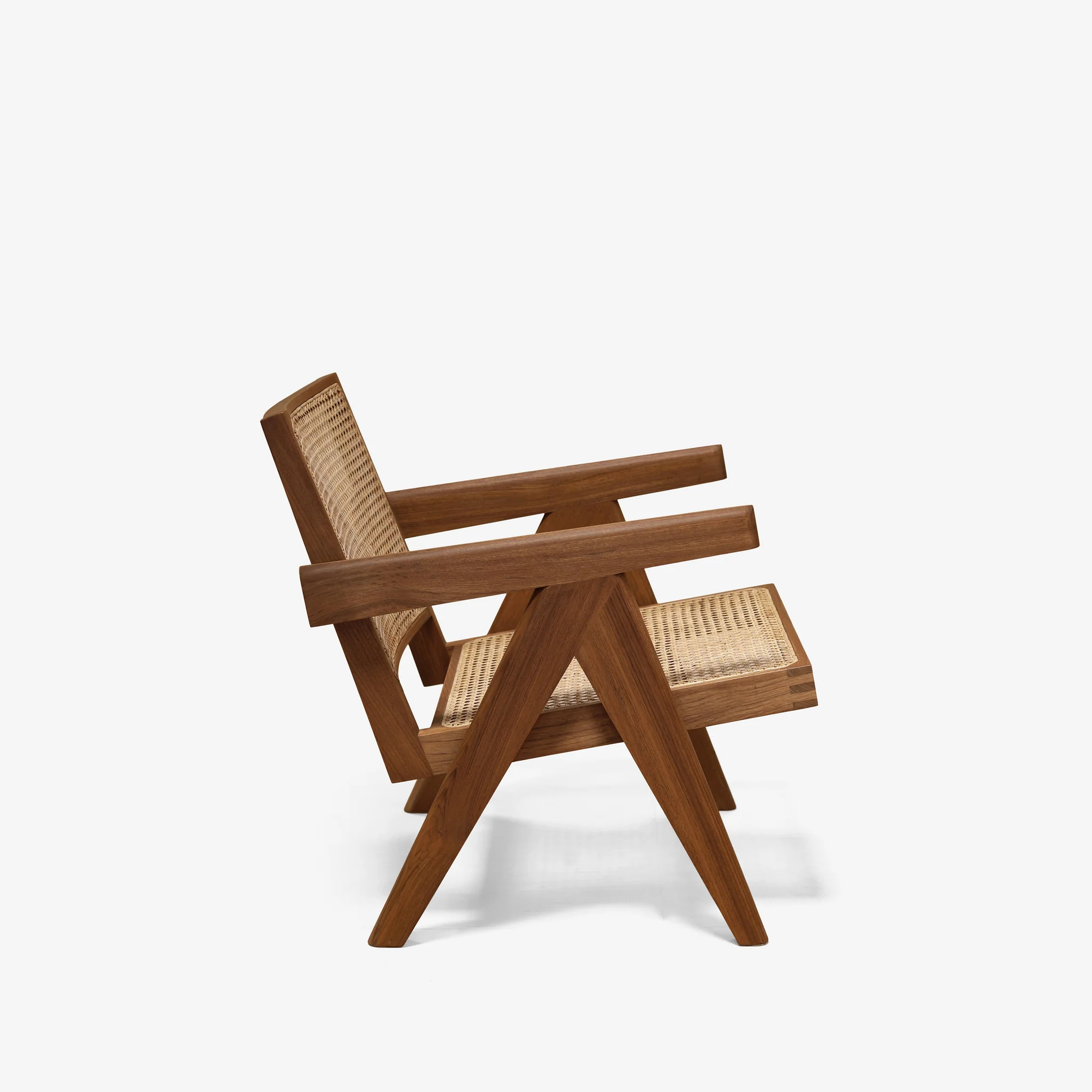
The broader selection of pieces by international designers sits within this craft-forward framework without disrupting it. The integration of the art collection drives much of this restraint – when the walls carry significant works, furniture must support rather than compete, and the symmetrical arrangements accomplish this by giving each room a visual stability that anchors even large-scale paintings.