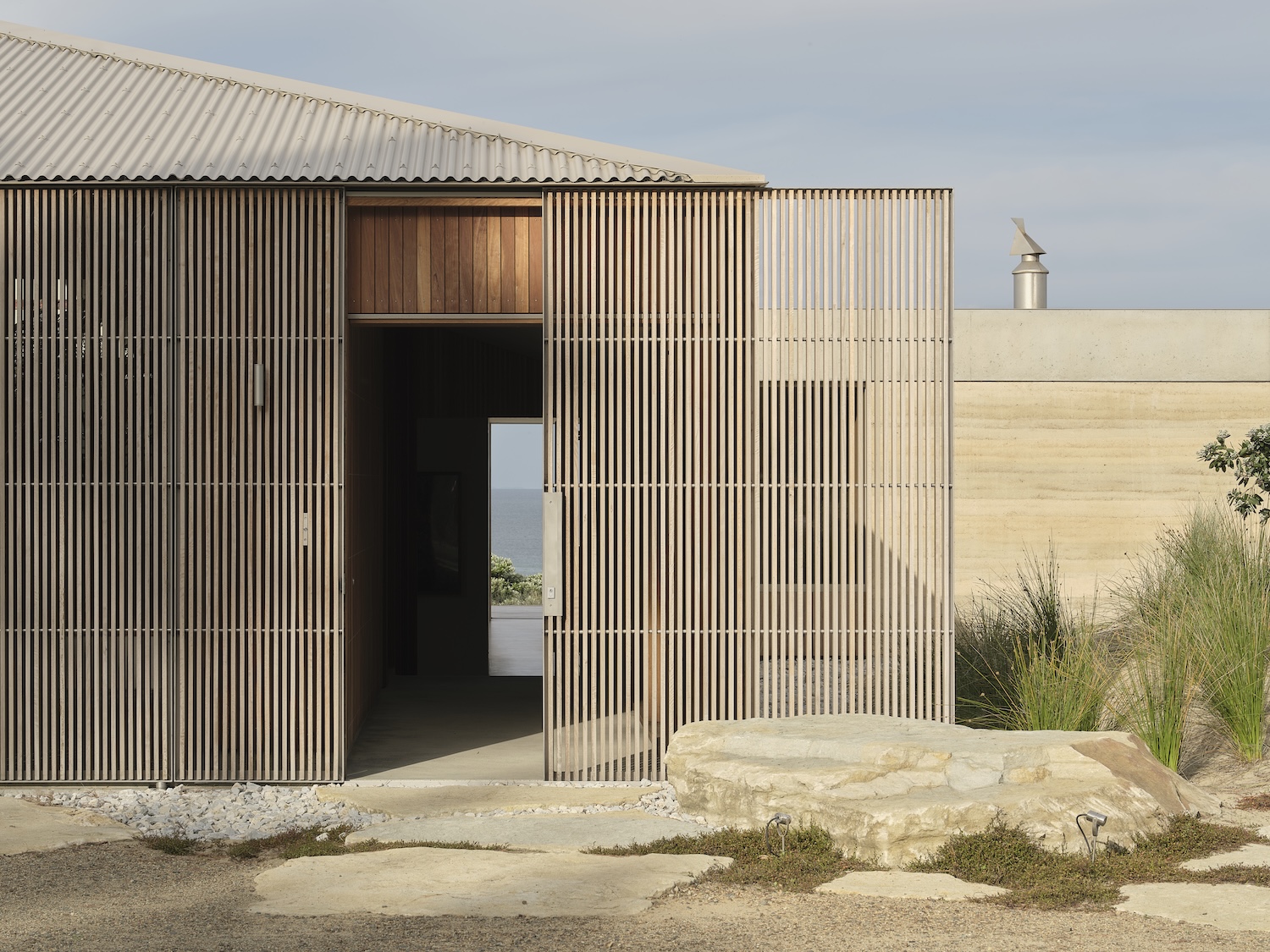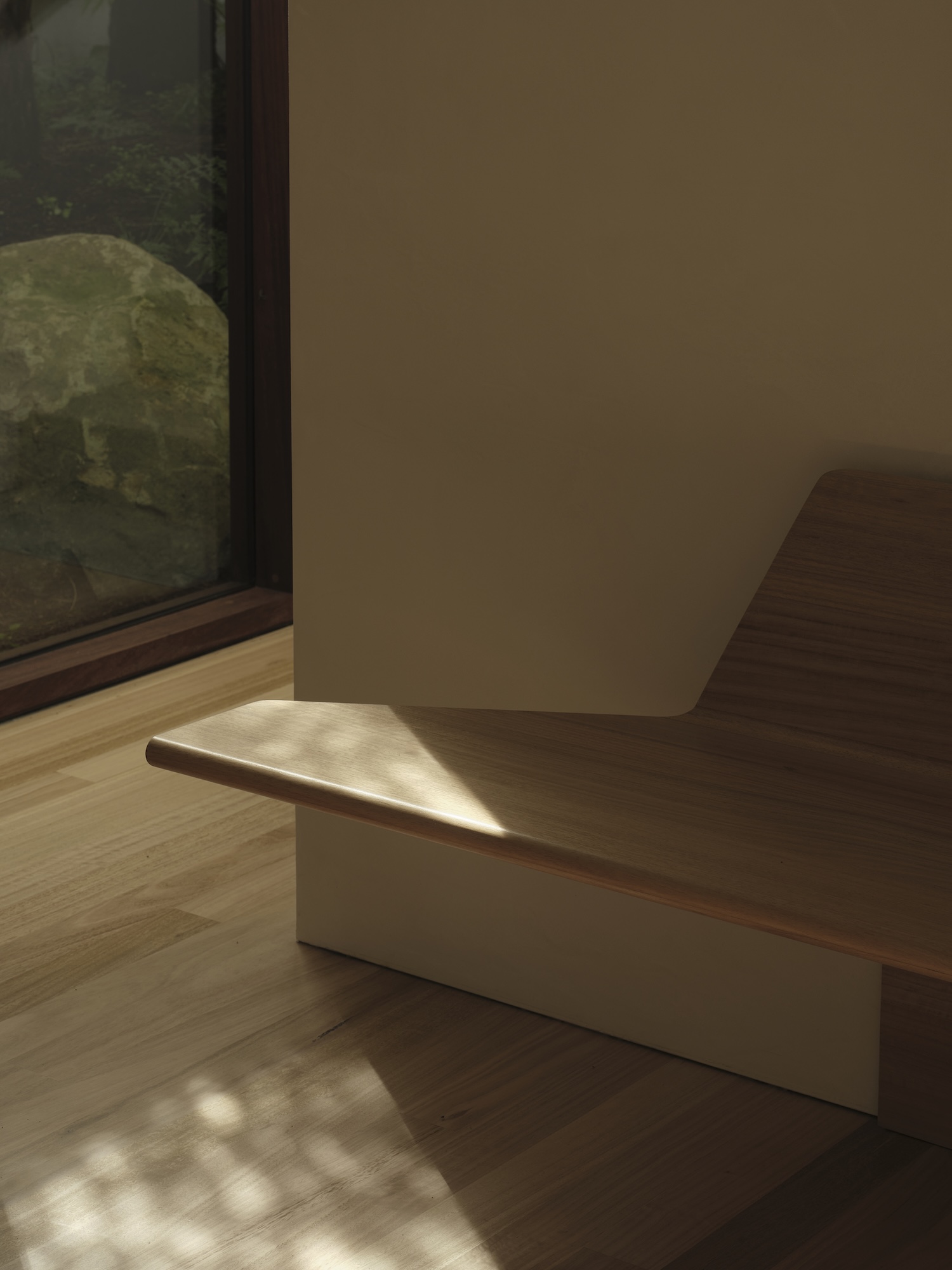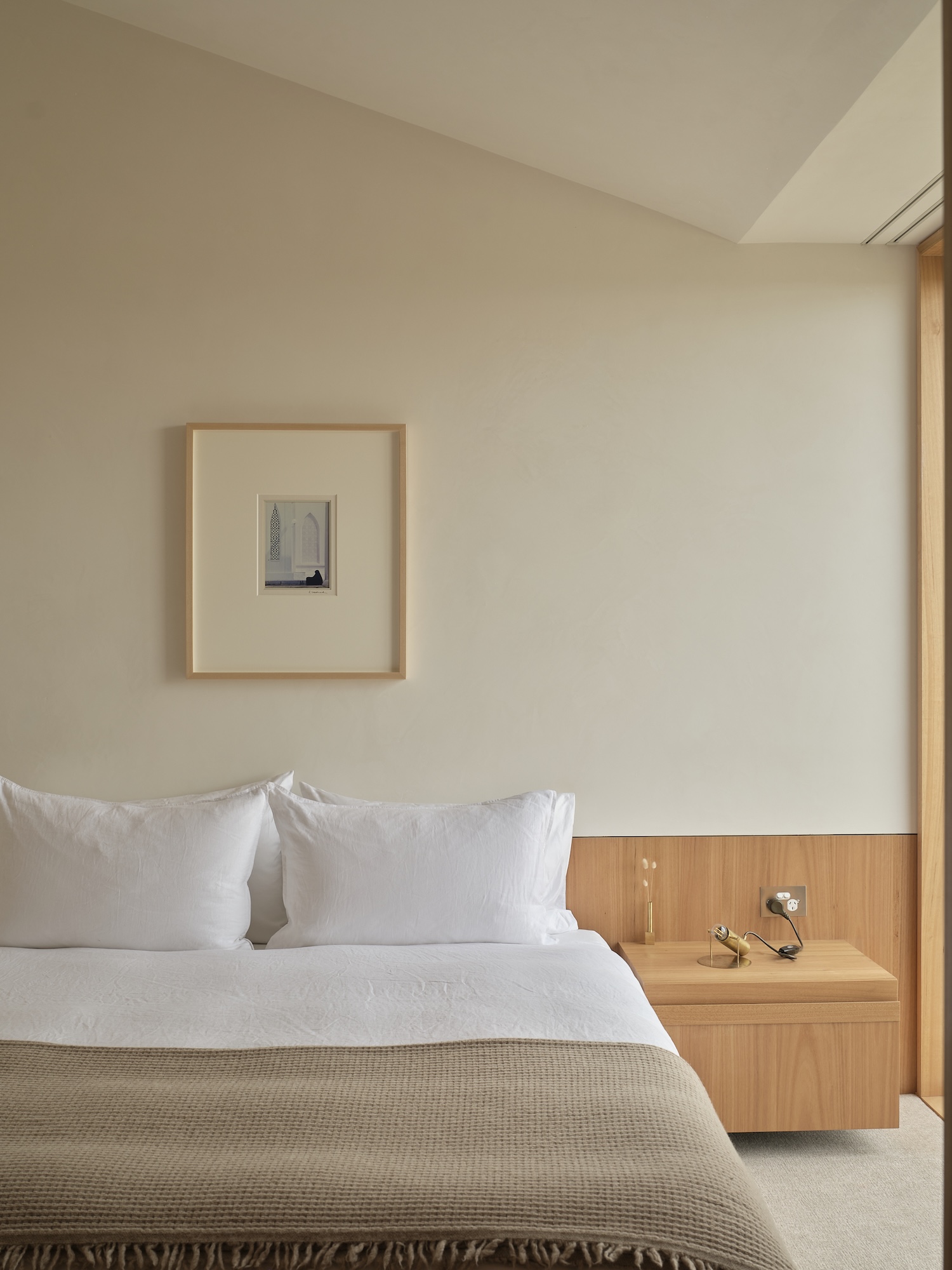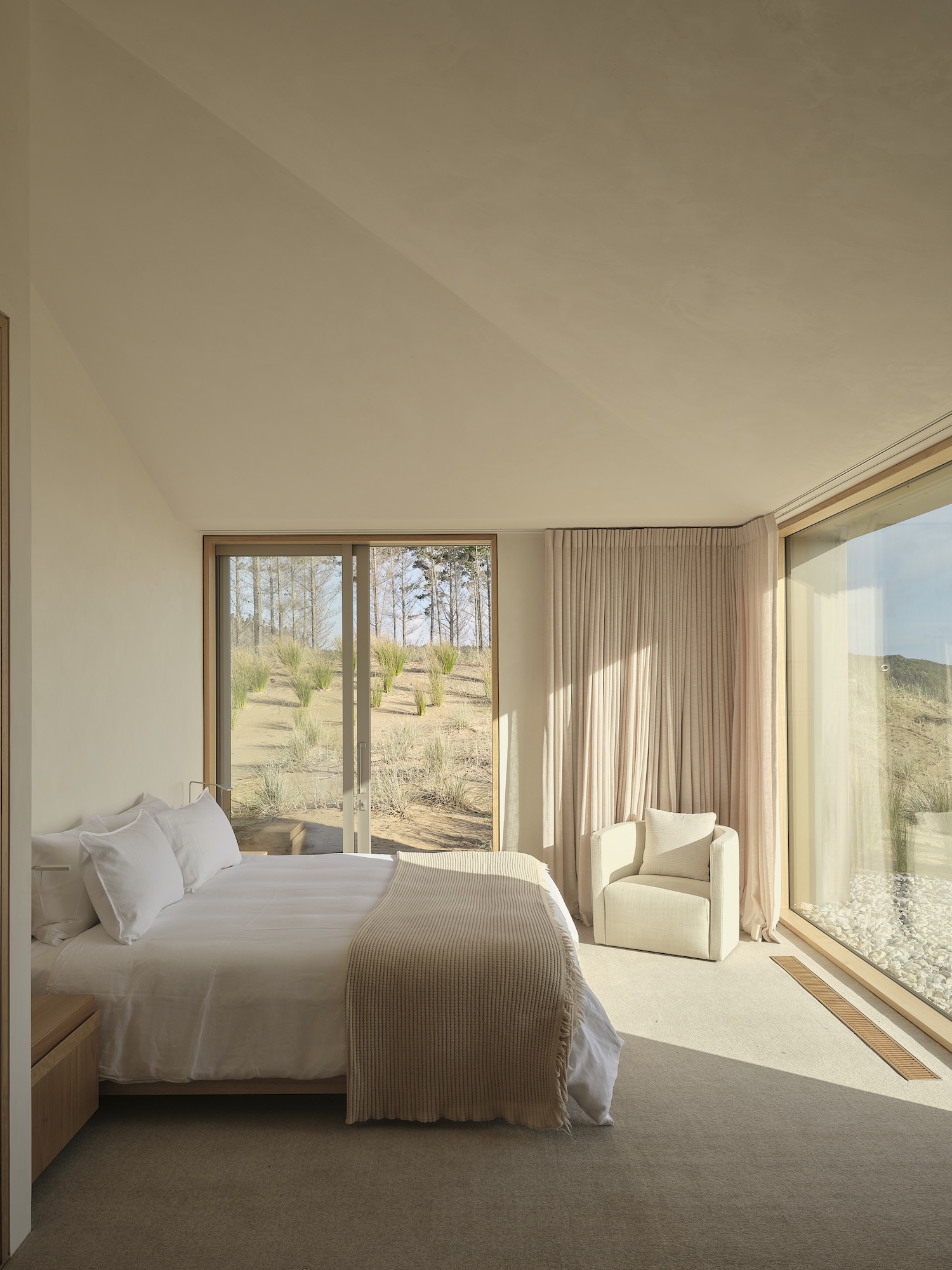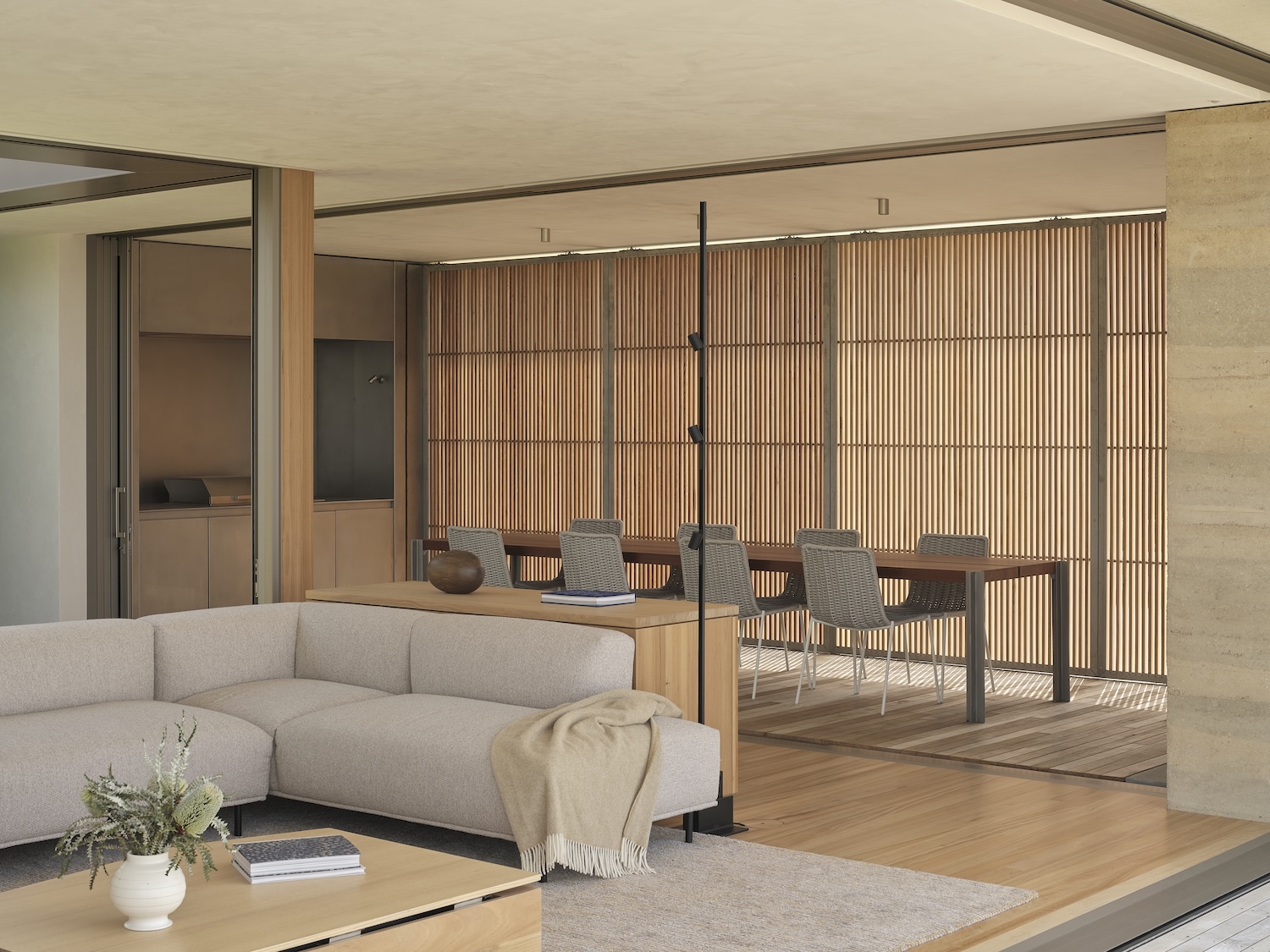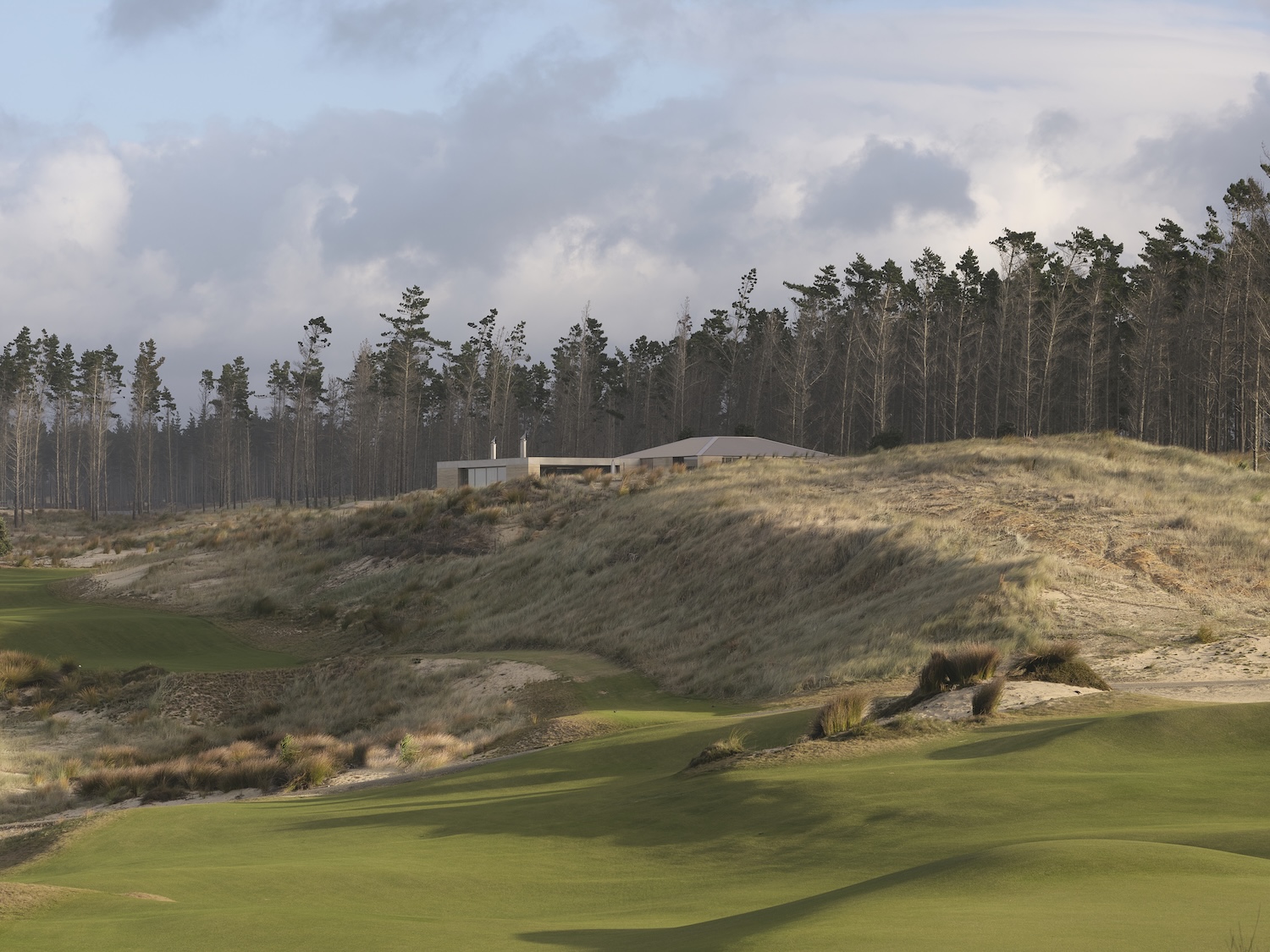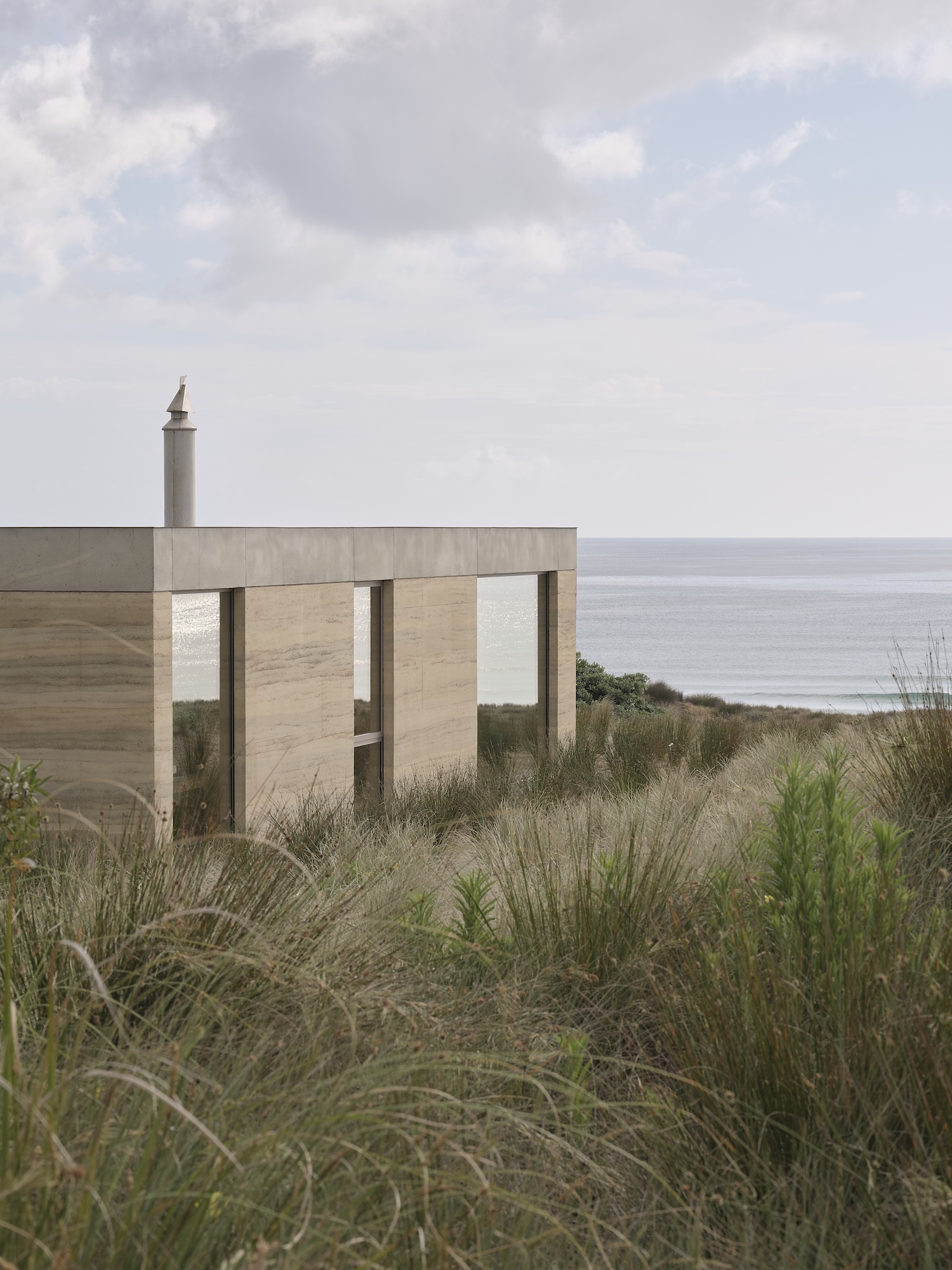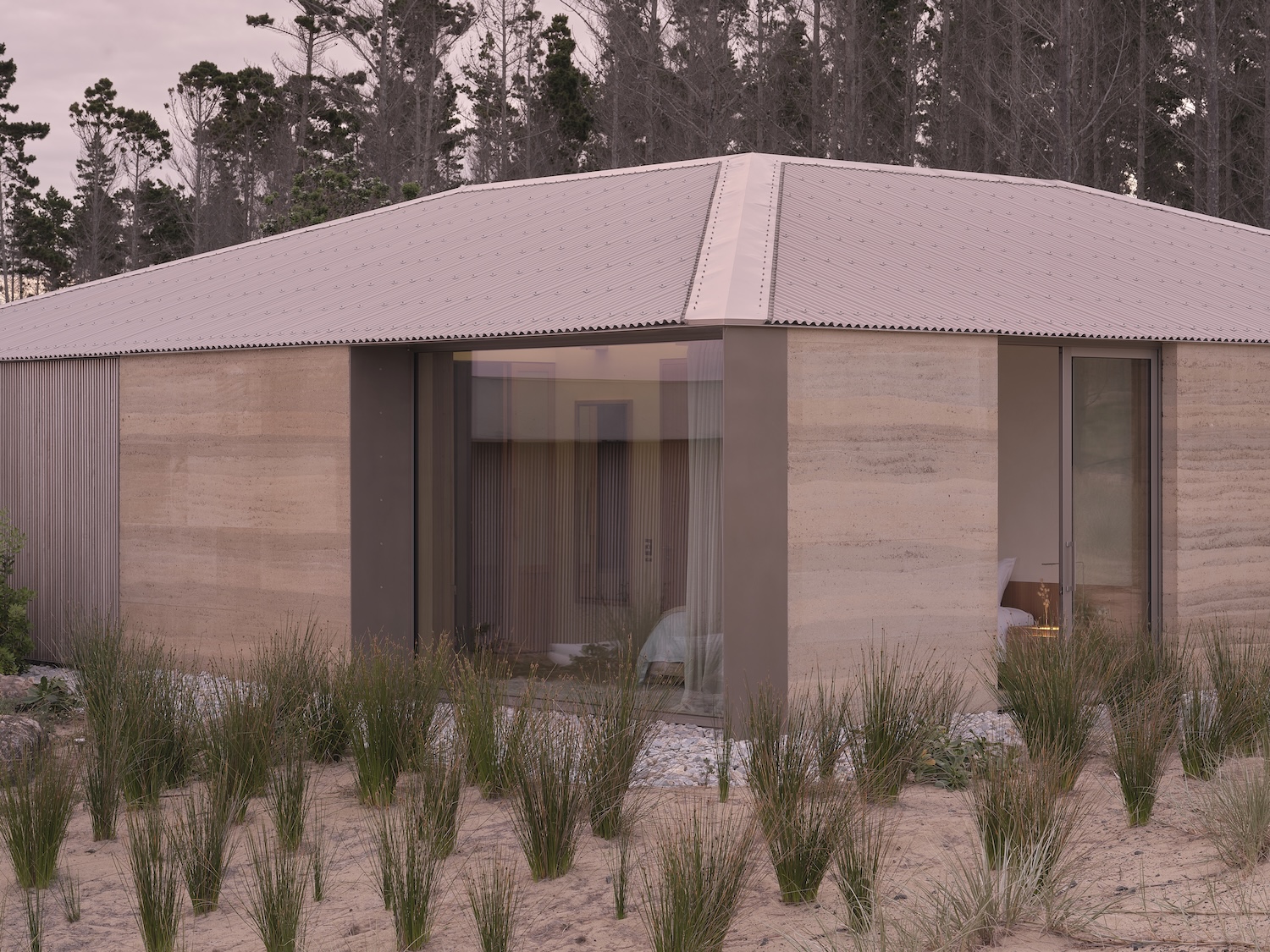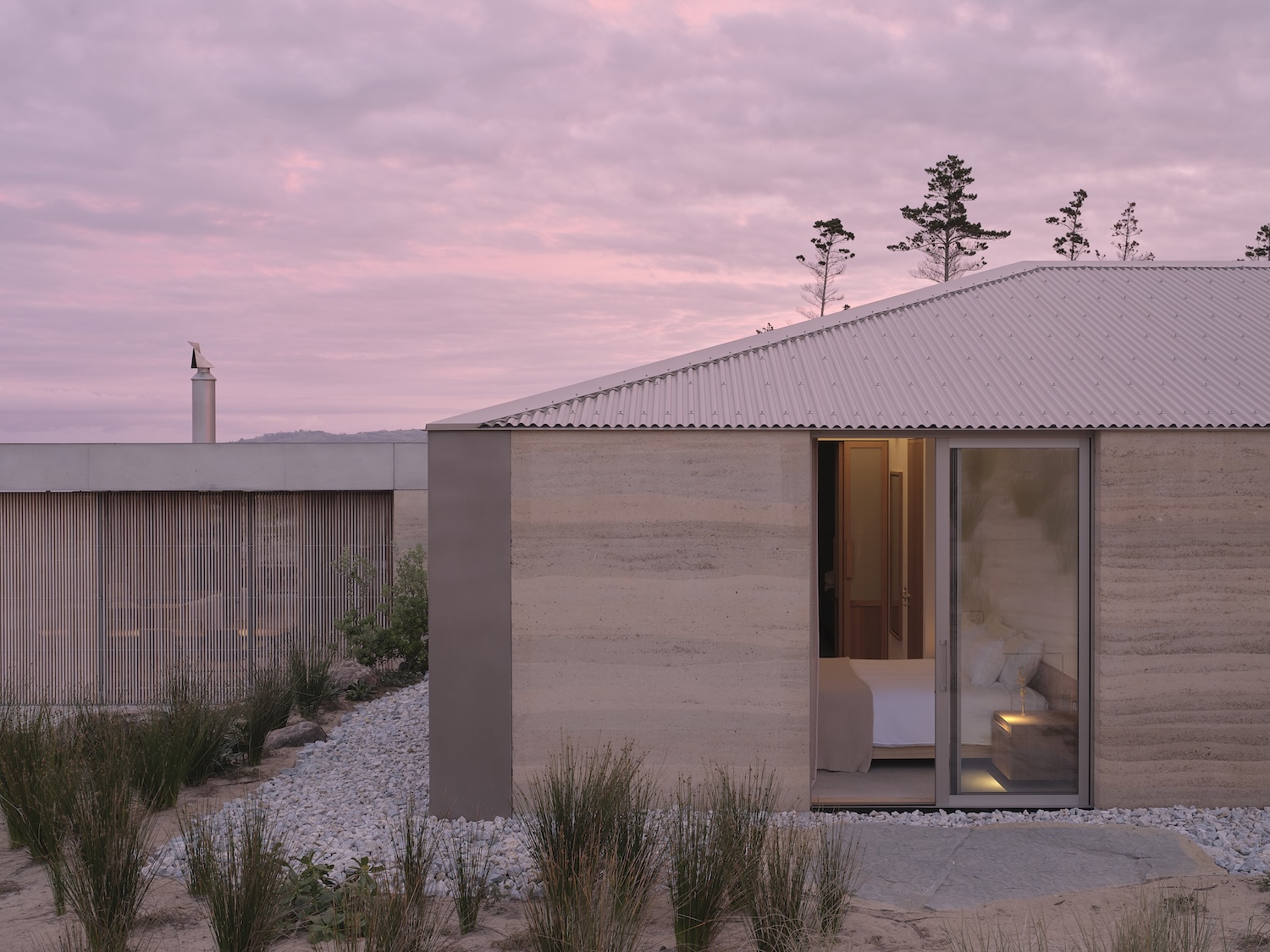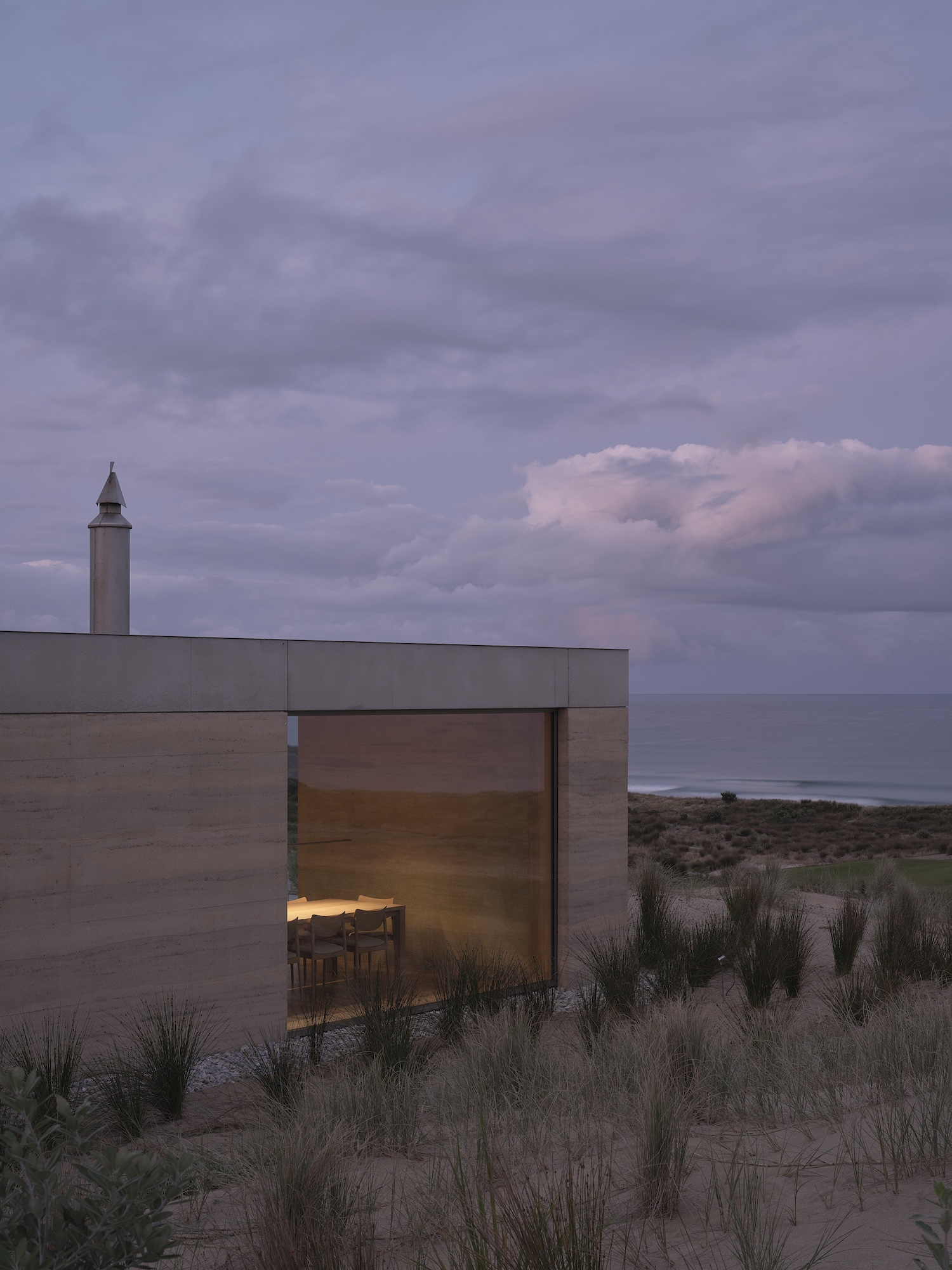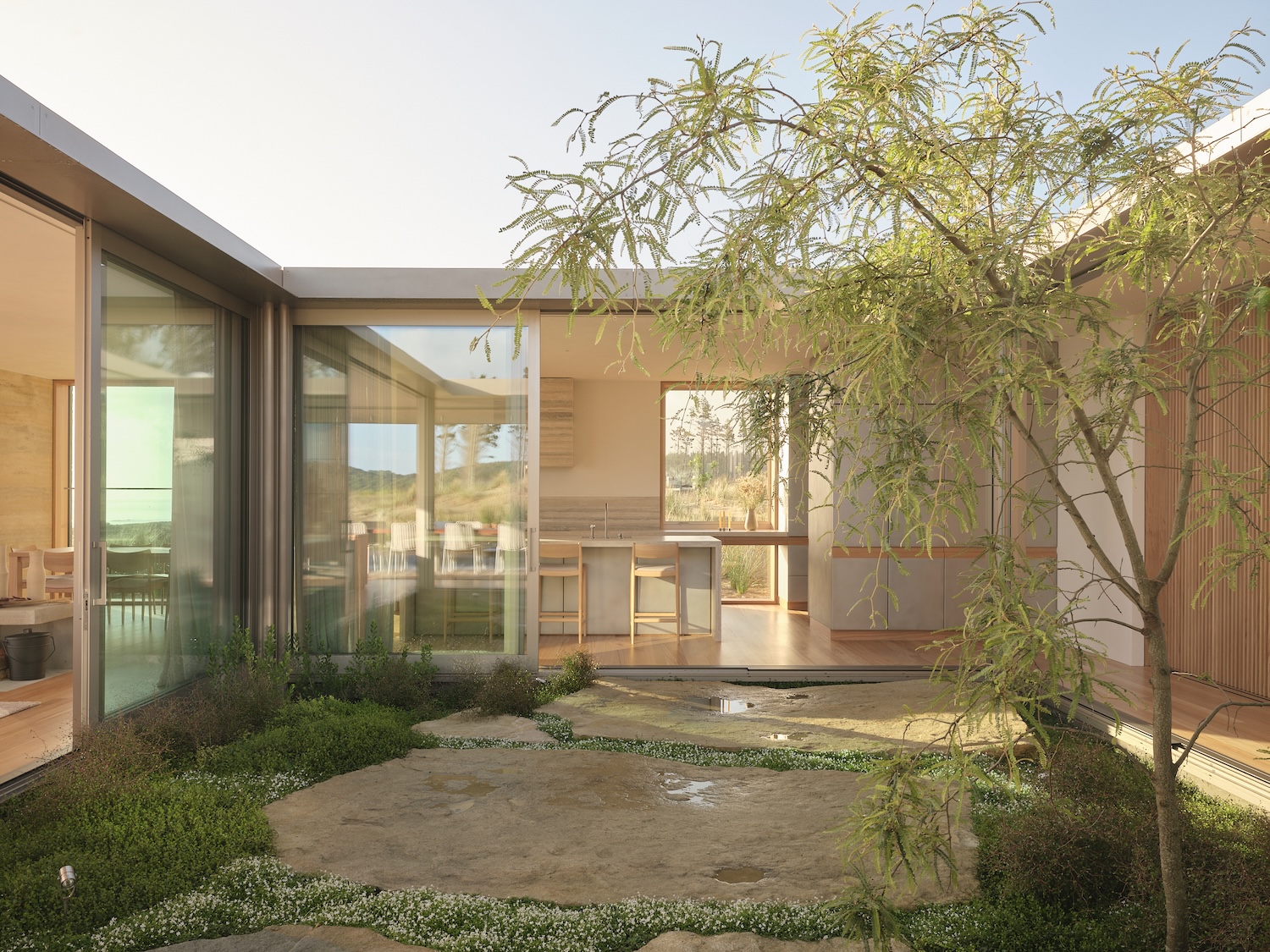
The rammed earth walls of Double Courtyard House were compacted loosely on purpose, leaving a coarser, more variable face than the technique usually produces. Designed by Roberts Gray Architects for a site in the dunes at Te Arai, New Zealand, the house is made of two intersecting pavilions, one under a hip roof and one under a flat roof, offset in plan and section so that one courtyard tracks the sun path while the other holds the sea view.
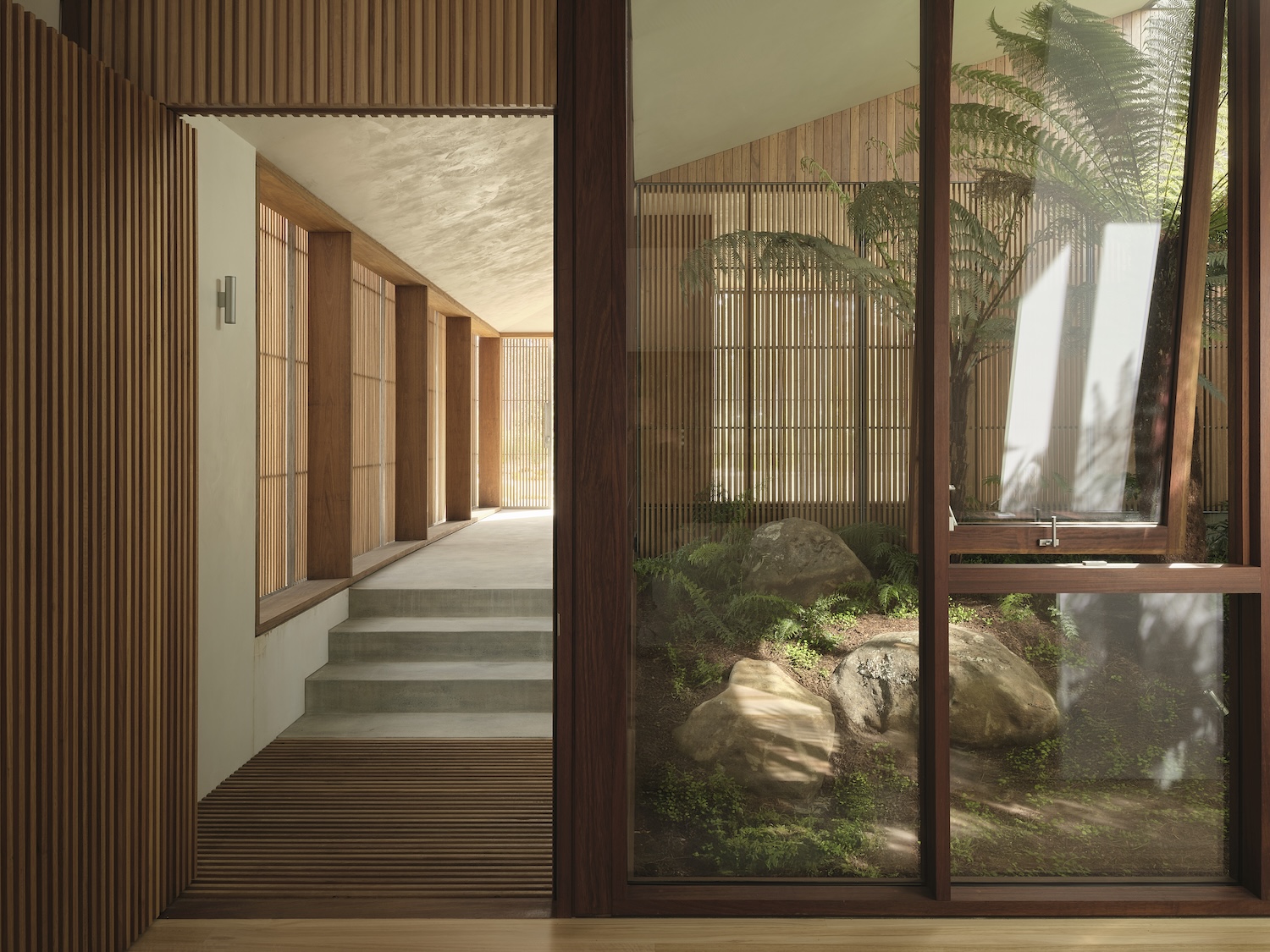
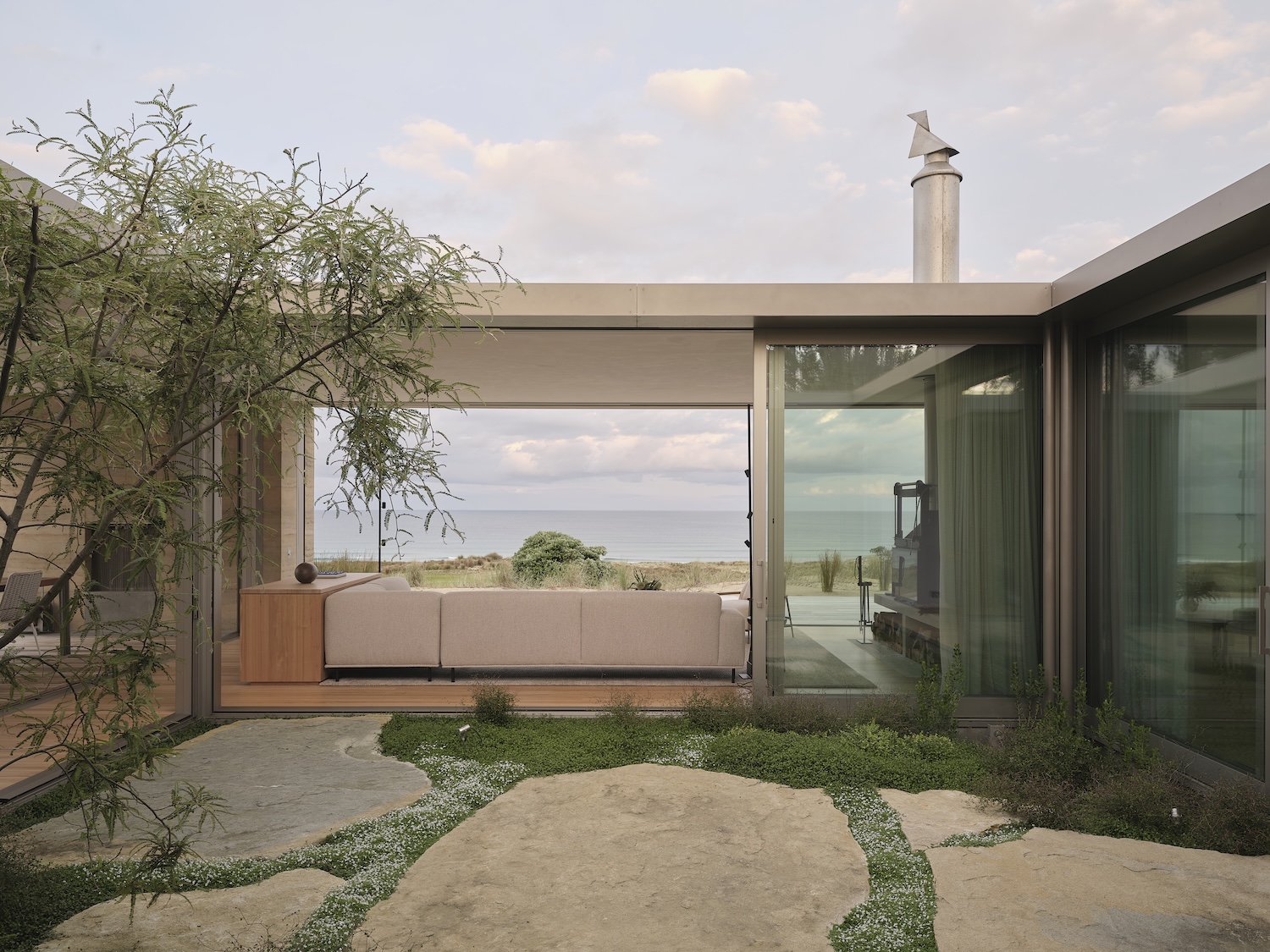
Coastal houses are typically organized around the horizon line. This one directs as much attention inward, toward two courtyards with different conditions. The rear courtyard, inside the bedroom wing, sits beneath an opening cut into the hip roof. Light drops through it onto tree ferns and ground cover, and the planted enclosure stays cooler and shaded, so the route to the bedrooms passes through cool air, the smell of vegetation, and filtered light after the glare of the dunes.
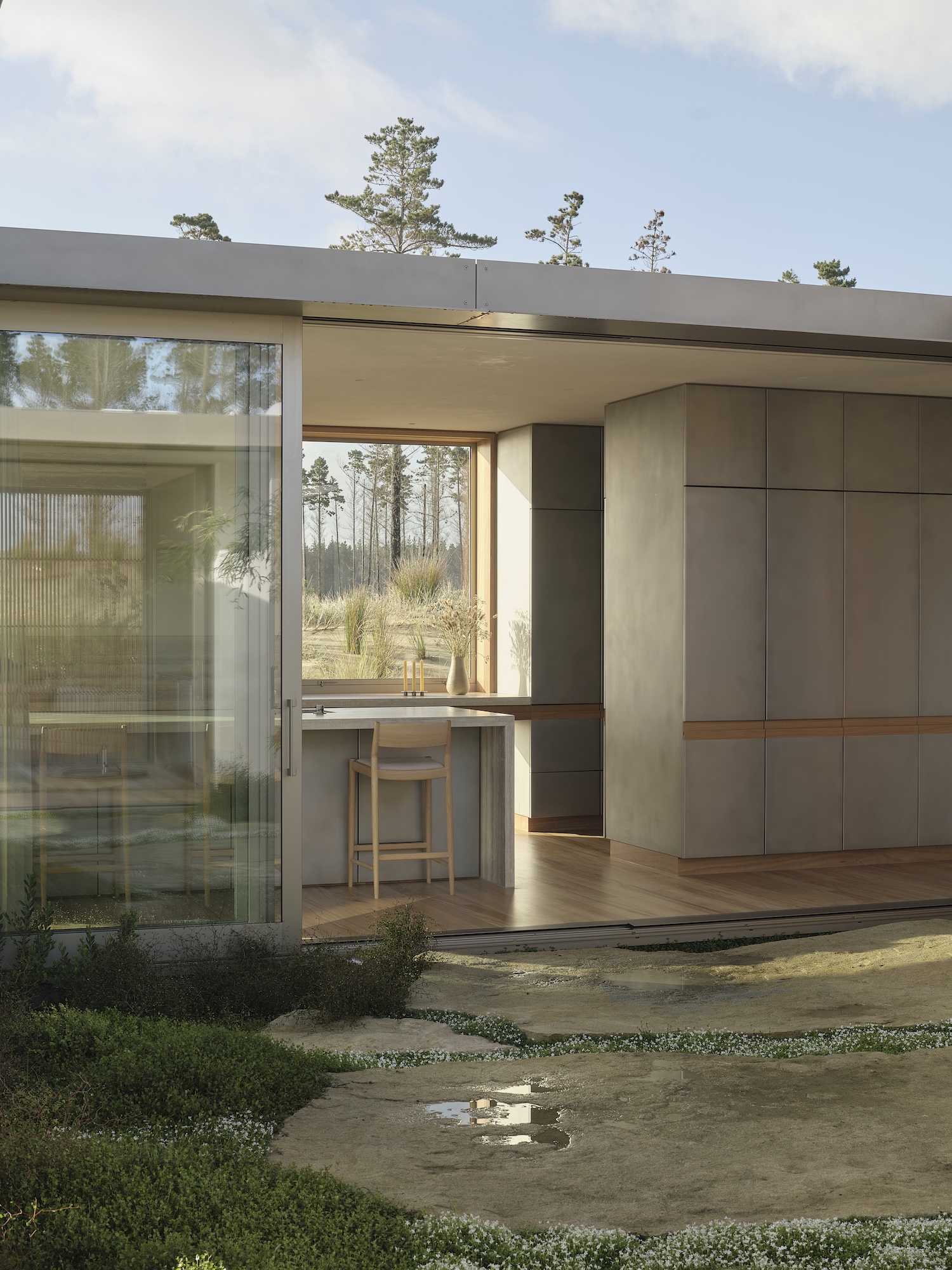
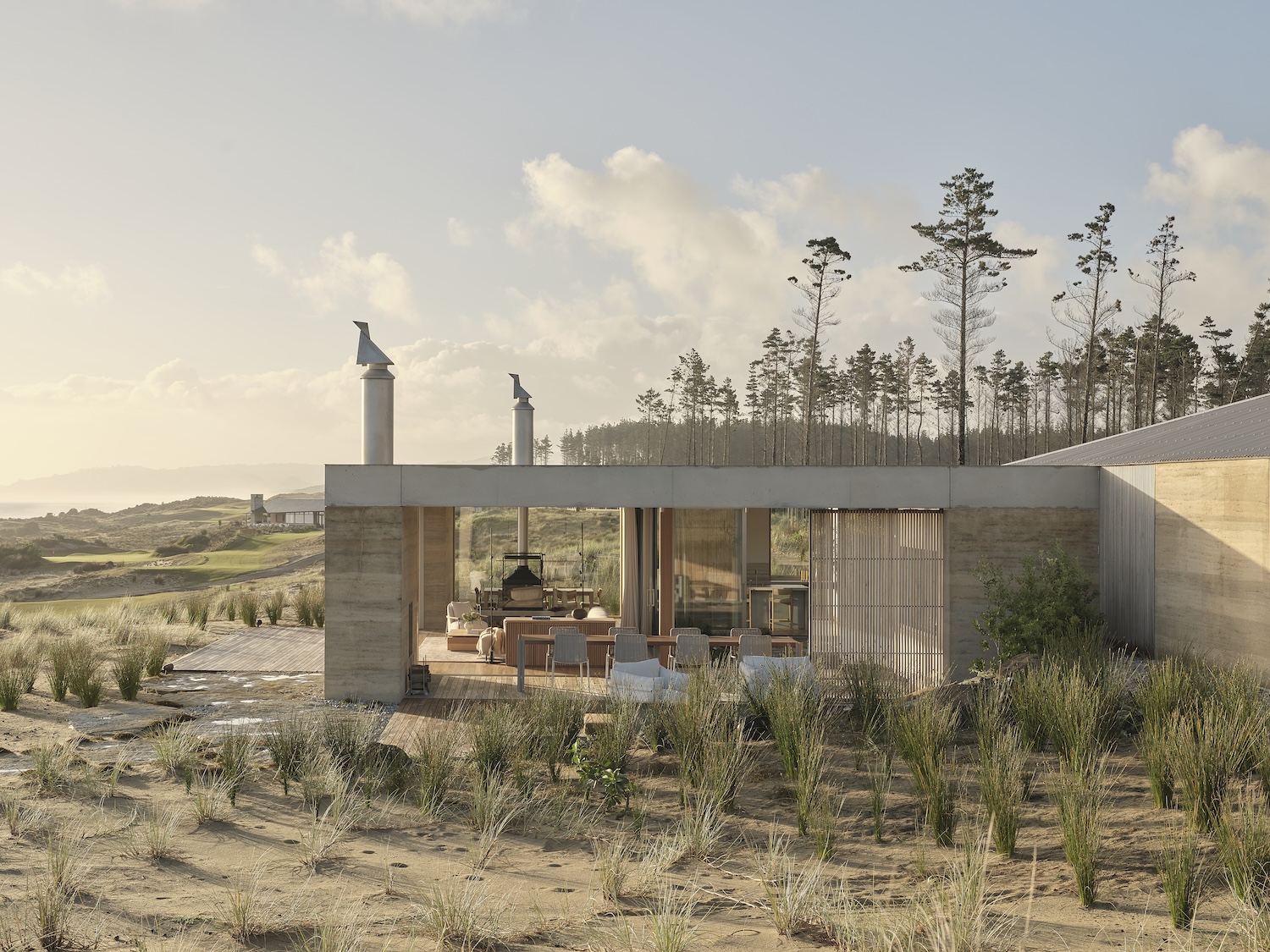
The front pavilion holds the social rooms. Its sliding screens and doors all recess fully into the walls, which lets the living spaces open to the surrounding landscape. The courtyard here is set with large flat rocks that serve as seating alongside loose furniture, and deep overhangs on the north side cover an outdoor dining area. In the Southern Hemisphere the north elevation takes the most direct sun, so those overhangs provide the shade the exposed site otherwise lacks.
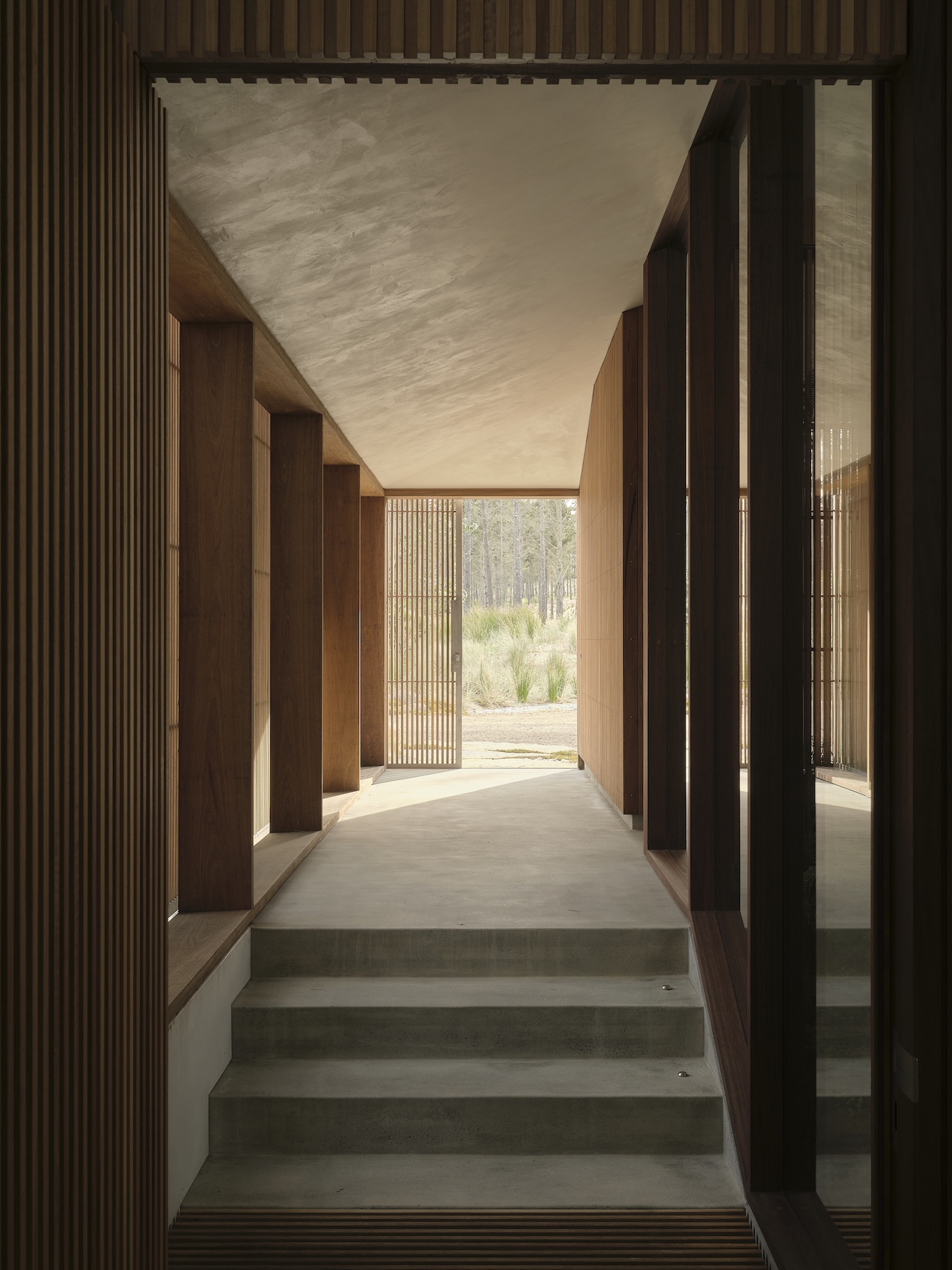
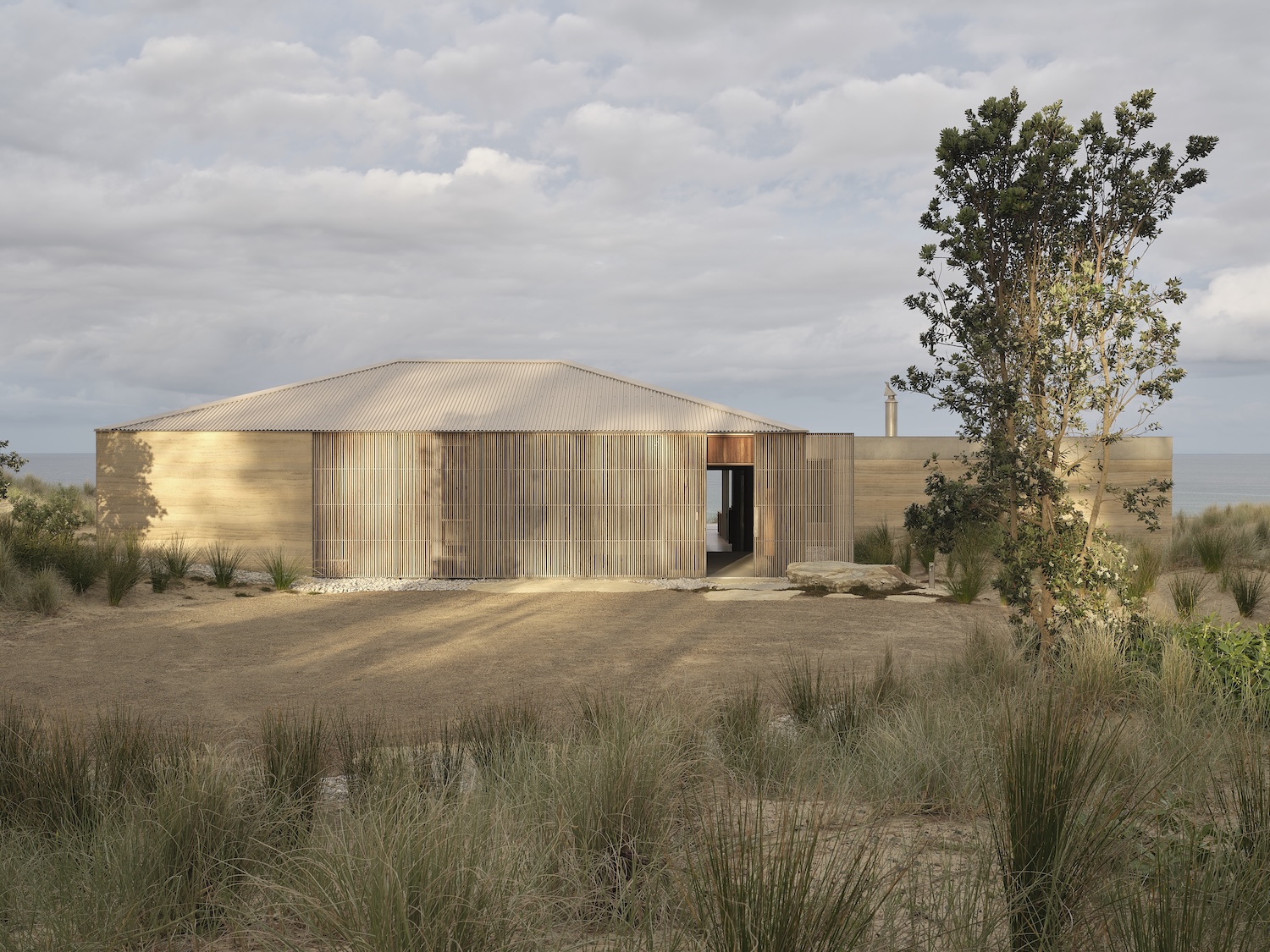
The weather line moves in and out from beneath the roof edge across the plan. Cars park under an open carport, and the entry is an open-air breezeway where a hallway would normally be. The breezeway ends at the point where the two pavilions intersect, the one spot where the heavier hipped wing and the lighter flat-roofed wing can be read side by side.
At that junction a thick roof meets a thin one, and a solid wall receives an operable screen. The finishes are abraded to keep that precision from reading as severe. Concrete is sandblasted to expose its fine aggregate, and steel is bead-blasted to an even matte surface that reflects less light and shows wear less readily than a polished finish would.