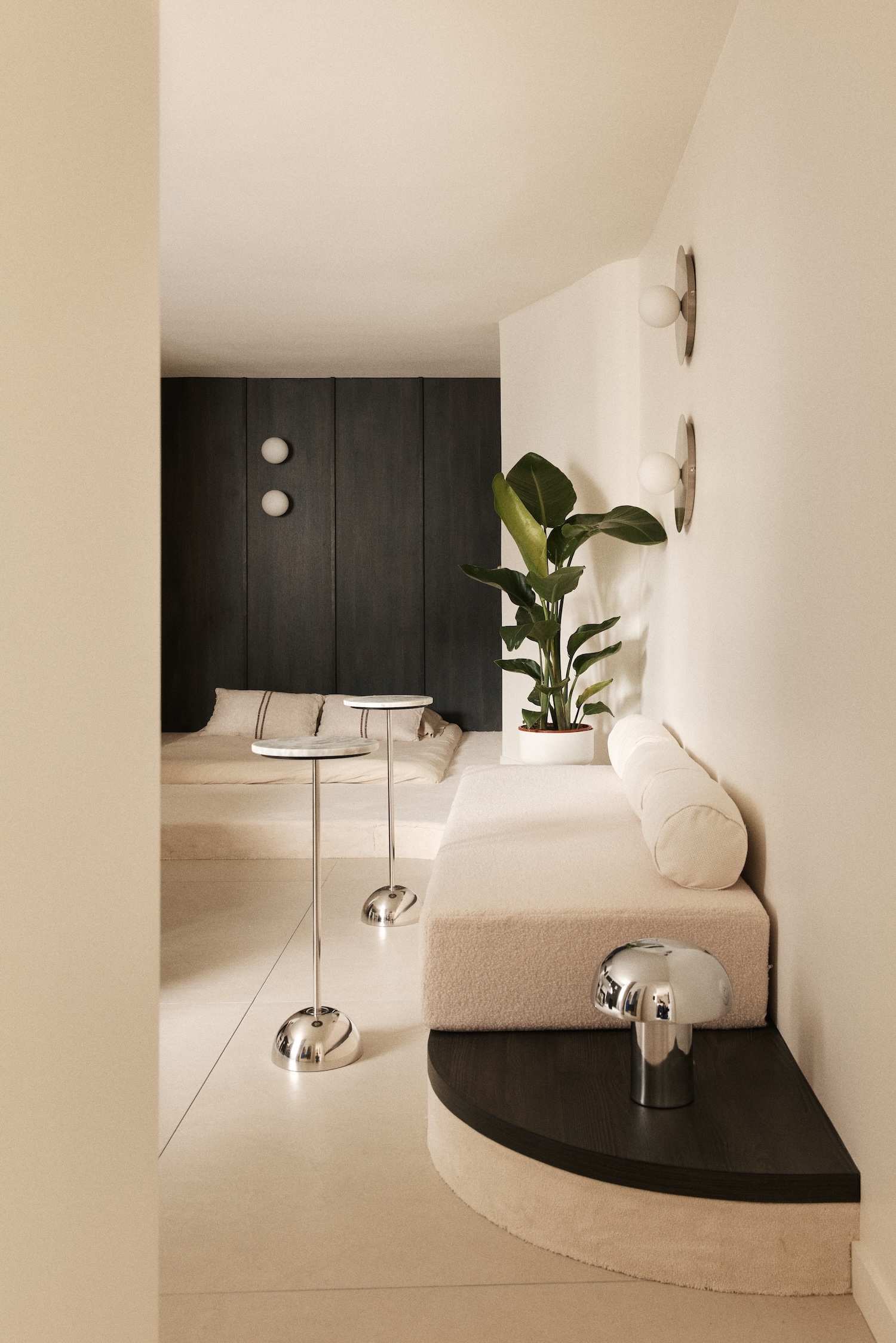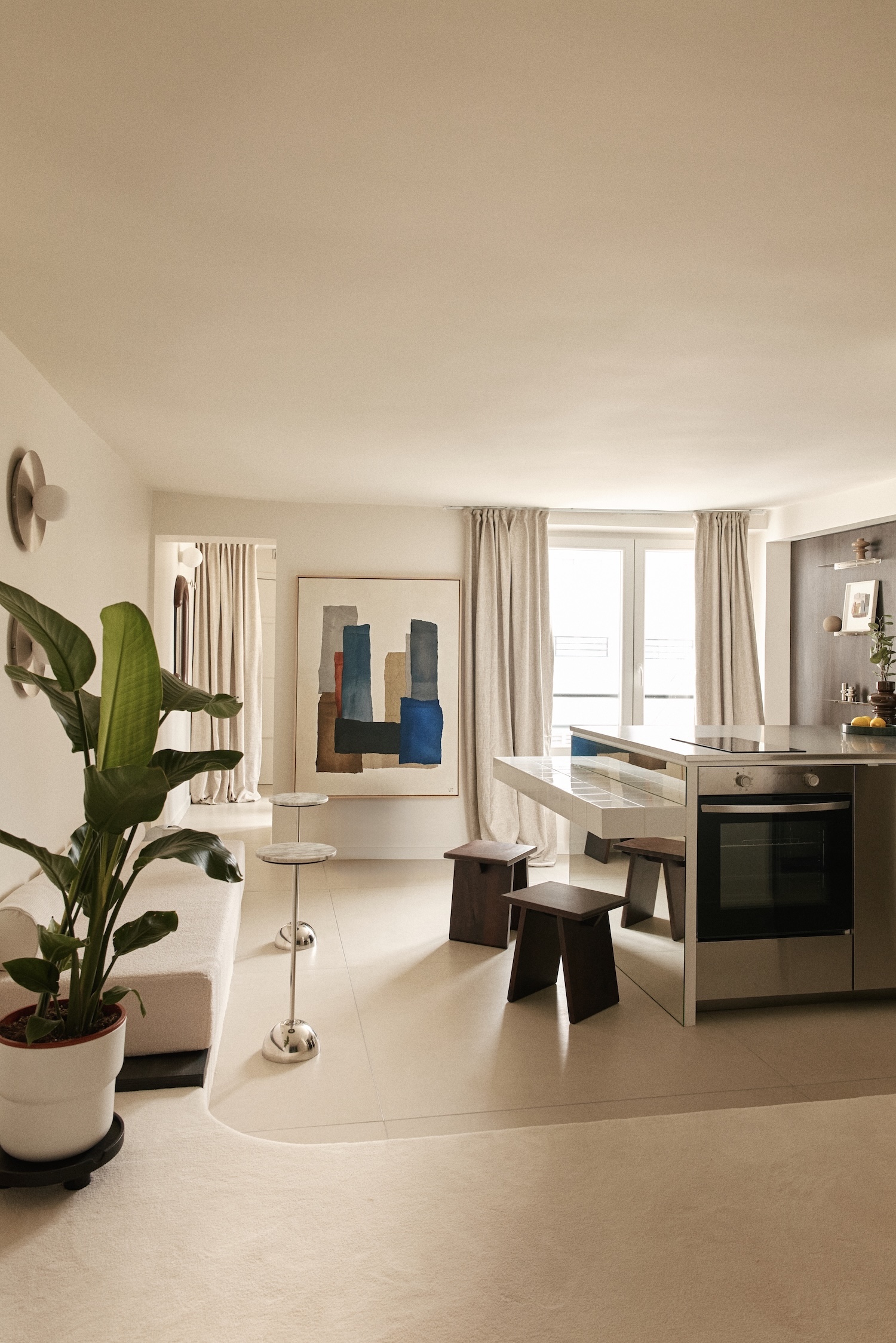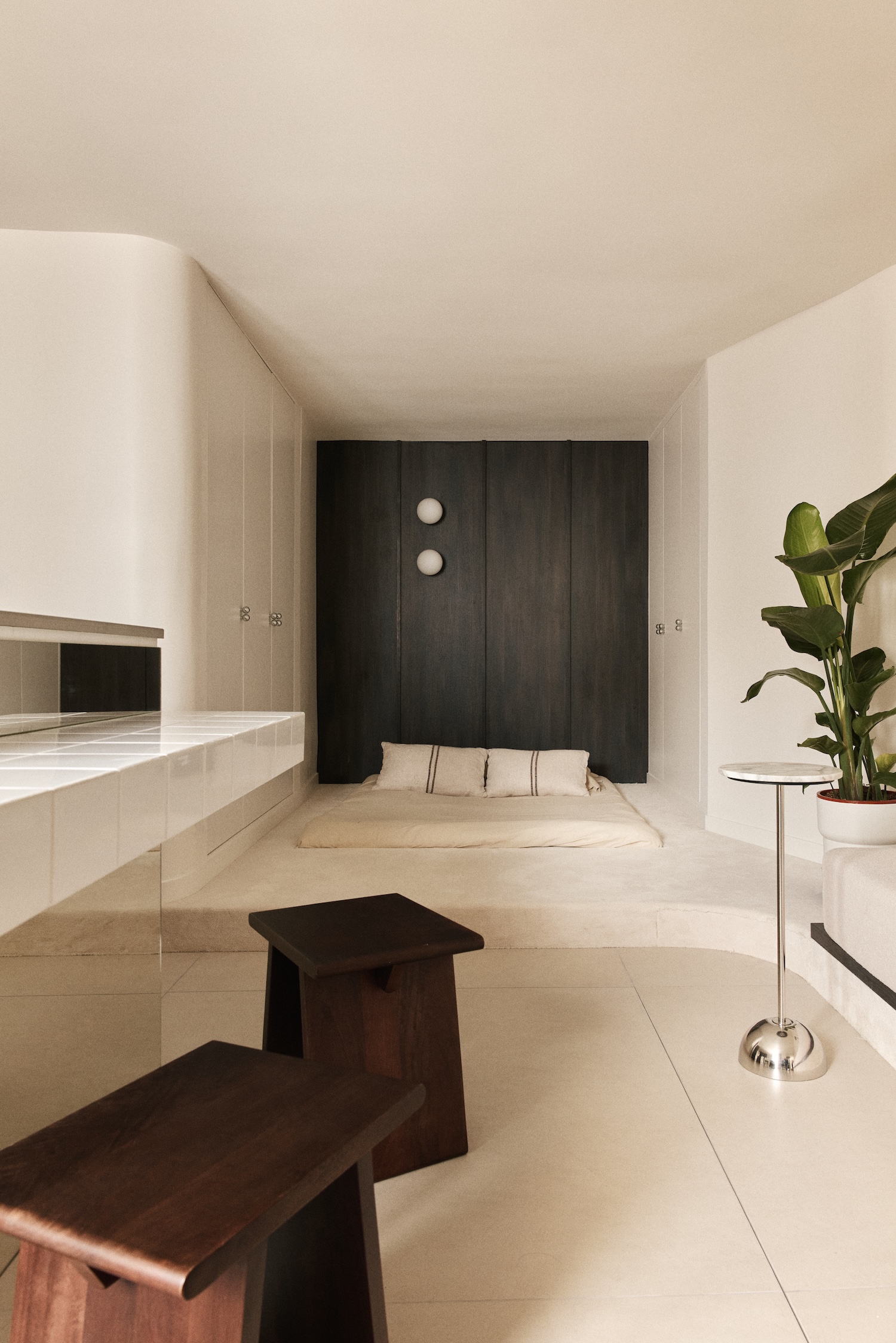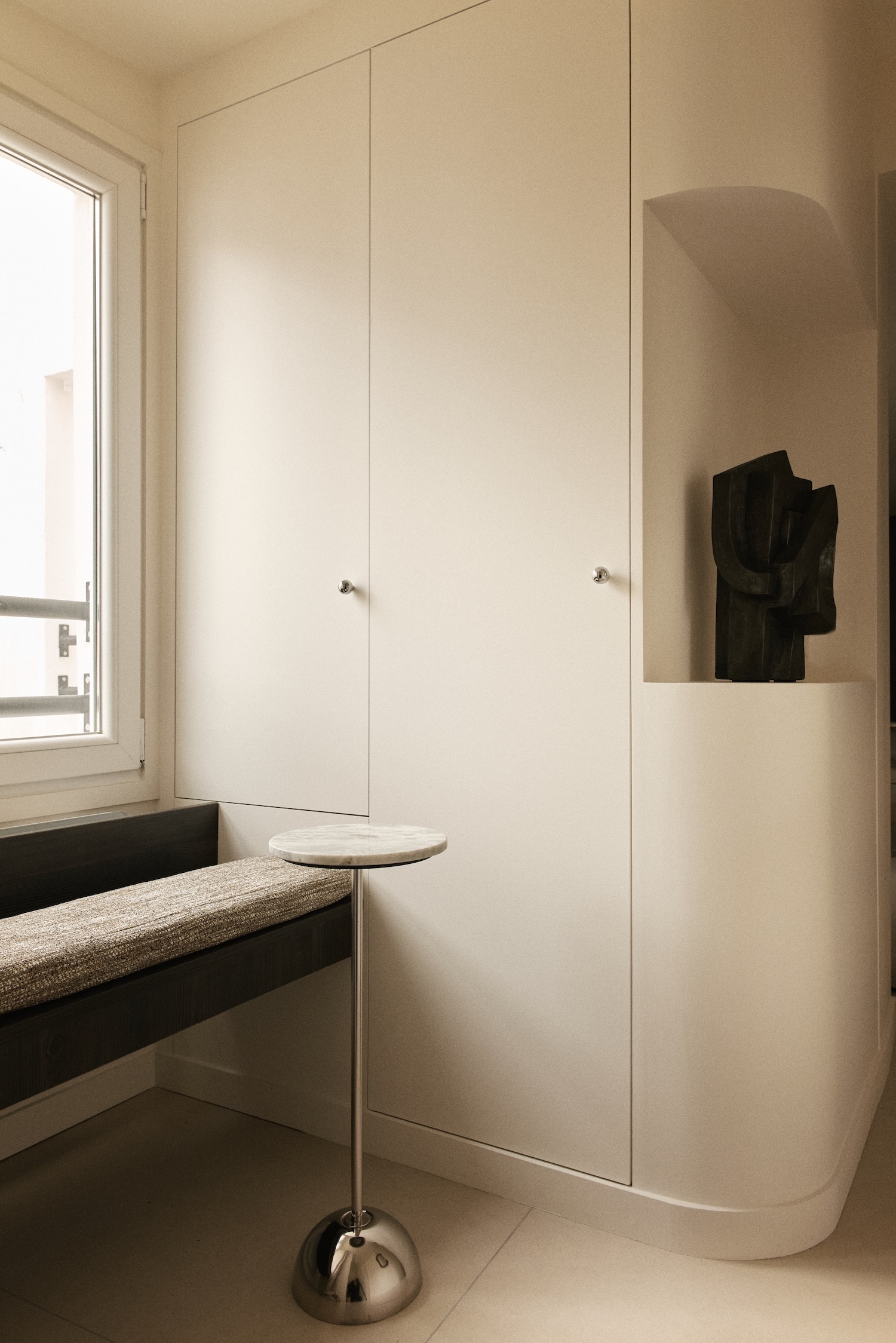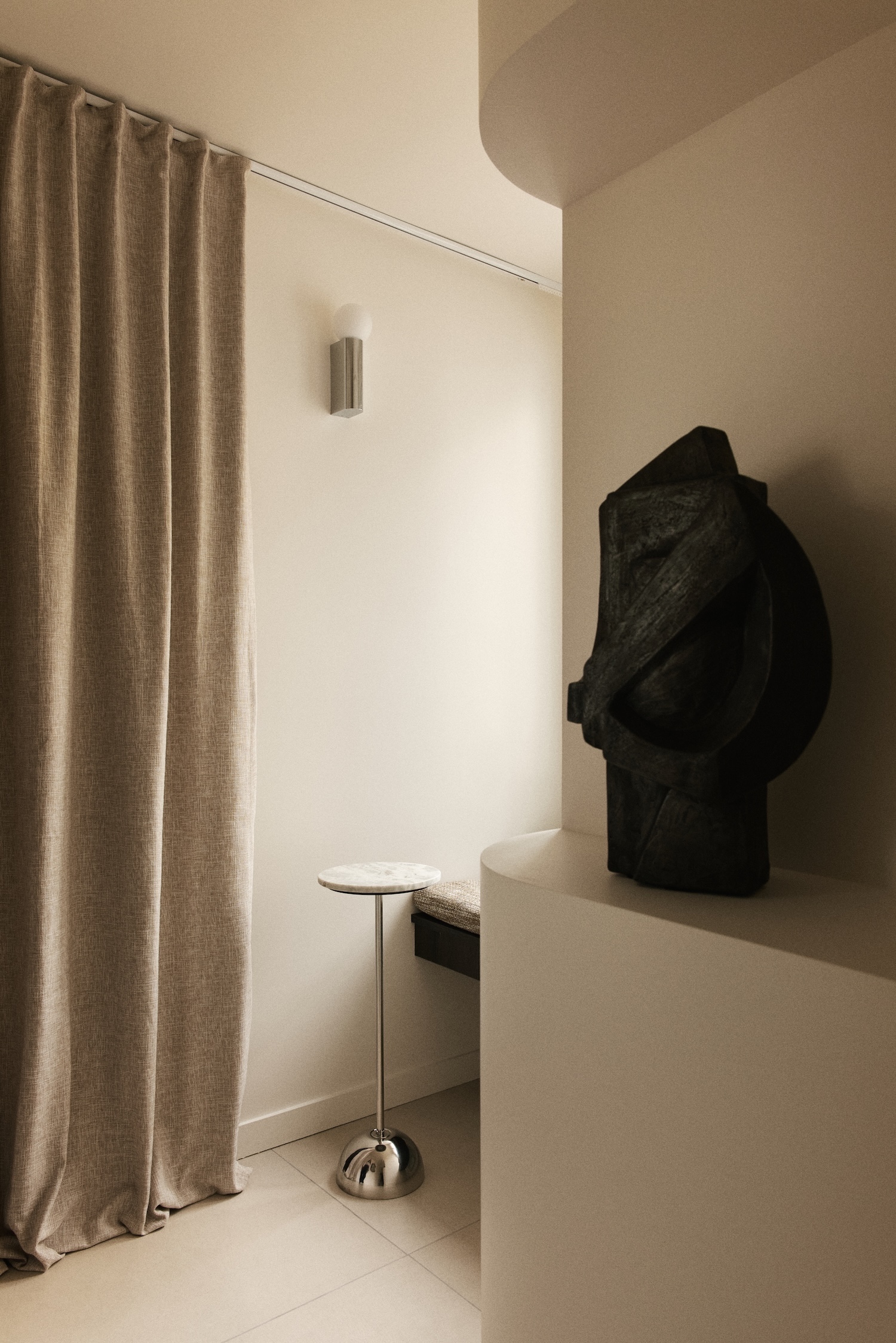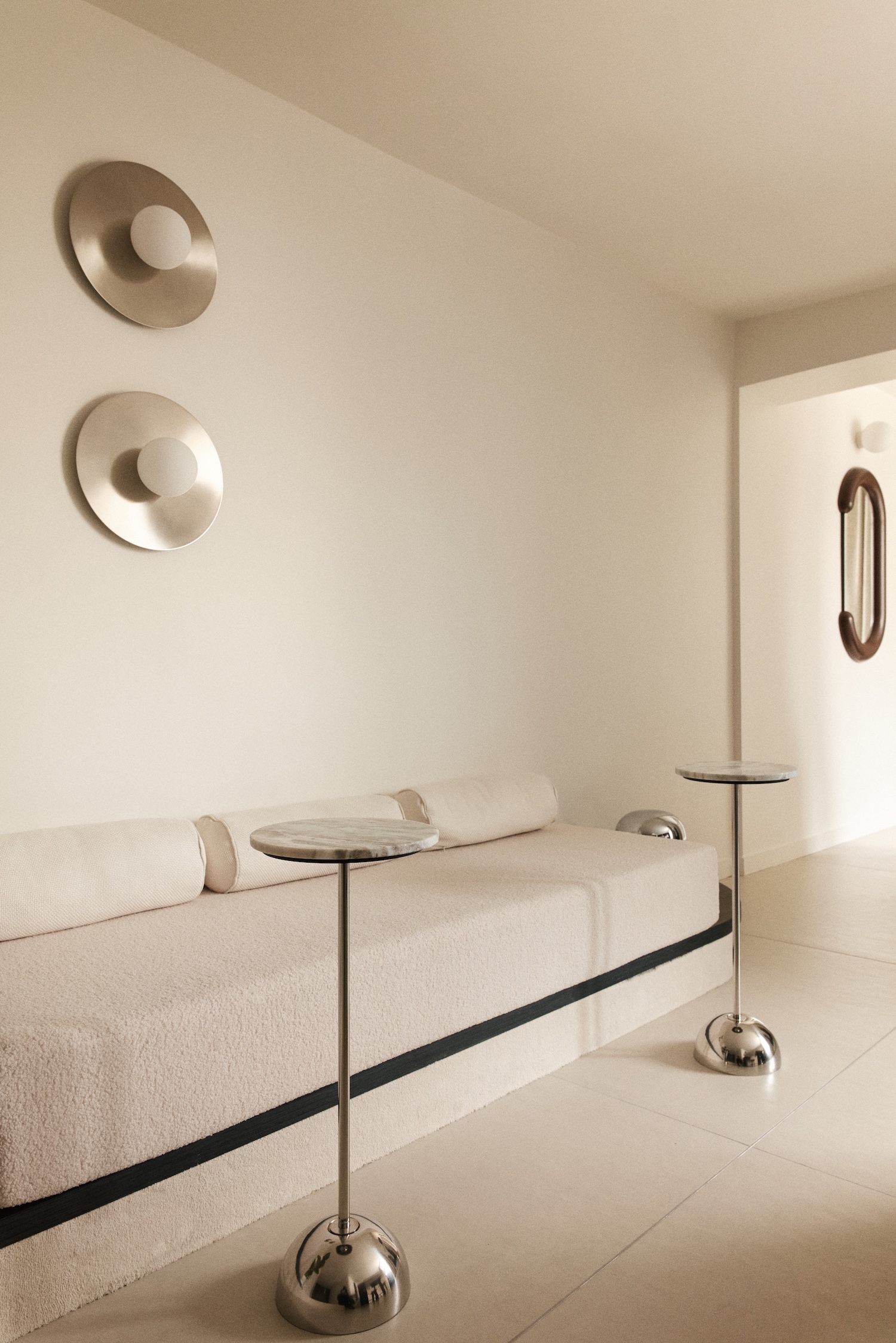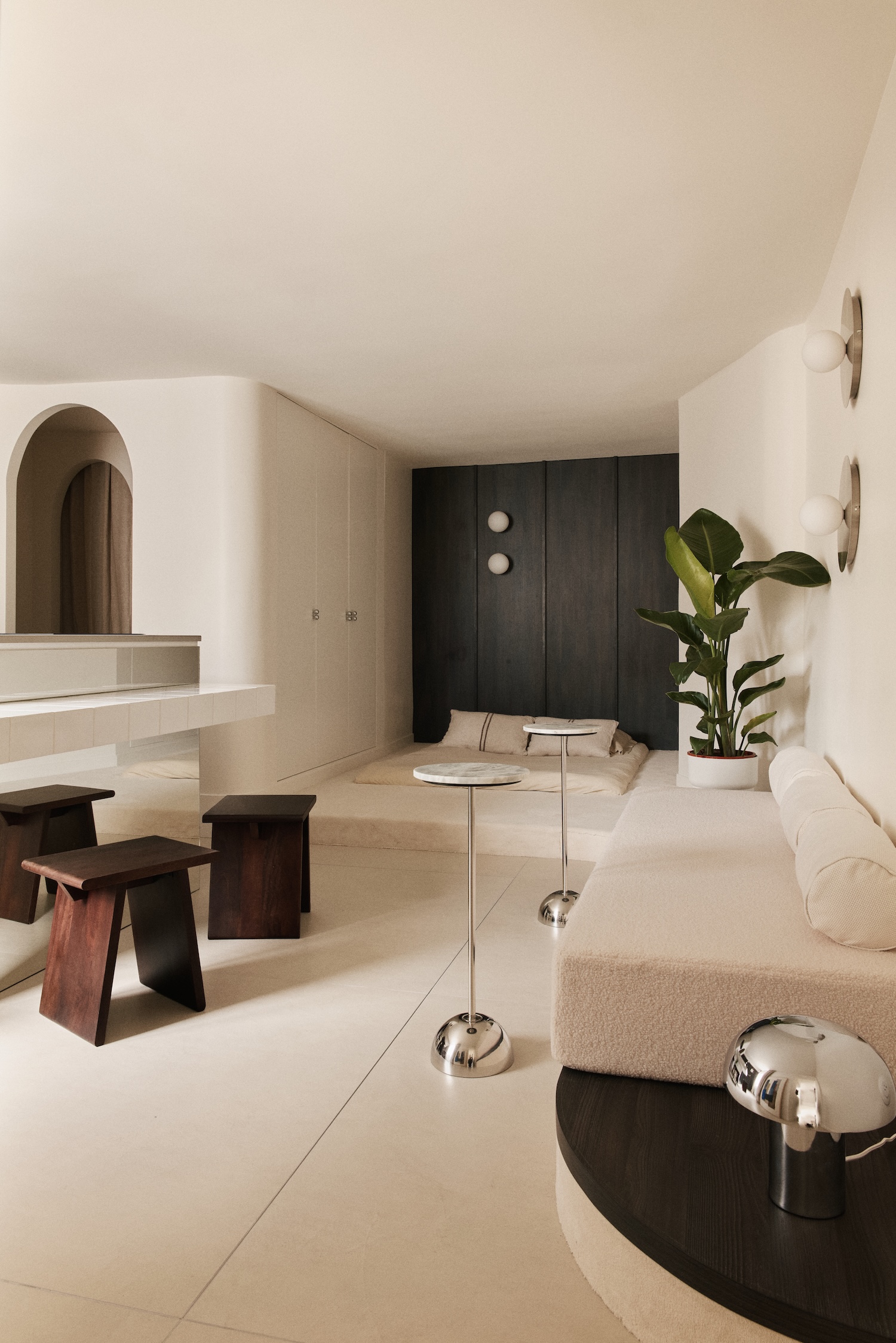
Gravilliers is a minimalist apartment located in Paris, France, designed by Studio Idà. Set within Le Marais in the 3rd arrondissement, this 30-square-meter studio renovation treats natural light not as a condition to be accommodated but as a material to be worked, refracted, and multiplied. The conceit is deceptively simple: in a space this compact, illumination becomes the most generous element available, and the entire intervention organizes itself around capturing and redistributing it.
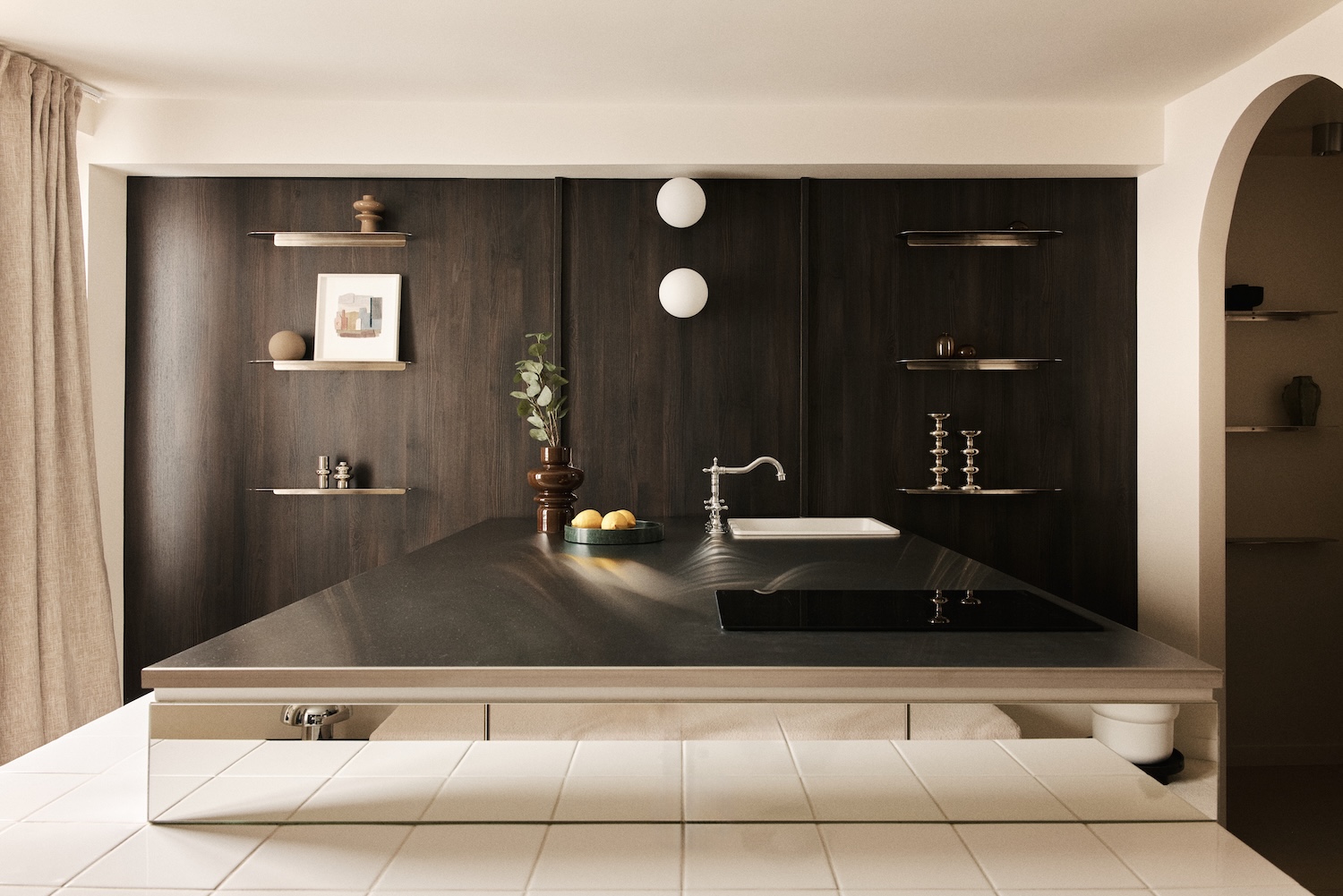
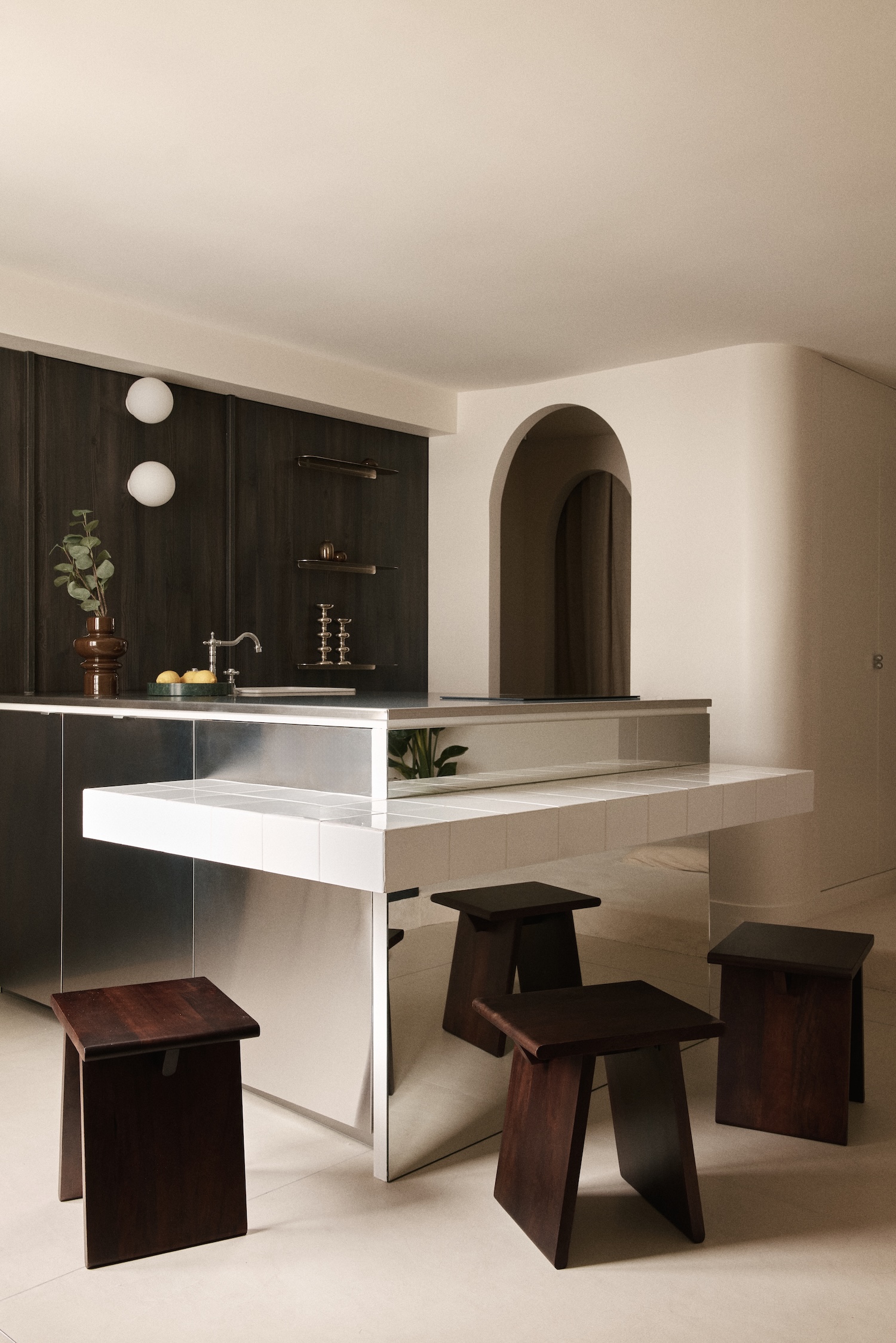
The kitchen carries this ambition. Rather than tucking it discreetly along a wall, as the conventional logic of small-space planning would dictate, the design pushes it to a central, almost ceremonial position. It becomes a compositional device, an object that extends sightlines and reveals the apartment’s separate zones through reflection. This inversion recalls the unfitted kitchen tradition that designers like Johnny Grey revived in opposition to the seamless built-in galley, though here the freestanding logic serves optical rather than purely social ends. The kitchen is less a place to cook than an instrument for seeing the whole apartment at once.
The material palette is selected entirely for how surfaces behave under changing light. Mirrors, polished and brushed stainless steel, aluminum, and green marble assemble an environment that never holds a fixed appearance. Polished steel throws sharp, mobile reflections while brushed steel softens and diffuses them, so the same source of daylight registers differently depending on which surface receives it. The green marble introduces depth and a geological weight against the industrial sheen, its veining catching light in a way the metals cannot. Throughout the day the apartment effectively redraws itself, reflections layering over one another to manufacture perspectives that the actual square footage does not contain.
There is a clear lineage here to the way mid-century designers understood mirror as a spatial multiplier, from the reflective interiors that made modest Parisian apartments feel boundless. What distinguishes Gravilliers is the refusal to treat reflection as decorative trickery. The surfaces are structural to the experience, redistributing both light and views so that the kitchen operates as a connective tissue binding the studio together rather than an autonomous block dropped into it. Sightlines pass through and around it, and the perception of a single open volume emerges from what is technically a tightly bounded room.