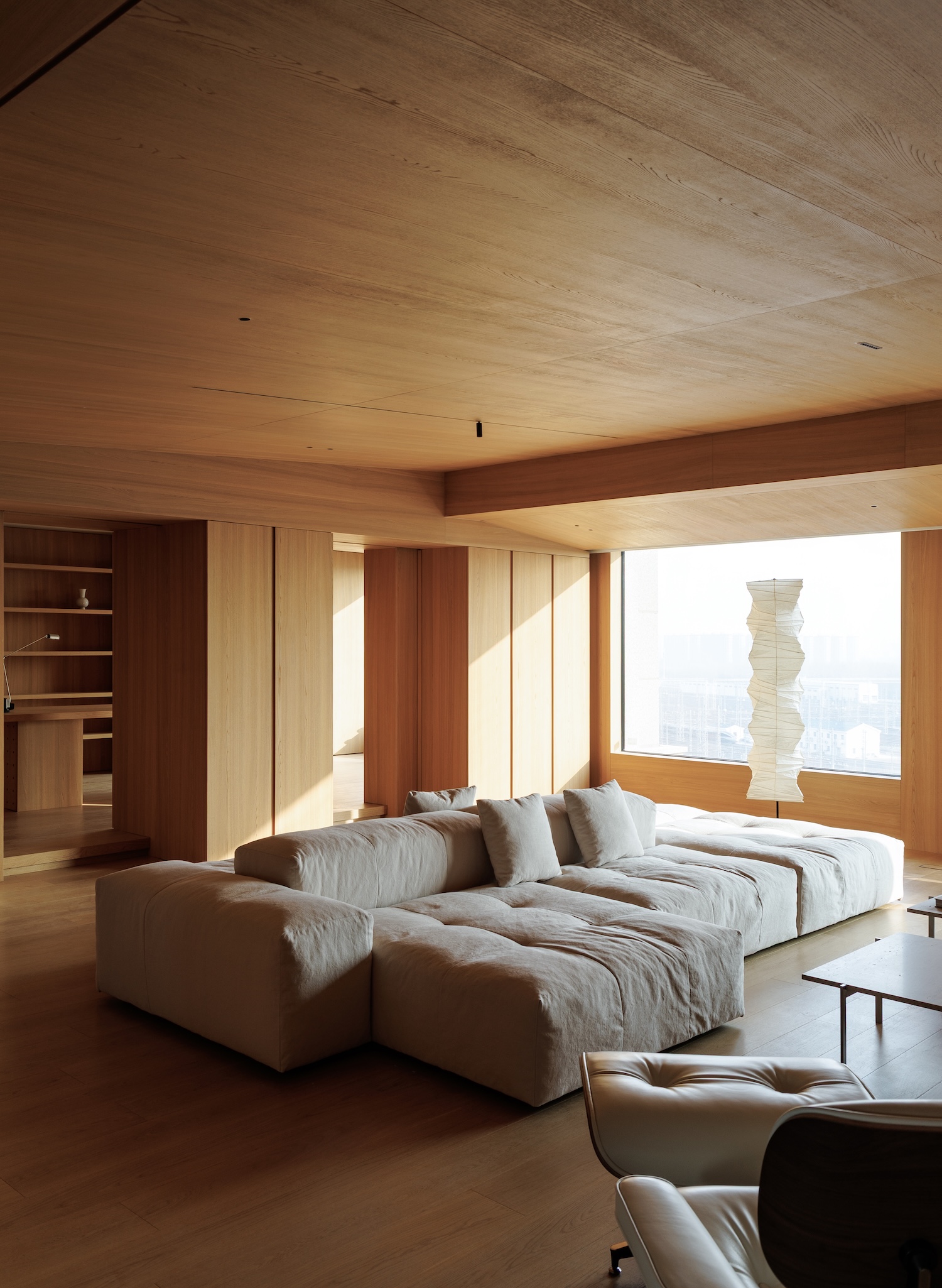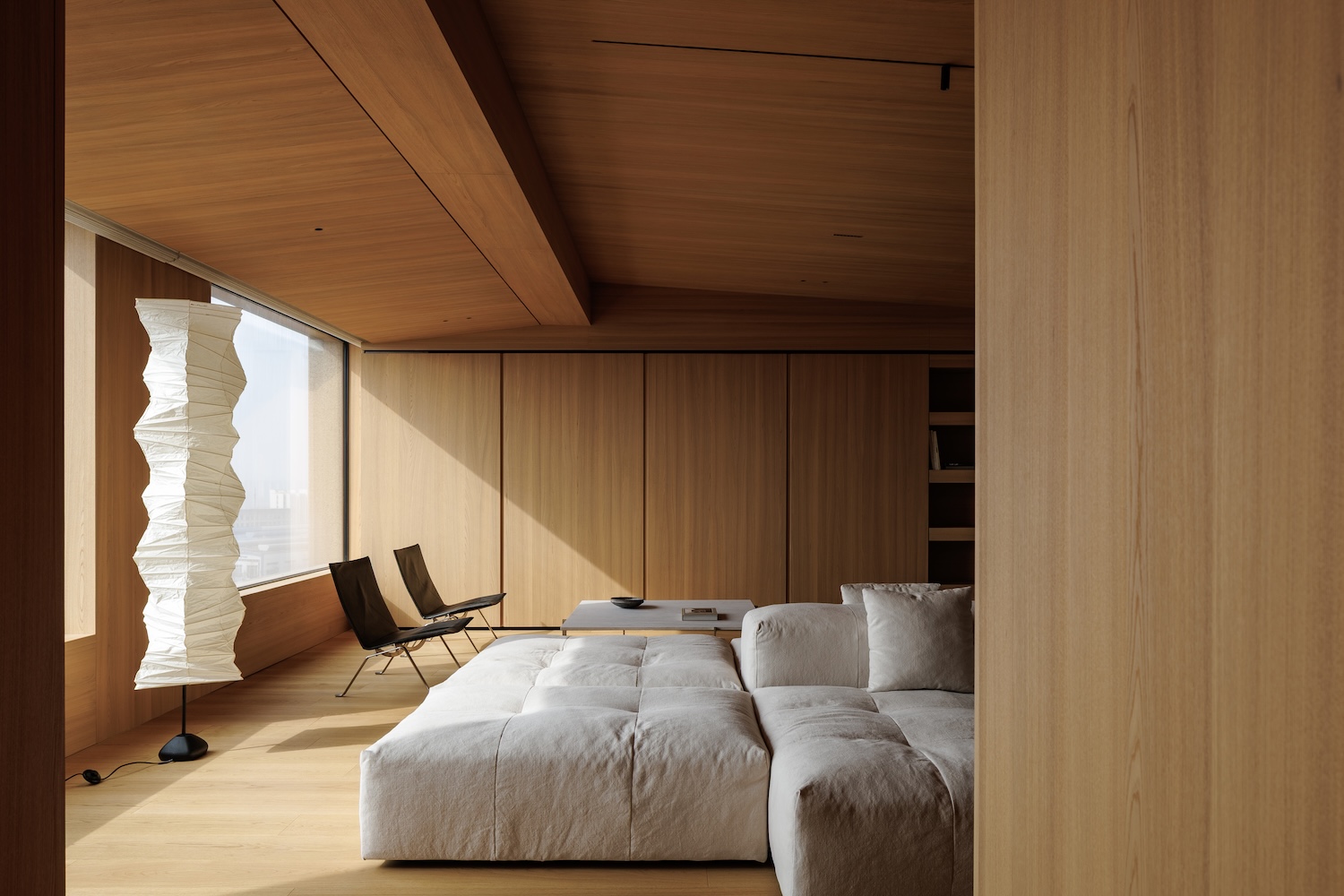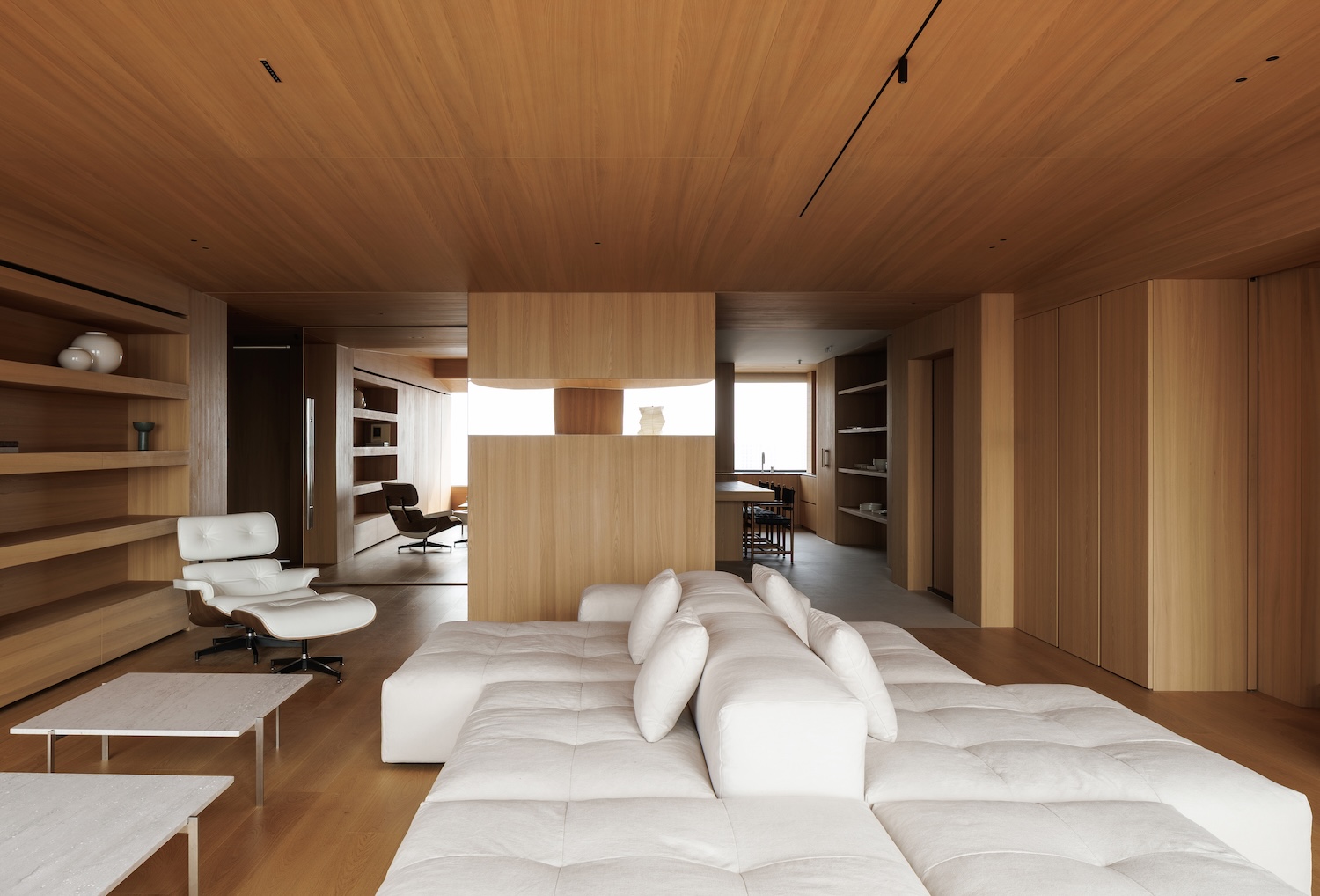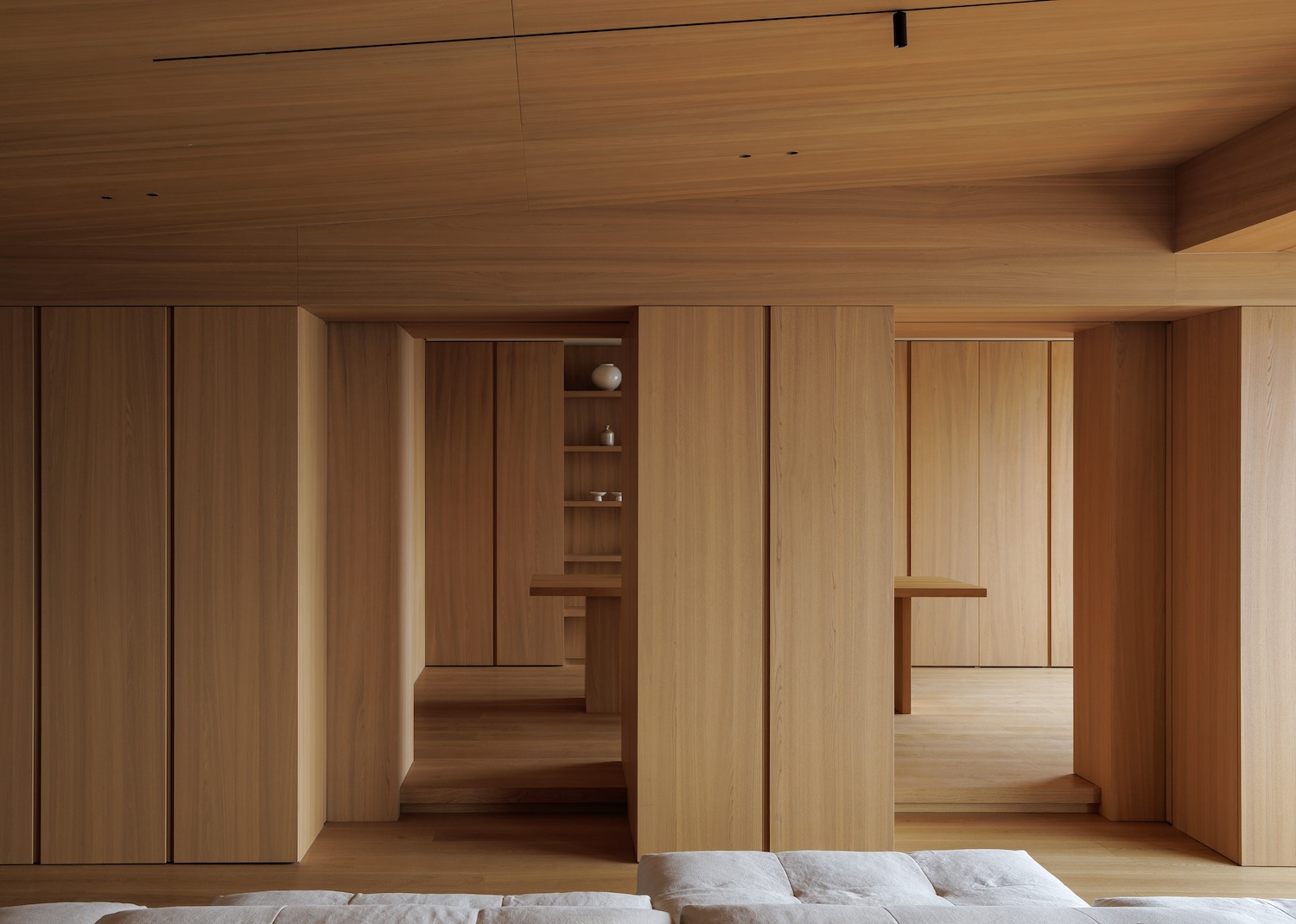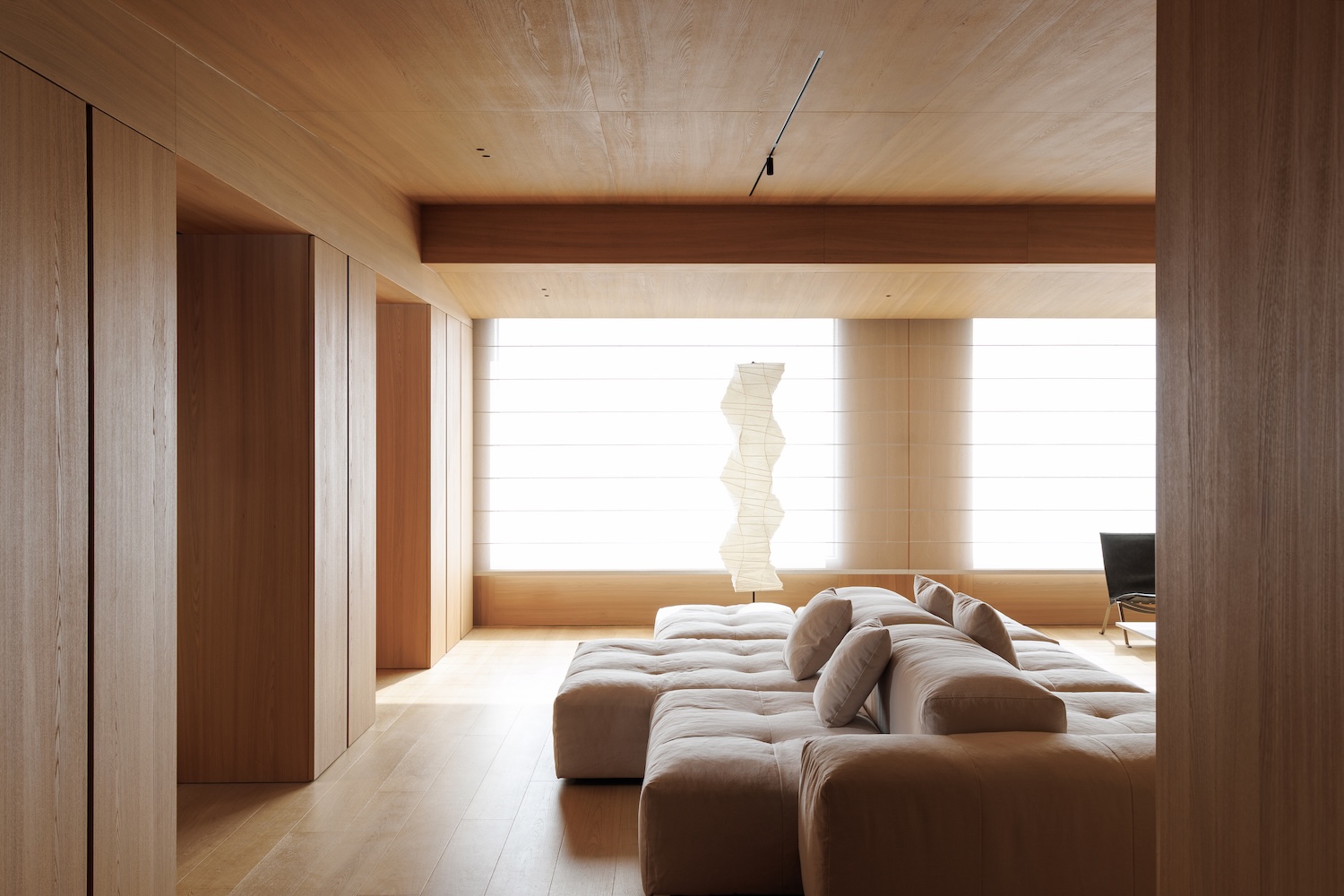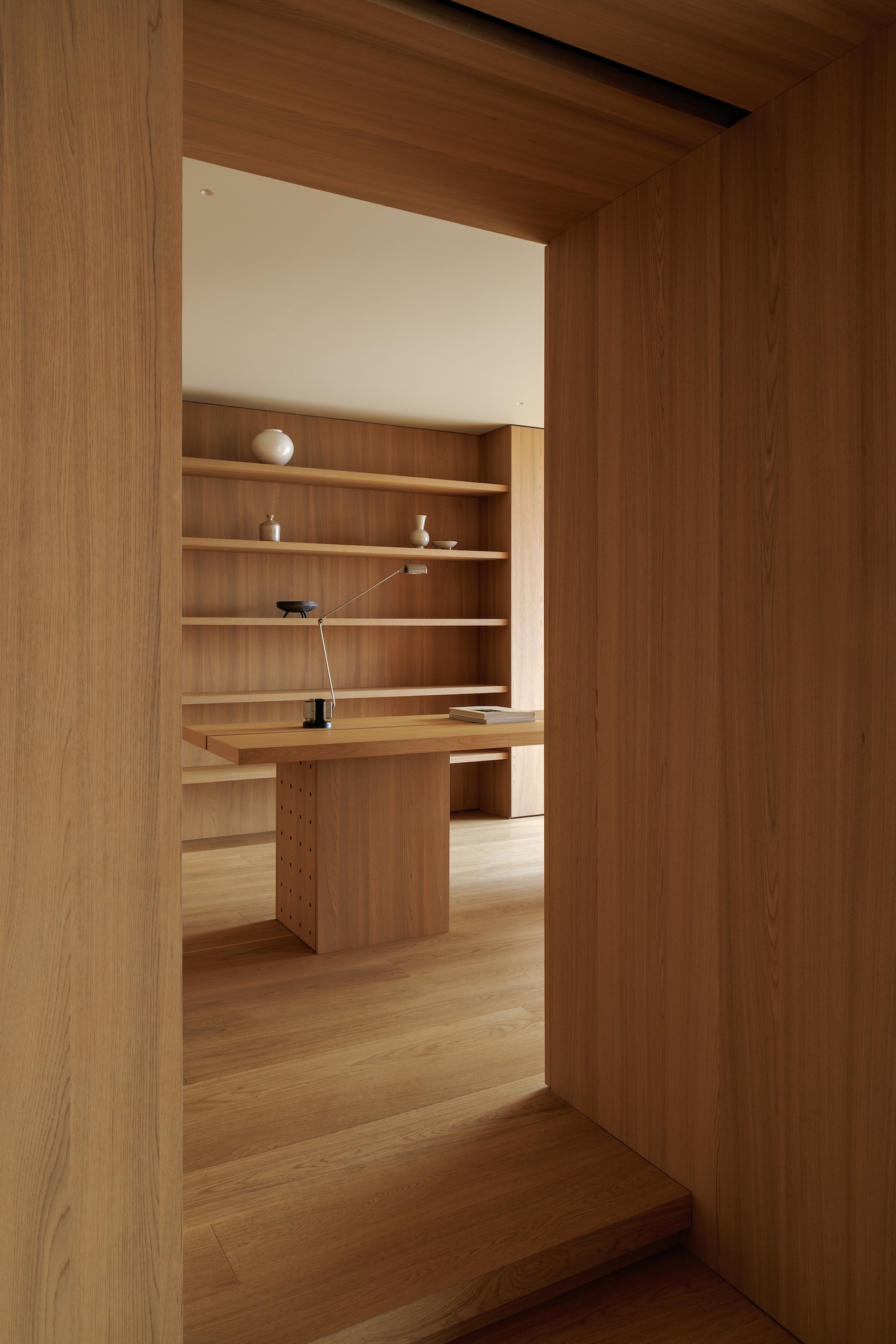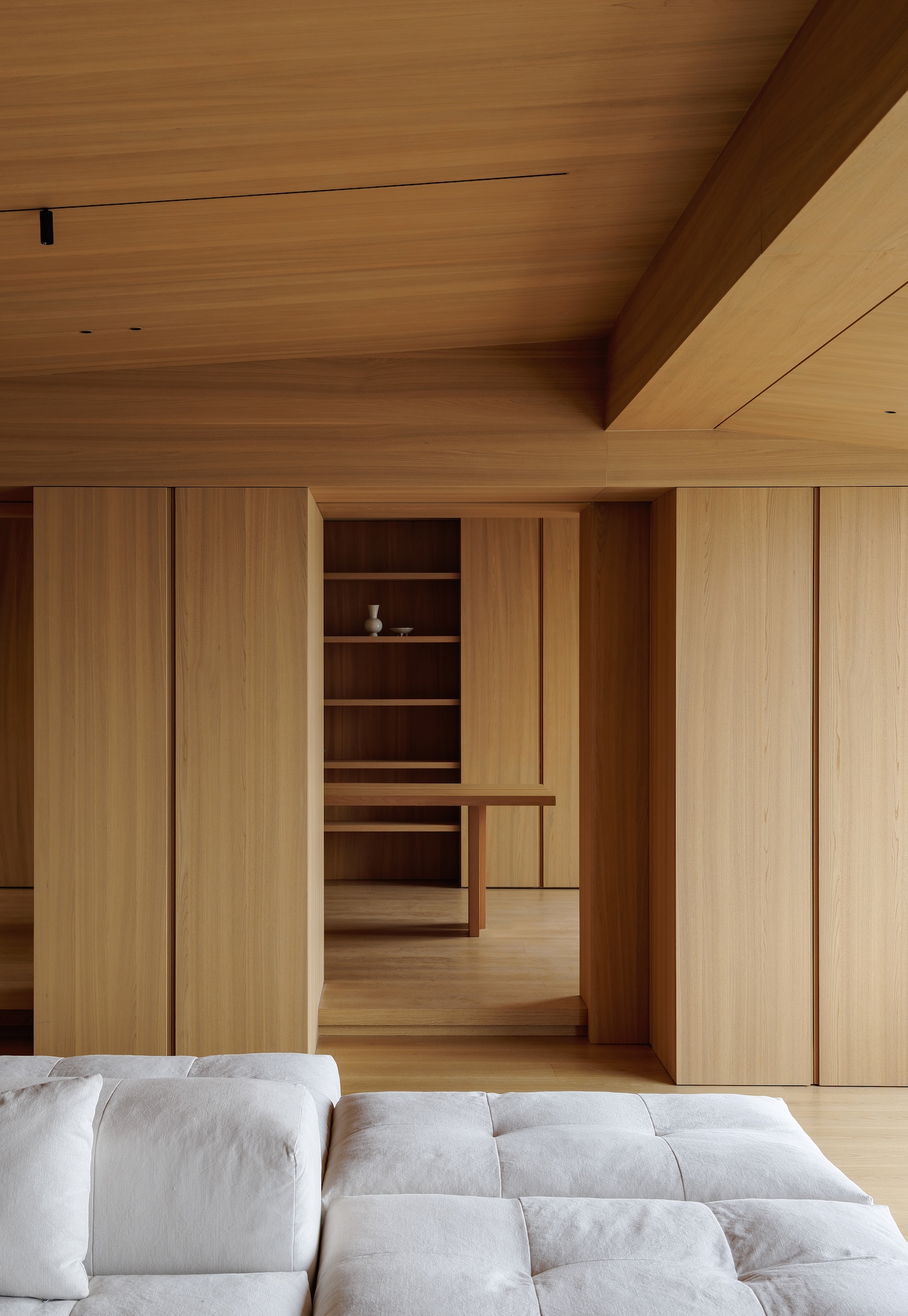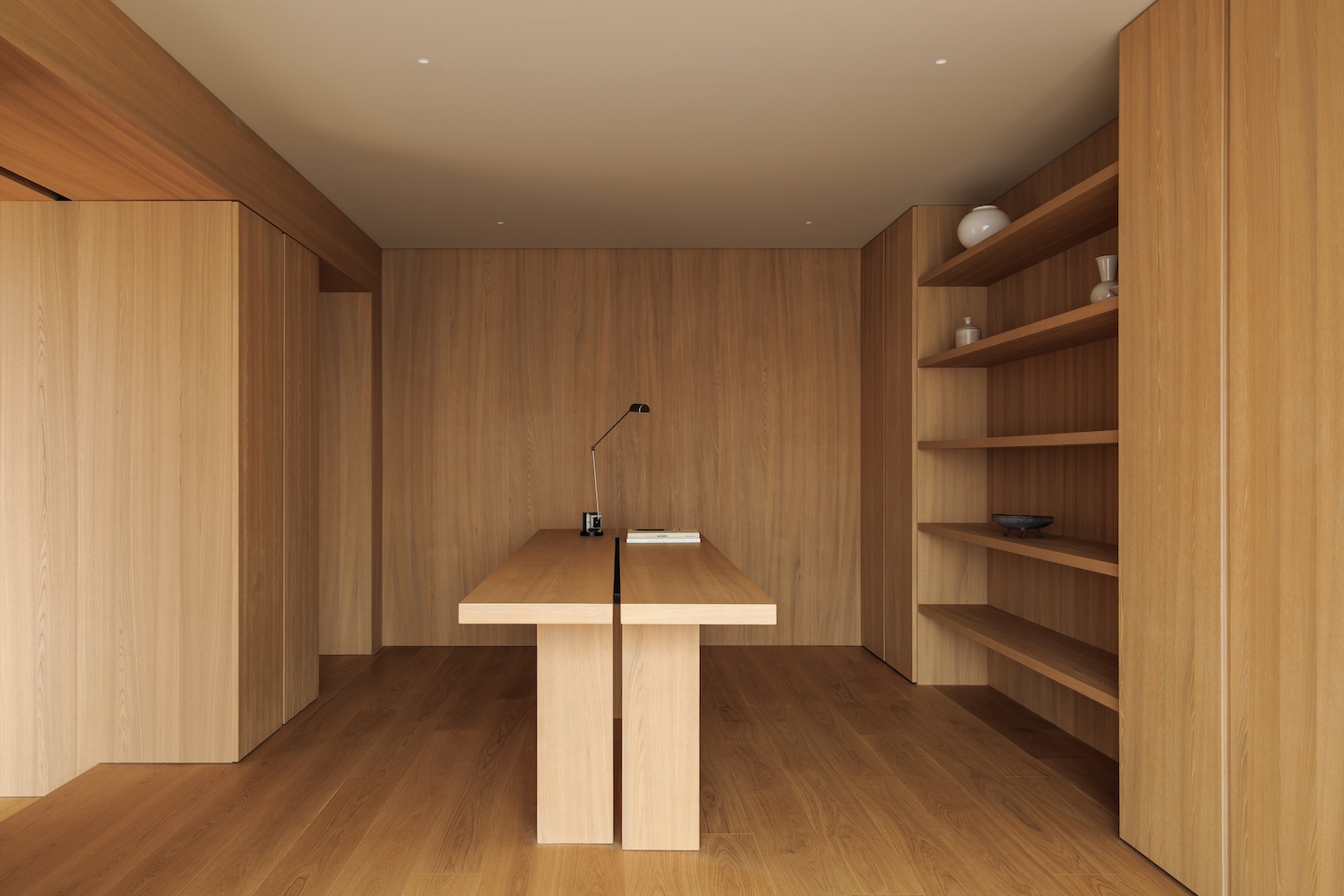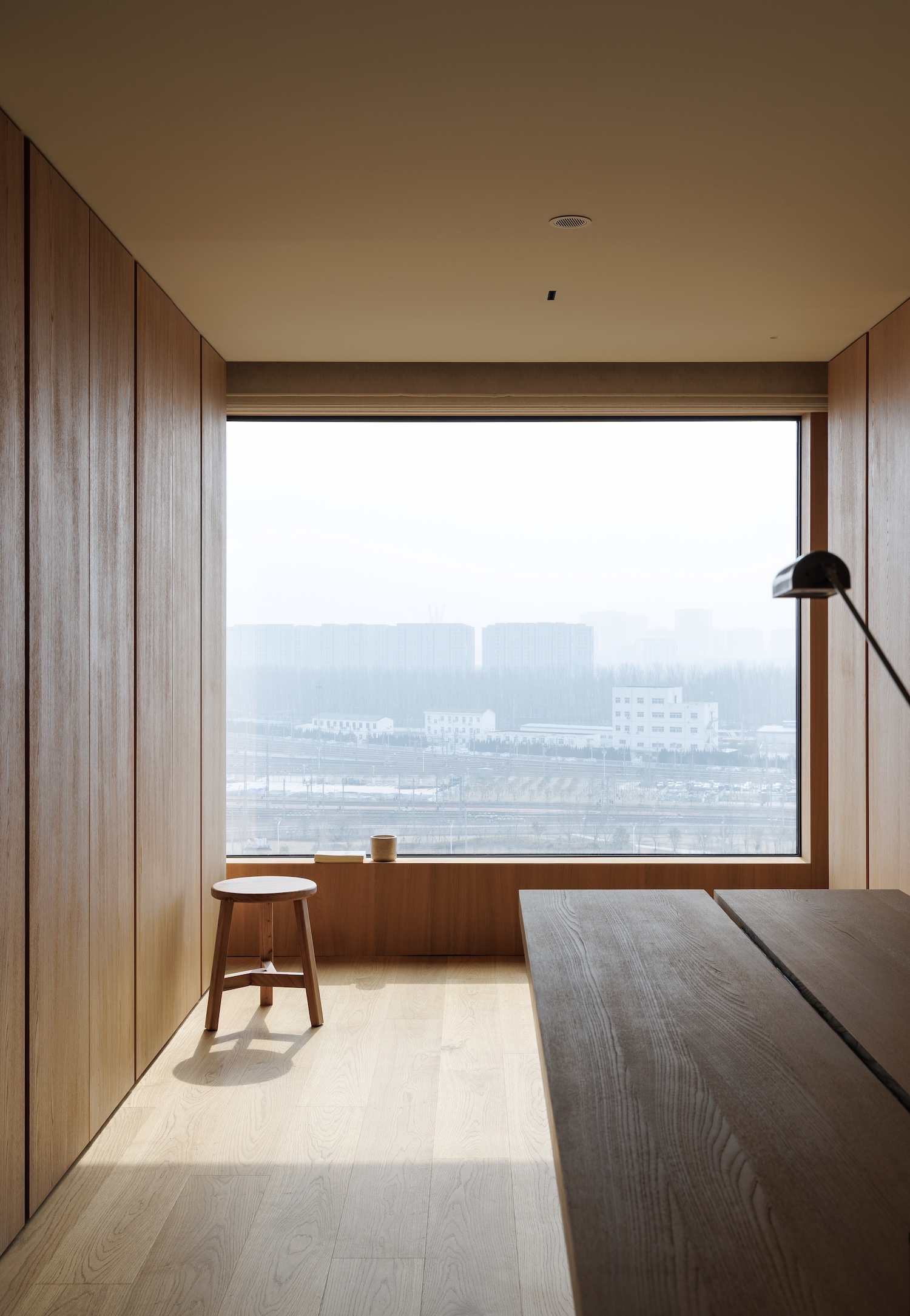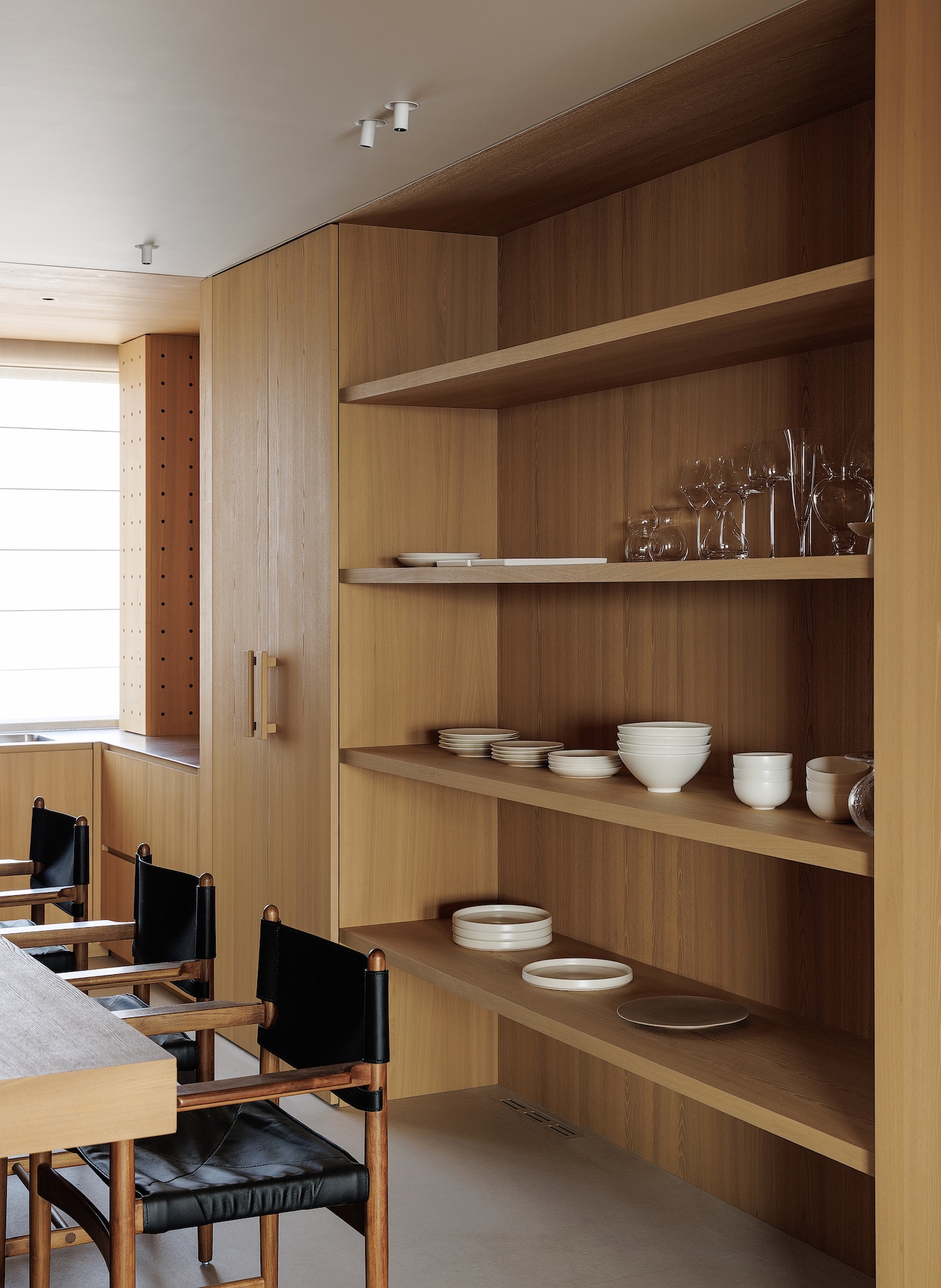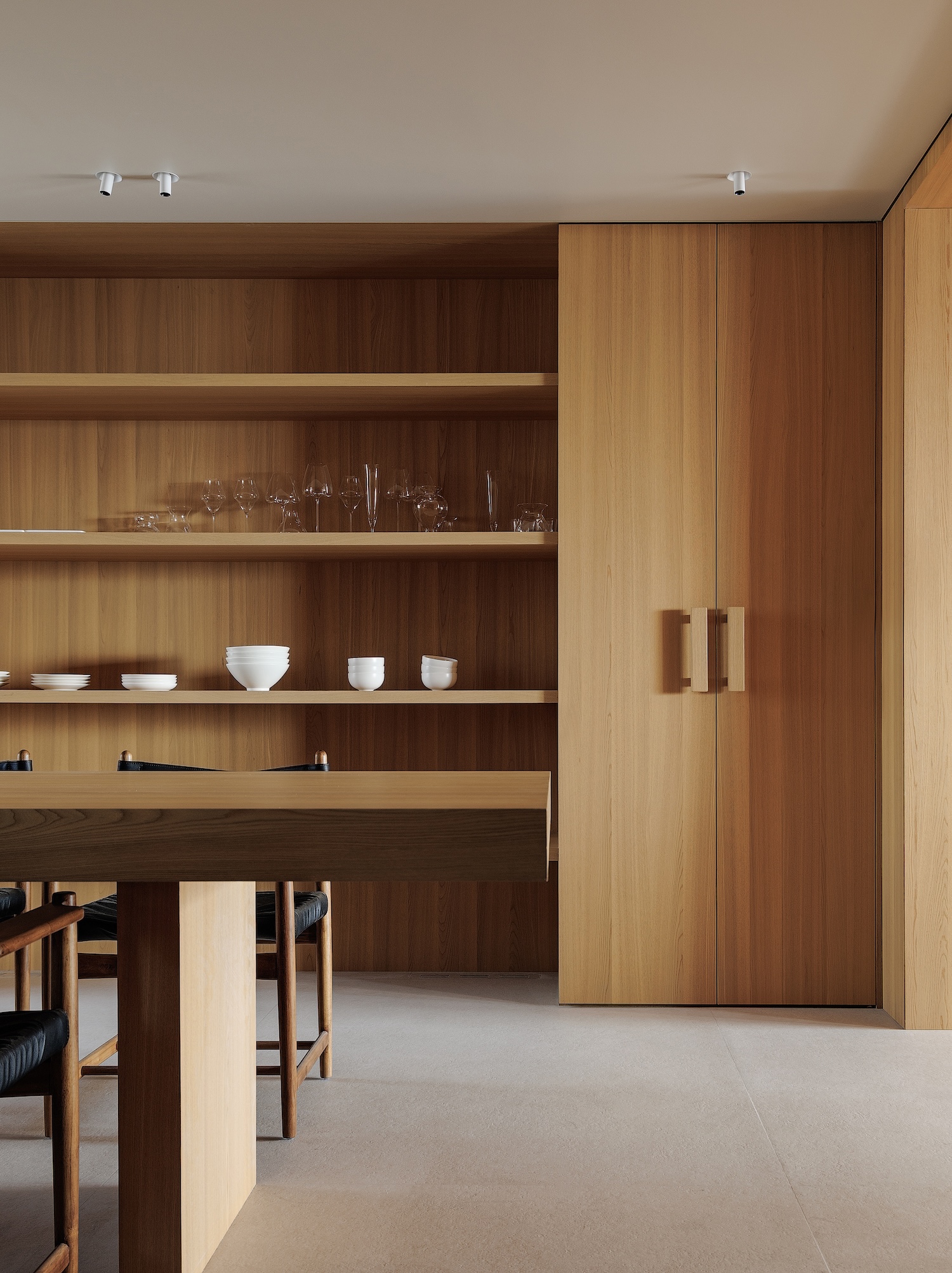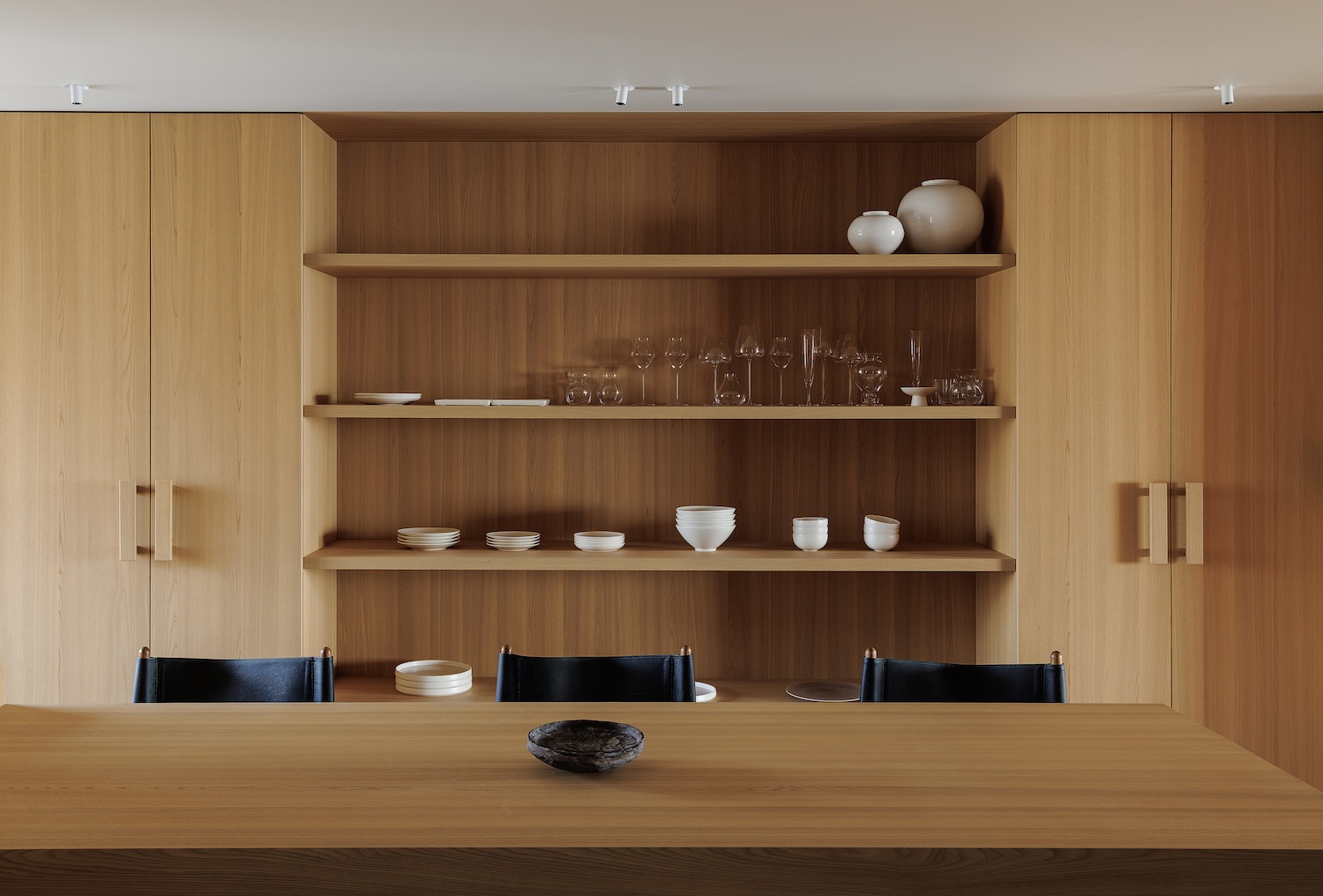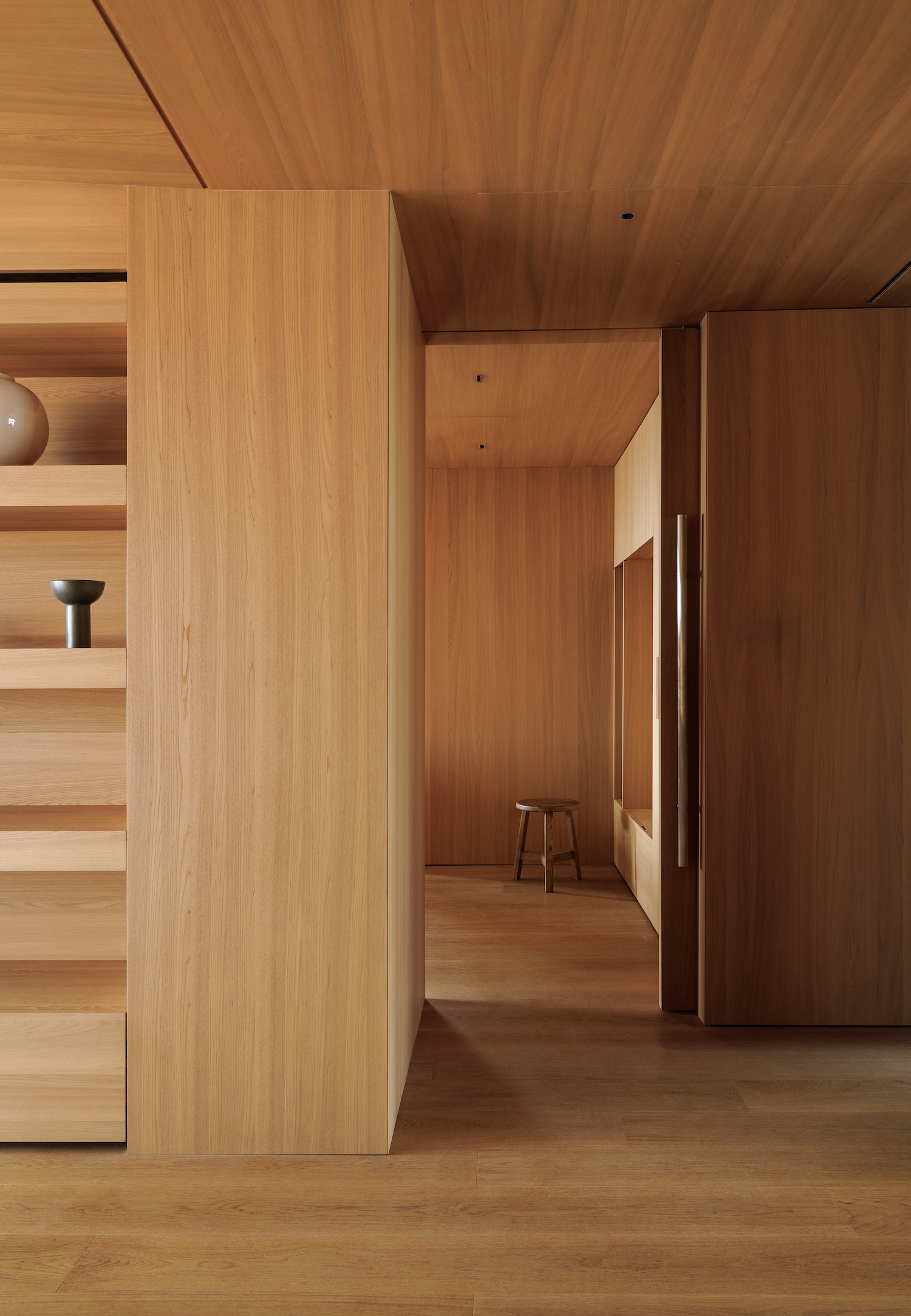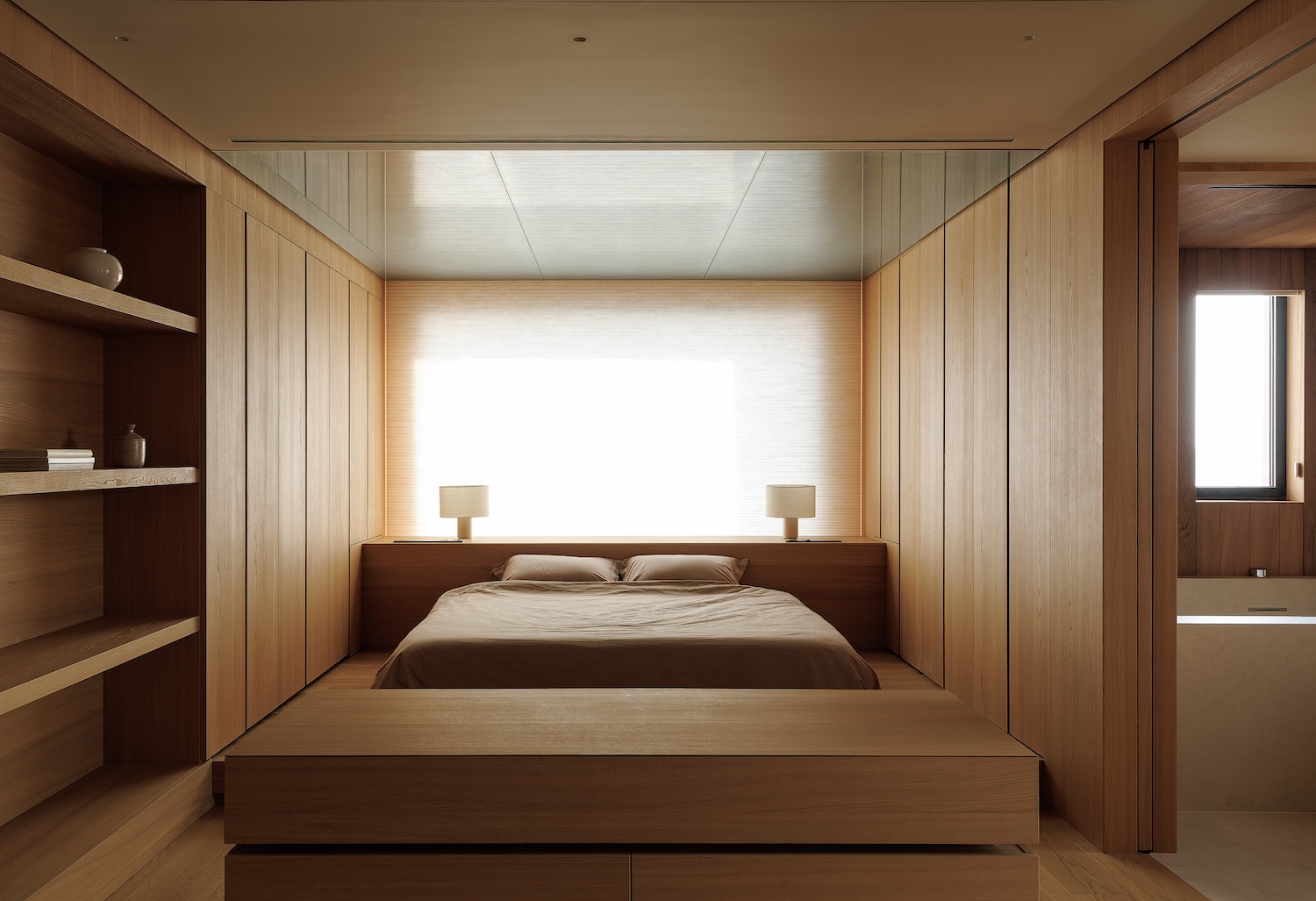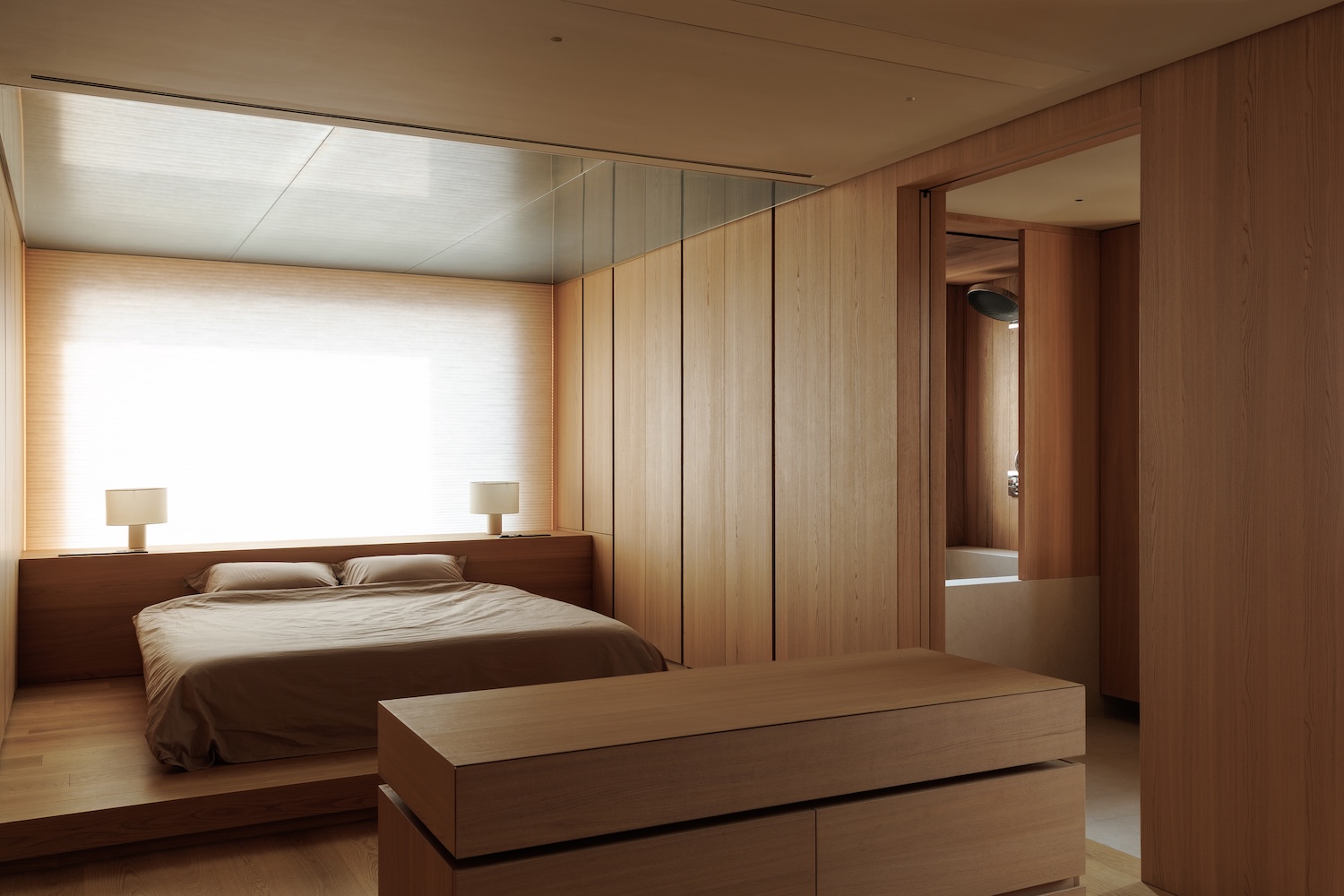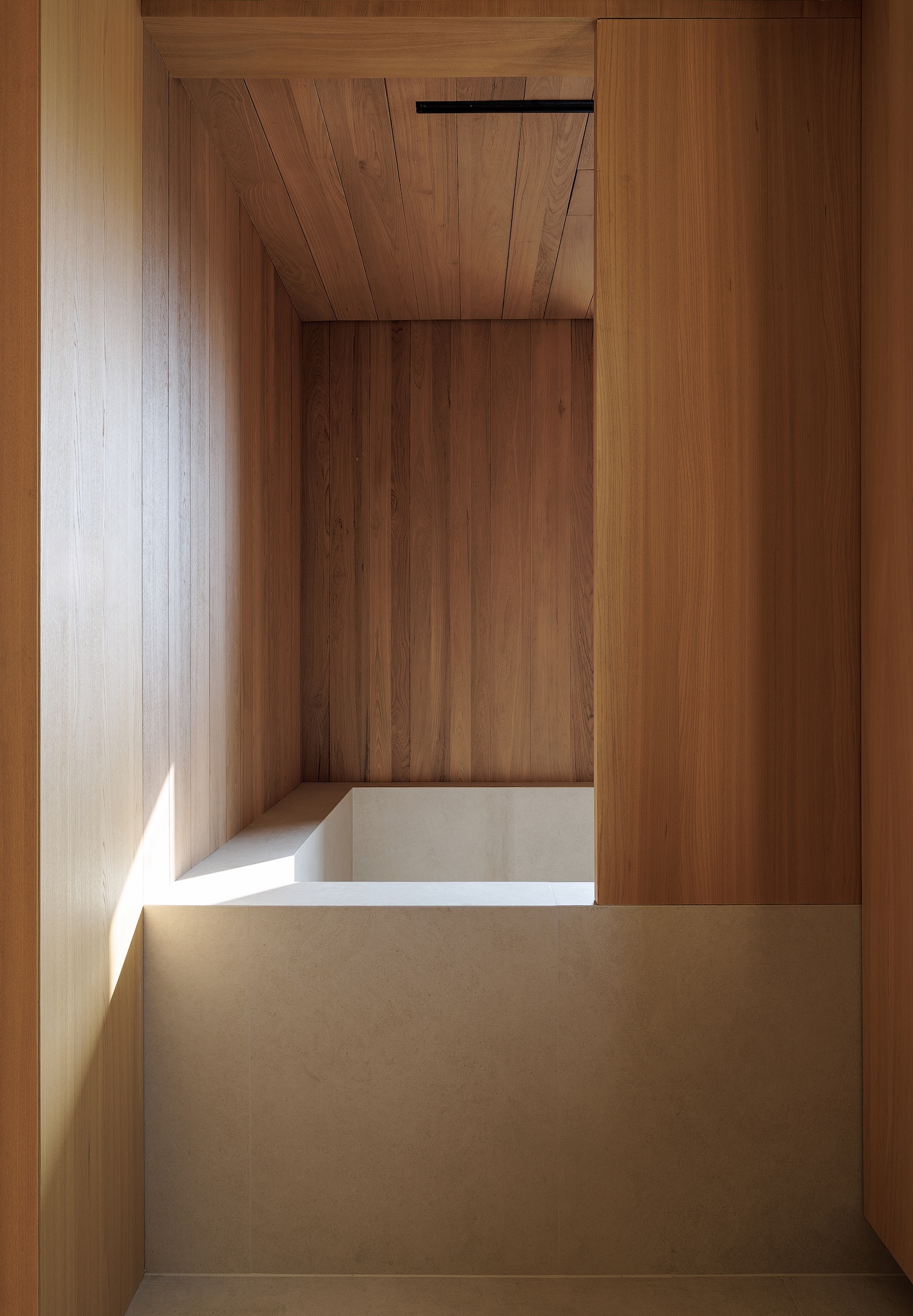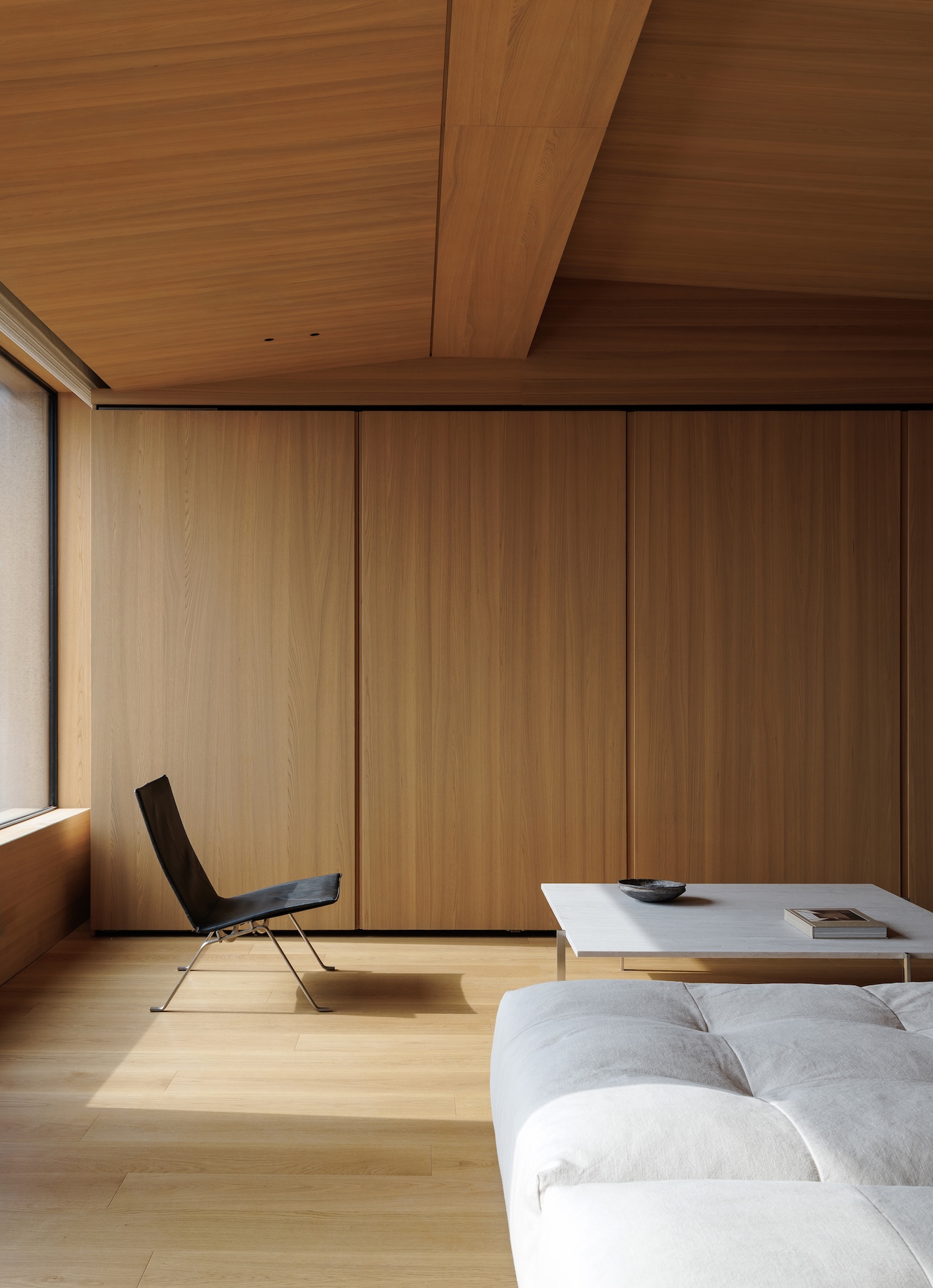
Smart Park Residence is a minimalist residence located in Zhengzhou, China, designed by ANG 3 STUDIO. The project tests a proposition at the heart of contemporary luxury: whether the choreographed calm of a high-end Japanese hotel can withstand the friction of ordinary domestic life. The client arrived with a clear reference point, the elongated spatial rhythm of Park Hyatt Kyoto, and a clear refusal, rejecting the cold detachment of extensive white finishes in favor of an interior fully wrapped in warm timber. ANG 3 STUDIO took that refusal as a structural premise rather than a finish selection, building the entire home around a single unified oak palette applied across six surfaces, ceiling to wall to floor, so that the space reads as one continuous wooden volume rather than an assembly of rooms.
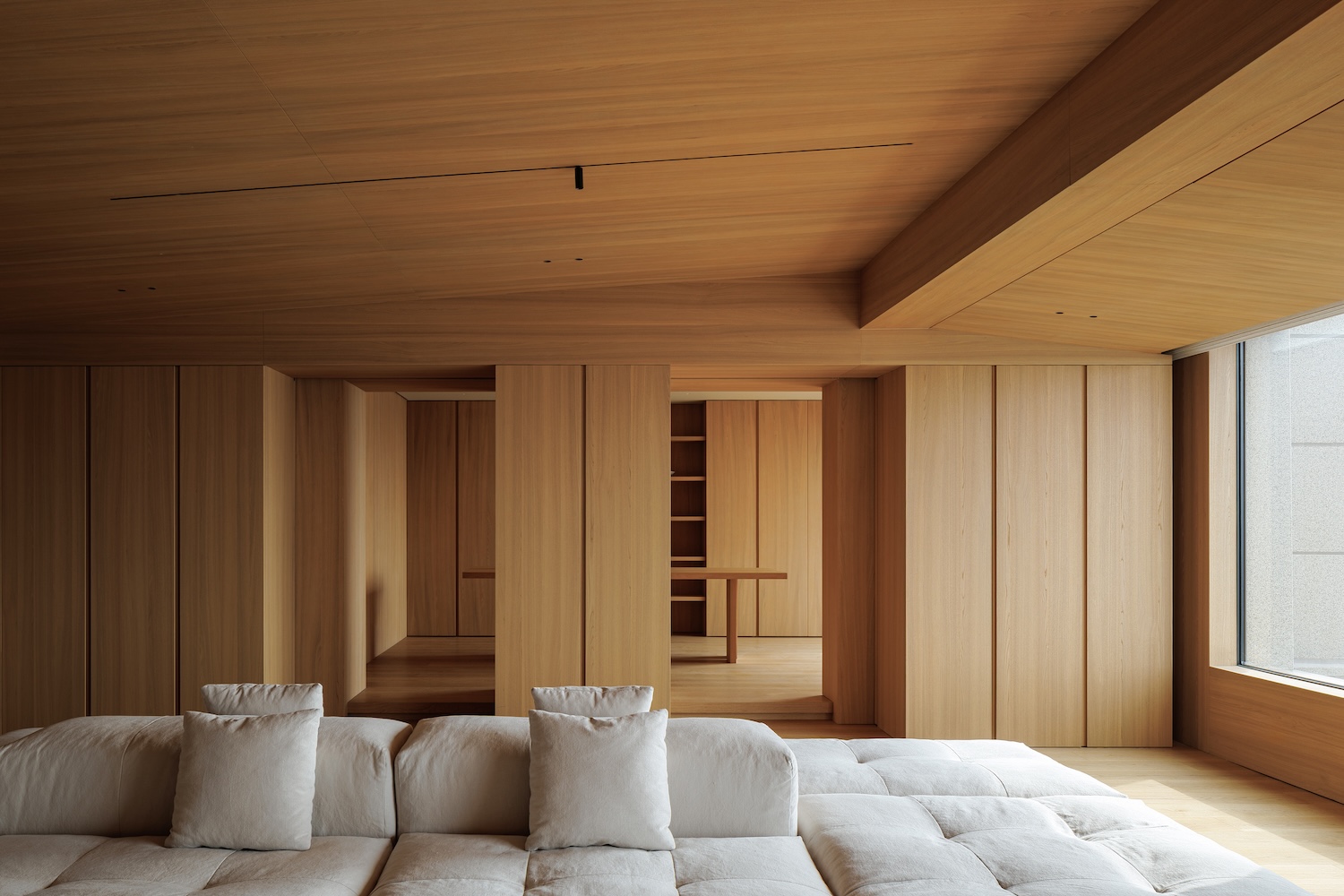
The deeper organizing principle is concealment. Japanese minimalism prizes hiddenness over display, and the design treats storage, technology, and secondary functions as things to be absorbed into the wood facade rather than exhibited. This logic recalls Fumihiko Maki’s notion of oku, the layered interiority that gives a Japanese plan its sense of depth through successive thresholds instead of a single revealing front. Mirrors placed at the master bedroom entrance and between public and quiet zones lighten the visual weight of the all-timber shell and stretch the apparent scale, a quiet counterweight to the density of the oak.
In the living area, the conventional axis of opposing TV and sofa walls is dissolved entirely. The television recedes into sliding cabinetry that merges with the surrounding paneling when closed, and reconfigurable modular seating replaces fixed furniture, allowing the room to reform as a reading niche, a social corner, or a screening space as needed. An irregular peaked ceiling breaks the flat monotony of the original raw apartment and reintroduces vertical layering overhead.