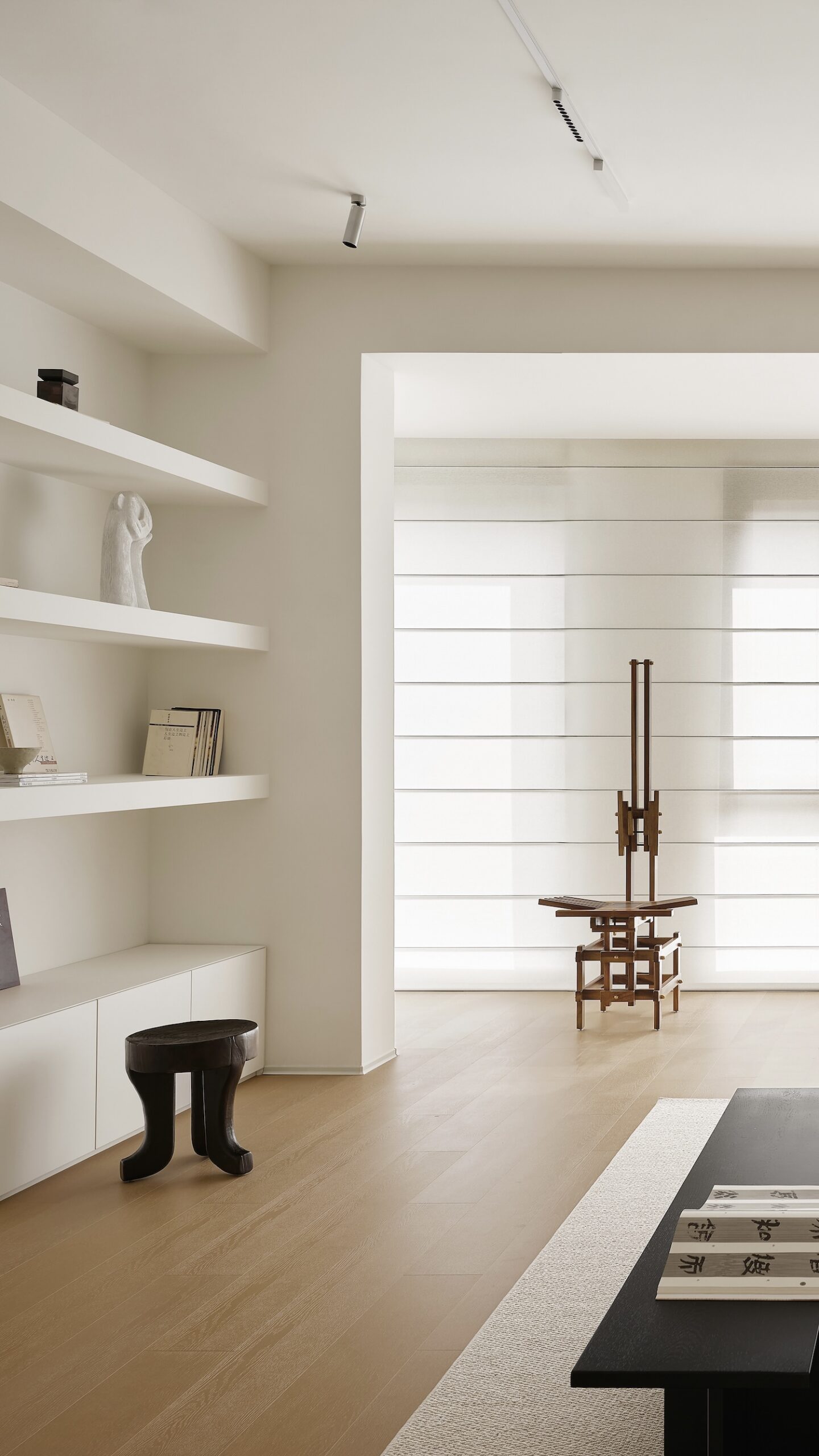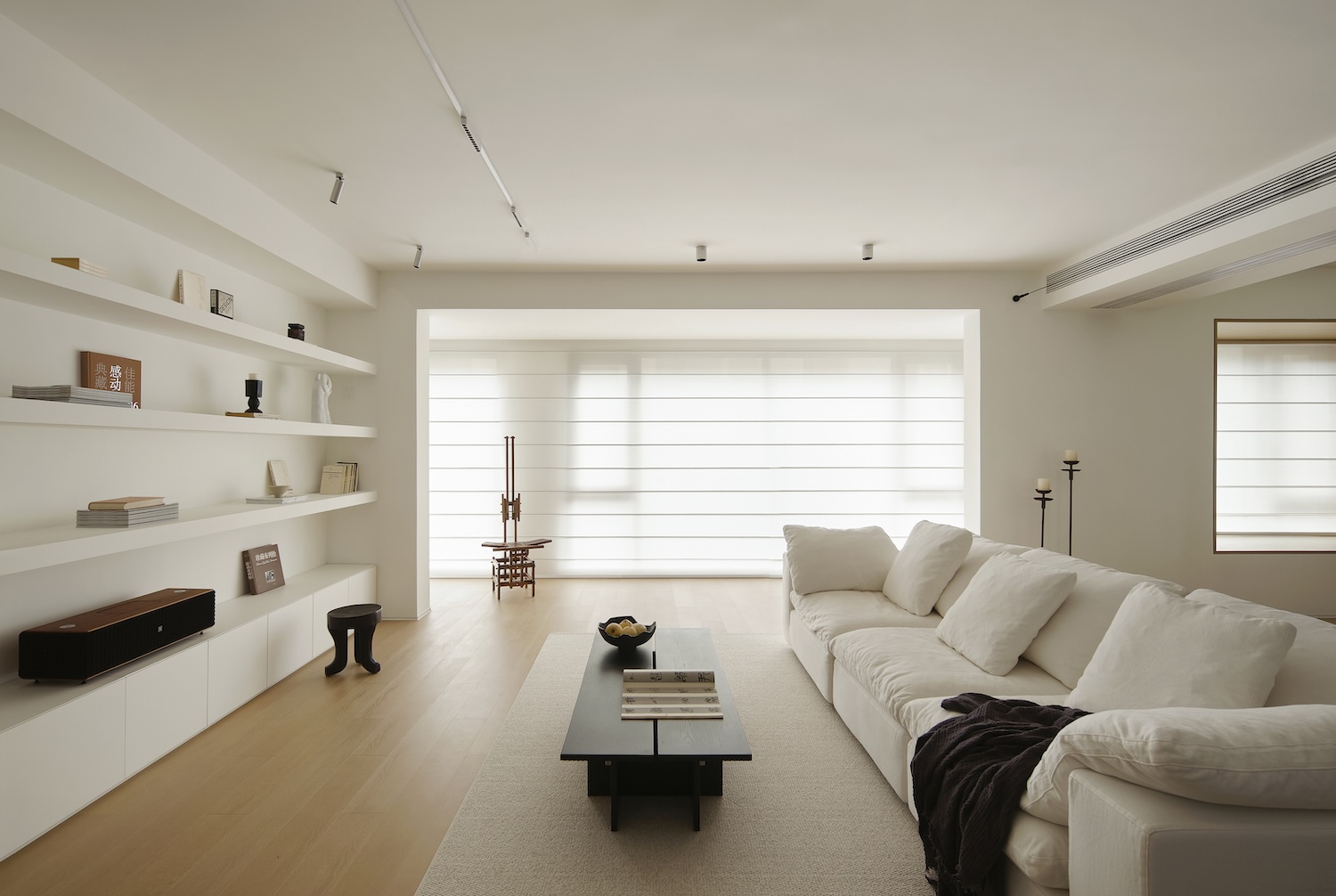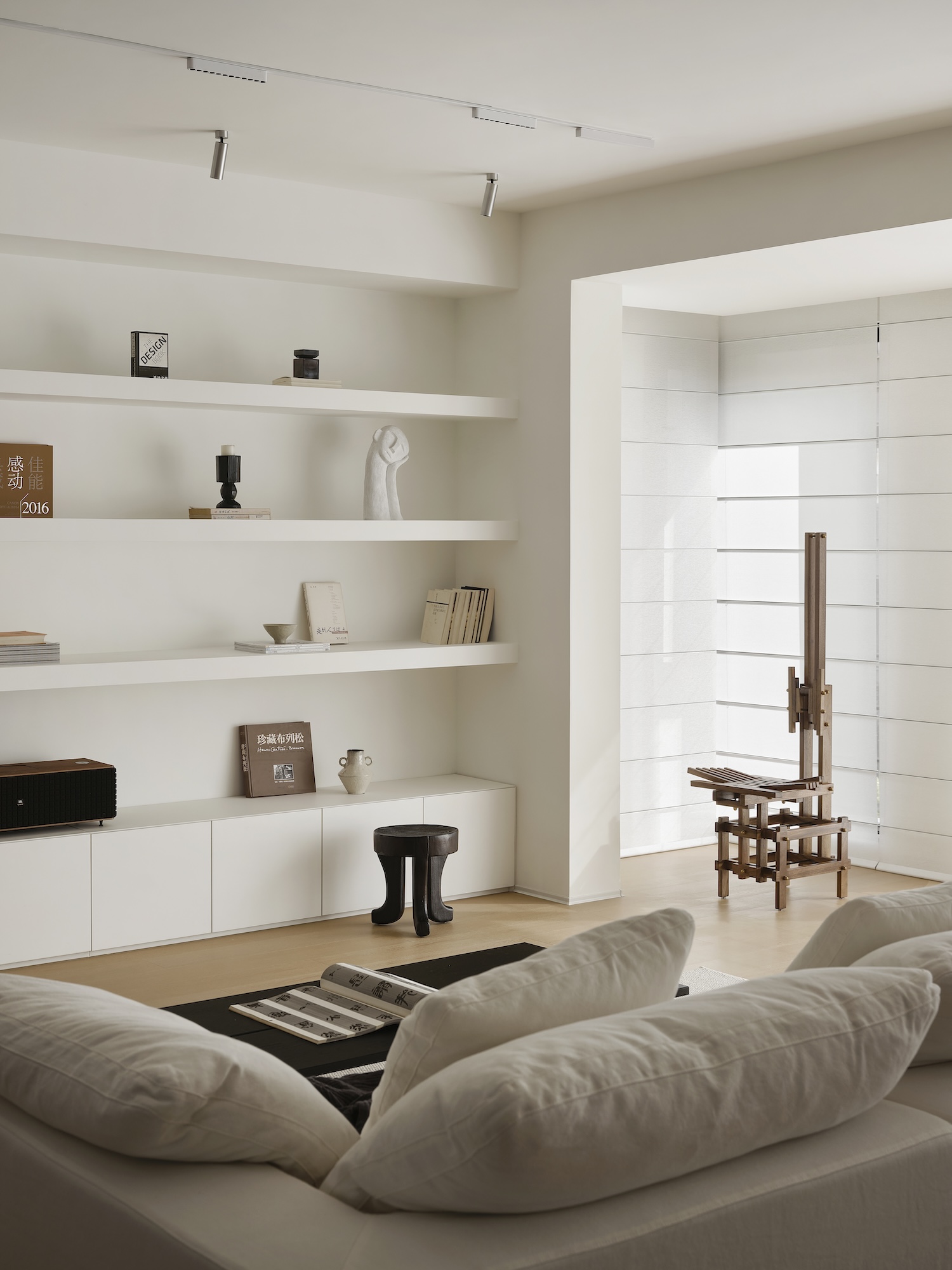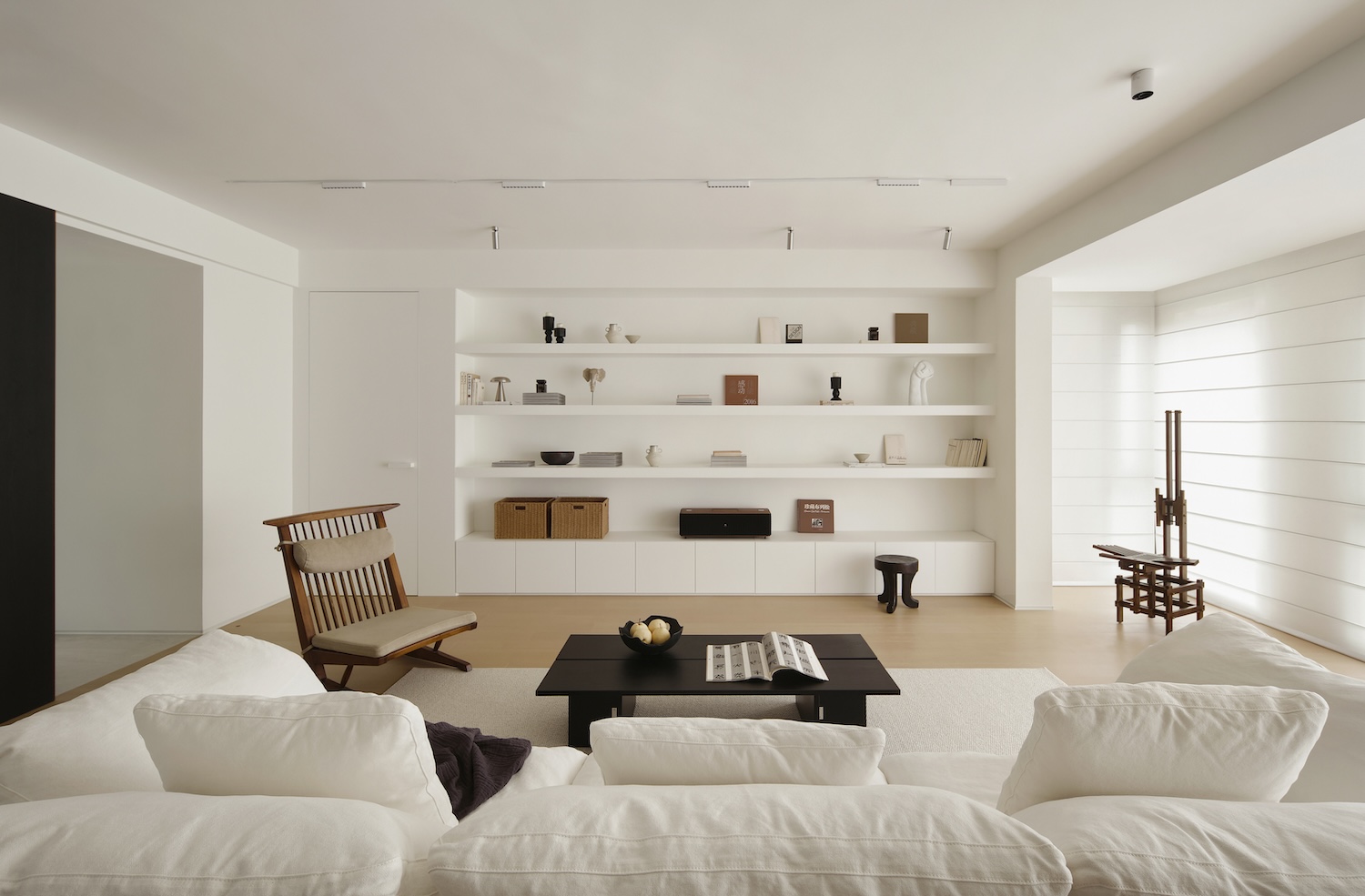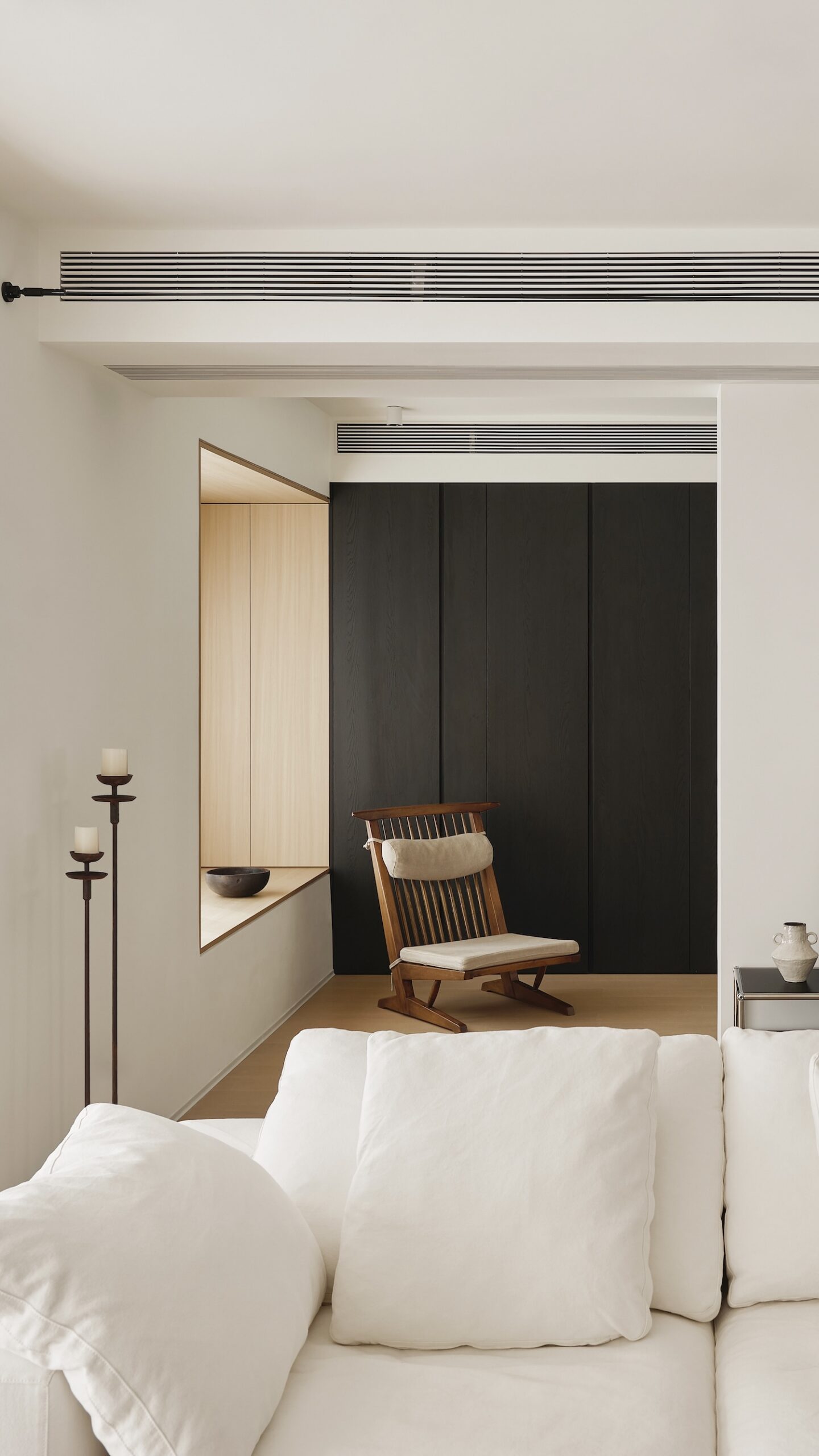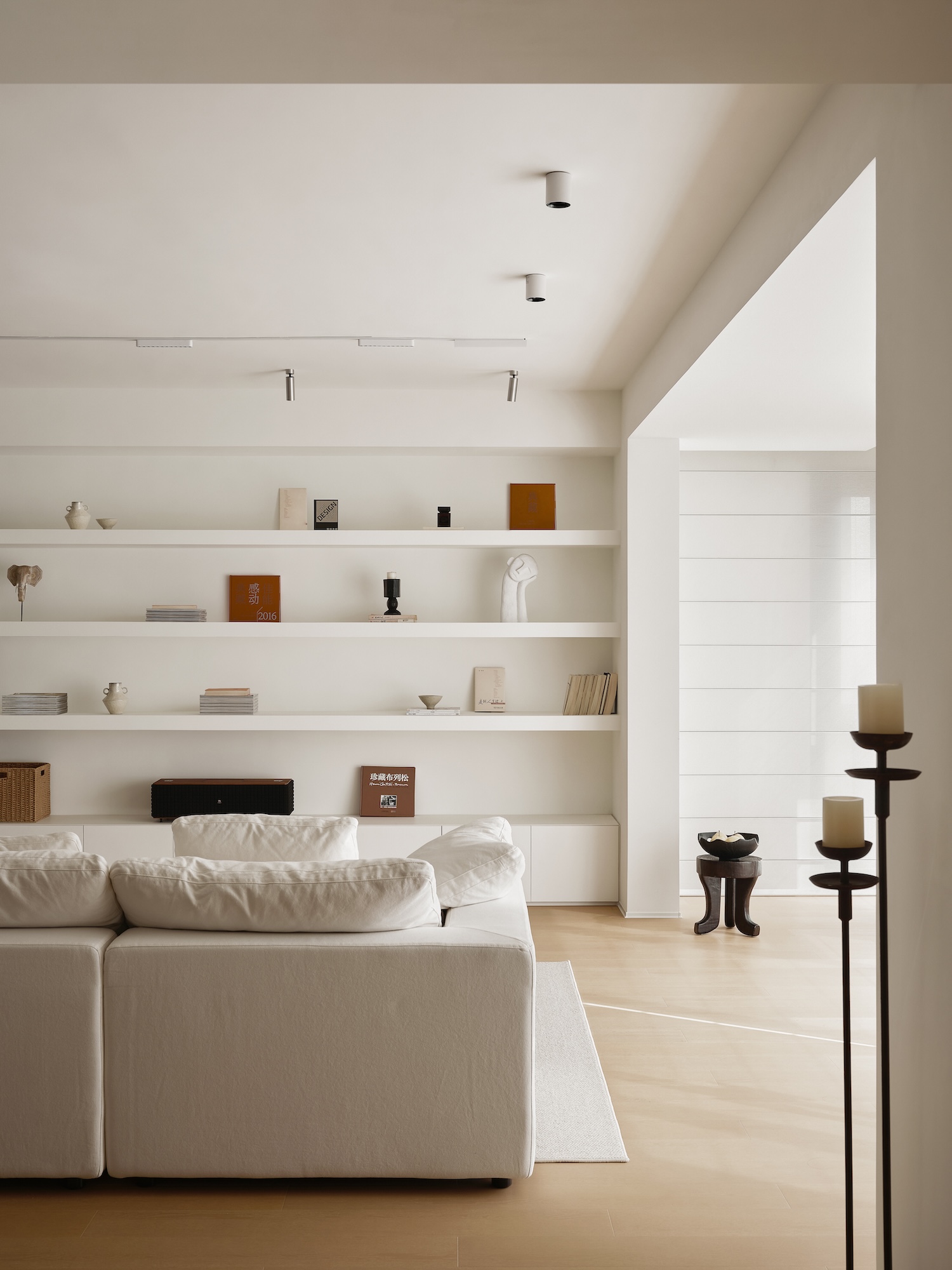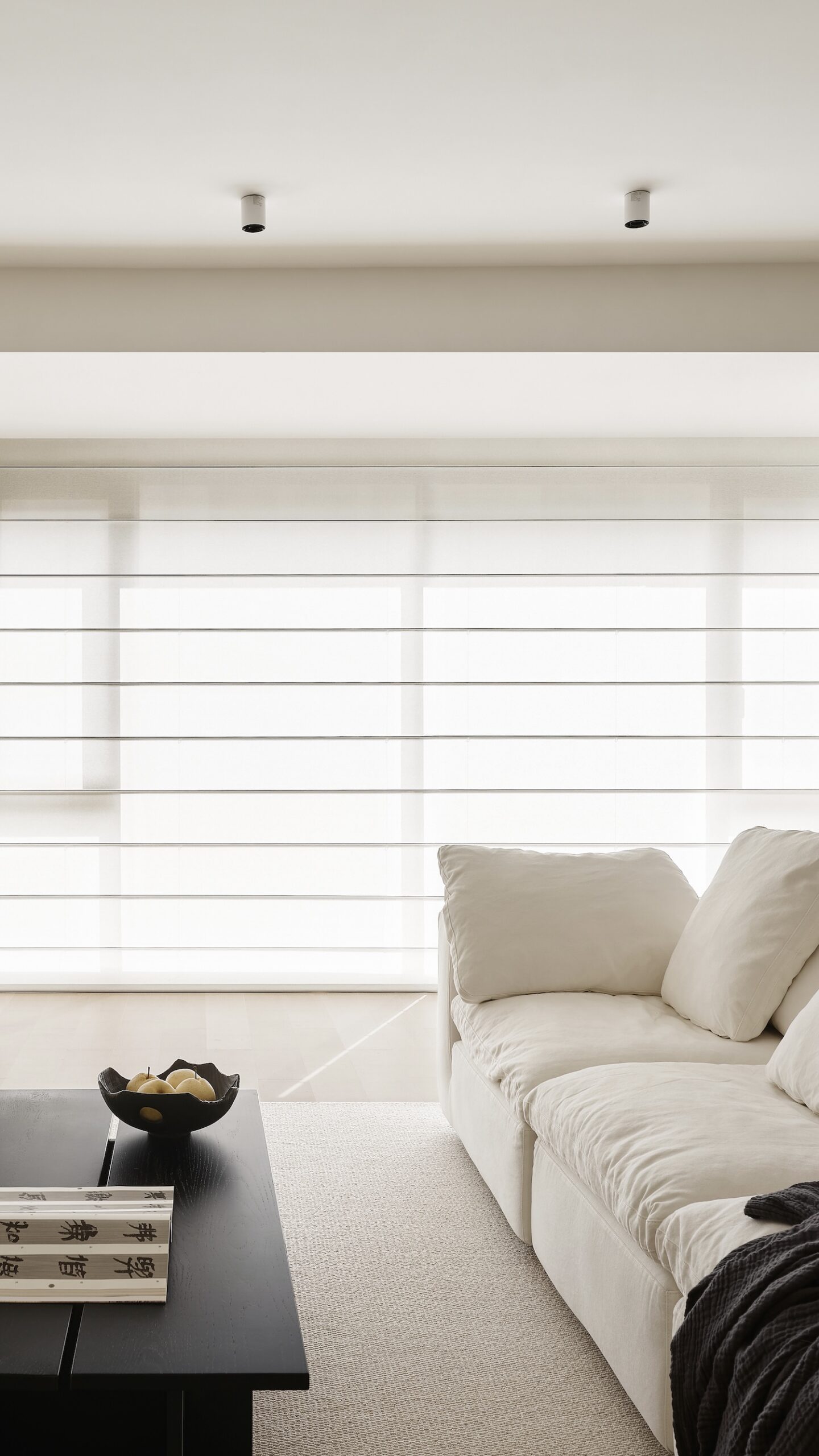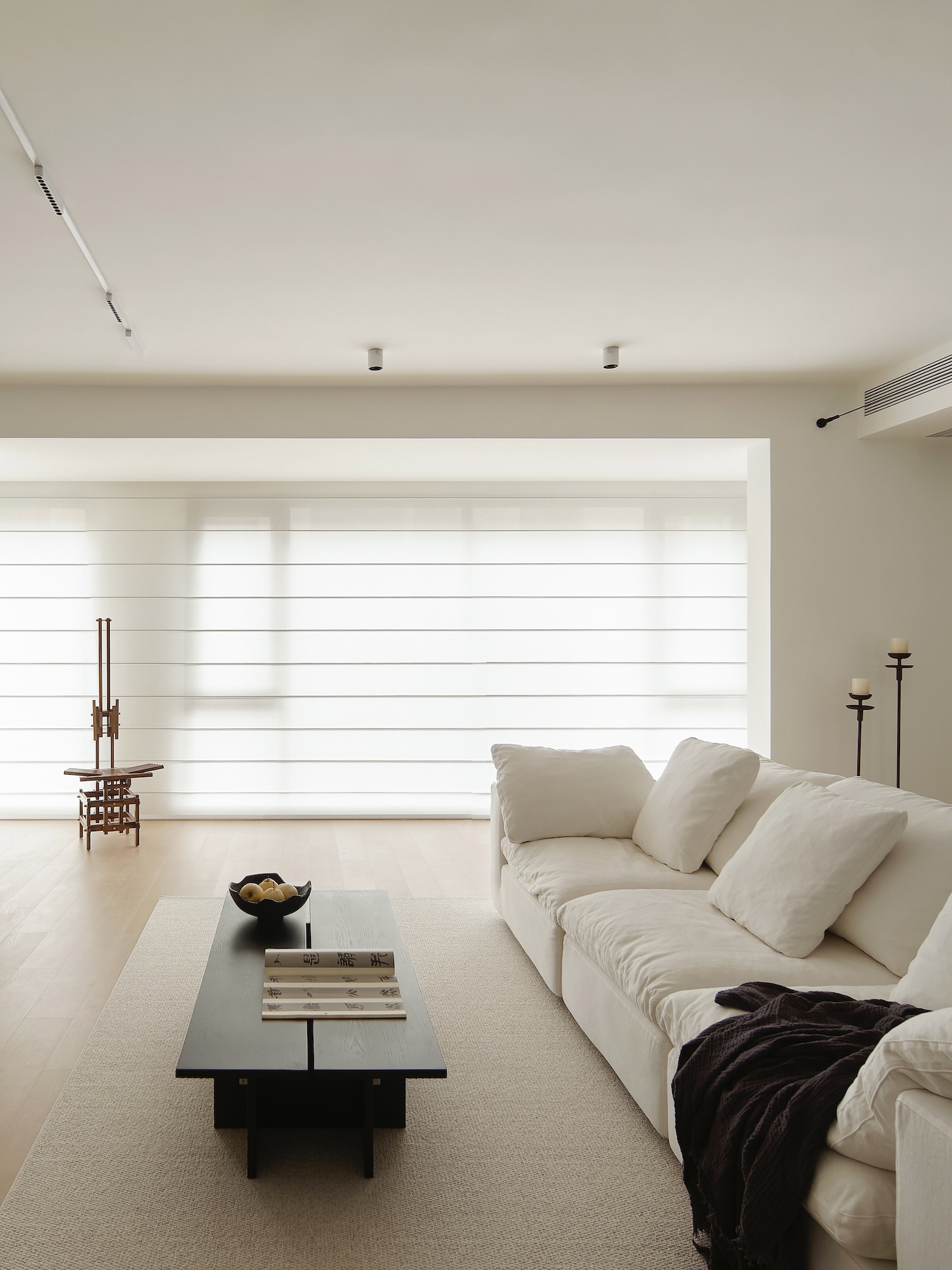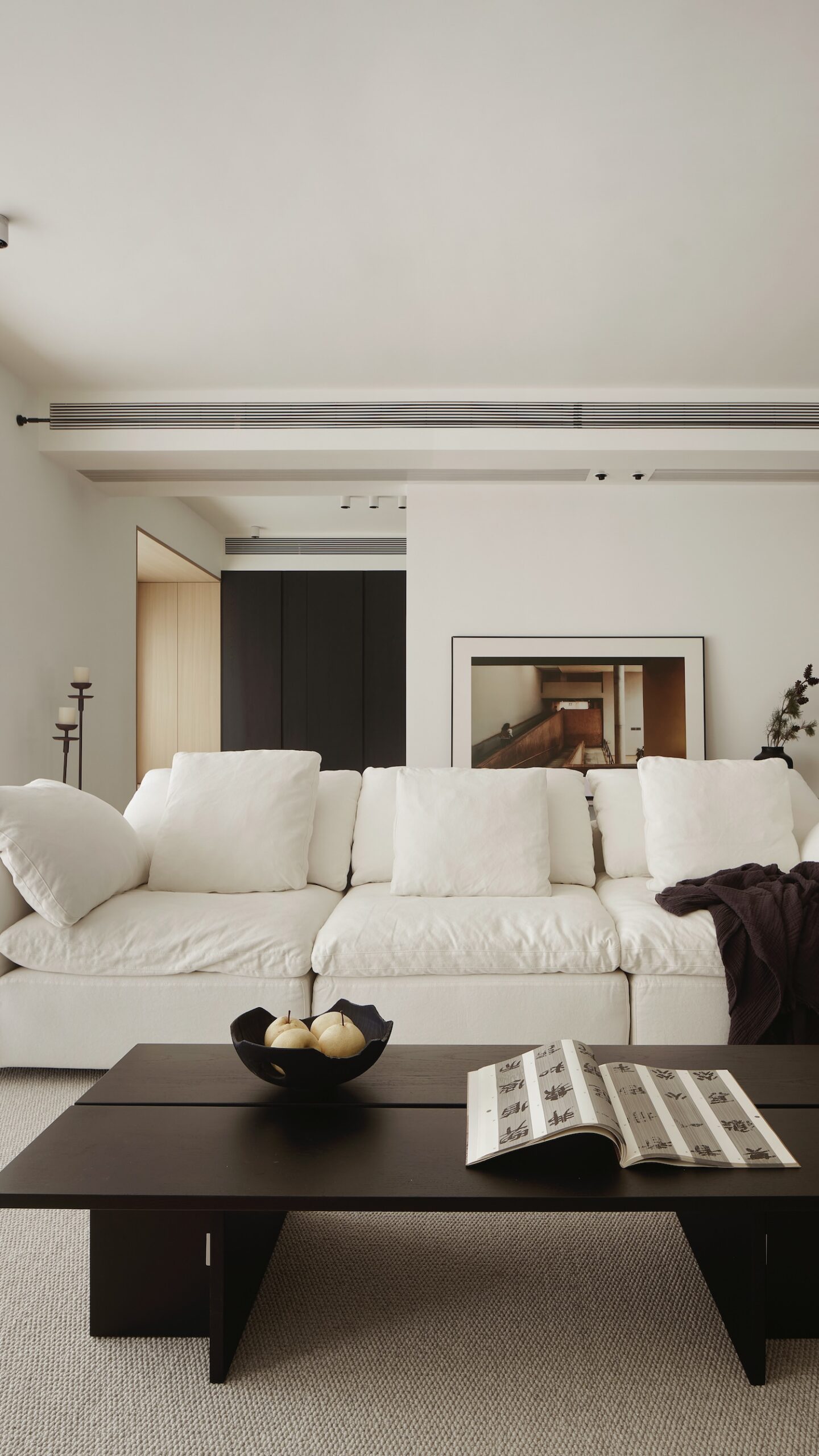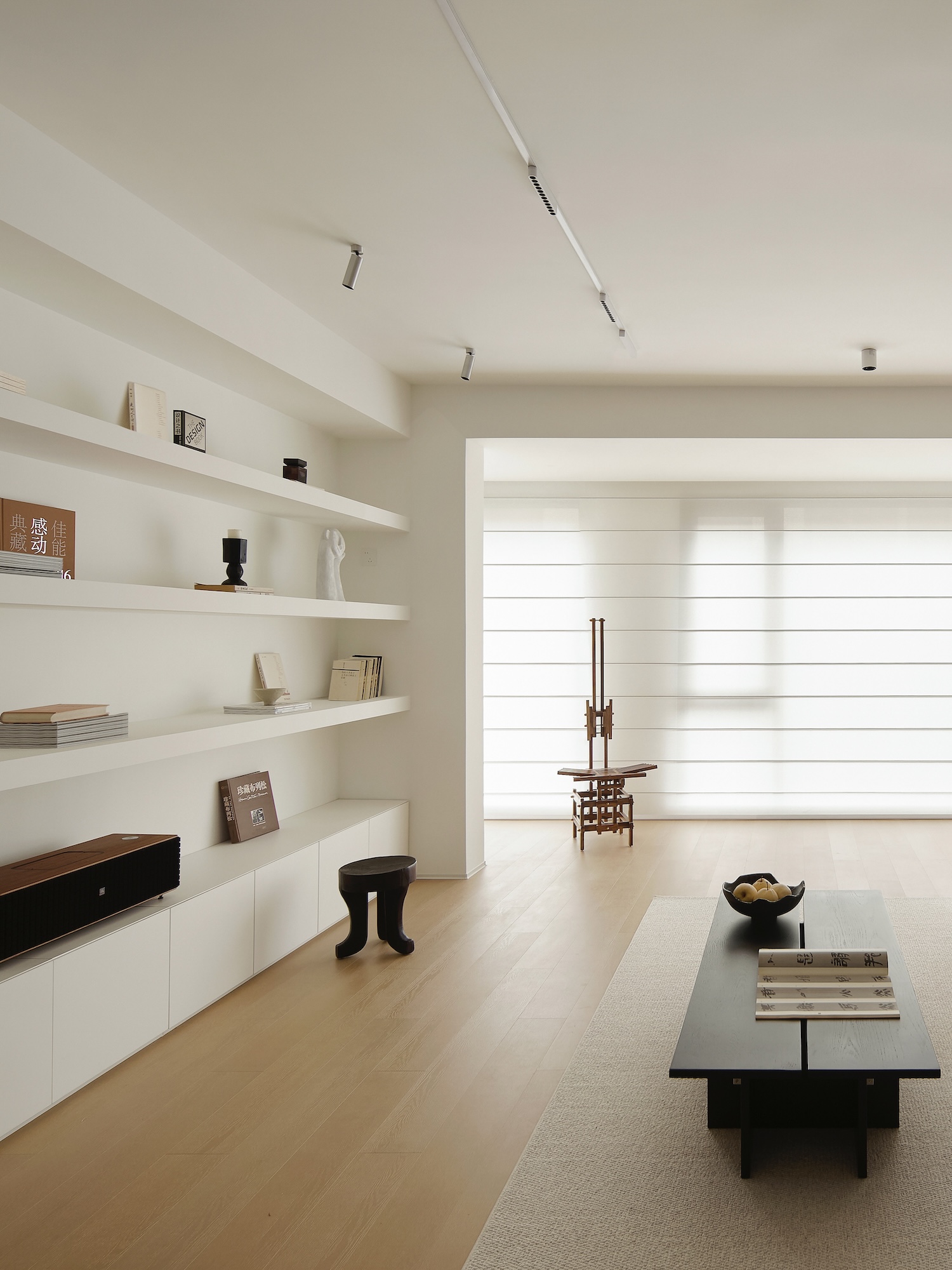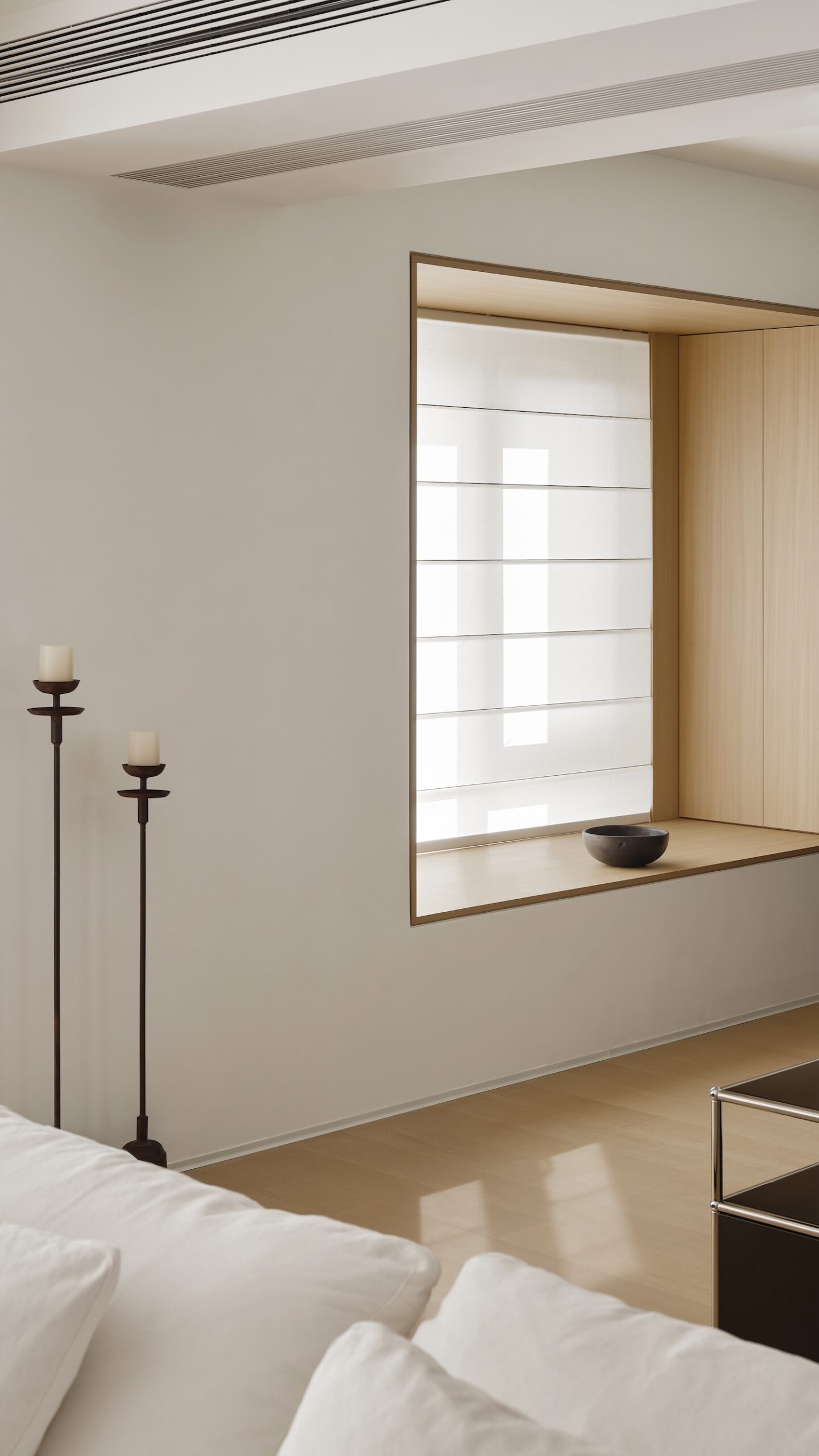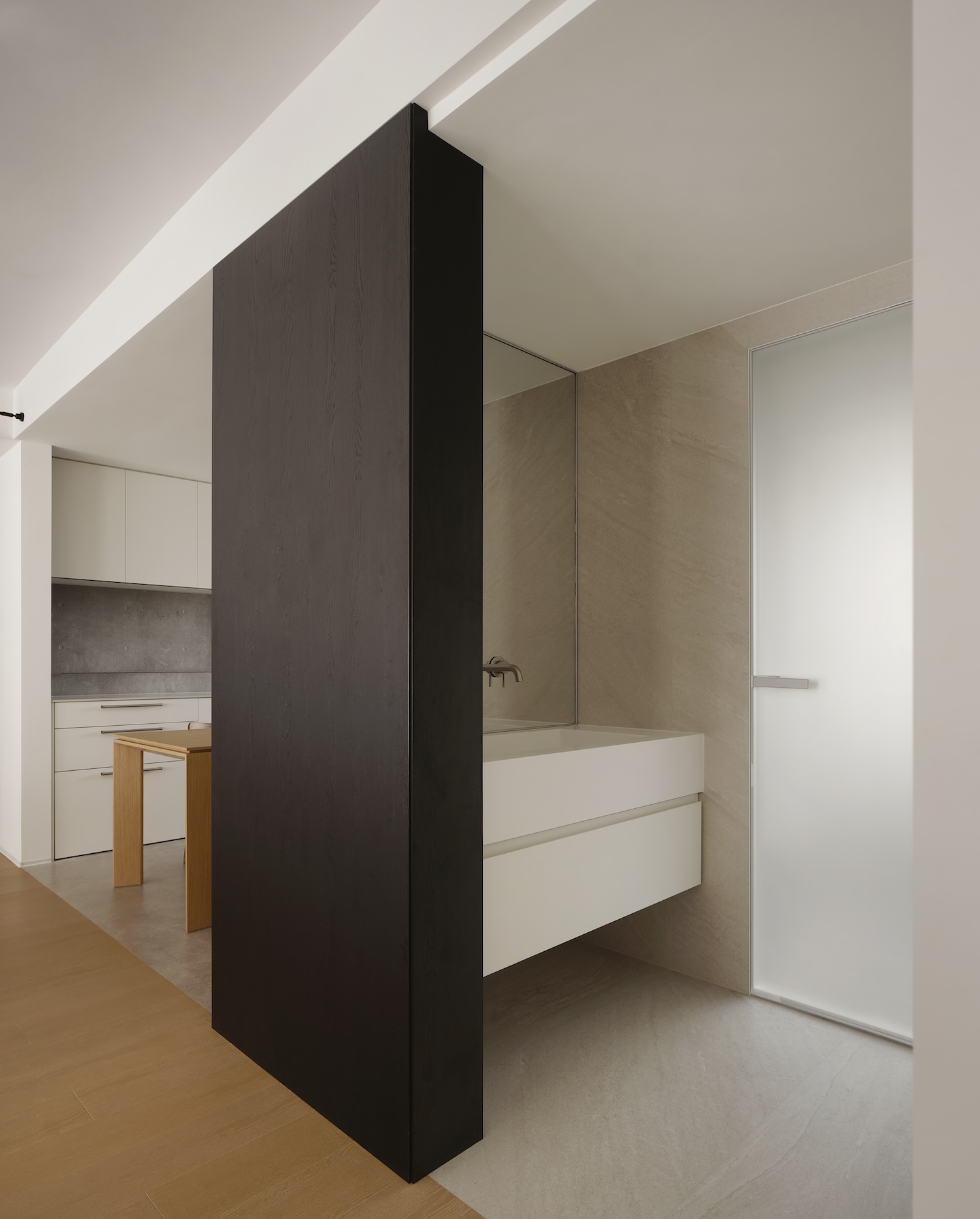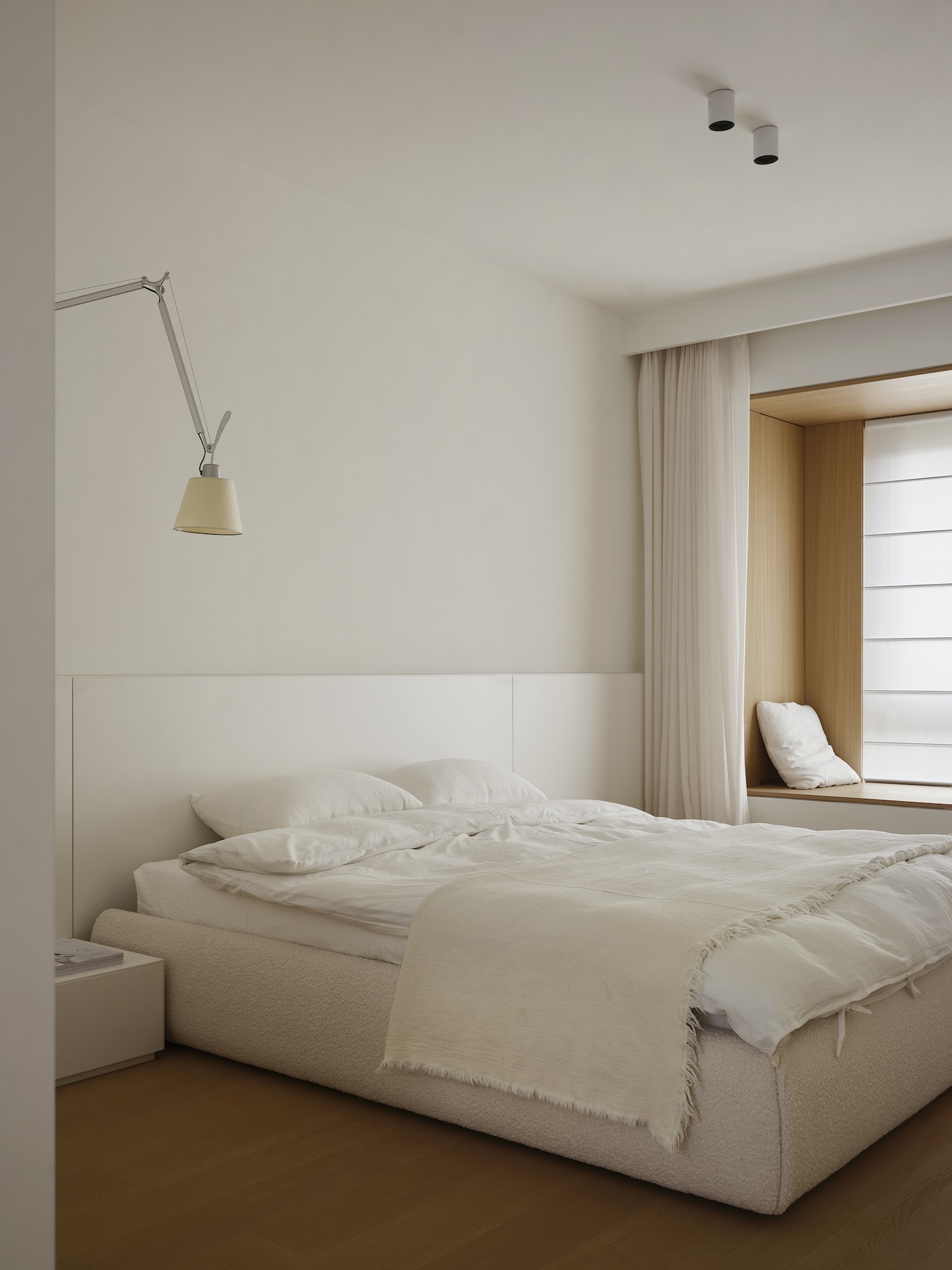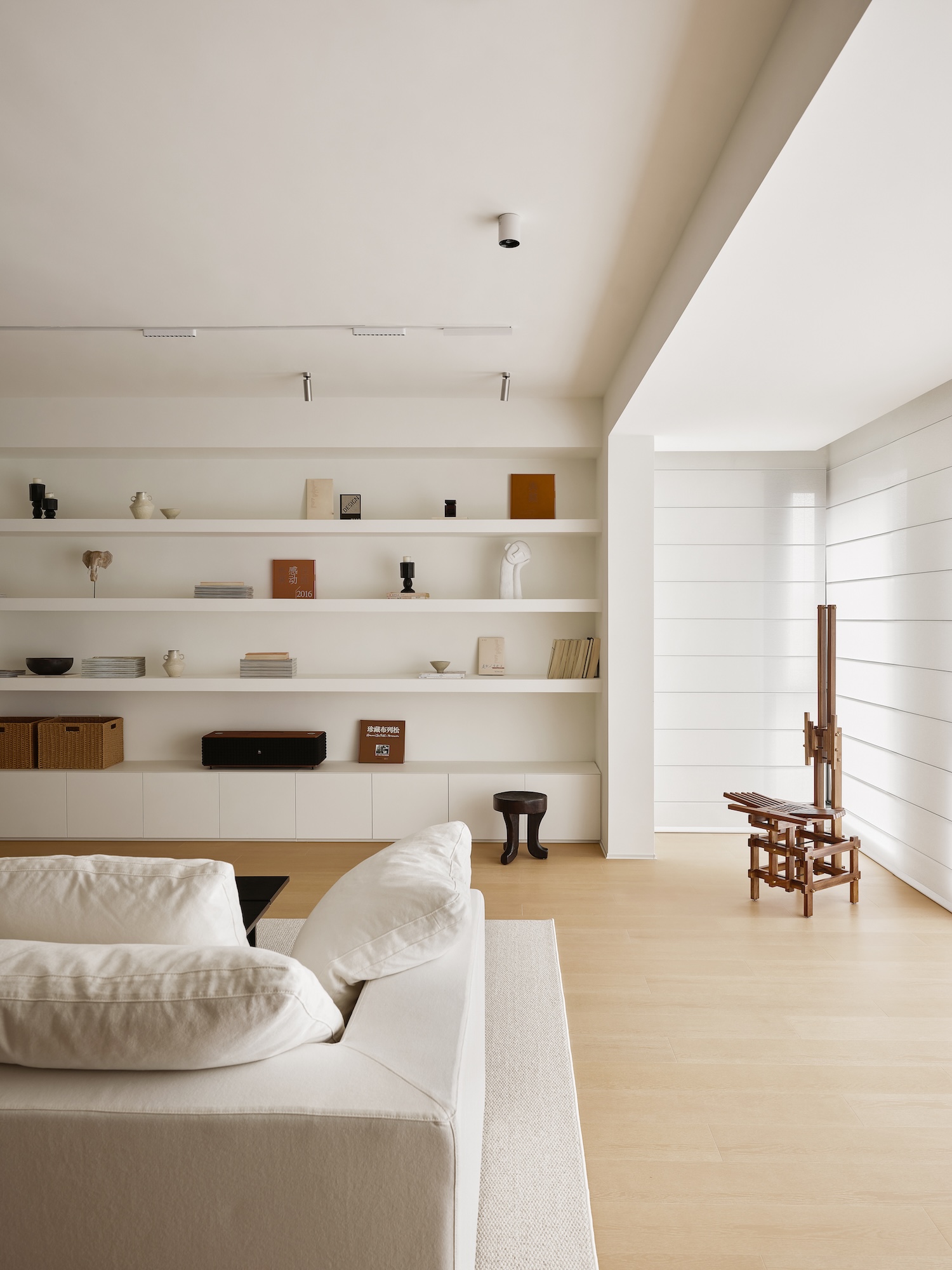
Su Residence, a 1300 sqft apartment completed in 2025 in Zhengzhou, China, carries no ceiling-mounted light fixtures. Zouhe Space Design, led by Qin Mengyu, routed every practical light source onto a magnetic track system or into small surface-mounted cylinders, leaving the ceiling itself uninterrupted apart from a single black air-conditioning grille that runs the length of the room as a horizontal line. The decision follows from a broader subtraction that removed moldings, applied decoration, and most form-making from the apartment before construction addressed how a young family would actually use the space day to day.
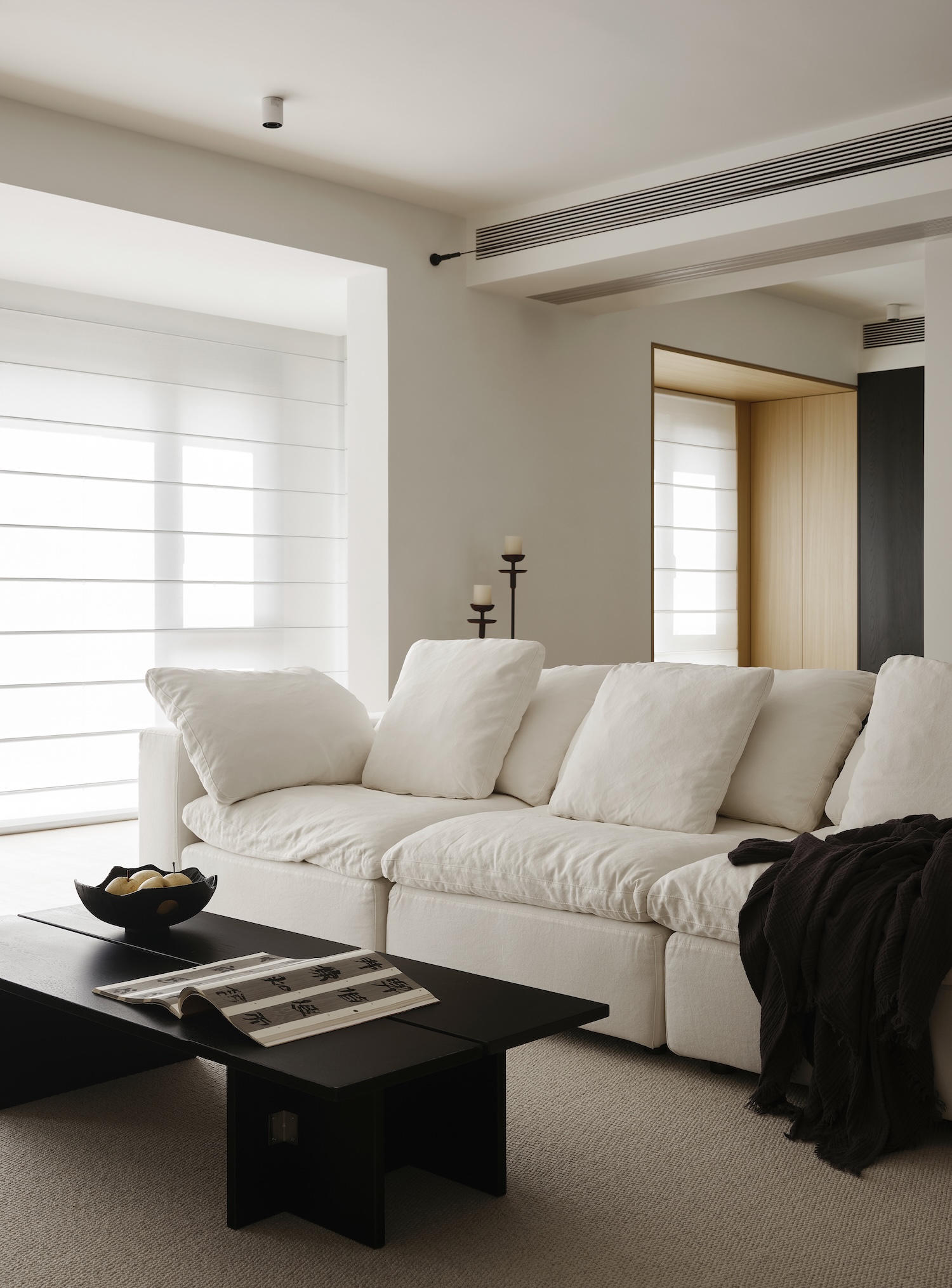
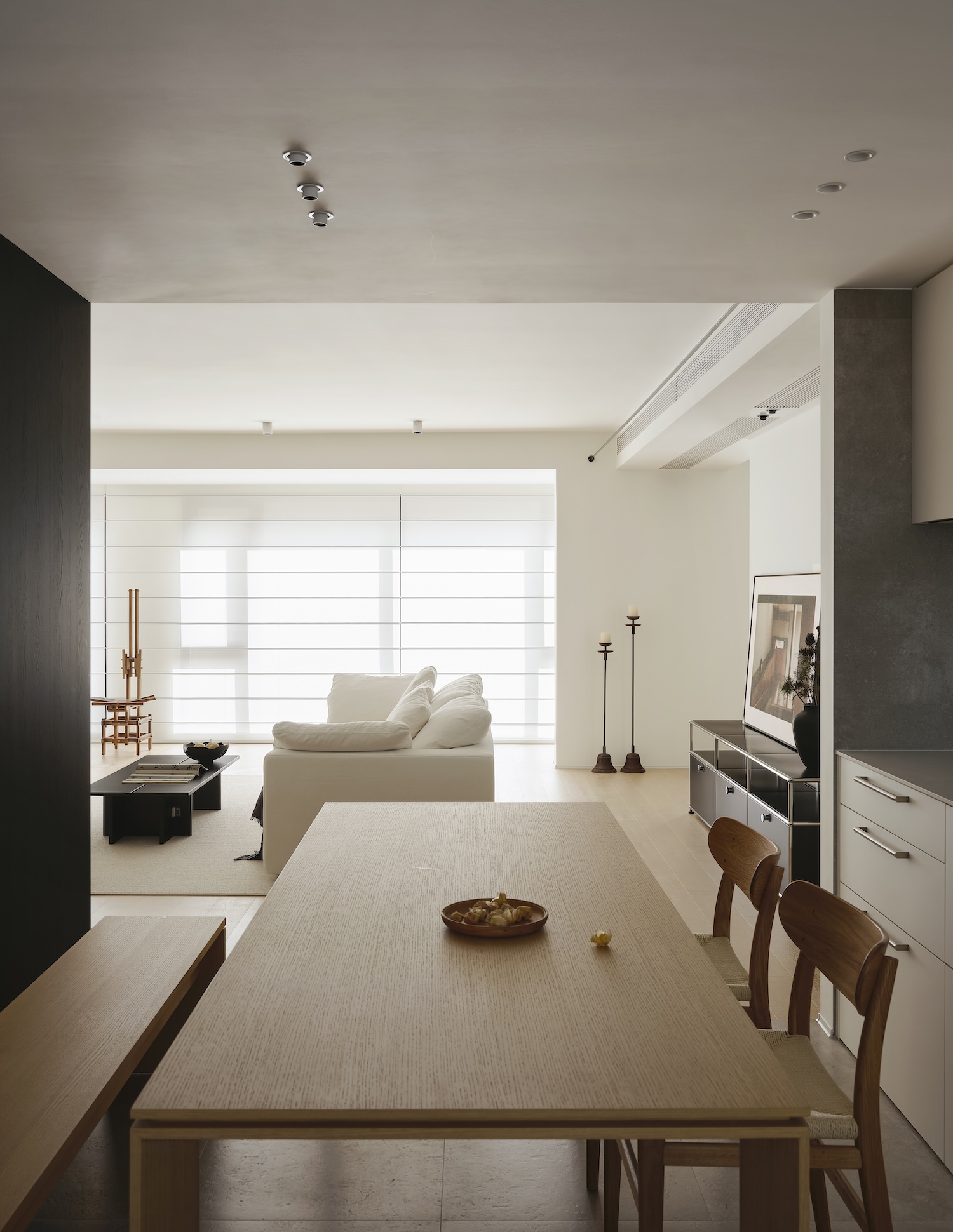
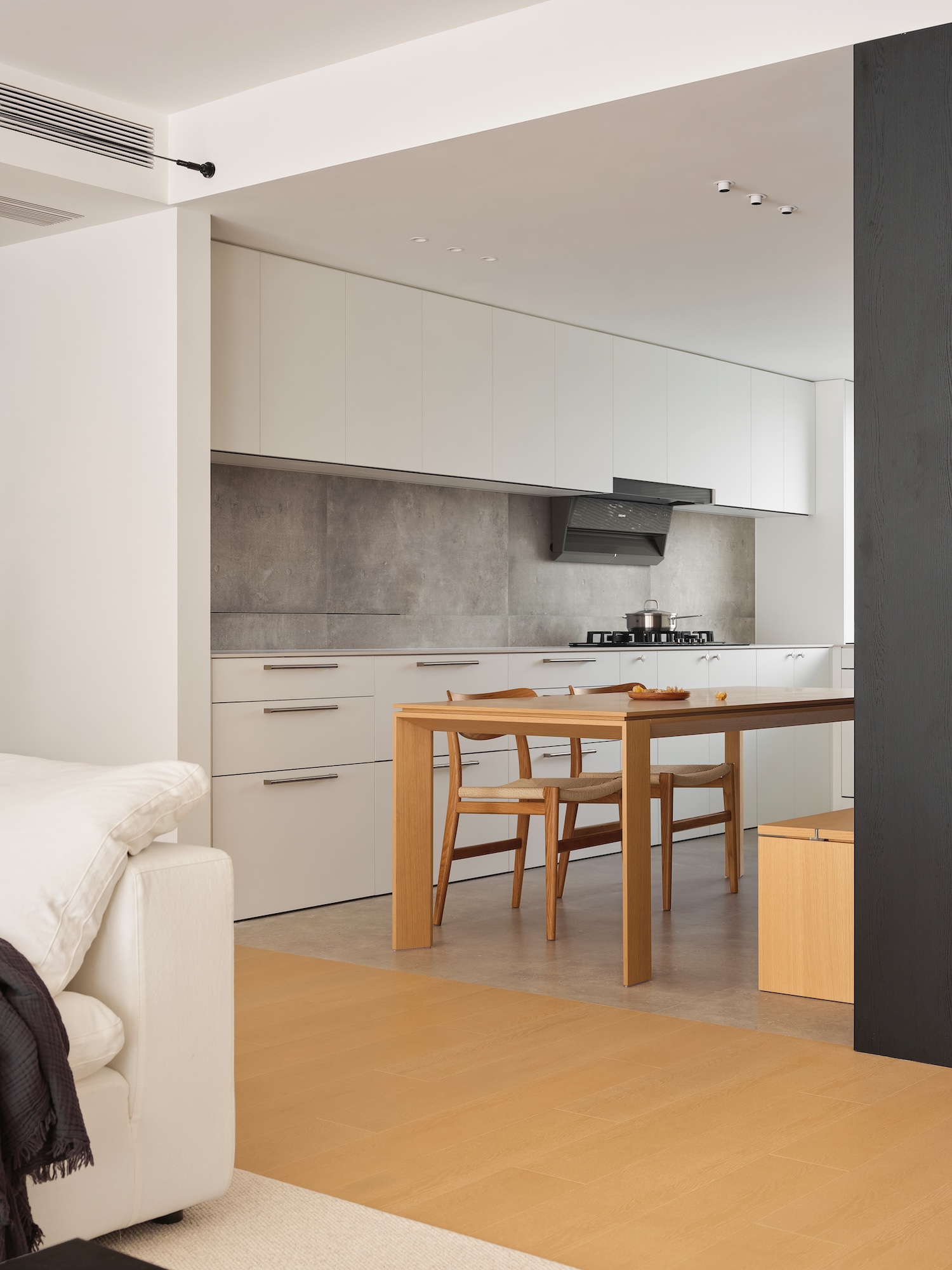
Living, dining, and kitchen are combined into one continuous field. A deep white modular sofa faces the floor-to-ceiling window, and the television is positioned to recede from the room rather than anchor it, giving the window priority over the screen. An oak table sits between the kitchen and the lounge, acting as a hinge that lets the household’s daily route cross a single run of timber flooring rather than switching between materials or levels.
Walls are warm off-white, floors are light oak, and a strip of gray cement tile runs behind the flat-panel white kitchen cabinets, the one place where a harder surface interrupts the plan. Charcoal-black veneer appears only at the entry and along one side of the dining zone, grounding the pale interior and marking a functional boundary without dividing the room.
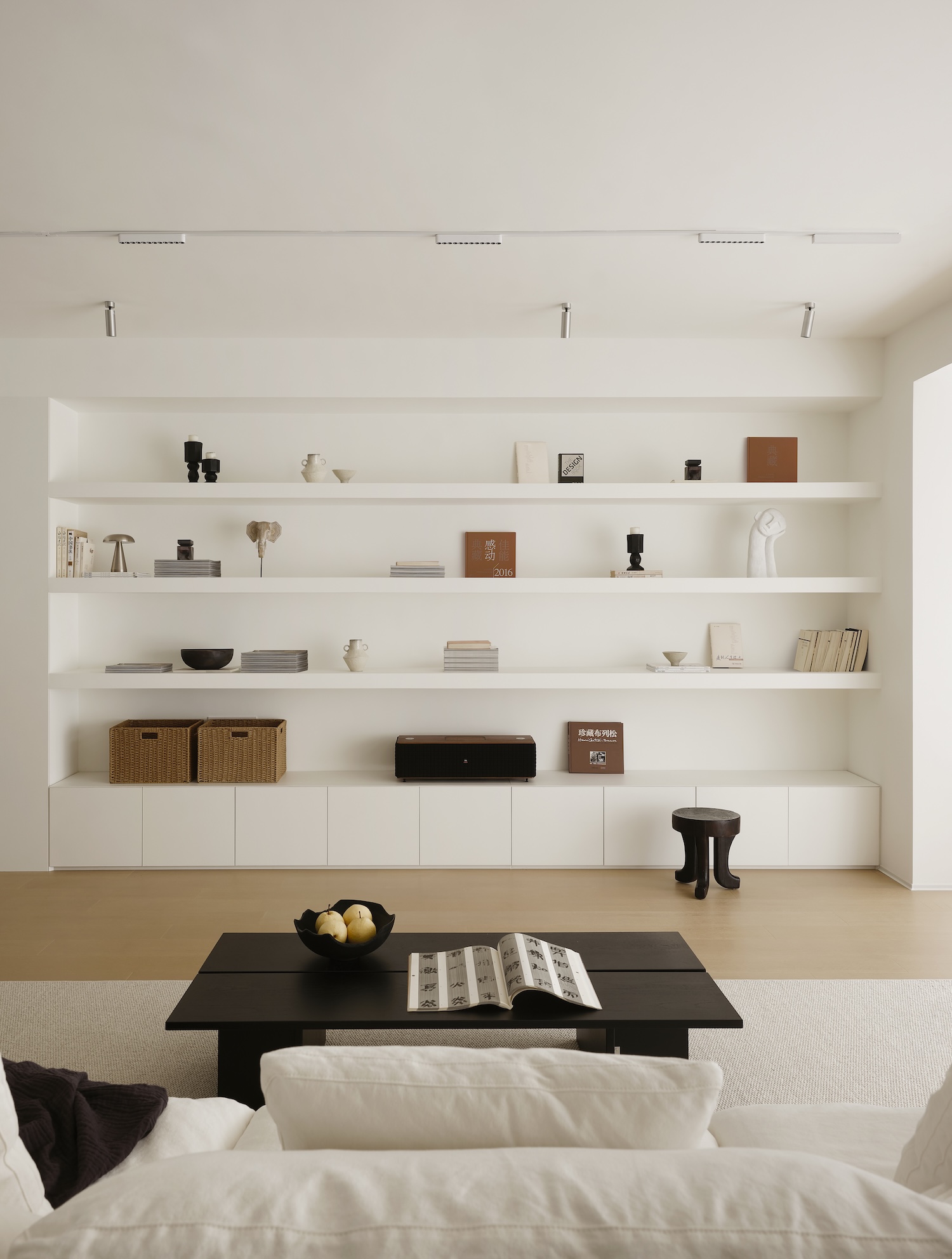
Furniture was chosen for continued use over statement value. An overstuffed white fabric sofa, a low black solid-wood coffee table, and an oak dining table with rush-seat wooden chairs furnish the open plan without dictating how it will be used a decade from now. Horizontal blinds diffuse daylight as it moves across the room over the course of a day, and open shelving holds only books, dark ceramics, and a small number of sculptural objects. The rush seats introduce the one handmade texture in an apartment otherwise built from flat planes of lacquer, veneer, and cement, a texture that will show its own wear pattern well before the surfaces around it do.