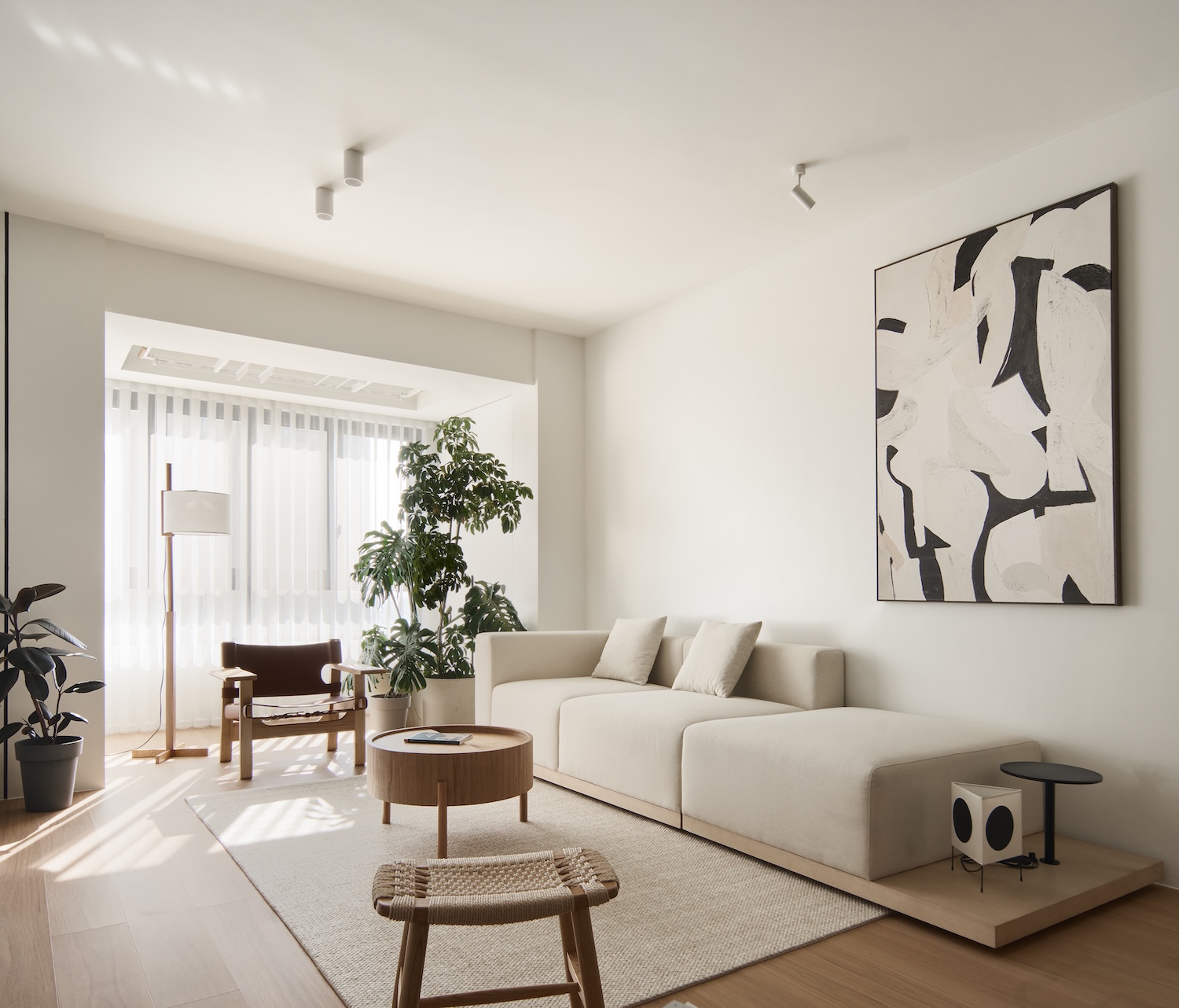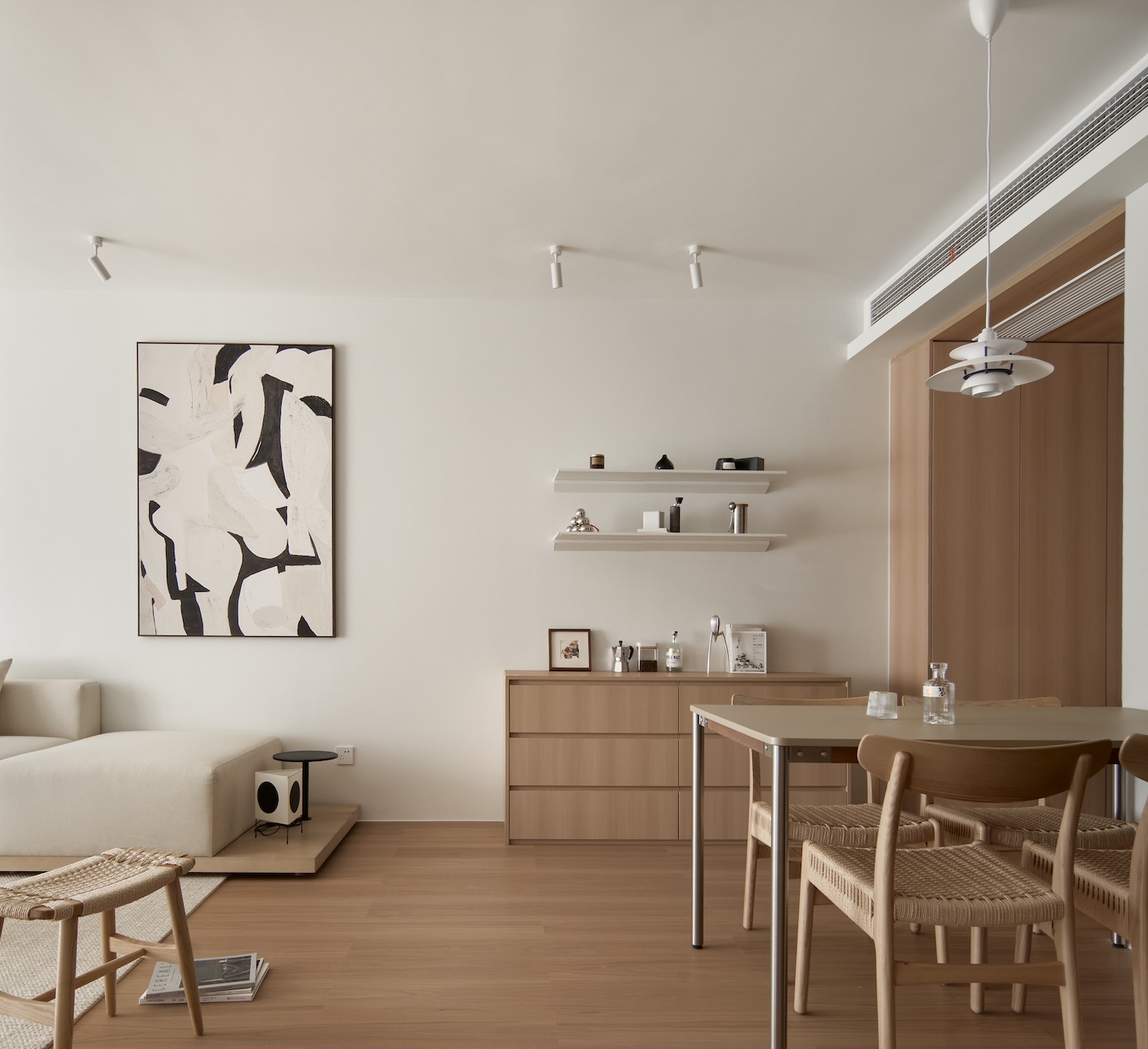
W-House is a minimalist residential interior located in Huzhou, China, designed by 101 DESIGN. W-House earns its usefulness through planning rather than scale. The project – a second collaboration between 101 DESIGN and the same family – centers on a specific brief: a school-district apartment purchased for a young son, with the mother requesting generous storage alongside spatial calm. The result channels most of its intelligence into circulation and concealment, turning a compact floor plan into something that reads far larger than its footprint.
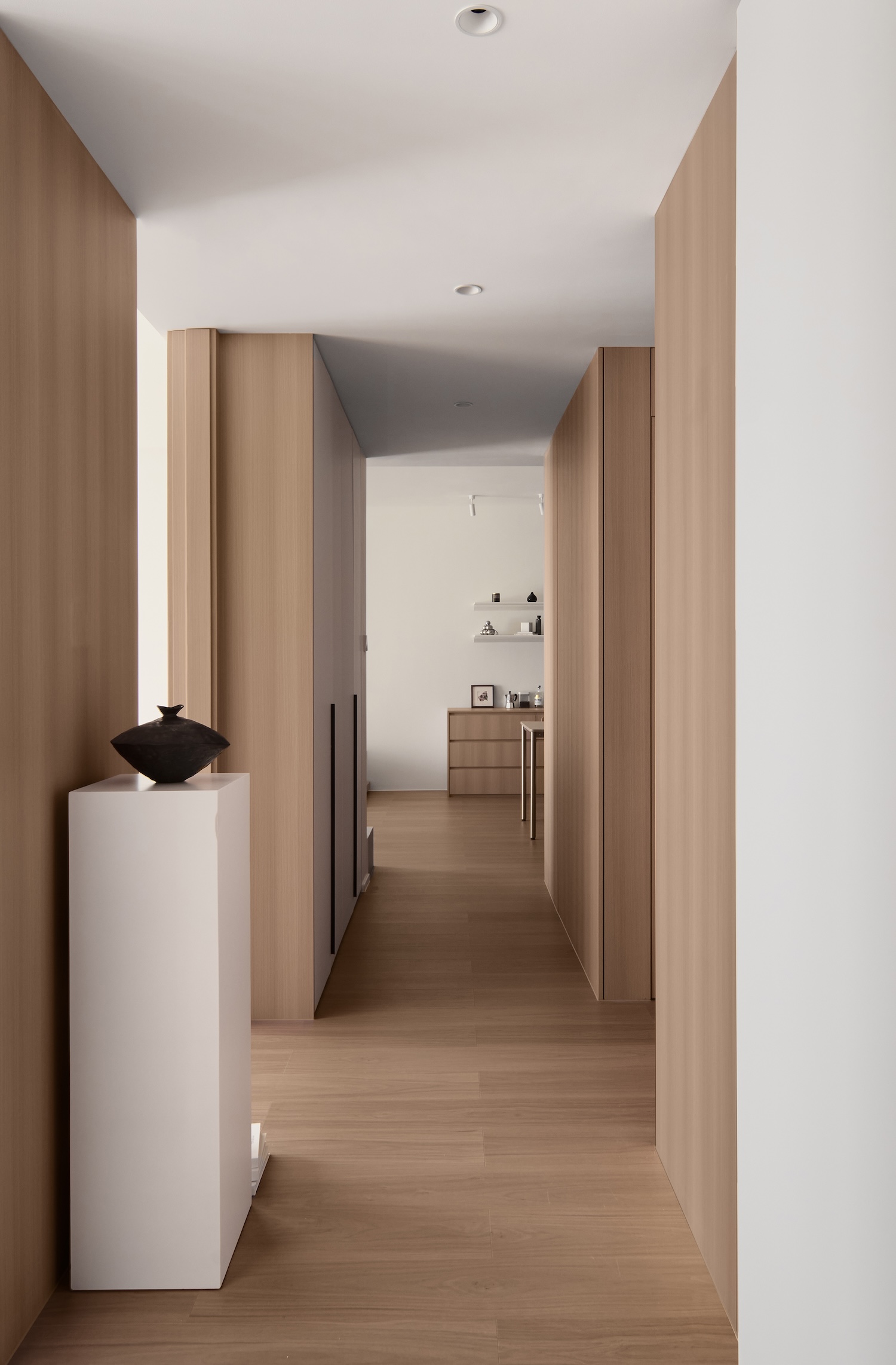
The organizational logic runs throughout every zone. A dedicated entry vestibule handles outerwear and shoes before they reach the main living space. The kitchen operates on a dual-circulation path, allowing movement through rather than in-and-out, a small shift that eliminates the pinch points common to galley-adjacent layouts. The bathroom separates into three distinct functions – wash, toilet, bath – a three-way split increasingly prevalent in Chinese residential design that brings hotel-suite practicality to domestic life. Corridor walls transform into built-in storage systems, and the study integrates directly with a dedicated storage room, compressing two low-occupancy functions into a single spatial envelope.
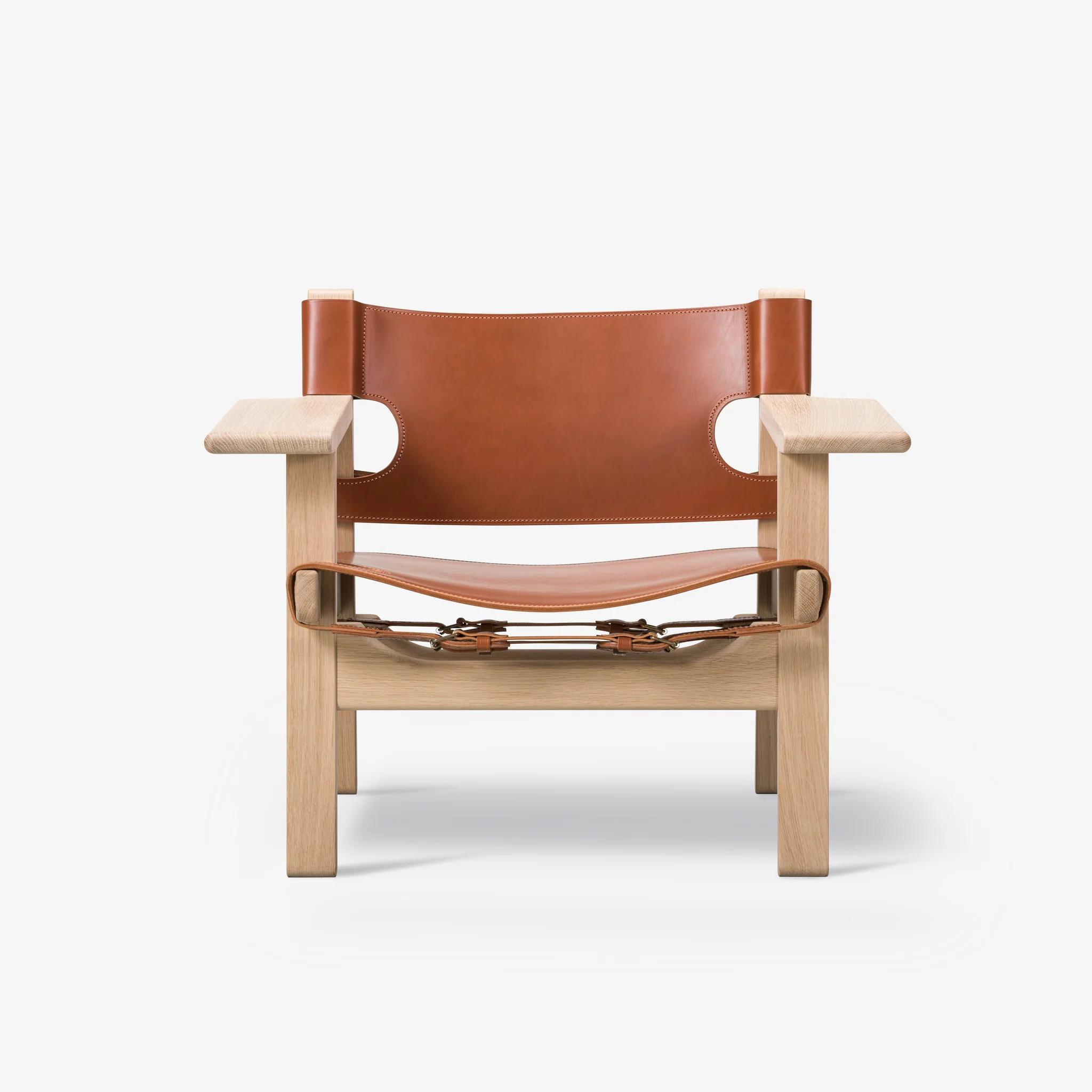
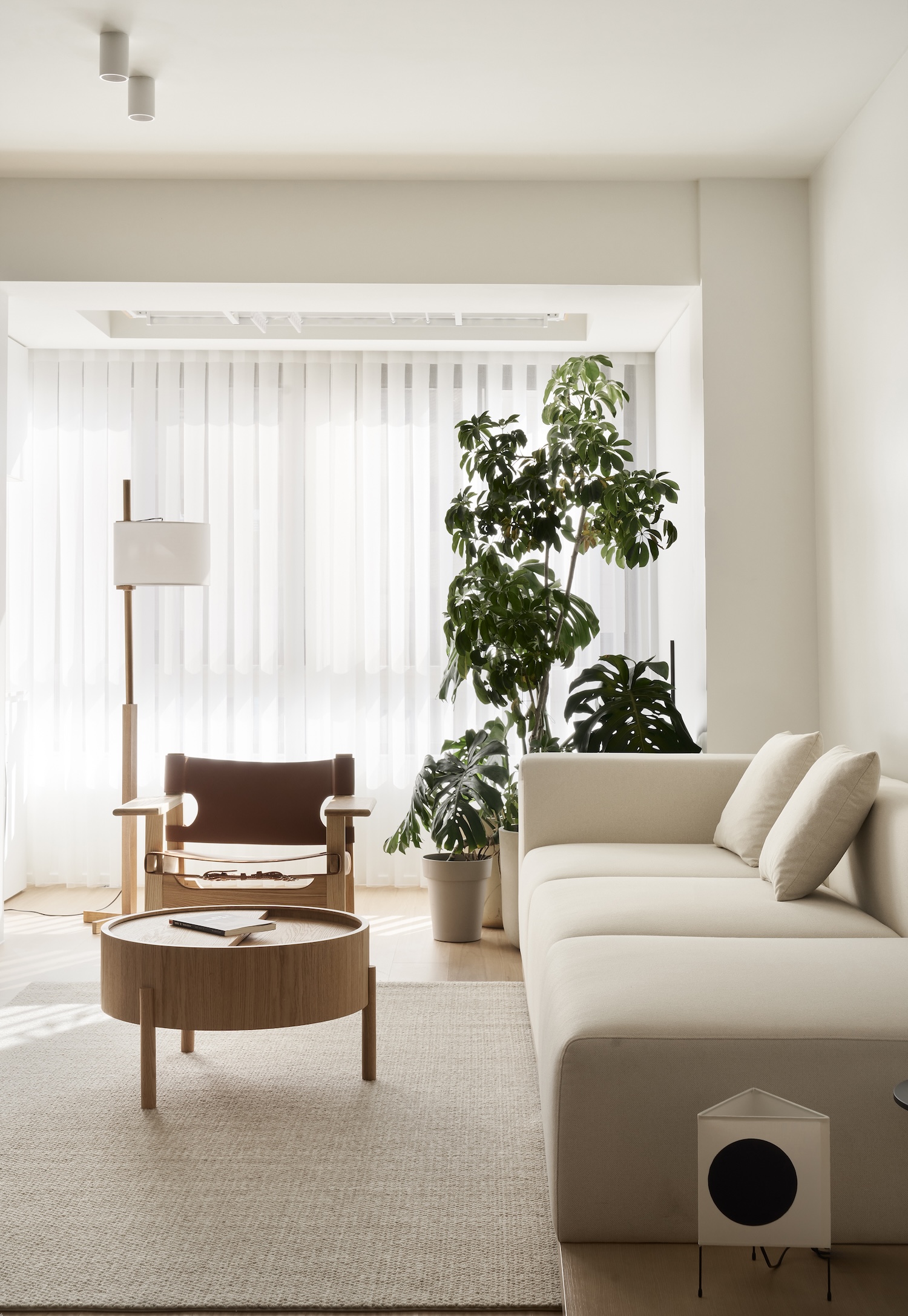
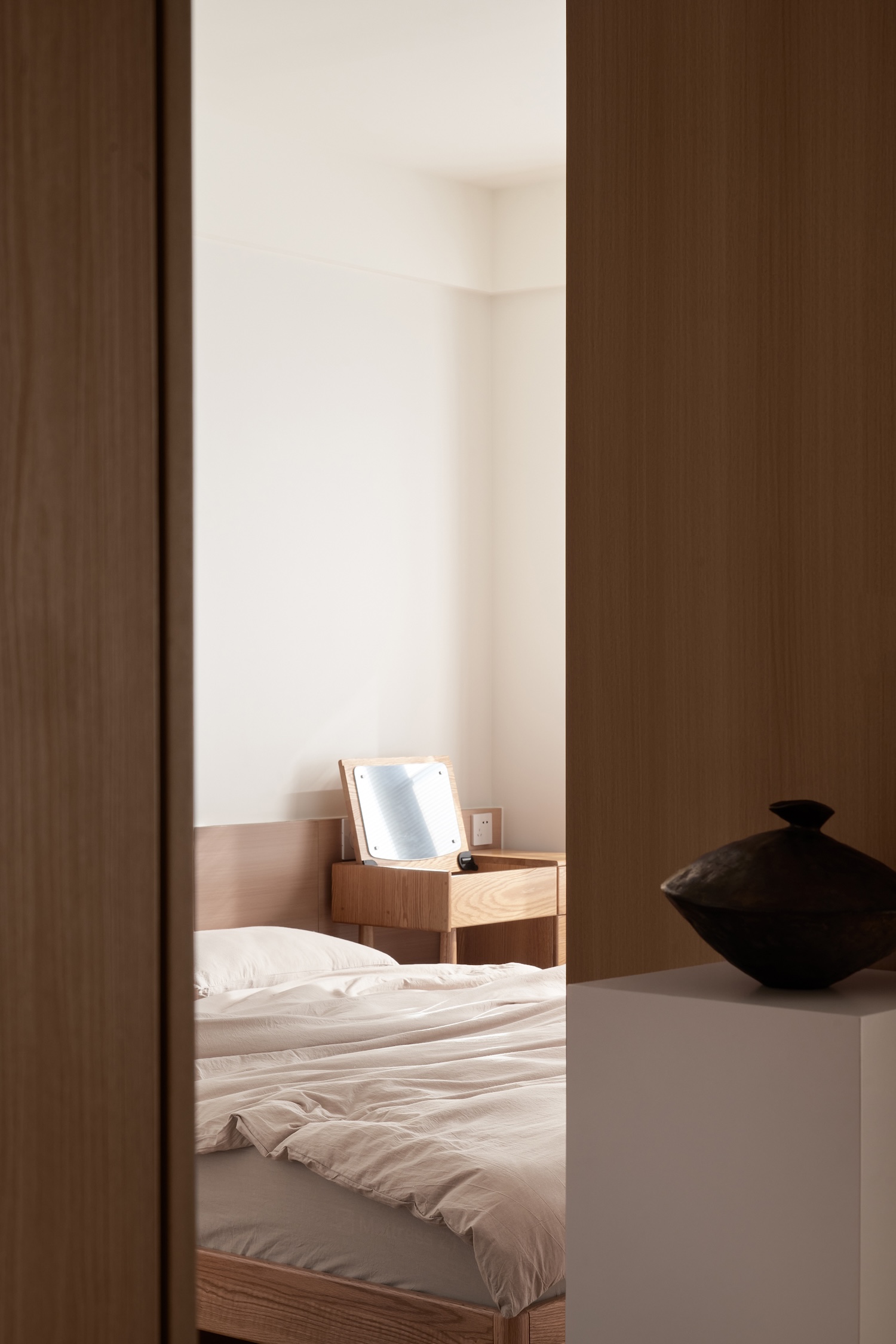
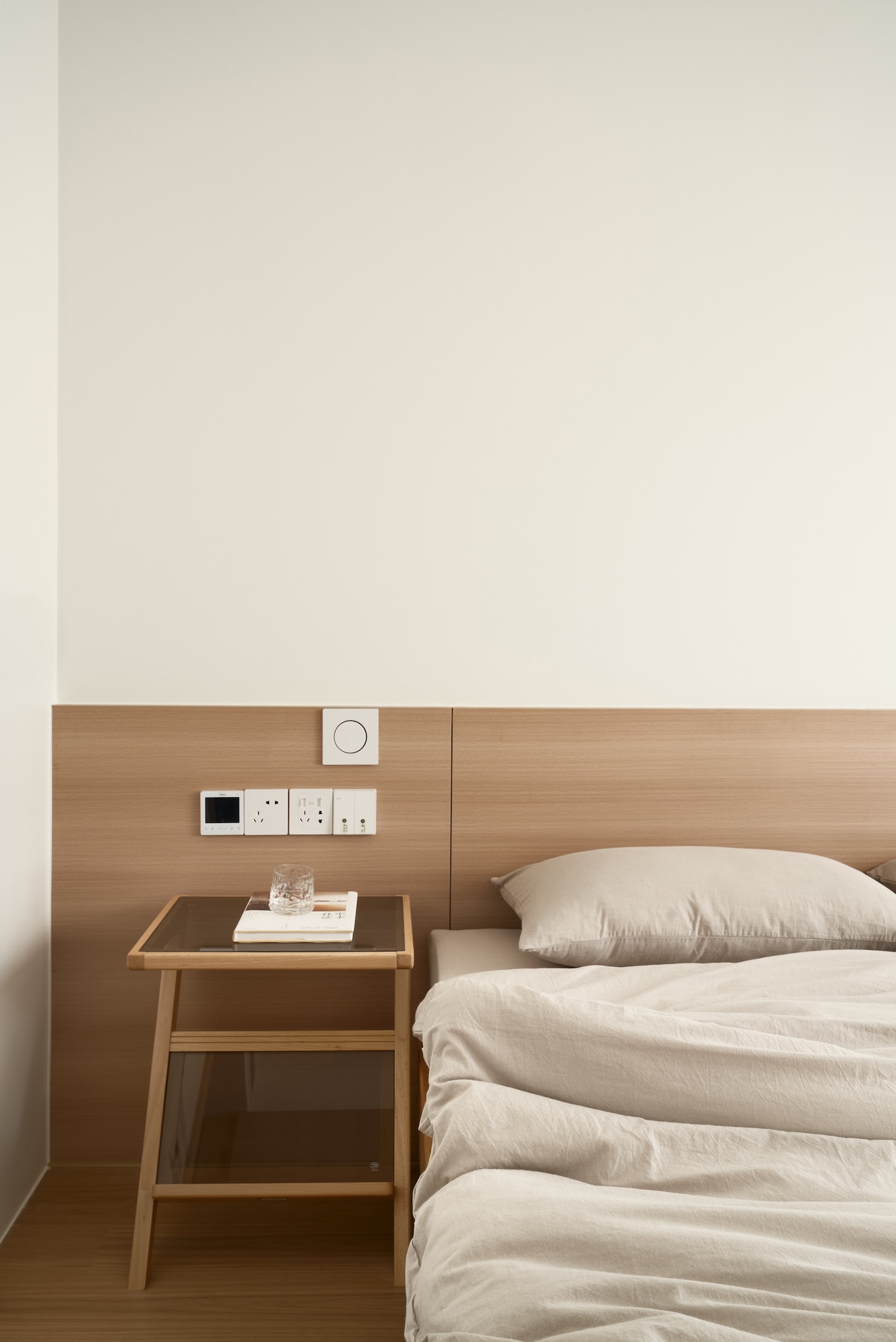
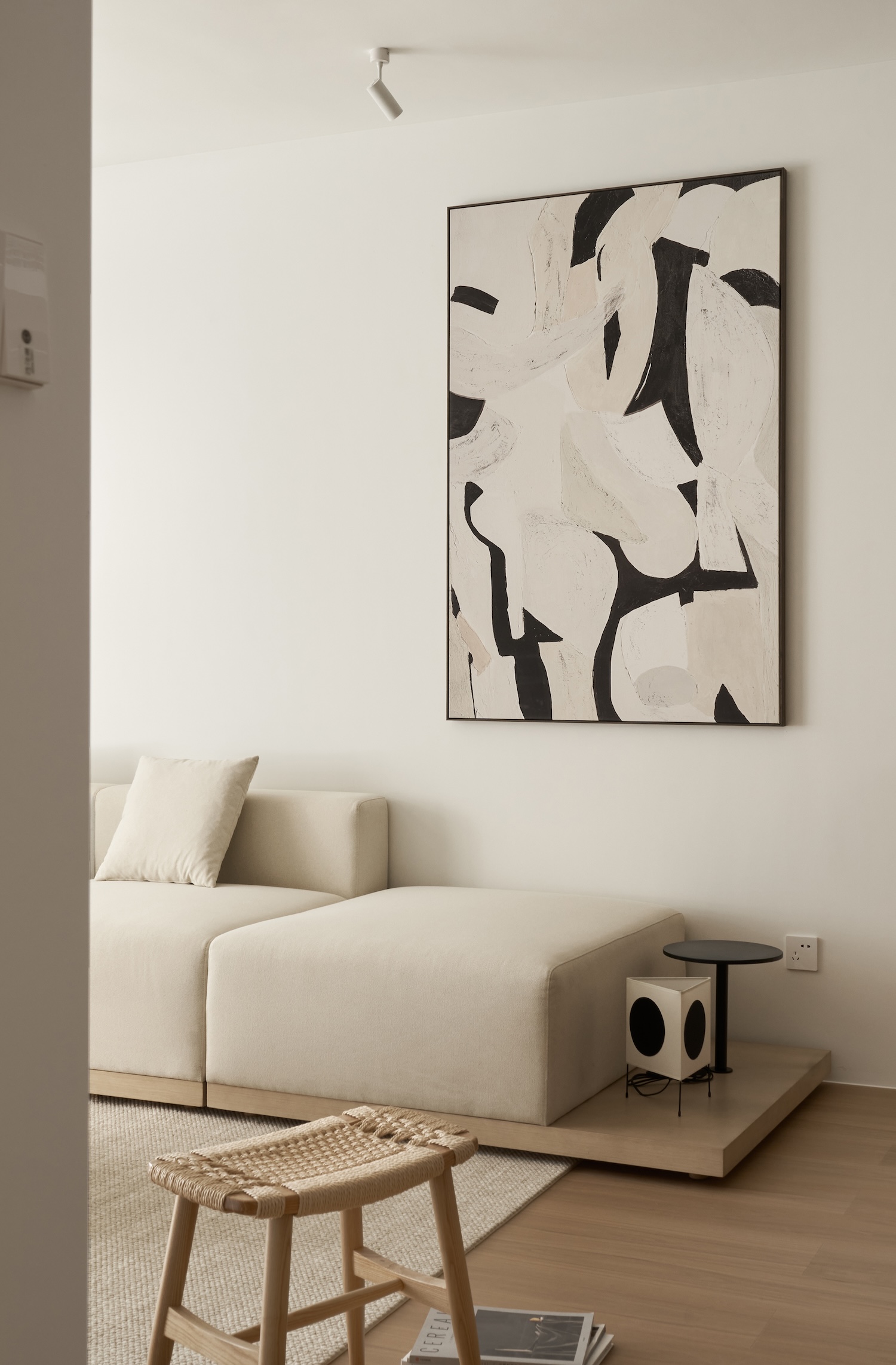
The material palette sits in beige and natural timber, a combination that risks blandness but earns its warmth through textural layering. A linen-upholstered sofa, a single leather chair, a jute area rug – each surface reads differently under the same light, creating depth without introducing competing colors. Against this backdrop, the green plants read as the only chromatic departure, and the restraint makes them land with genuine effect.