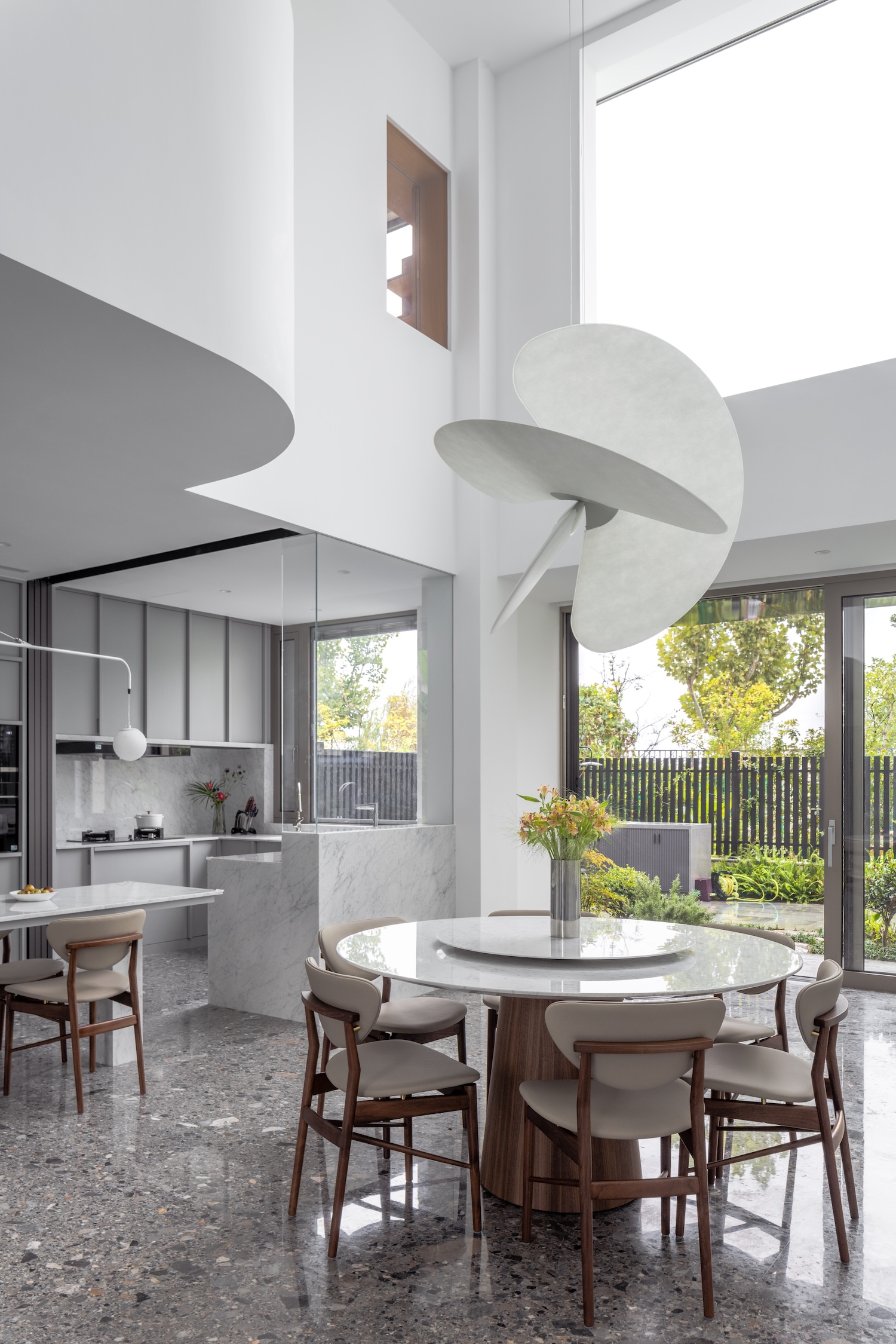
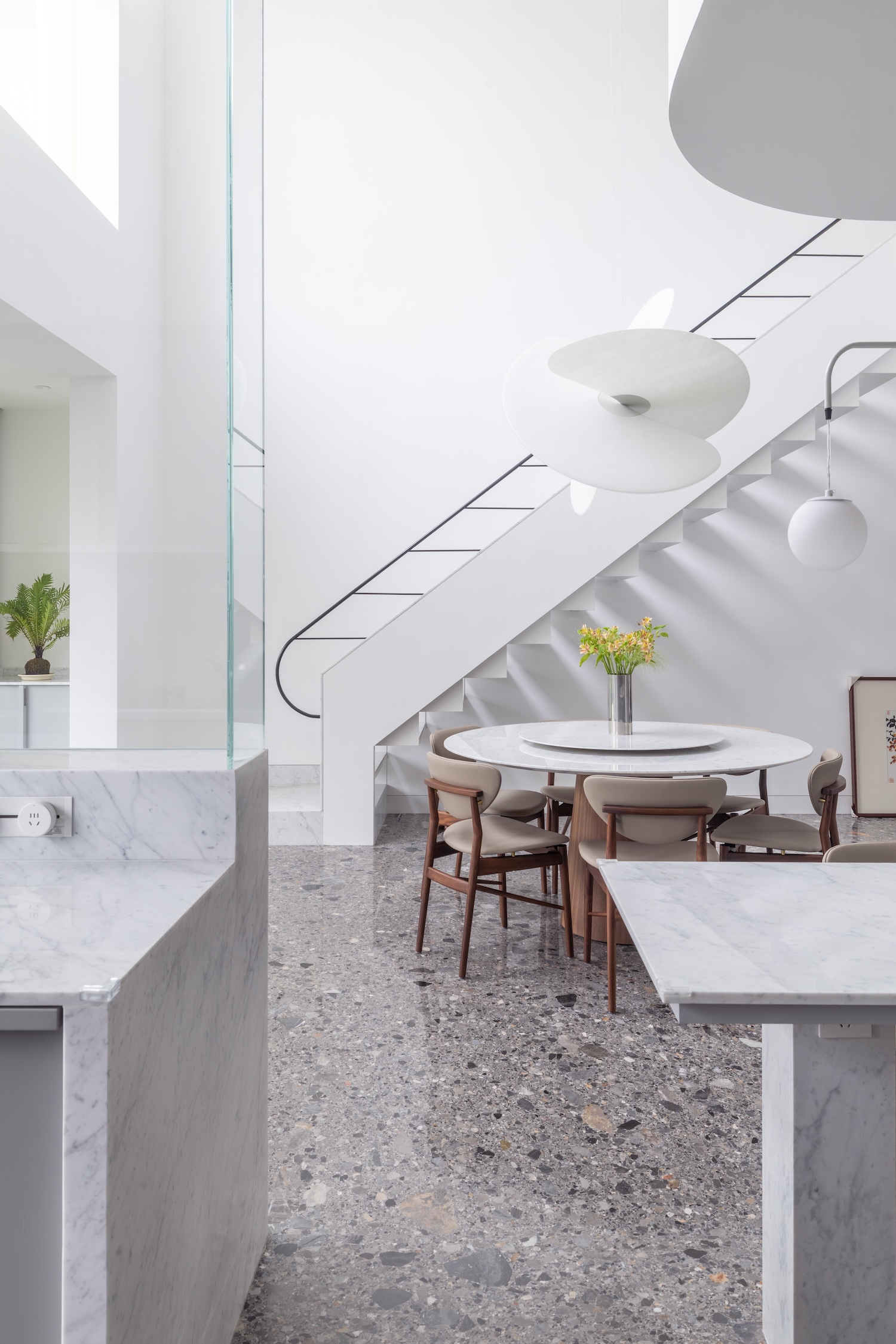
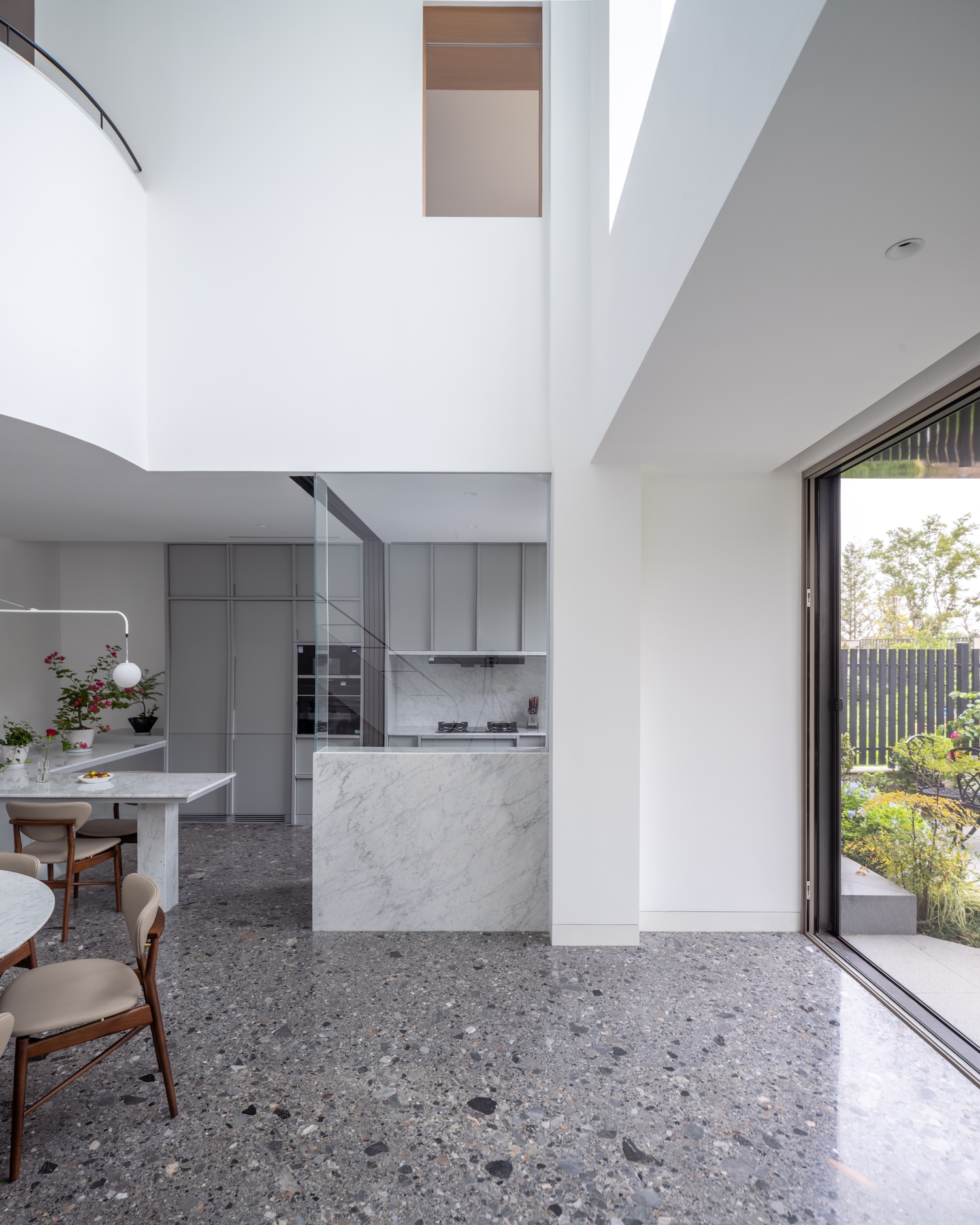
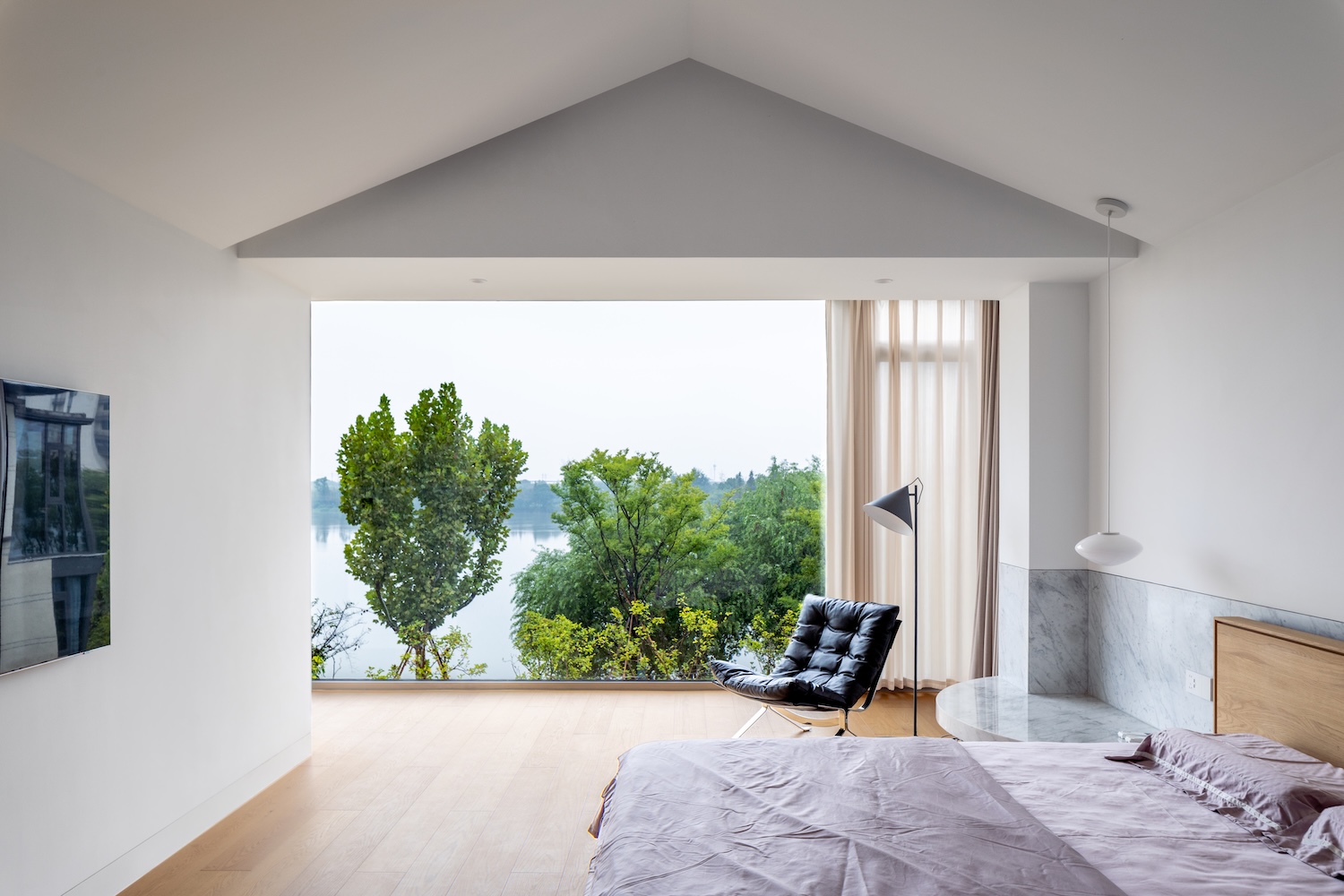
Waterview Townhome is a minimalist house located in Zhejiang, China, designed by Atelier 6C. Water sits directly outside, and a reflective surface of that size does something specific to an interior, doubling the sky and pushing light upward into rooms that would otherwise receive it from above. Atelier 6C treated this as a structural condition and built the plan around it, so the 390-square-meter house is organized less by room type than by elevation, each floor calibrated to a different height above the water.
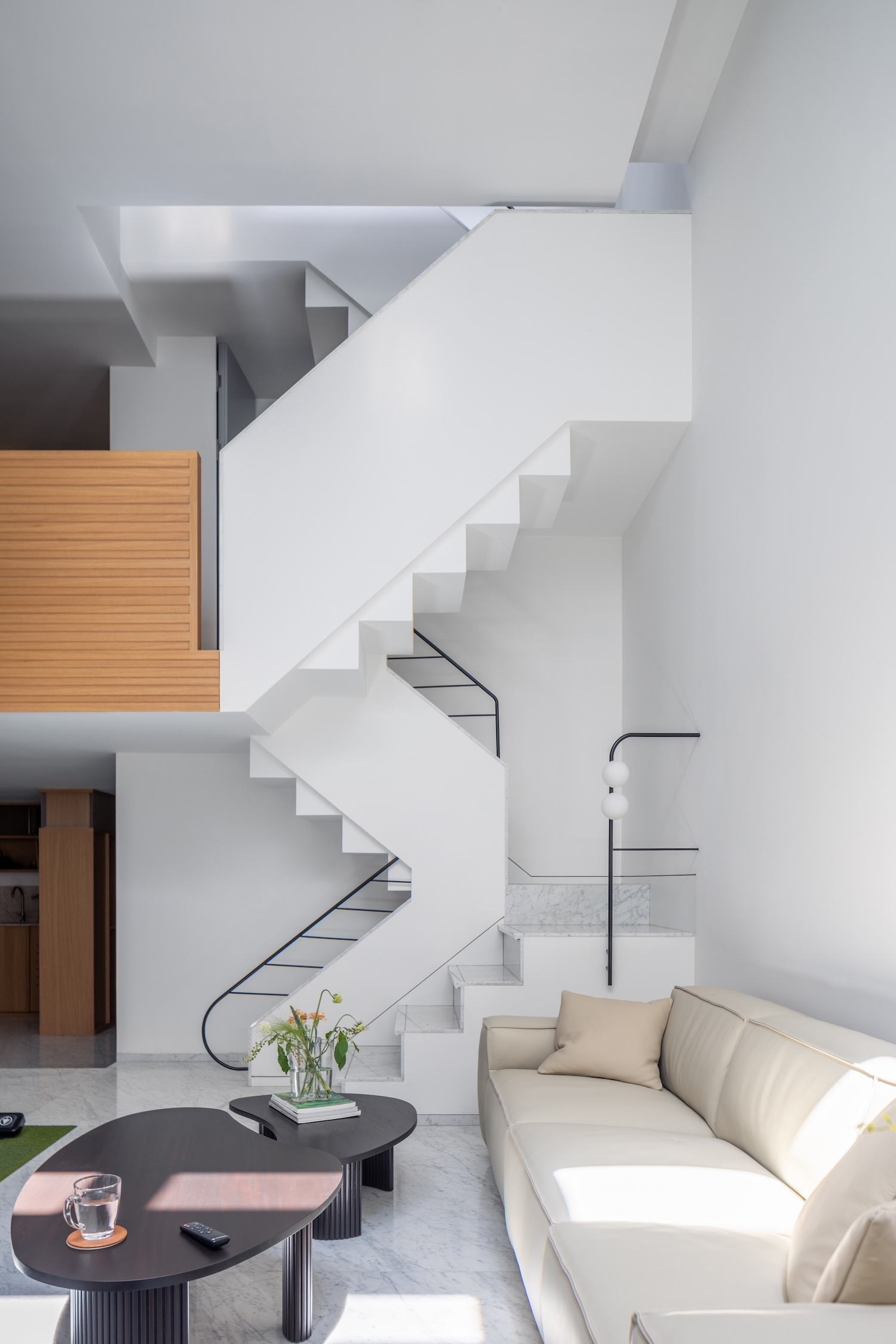
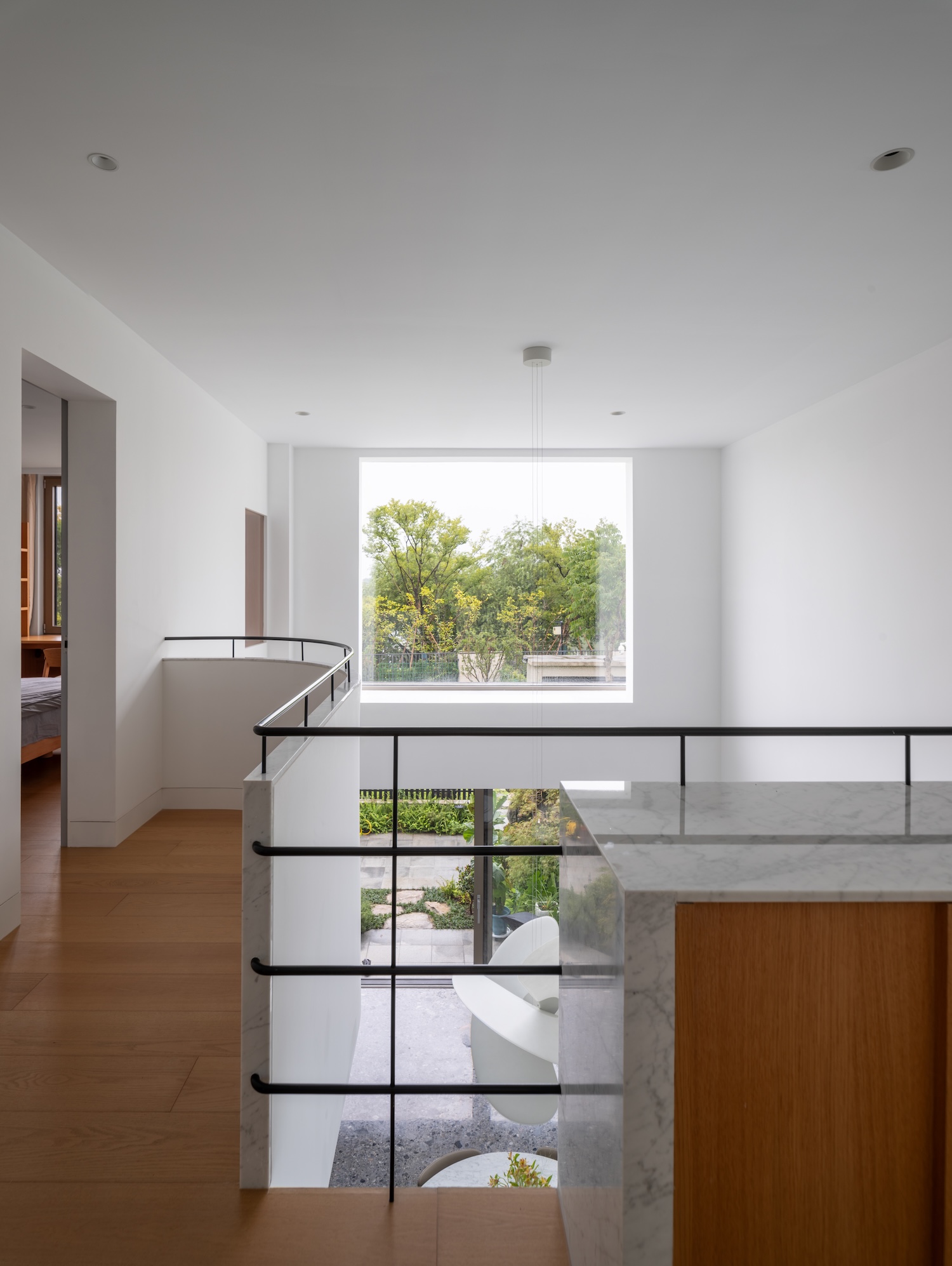
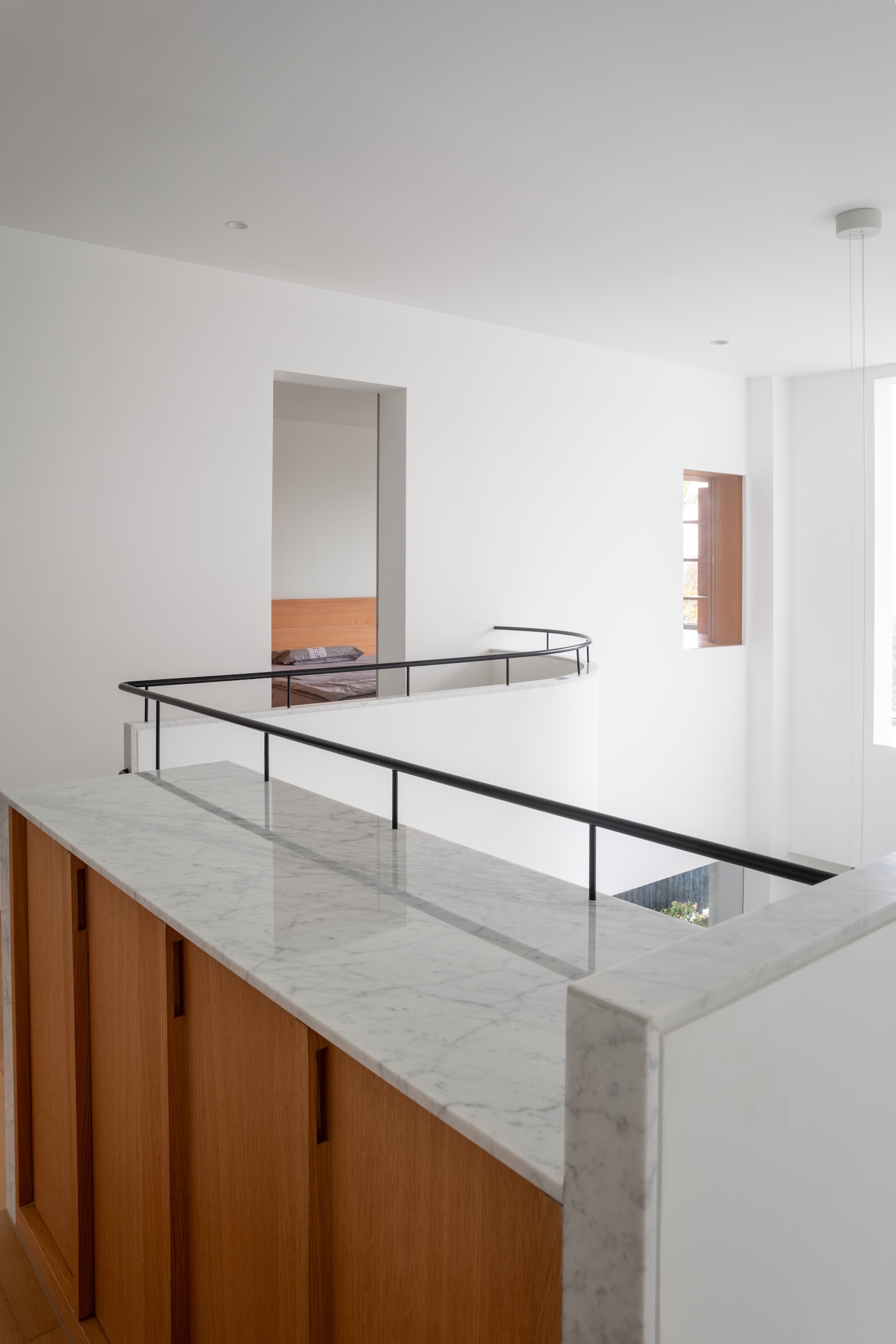
Staircases in houses of this scale usually get compressed into a single vertical shaft, an efficiency that treats circulation as dead time. Here the stair is unpacked and distributed across the plan, threading between functional zones so that arriving anywhere requires passing through a series of framed openings. The logic sits closer to the Jiangnan garden principle of bu yi jing yi, where scenery shifts with every step and the path itself carries the composition, than to any modernist promenade. Adolf Loos worked a related idea vertically in the Raumplan, stacking rooms at varying heights so that movement between them produced changes in pressure and outlook, and Waterview Townhome applies something similar across a looser, more open footprint.
The garden reads in layers on the first floor, partially screened by dense planting that withholds as much as it offers. Rising to the second floor lifts the eye into the canopy, where Japanese maple, banana, hydrangea, crabapple and crape myrtle fill the large windows and water appears only as distant fragments. The third floor briefly compresses before releasing into the master bedroom, where sky and water arrive without mediation. Restriction followed by release is the oldest move in Suzhou garden design, and it lands here because the compression is built into real ceiling heights and door widths.
A scholar’s rock stands in the courtyard, continuing the Jiangnan tradition of stone appreciation. It was chosen with the client on instinct, without measuring it against the classical criteria of thinness, wrinkling, channeling and perforation codified since the Song dynasty. Gongshi collecting has always carried the risk of connoisseurship hardening into a checklist, and selecting a stone for how it holds attention returns the practice to its original terms.