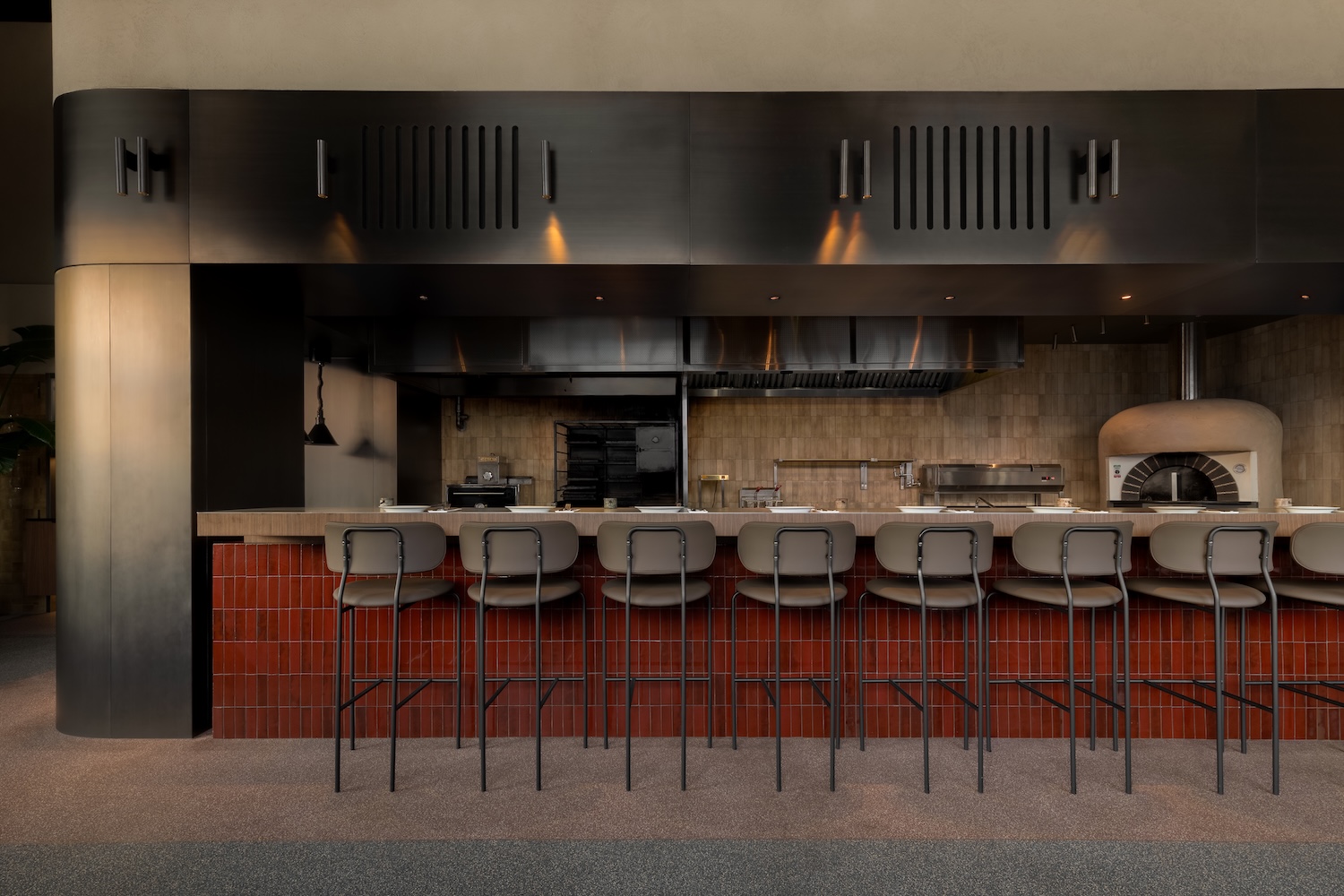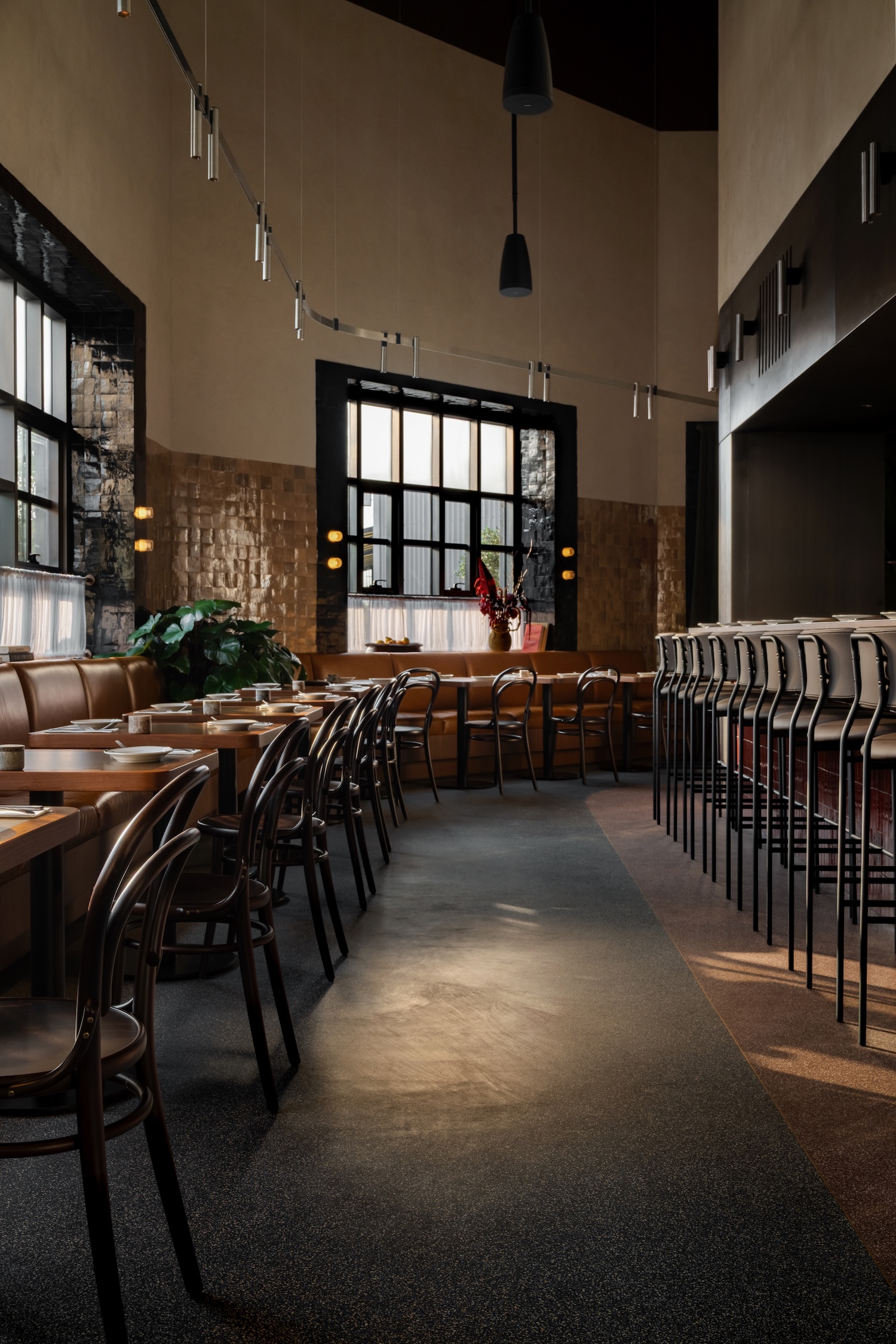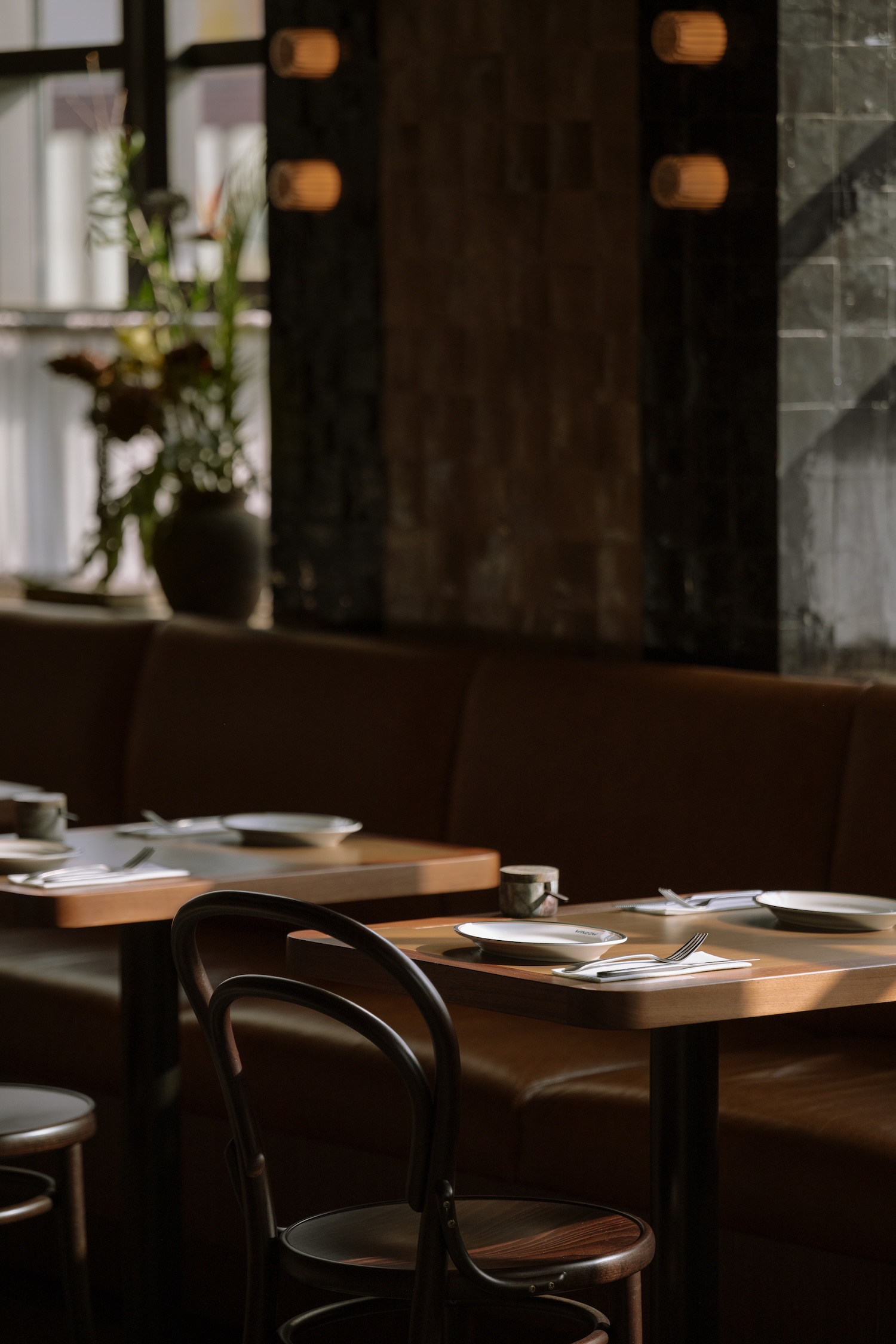
Window is a minimalist restaurant located in Dubai, United Arab Emirates, designed by T.ZED Architects. Fire is the organizing principle here, and every surface inside the double-height industrial shell has been calibrated to either absorb its light or throw it back into the room, which keeps the act of cooking legible from nearly every seat instead of hidden behind a service wall.
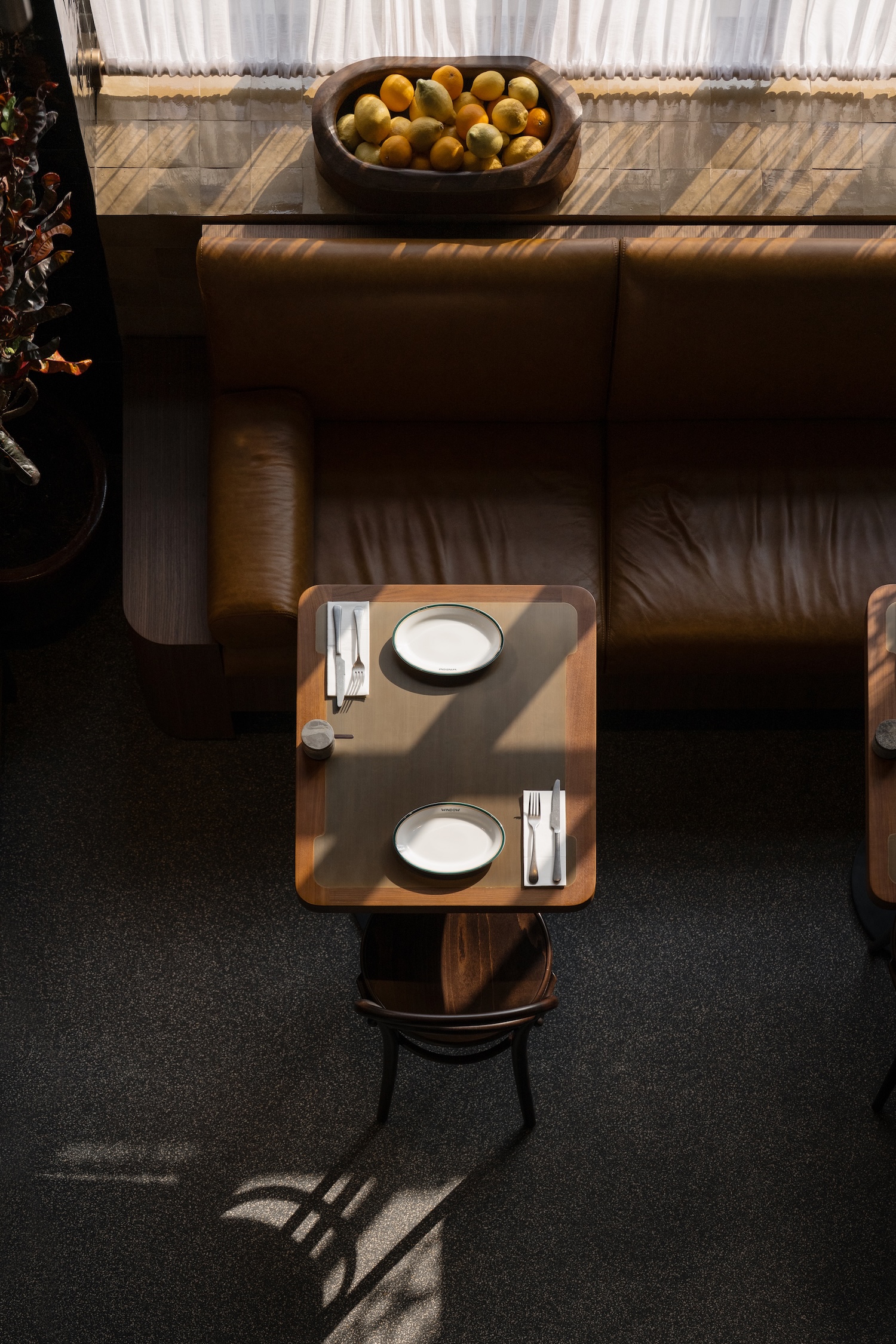
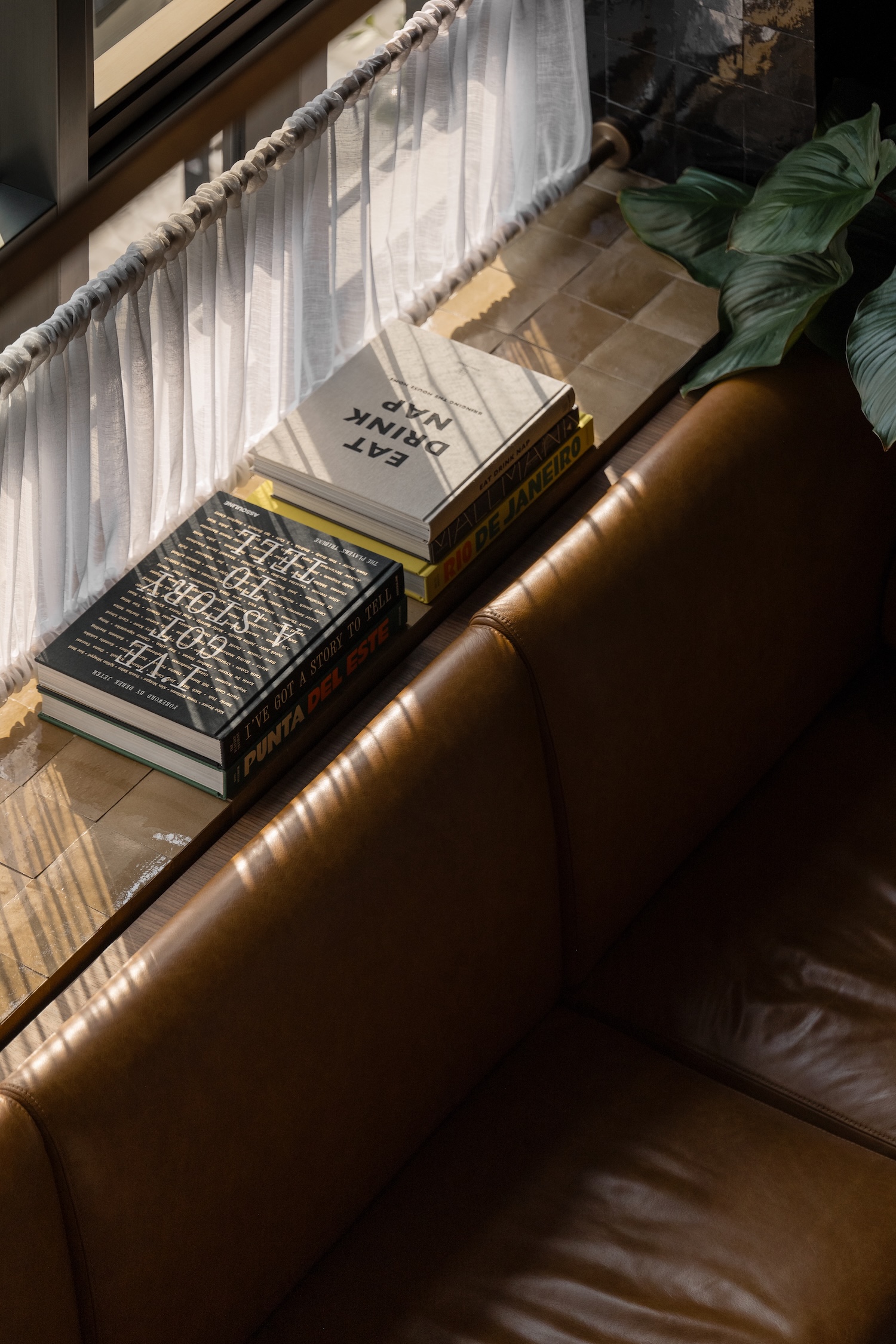
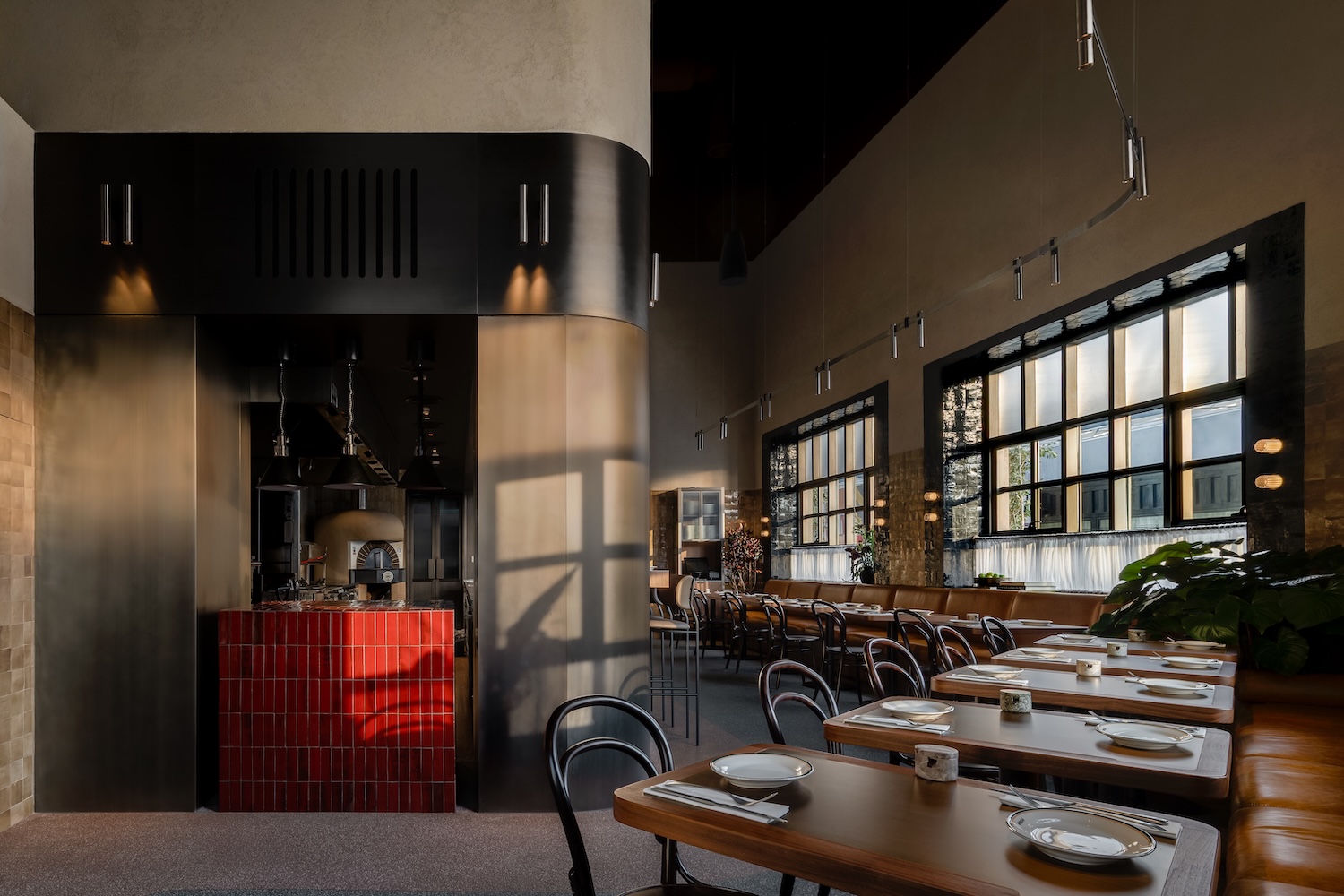
Three expressions of handmade tile, all sourced from Dubai supplier Slō, carry the material argument. Warm amber zellige runs in a horizontal band across the main dining wall, establishing a datum that compresses the warehouse volume down to human dimension. Zellige rewards this kind of use because of how it is made. Hand-cut from fired clay and glazed by hand, each piece pools its glaze unevenly and sits at a slightly different plane than its neighbor, so a wall of it never resolves into flatness. It reads as a field of small variations that shift as the light moves across them. Deep charcoal zellige clads the window sills with a quieter authority, and crimson ceramic faces the kitchen counter and pass, the most restrained gesture in the room and also the loudest, a plane of saturated color that seems to pulse when the flame behind it flares.
Speckled dark terrazzo runs underfoot throughout, unifying the plan while swallowing light and shadow at equal rates. Anodized brushed gunmetal steel joinery, its edges softly radiused rather than sharply mitred, keeps the palette hovering between industrial stock and something more deliberately made.
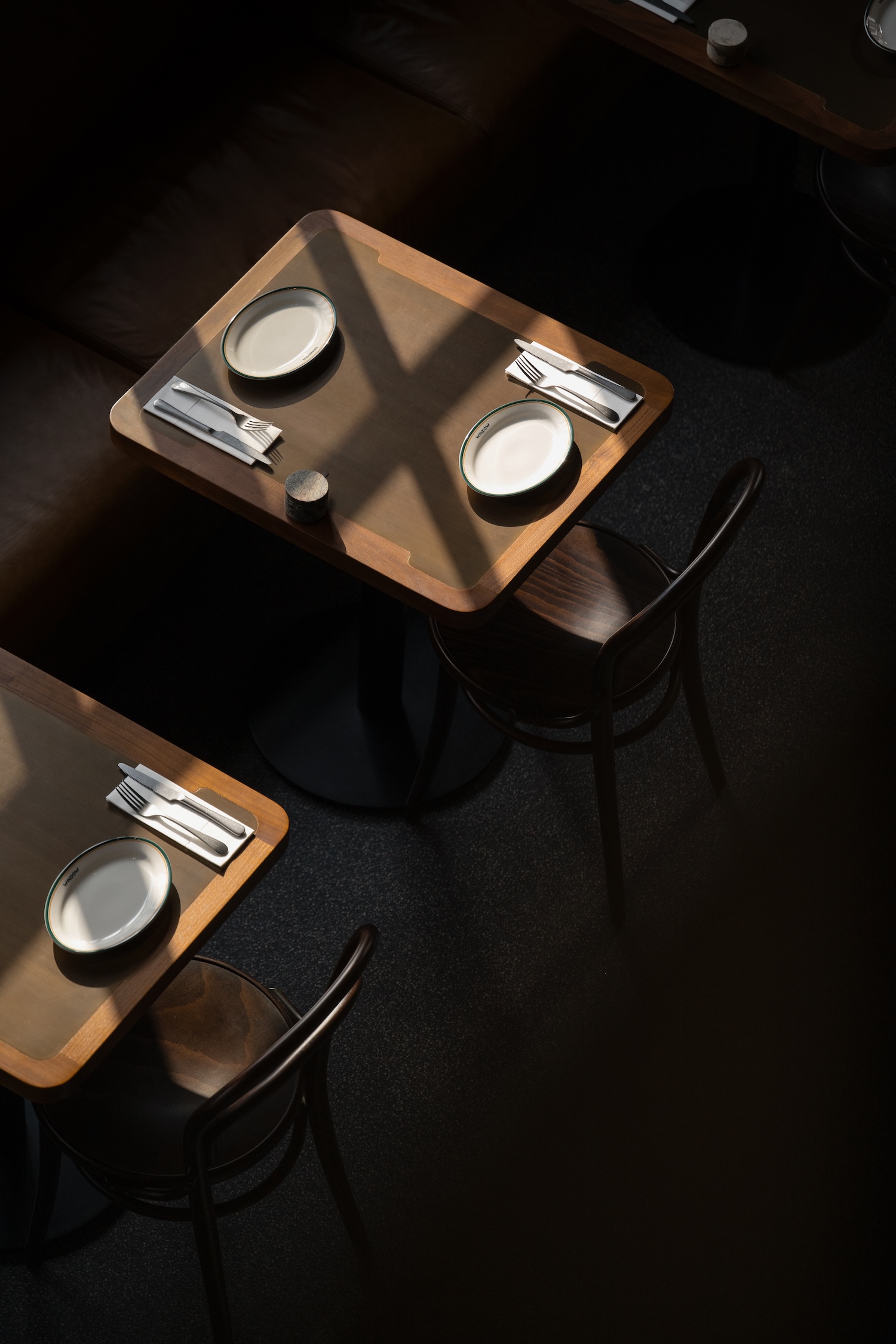
The open kitchen occupies a sweeping curved volume in matte black steel along one length of the space. Guests choose their proximity to it. Timber and brass-topped tables paired with cognac leather banquettes and darkened bentwood chairs, direct descendants of the steam-bent Thonet vocabulary that has anchored café interiors for a century and a half, offer the relaxed option. A run of counter stools along the kitchen edge offers the other, putting diners in direct communion with the fire and the hands tending it, an arrangement that owes more to the Japanese kappo counter and the Basque asador than to any Western dining room convention. Black-framed industrial windows dressed with sheer curtains gathered on a steel rail, and dual-tone textured limewash on the walls, soften the warehouse scale while flooding the room with diffused daylight.